Top Materials for Custom Home Theater Soundproofing
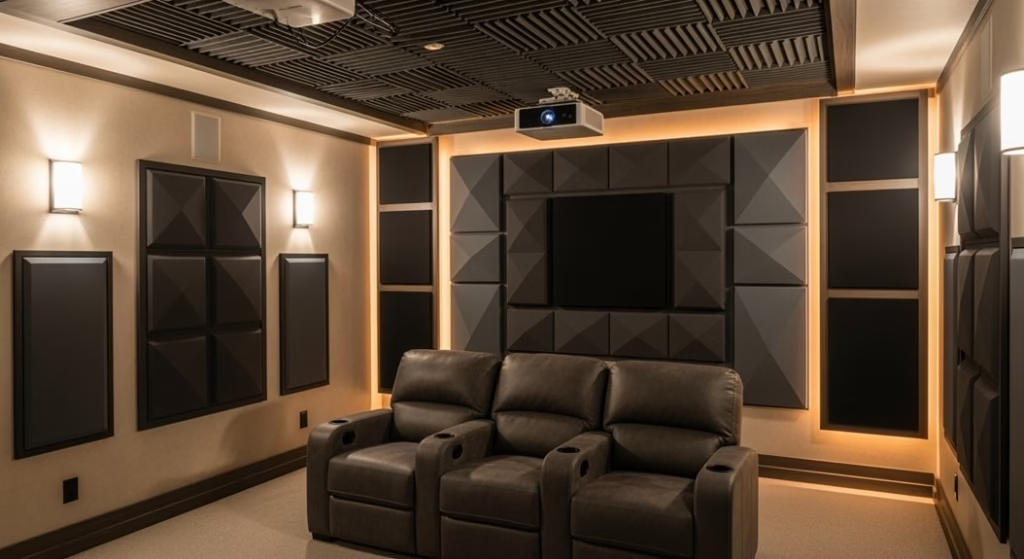
For a custom home theater, consider using acoustic foam, Mass Loaded Vinyl (MLV), and Green Glue for superior soundproofing. Acoustic foam minimizes echoes, MLV blocks outside noise, and Green Glue dampens vibrations. Combine resilient channels and sound isolation clips to decouple surfaces, enhancing sound clarity. High-density insulation like mineral wool or fiberglass further improves noise reduction. Effective soundproofing transforms your space into an immersive retreat, and there’s more to explore about optimizing your home theater soundscape.
Key Takeaways
- Acoustic foam effectively reduces echo and reverberation, enhancing sound clarity in home theaters.
- Mass Loaded Vinyl (MLV) provides dense soundproofing for walls and ceilings, blocking outside noise efficiently.
- Soundproof drywall with Green Glue maximizes sound reduction by converting sound energy into heat.
- Resilient channels and isolation clips decouple drywall, significantly improving sound isolation and STC ratings.
- Mineral wool insulation absorbs sound waves and blocks low-frequency sounds, enhancing overall acoustics.
Understanding Sound in Home Theaters
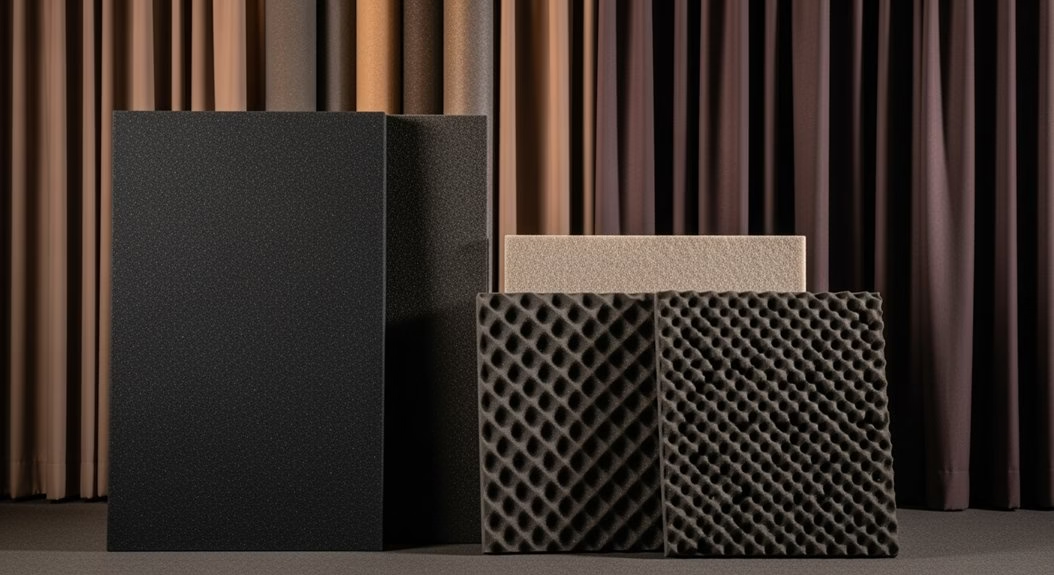
When setting up a home theater, understanding how sound travels is essential to achieving the best audio experience. Sound waves, both airborne and structure-borne, require careful consideration to optimize soundproofing.
Airborne sound, like dialogue, travels through the air and reaches your ears directly. To achieve sound isolation, focus on minimizing sound transfer with effective soundproofing materials that emphasize mass, limpness, and airtightness. These materials enhance sound absorption, reducing unwanted noise and ensuring a soundproof home theater.
Acoustic treatments are vital to refine sound quality, managing reverberation and echo within the space. By addressing both soundproofing and acoustic treatments, you enhance your auditory experience, ensuring every movie or song sounds crisp and clear.
The Importance of Soundproofing
Although often overlooked, soundproofing is an essential element in creating an exceptional home theater experience. You’ll find that proper soundproofing doesn’t just contain loud sounds within your theater but also blocks unwanted noise from outside, enhancing sound quality.
By using sound isolation techniques like mass loaded vinyl and resilient channels, you can achieve a Sound Transmission Class (STC) rating of 50 or higher. This rating guarantees effective noise reduction, allowing for a richer audio experience that matches the high picture quality you desire.
Effective soundproofing reduces noise transfer by up to 80%, keeping the rest of your home peaceful. Additionally, it improves acoustics, reduces stress, and enhances focus, making your viewing experience immersive.
Consider incorporating acoustic panels to further optimize your theater’s sound environment.
Types of Soundproofing Materials
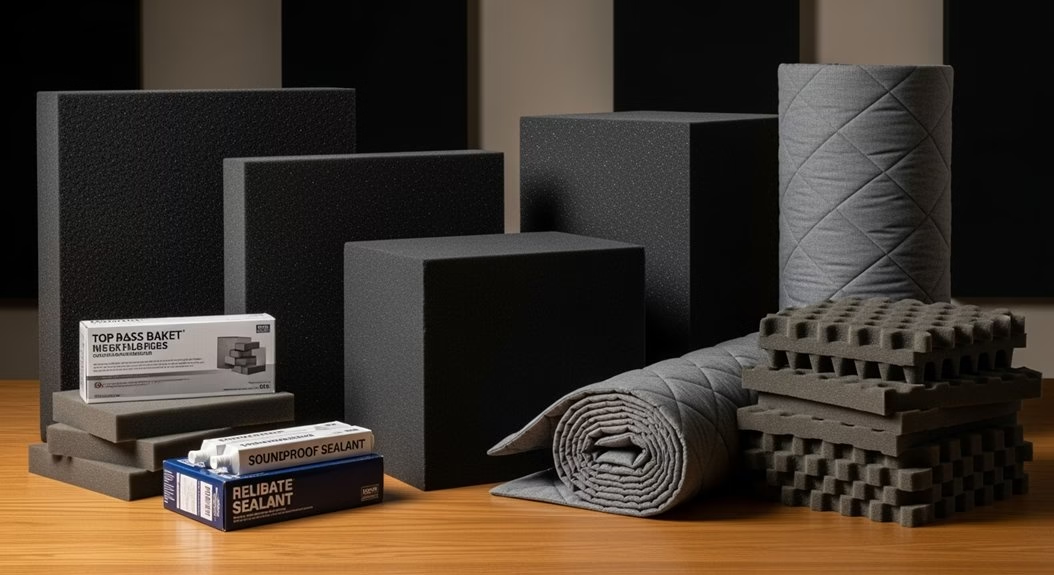
There are several key soundproofing materials that can transform your home theater into an acoustically optimized space.
Acoustic foam is a must-have for reducing echo and reverberation, helping to improve sound quality.
Soundproof drywall, with its additional layers, excels at sound blocking. Pair it with Green Glue, a damping compound, to boost the Sound Transmission Class (STC) rating.
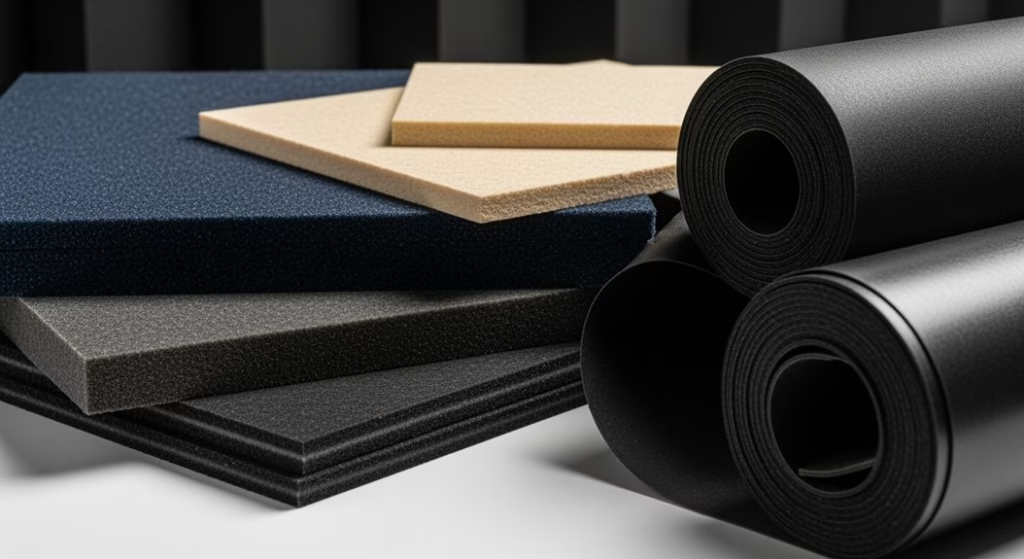
Mass Loaded Vinyl (MLV) is another effective choice, offering dense soundproofing for walls, ceilings, and floors.
Resilient channels and sound isolation clips work wonders by decoupling drywall from framing, minimizing sound transmission.
Finally, soundproofing insulation can further enhance your theater’s acoustics.
High-Density Insulation Options
To effectively soundproof your custom home theater, consider high-density insulation options like mineral wool and fiberglass. These soundproofing materials absorb sound waves, reducing both airborne sounds and impact noise.
Mineral wool, with its 3-4 lbs per cubic foot density, blocks low-frequency sounds often missed by standard insulation. Properly installed fiberglass insulation can improve the STC rating by 5-10 points, thanks to its sound-dampening properties.
Mineral wool’s density effectively blocks low-frequency sounds, while fiberglass boosts the STC rating by up to 10 points.
Acoustic batts are another fantastic choice, boasting a noise reduction coefficient (NRC) of 0.85 for minimizing sound reverberation.
Here’s why you should choose high-density insulation:
- Enhanced sound isolation: Ideal for home theaters.
- Versatile installation: Suitable for walls, ceilings, and floors.
- Superior STC rating: Better soundproofing performance.
- Effective noise reduction: Reduces unwanted sound.
Using Gypsum Board for Sound Isolation
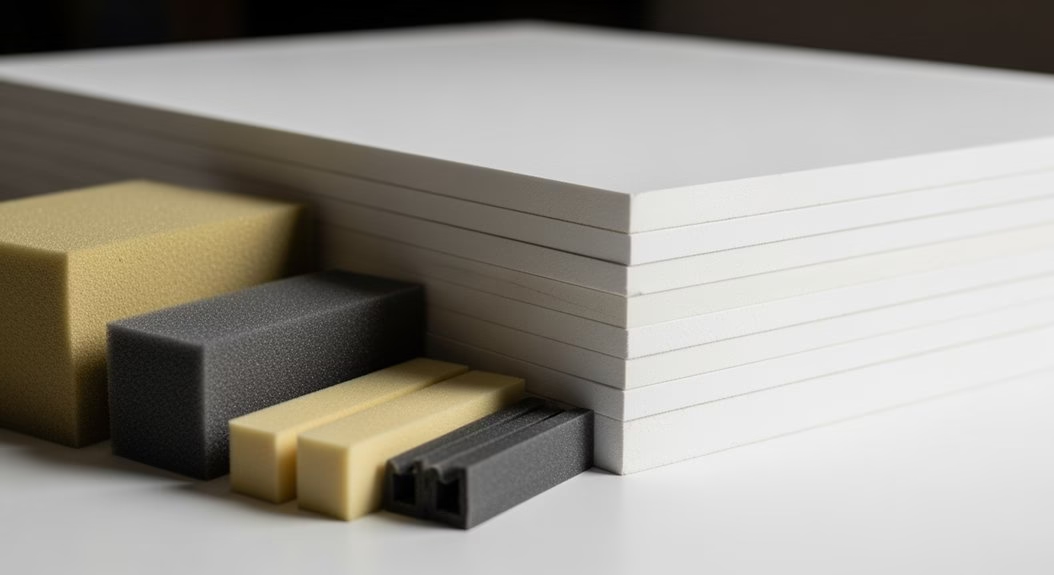
When designing a custom home theater, employing gypsum board for sound isolation can be a game-changer. You can boost soundproofing effectiveness by using multiple layers of 5/8” gypsum board. Doubling the mass with these layers can increase STC ratings by about 5 points.
For added sound isolation, consider using resilient channels to decouple the drywall from the wall studs, reducing sound transmission through your theater walls. Incorporating dampening compounds like Green Glue between these layers can further enhance STC ratings by over 10 points, converting sound energy to heat.
Don’t forget the importance of airtight seals around edges and penetrations to prevent sound leaks. These steps guarantee your home theater achieves peak sound isolation and performance.
Incorporating Green Glue for Damping
Although soundproofing can be a complex process, incorporating Green Glue for damping is a straightforward and effective solution for your custom home theater.
Incorporating Green Glue simplifies soundproofing for your custom home theater, providing an effective solution.
This non-toxic damping compound, when sandwiched between layers of drywall, can reduce sound transmission by up to 50%. It works by converting sound energy into heat, which mitigates airborne noise and enhances sound clarity.
For best soundproofing walls, use two drywall layers with Green Glue in between. This setup maximizes the reduction of both low and high-frequency sounds.
- Easy application: Use a simple caulking gun.
- Versatile: Works on wood, metal, and concrete.
- Increases STC rating: Exceeds STC 50 with proper use.
- Ideal for home theaters: Essential for maintaining sound clarity.
Resilient Channels for Decoupling
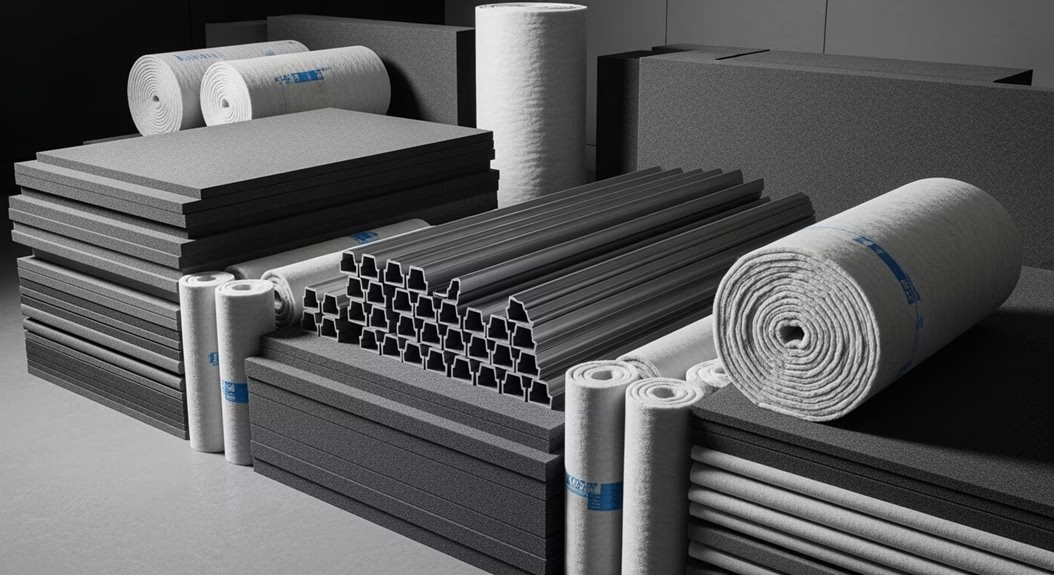
If you’re looking to enhance your home theater’s soundproofing, resilient channels offer an effective strategy for decoupling sound vibrations.
These metal strips decouple drywall from the wall framing, considerably reducing sound transmission by interrupting vibration paths. Installed perpendicular to wall studs, resilient channels create a flexible sound isolation system that can boost STC ratings by up to 20 points.
This gap between the drywall and framing minimizes direct sound transfer and absorbs vibrations, especially for airborne noise. Installation is straightforward, making resilient channels a popular choice for new constructions and remodels.
When paired with soundproof drywall and insulation, they contribute to a thorough soundproofing system that effectively controls both high and low-frequency noise.
Selecting Doors for Soundproofing
Resilient channels set a strong foundation for soundproofing, but choosing the right doors is equally important for a complete noise barrier in your home theater.
Opt for solid core doors to guarantee better sound isolation, as they can achieve an STC rating of up to 51. Soundproof doors can minimize noise transfer effectively when you address potential sound leakage.
Solid core doors offer superior sound isolation, achieving STC ratings up to 51 for effective noise reduction.
- Install door sweeps and adjustable jamb seals to reduce sound leakage.
- Enhance soundproofing effectiveness with acoustic sealant around the door frame.
- Consider pre-made soundproof doors with multiple layers for higher STC ratings.
- Use mass-loaded vinyl (MLV) to add density and block airborne noise.
These strategies collectively enhance soundproofing, guaranteeing your home theater remains a sanctuary from external noise distractions.
Enhancing Acoustics With Carpeting and Panels
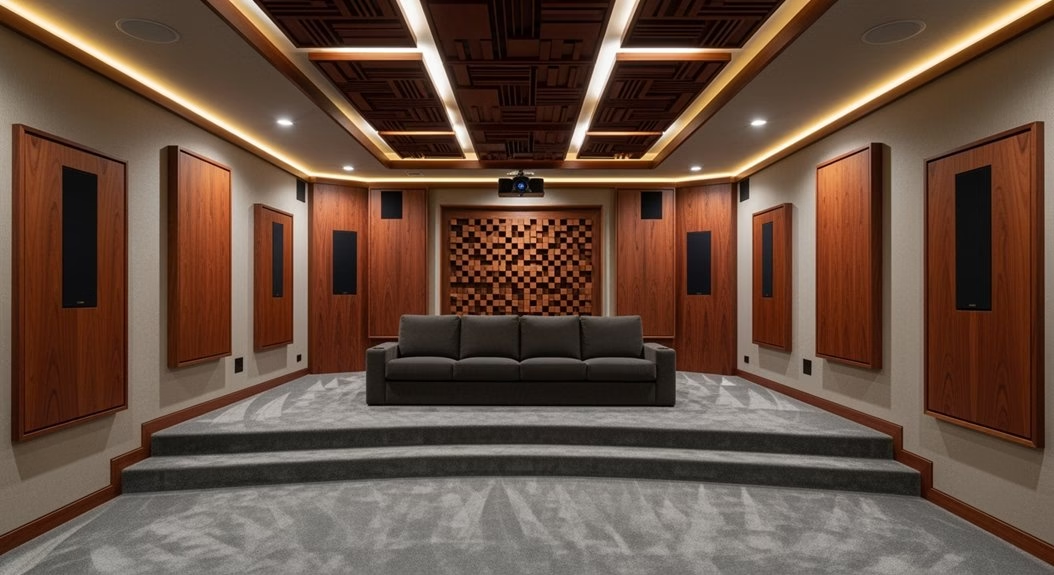
When you aim to enhance the acoustics of your home theater, incorporating carpeting and acoustic panels is key to achieving ideal sound quality.
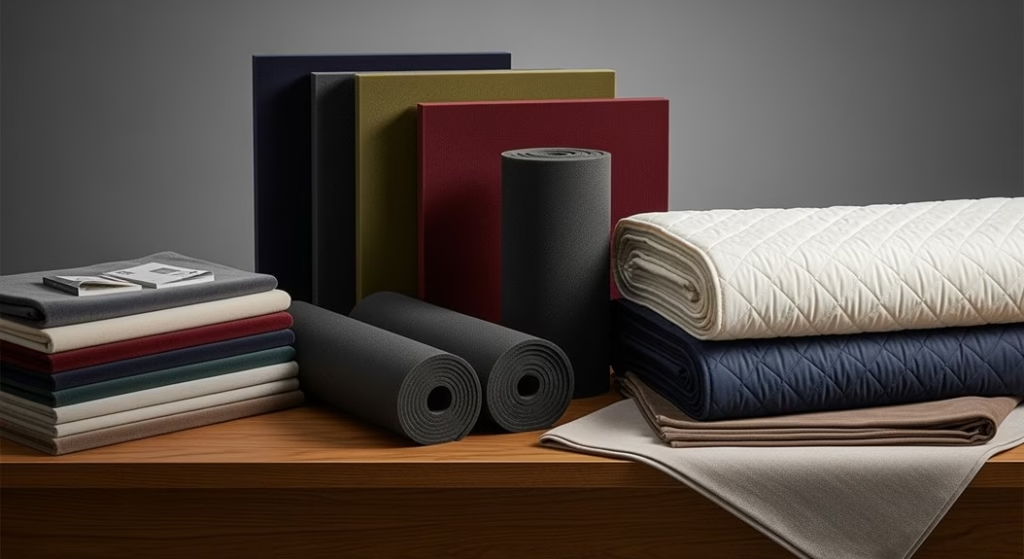
Carpeting minimizes echo and provides excellent sound absorption, especially when you choose plush, thick options. Pairing this with a dense underlayment boosts soundproofing effectiveness by blocking sound transmission and reducing impact noise.
Meanwhile, acoustic panels, with varying noise reduction coefficient ratings, absorb sound energy, taming airborne sound frequencies and improving overall acoustics.
Combining carpets and wall-mounted panels creates a balanced environment; carpets handle impact noise, while panels address airborne frequencies.
Evaluating Novel Materials for Soundproofing
While exploring novel materials for soundproofing your home theater, you’ll find a range of innovative options designed to enhance sound isolation and quality.
Mass Loaded Vinyl (MLV) stands out as an effective soundproofing material, thanks to its density and flexibility, ideal for walls and ceilings. Acoustic foam panels are perfect for sound absorption, cutting down on echo and reverberation.
Consider these options:
- Mass Loaded Vinyl: Blocks airborne noise, easy to install.
- Green Glue: Enhances STC rating by over 50% between drywall layers.
- Acoustiblok Isolation Membrane: Converts sound energy into heat, reducing sound transfer.
- Resilient Sound Isolation: Decouples drywall, improving STC by up to 20 points.
These materials can greatly improve your home theater’s soundproofing and overall acoustics.
Frequently Asked Questions
What Is the Best Soundproofing Material for Home Theaters?
You’re looking for the best soundproofing material for home theaters, aren’t you?
Consider using Acoustic Panels and Acoustic Foam to reduce echo.
Mass Loaded Vinyl Barriers and Soundproof Drywall effectively block noise.
Resilient Channels and Isolation Clips minimize sound transmission.
Don’t forget Soundproof Doors and Soundproof Curtains for extra isolation.
Ceiling Clouds add style while enhancing acoustics.
Combine these elements for a theater experience that keeps noise where it belongs.
What Is the Most Effective Soundproofing Material?
Did you know that Green Glue can reduce sound transmission by over 20 dB when used between drywall layers?
For effective soundproofing, combine mass-loaded vinyl with resilient channels for outstanding noise reduction.
Acoustic panels and foam tiles absorb sound, while soundproof curtains and bass traps enhance sound isolation.
Sound barriers like mass-loaded materials and Green Glue create a thorough approach, ensuring your space achieves ideal noise reduction and sound isolation.
What Material Can Sound Not Pass Through?
You’re wondering what material sound can’t pass through. High-density materials like lead and concrete are your top soundproofing options due to their mass.
Acoustic panels and mass loaded vinyl are also effective barriers. Pairing double drywall with Green Glue adds density.
Soundproof curtains and foam insulation help absorb sound. Resilient channels decouple structures, reducing noise.
Combine these with sound barriers to maximize soundproofing. Remember, each layer contributes to blocking sound.
How Can I Make My Theater Room Soundproof?
Think of soundproofing your theater room like building a fortress against noise.
You’ll want to start with acoustic panels and soundproof curtains to isolate sound. Use resilient channels and mass-loaded vinyl to block vibrations.
Decoupling walls with insulation types like soundproof foam enhances sound isolation. Floor underlayment paired with soundproof doors guarantees no sound sneaks in or out.
It’s all about creating a seamless barrier for an immersive experience.
Conclusion
So, are you ready to transform your home theater into an acoustic haven? By carefully selecting the right soundproofing materials, you can greatly enhance your listening experience. From high-density insulation to resilient channels, each choice plays an essential role. Don’t forget the importance of soundproof doors and the added touch of carpeting and panels. With these strategies, you’ll enjoy a cinematic experience without disturbing the peace of your home. What’s stopping you from starting today?