
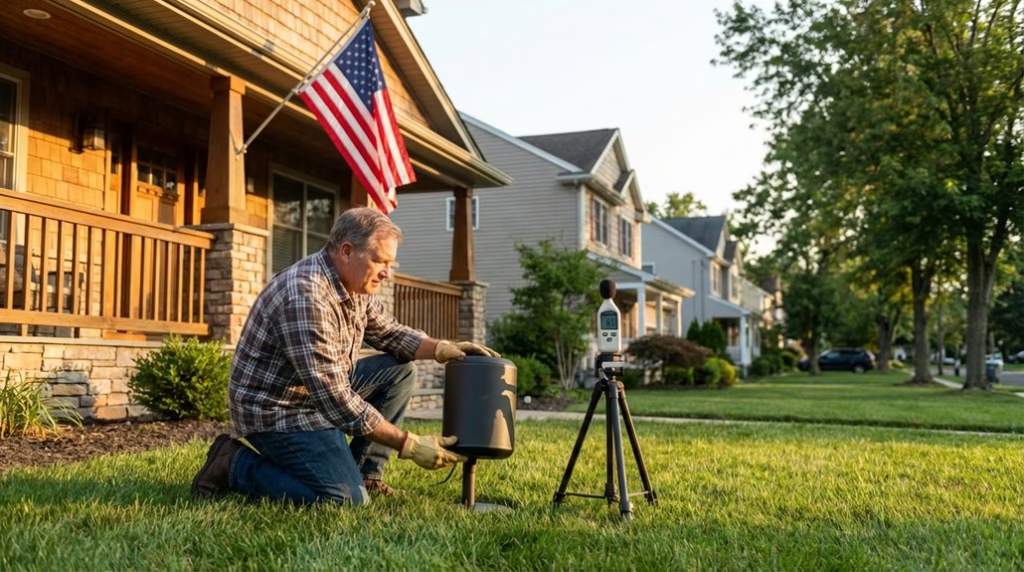
New Jersey sets community noise limits around 65 dBA during the day (7 a.m.–10 p.m.) and 50 dBA at night (10 p.m.–7 a.m.), but every town defines its own quiet hours and enforcement. If you’re dealing with street noise, neighbor impact, or privacy concerns, start by checking your municipal code and documenting dates, times, and sound levels. After-hours issues typically go to local police; daytime measurements are often handled by health or environmental officers using calibrated equipment. Penalties can reach $2,000 per offense, per day—so proactive mitigation pays.
Total Home Interiors helps you stay compliant and comfortable with premium, professionally engineered solutions:
- Soundproofing: We design and build decoupled wall and ceiling systems, floated floors, and upgraded window assemblies using specialty acoustic drywall and mass-loaded vinyl to stop noise transfer between units and from the street.
- Acoustics: For rooms that sound harsh or echoey, we install custom fabric-wrapped panels, fabric wall systems, acoustic ceilings, and sound masking to improve clarity and privacy without compromising design.
- Window Treatments: Motorized shades, blinds, and drapery from Lutron, Somfy, and Hunter Douglas PowerView deliver privacy, light control, and energy efficiency—fully integrated with your smart home for effortless daily quiet.
- Home Automation: Scene-based lighting, whole-home audio/video, robust networking, and voice control (Alexa, Google, Control4) create a seamless experience that supports focus, sleep, and entertainment.
- Home Theater: Purpose-built theaters with acoustic design, Dolby Atmos, precision screen/projector selection, and luxury seating bring cinema-quality sound without disturbing adjacent rooms.
Summer complaints can spike by 25% as windows open and outdoor activity increases. If you’re in Jersey City, Hoboken, NYC, or anywhere in North Jersey, schedule a site assessment now. We’ll test, model, and specify the right combination of isolation, acoustic treatment, and automated privacy to reduce risk, meet local standards, and deliver the peace and quiet you’ve been missing.
Key Takeaways
New Jersey Noise Ordinance Guide for Homeowners
Prepared by Total Home Interiors — Your local experts in soundproofing, acoustics, motorized window treatments, and smart home integration across NJ, NYC, Hoboken, and Jersey City.
What NJ law says (and why it matters)
- Baseline state limits: 65 dBA daytime (7 a.m.–10 p.m.) and 50 dBA nighttime (10 p.m.–7 a.m.) measured at the property line. Municipalities can set stricter rules—always check your local code for quiet hours, specific source restrictions, and enforcement.
- If you’re dealing with chronic disturbances, keep a written log with dates/times, capture short video or audio clips, and request a calibrated meter reading from your local health or environmental agency. For after-hours issues, contact local police; formal readings and enforcement typically run through municipal health/environmental departments.
How we help you meet—and exceed—local noise standards
1) Soundproofing (stop noise transfer)
- Residential: We design and build high-performance wall, ceiling, floor, and window assemblies that block neighbor and street noise in apartments, condos, and townhomes. Our premium approach uses mass-loaded vinyl, decoupled wall systems, acoustic isolation clips, and specialty acoustic drywall to achieve measurable transmission loss.
- Commercial: Offices, restaurants, studios, and medical facilities benefit from code-conscious designs that improve privacy, compliance, and comfort without sacrificing aesthetics.
- Why professional over DIY: Proper detailing (flanking path control, sealants, door and window upgrades) and precise installation determine results. We provide lab-tested materials, construction-grade isolation methods, and documented performance targets.
2) Acoustics (control echo and improve clarity)
- Acoustic panels: Custom, fabric-wrapped panels that complement your interior while taming reflections for clearer dialogue and better focus.
- Fabric wall systems and acoustic ceilings: Seamless, design-forward solutions for living spaces, conference rooms, and dining areas.
- Sound masking: Discreet systems that enhance speech privacy in offices and treatment rooms.
- Outcome: Quieter rooms, better sleep, improved call quality and productivity—especially important for WFH setups in urban environments.
3) Motorized Window Treatments (privacy and urban comfort)
- Automated shades, blinds, and drapery from Lutron, Somfy, and Hunter Douglas PowerView integrated with your smart home.
- Benefits: Day-to-night privacy, reduced traffic noise infiltration when paired with proper window sealing strategies, glare control for screens, and energy savings.
- Perfect for street-facing apartments and high-rises where privacy and light control change hour by hour.
4) Home Automation (quiet, comfort, and control)
- Lighting scenes, whole-home audio/video, robust networking, and voice control (Alexa, Google, Control4) engineered so everything works seamlessly.
- Practical value: Schedule quiet-time scenes, automate shades at bedtime, and maintain stable WiFi for work and streaming without the noise of ad‑hoc gear.
5) Home Theater (performance without disturbing the neighbors)
- Theater design with proper room isolation, Dolby Atmos calibration, acoustic treatment, and luxury seating.
- We manage bass control, door seals, and decoupled construction to keep cinematic sound in—and nighttime peace intact.
Pro tips to reduce conflict and risk
- Plan proactively: For home theaters, gyms, and outdoor speakers, we set calibrated volume limits and isolation details to stay within local dBA thresholds.
- Treat the envelope: Combine soundproofing assemblies with motorized shades and proper sealing for maximum reduction.
- Document results: We can coordinate third-party acoustic testing to verify improvements relative to local standards.
Serving the Tri-State with white-glove execution
- Local expertise: We understand NJ and NYC building types—brick row homes, concrete high-rises, wood-framed condos—and tailor solutions to each.
- Premium materials and meticulous installation: Measurable results, clean finishes, and minimal disruption.
- End-to-end: Design, permitting coordination when needed, installation, and smart integration—handled by one accountable team.
Next steps
- Schedule a consultation: We’ll assess your space, noise sources, and municipal requirements, then present a clear plan with performance targets.
- Need immediate help with disturbances? Log incidents, contact your local police for after-hours issues, and request calibrated measurements through your municipal health/environmental agency—then talk to us about permanent solutions.
Total Home Interiors | West Orange, NJ
Expert soundproofing, acoustics, automated window treatments, smart home systems, and home theaters for NJ, NYC, Hoboken, and Jersey City.
NJ Quiet Hours and Decibel Limits (Answer at a Glance)
Know your limits: NJ quiet hours and how to stay compliant
If you live or manage property in New Jersey, typical quiet hours run from 10:00 p.m. to 7:00 a.m. During that window, residential sound is generally limited to about 50 dBA at the property line; from 7:00 a.m. to 10:00 p.m., the daytime limit is about 65 dBA. As a reference, 50 dBA is a quiet conversation; 65 dBA is normal speaking levels or a dishwasher. Local ordinances can vary by municipality, so it’s wise to verify your city’s specific code. During summer, noise complaints rise by over 25%, making it even more important to observe quiet hours and local limits.
Local NJ Ordinance Differences and Why They Matter
How much do local rules really change the picture? A lot—and they directly impact how we design and install effective, compliant solutions for your home or business.
New Jersey’s baseline is 65 dBA by day and 50 dBA at night, but municipalities across the Tri-State routinely tighten or tailor limits. Some ordinances regulate behavior (for example, Hawthorne bans hooting; Ridgewood limits train whistles to emergencies), while many others restrict amplified sound, leaf blowers, or music by time of day and distance from residences and offices. In practice, what’s acceptable in one town can trigger a citation next door. For home theaters and media rooms, incorporating mass-loaded vinyl with decoupled wall systems and bass traps helps meet stricter local limits while keeping low-frequency noise contained.
Local noise limits vary town to town—what’s fine here can earn a citation next door.
Why this matters for your project:
- Soundproofing: We engineer wall, ceiling, floor, and window assemblies to meet stricter local thresholds—using premium mass-loaded vinyl, decoupled wall systems, and specialty acoustic drywall—so you get real noise reduction that stands up to enforcement.
- Acoustics: For restaurants, offices, studios, and open-plan homes, we design acoustic panels, fabric wall systems, and ceiling treatments that control reverberation and intelligibility without exceeding local limits—often paired with sound masking to improve privacy within allowed levels.
- Window treatments: Motorized shades and drapery (Lutron, Somfy, Hunter Douglas PowerView) add a critical layer of privacy and help tame outside noise when combined with acoustic glazing and proper sealing—ideal for urban living where nighttime limits are lower.
- Home automation: Smart scenes, whole-home audio, and voice control let you enjoy entertainment responsibly—automated volume caps, night modes, and scheduled quiet hours help keep you within code while preserving convenience.
- Home theater: We design theaters with Dolby Atmos isolation in mind—floating floors, isolated walls, and targeted absorption/diffusion—so cinematic sound stays in the room and neighbors stay happy.
Local enforcement typically relies on calibrated meters and can escalate from warnings to fines for repeat issues. Our team reviews your municipality’s code before we specify construction, finishes, or system settings. That upfront diligence protects you legally, informs product and material choices, and preserves good neighbor relationships—so you can enjoy peace, privacy, and performance without surprises.
Serving West Orange, Jersey City, Hoboken, NYC, and beyond, Total Home Interiors delivers compliant, high-performance results—no guesswork, no DIY compromises. Want a code-smart plan for your space? Schedule a site assessment and we’ll tailor a solution to your town’s rules and your goals.
Prohibited Noise During Quiet Hours in NJ
Quiet hours in New Jersey typically run from 10:00 p.m. to 7:00 a.m., and many towns cap residential noise around 50 dBA during that window. If you’re in Jersey City, Hoboken, or NYC-adjacent neighborhoods, those limits can be even stricter—meaning street noise, neighbor activity, and everyday appliances can trigger complaints fast.
Total Home Interiors helps you stay comfortably under local limits without compromising your lifestyle:
- Soundproofing: We design and build high-performance assemblies—decoupled walls, specialty acoustic drywall, and premium mass-loaded vinyl—that block transfer from neighbors, hallways, elevators, and street traffic. For condos and brownstones, we target walls, ceilings, floors, and windows to reduce noise at the source and at the property line.
- Acoustics: If echo or harsh reflections make conversations carry at night, our fabric-wrapped panels, fabric wall systems, and acoustic ceilings tame reverberation so you can keep volumes low and intelligible. Sound masking can further protect speech privacy in home offices and bedrooms.
- Window Treatments: Motorized shades and drapery from Lutron, Somfy, and Hunter Douglas PowerView add a crucial layer of absorption and sealing at windows—softening exterior noise, improving privacy, and minimizing nighttime sound leakage. Automations lower shades at quiet hours for consistent results.
- Home Automation: Scene-based control lowers audio system output, dims lighting, and triggers quiet-hours routines automatically. We integrate voice control and whole-home A/V so late-night listening stays intimate and compliant.
- Home Theater: Proper theater design with Dolby Atmos, isolation techniques, and acoustic treatments keeps cinematic sound inside the room—so you enjoy immersive audio after 10 p.m. without disturbing neighbors.
Practical tips while you plan:
- Keep late-night conversations and media at modest levels; close windows and lower motorized shades during quiet hours.
- Choose quieter appliances and HVAC settings; address rattles and vibration transmission through isolation.
- Measure if needed—we can validate performance and tailor upgrades to your building’s ordinance.
Using resilient channels and Green Glue between double drywall layers can significantly raise STC and reduce late-night transmission, aligning your home with quiet-hour limits.
Ready to meet local quiet-hour rules and reclaim peace? Total Home Interiors delivers engineered, code-aware solutions for condos, co-ops, and single-family homes across West Orange, Jersey City, Hoboken, and NYC. Schedule a consultation to get a custom plan that prevents complaints and elevates comfort.
NJ Complaints and Fines: How Enforcement Works
What happens after a noise complaint in New Jersey—and how Total Home Interiors helps you stay compliant
When a noise complaint is filed in NJ, police or local code officers typically respond first. If they suspect sound levels exceed local standards or state guidelines, they may return with trained personnel and calibrated meters to document readings. In residential settings, officers often compare measurements to 65 dBA during the day and 50 dBA at night. Exceedances can lead to fines up to $2,000 per offense (each day can count separately). Persistent violations may trigger a Notice of Penalty Assessment (NOPA), which you can usually appeal in municipal court within 20 days. Because many towns adopt the NJDEP model ordinance—or create their own—procedures and fines vary, and officer discretion plays a role. For proactive compliance and quieter rooms, adding acoustic panels and bass traps can reduce echo while double-pane windows with airtight seals help block exterior noise.
How we protect you from complaints—and create lasting quiet
- Soundproofing (stop noise at the source): We engineer build-level solutions that meaningfully reduce noise transfer between apartments, rooms, and floors—so you’re less likely to trigger complaints or receive them. For urban condos and brownstones, we deploy decoupled wall assemblies, premium mass-loaded vinyl, specialty acoustic drywall, and floating ceilings/floors to block street and neighbor noise. For commercial spaces—restaurants, offices, medical, and studios—we specify assemblies that meet use-case and code requirements.
- Acoustics (make rooms sound right): If echo and speech intelligibility are the issue (often what callers complain about), we design and install fabric-wrapped panels, custom fabric wall systems, acoustic ceilings, and sound masking. Offices gain speech privacy and focus; restaurants achieve lively ambiance without harsh noise; studios get controlled, accurate sound.
- Window treatments (privacy and urban noise relief): Motorized shades and drapery from Lutron, Somfy, and Hunter Douglas PowerView improve privacy and light control while helping tame exterior noise when paired with proper seals and layered textiles. We integrate them with smart home systems for one-tap scenes (Quiet Nights, Work Mode) that reduce disturbances and enhance comfort.
- Home automation (quiet, convenient control): We integrate lighting, whole-home audio, and voice control (Alexa, Google, Control4) so you can automate “quiet hours,” manage background audio levels, and ensure consistent settings that prevent accidental late-night disturbances—especially useful in multifamily buildings.
- Home theater (performance without disruption): Our theater designs include isolation construction, acoustic treatments, Dolby Atmos calibration, and controlled ventilation so cinematic sound stays in the room and out of the neighbor’s. Luxury seating and lighting scenes complete the experience.
Why choose Total Home Interiors
- Local expertise in NJ/NYC enforcement realities: We design to real-world thresholds and building types common in Jersey City, Hoboken, and Manhattan co-ops/condos.
- Premium materials, certified installation: Properly engineered assemblies and calibrated results outperform DIY fixes and reduce the risk of fines and repeat complaints.
- Discreet, code-aware documentation: When needed, we provide measurement reports and before/after data to demonstrate due diligence and responsible mitigation.
Next steps
- Concerned about a current or potential complaint? Book a site assessment. We’ll measure existing conditions, identify transmission paths, and provide a compliant, build-ready plan.
- Developers, restaurants, and offices: Ask about pre-occupancy noise strategies and speech privacy design to avoid post-opening penalties and reputation risk.
Serving West Orange, NJ, and the Tri-State area. Get the peace, privacy, and professionalism your space—and neighbors—deserve.
Find Your Town’s Noise Rules and Contacts
Find Your Town’s Noise Rules and Who to Call
If you’re dealing with street noise, neighbor impact, or privacy concerns in the Tri‑State area, start with the legal baseline—then let Total Home Interiors design a solution that actually delivers quiet. New Jersey’s model standard is 65 dBA daytime (7:00 am–10:00 pm) and 50 dBA nighttime (10:00 pm–7:00 am), but cities like Jersey City, Hoboken, and NYC often adjust limits, quiet hours, and enforcement. Knowing the rules helps; professional soundproofing and acoustics fix the problem. For long-term value, prioritize solutions with strong STC ratings to ensure effective isolation while staying budget-conscious.
Start with local limits—then let us turn compliance into real, lasting quiet.
How to confirm your local ordinance and contacts
- Search your municipality’s site for “noise,” “acoustic ordinance,” or “Chapter [Code] Noise.” NYC residents can also check 311 for the NYC Noise Code.
- Look for references to the NJDEP Model Noise Control Ordinance (NJ) to see adopted limits, measurement points (property line vs. interior), and exemptions (construction, emergency, commercial equipment).
- Note quiet hours and decibel thresholds relevant to your space—especially for multifamily buildings and mixed‑use zones.
- Identify enforcement: local police for after‑hours disturbances; county/municipal health or environmental agencies for meter‑based assessments and calibrated readings.
- Save the complaint steps: how to document dates/times, capture short audio/video, request a calibrated meter measurement, and file follow‑ups.
How Total Home Interiors turns compliance into real-world quiet
- Soundproofing (residential and commercial): We design and build decoupled wall/ceiling systems, high‑mass assemblies with premium mass‑loaded vinyl, specialty acoustic drywall, floating floors, and acoustic glazing to block neighbor and street noise—engineered to your building type.
- Acoustics: Custom fabric-wrapped panels, fabric wall systems, sound masking, and acoustic ceilings to eliminate echo, improve speech privacy, and create calm in open plans, offices, restaurants, and studios.
- Window Treatments: Motorized shades, blinds, and drapery from Lutron, Somfy, and Hunter Douglas PowerView for privacy, light control, and added acoustic absorption—fully integrated with your smart home.
- Home Automation: Lighting scenes, whole‑home AV, robust networking, and voice control (Alexa, Google, Control4) to harmonize comfort, entertainment, and privacy.
- Home Theater: Expert room design, acoustic treatment, Dolby Atmos layouts, projection systems, and luxury seating for cinematic immersion without disturbing the rest of the home.
Why work with us
- Local code fluency: We navigate NJ/NYC noise codes, building types, and condo/coop requirements to design compliant, high‑performance solutions.
- Premium materials, professional installation: No guesswork, no DIY gaps—just verified results.
- Measurable outcomes: Pre/post noise and reverberation assessments to demonstrate improvement and support discussions with HOAs or property managers.
Next steps
1) Check your town’s ordinance and note quiet hours and measurement rules.
2) Keep a brief noise log (time, duration, source) and any notices from management or the city.
3) Book a consultation: We’ll assess your space, measure problem frequencies, and deliver a tailored plan that meets code and achieves true peace and privacy.
Serving West Orange, NJ and the greater Tri‑State area, including Jersey City, Hoboken, and NYC.
Quiet Your Home and Yard: Practical Strategies
Ready to make your home truly quiet and private? Start with a professional noise assessment from Total Home Interiors. Our West Orange-based team pinpoints when and where noise intrudes—street traffic, neighbor impact, mechanical systems—and designs a targeted plan that actually solves it, not masks it.
Acoustic panels are essential for enhancing audio quality in home theater, and strategic placement at first reflection points and corners with bass traps maximizes immersion and clarity.
What we deliver:
- Soundproofing (stop noise transfer)
- Residential: We rebuild the problem assemblies—walls, ceilings, floors, and windows—using premium mass-loaded vinyl, specialty acoustic drywall, green glue damping, and decoupled wall/ceiling systems to cut highway hum, footfall, elevator shafts, and late-night neighbor chatter. Solid-core door upgrades and acoustic seals finish the envelope for real, measurable results.
- Commercial: Offices, restaurants, studios, and medical suites benefit from speech privacy and reduced reverberation. We engineer assemblies that meet code and performance targets without compromising design.
- Acoustics (control echo and improve clarity)
- Custom fabric-wrapped panels, fabric wall systems, and acoustic ceiling treatments are designed to complement your interiors while eliminating reflections in living rooms, open-plan kitchens, home offices, restaurants, and conference rooms.
- Sound masking systems for offices create speech privacy and a calmer working environment.
- Window Treatments (privacy, light control, and noise support)
- Motorized shades, blinds, and drapery from Lutron, Somfy, and Hunter Douglas PowerView integrate with your smart home for one-touch scenes—quiet mornings, blackout for sleep, glare-free WFH.
- Multi-layer strategies (sheer + blackout + side channels) enhance privacy and improve perceived sound comfort while boosting energy efficiency in urban settings.
- Home Automation (effortless control, quieter living)
- Lighting control and scene programming reduce disturbances and set the mood.
- Whole-home audio/video distribution with network and WiFi optimization ensures reliable streaming and conferencing.
- Voice control integration with Alexa, Google, and Control4 unifies shades, lighting, climate, and AV into a seamless, quiet routine.
- Home Theater (immersive and acoustically correct)
- We handle theater design, room isolation, acoustic treatment, projector/screen selection, Dolby Atmos audio, luxury seating, and lighting control—performance tuned, not pieced together.
Thoughtful details that matter in the Tri-State:
- We specify directional speakers and calibrated volume limits for patios and rooftop terraces to keep sound on your property—great for Hoboken and Jersey City townhomes.
- Our team manages permits and adheres to local quiet hours (often 10 p.m.–7 a.m., with some municipalities stricter) to keep your project compliant and neighbor-friendly.
- Post-install verification with acoustic measurements confirms results.
Why Total Home Interiors:
- Local expertise in NYC, Hoboken, Jersey City, and North Jersey construction types (plaster over brick, party walls, concrete slabs).
- Premium materials, clean execution, and coordinated trades—no guesswork or DIY compromises.
- Design-first approach that respects your aesthetic while delivering quiet, privacy, and control.
Take the first step toward peace and privacy. Book an in-home or virtual assessment, and we’ll build a tailored plan for your space.
Summer Spike: Seasonal Tips and Neighbor-Friendly Habits
Summer Spike: Seasonal Tips and Neighbor-Friendly Habits
When summer brings backyard gatherings and open windows, noise complaints in NJ often surge—and quiet hours matter more than ever. If you’re navigating street noise, neighbor sound transfer, or privacy challenges in Jersey City, Hoboken, NYC, or West Orange, Total Home Interiors can help you enjoy the season without friction. Our premium soundproofing, acoustic treatments, automated window coverings, and smart home controls create quieter, more private homes that respect your neighbors and your sanity.
Neighbor-friendly habits you can start today:
- Plan loud tasks for daytime. Schedule mowers, blowers, and DIY projects before dusk; avoid 10:00 pm–7:00 am. We can evaluate garage/workshop doors, walls, and ceilings with decoupled assemblies and specialty acoustic drywall to reduce transfer to adjacent units.
- Lower the volume, upgrade the tech. Choose quieter gear and keep speakers modest—especially at night. Our whole-home audio systems include scene-based volume caps after 9:30 pm, outdoor zone tuning, and smart automations so music stays enjoyable inside without bleeding into the block.
- Control where sound travels. Point speakers inward and close doors/windows after 9:30 pm. Add fabric-wrapped acoustic panels or discreet ceiling treatments to tame echo during gatherings so you hear more detail at lower volumes.
- Maintain and quiet the mechanicals. A humming HVAC can carry through walls and shafts. We diagnose vibration paths and apply isolation, duct liner, and premium mass-loaded vinyl to reduce mechanical noise in condos and townhomes.
- Boost privacy with smarter windows. Motorized shades and drapery from Lutron, Somfy, and Hunter Douglas PowerView add instant privacy, help block street noise reflections, and improve sleep. Tie them to sunrise/sunset schedules or voice control for hands-free comfort.
- Seal and soften. Add door seals, window upgrades, and area rugs to cut footfall noise. For persistent issues—thin party walls, ceiling noise from upstairs neighbors—we design custom soundproofing for walls, floors, and ceilings using decoupled systems and specialty acoustic drywall.
Why Total Home Interiors
- Local expertise: Tri-State residential and commercial projects—from brownstone bedrooms to open-plan restaurants and medical offices.
- Premium materials and engineering: Mass-loaded vinyl, resilient channels, and fabric wall systems professionally installed for predictable results.
- Smart integration: Lighting scenes, audio distribution, and voice control that make quiet living effortless.
- Discreet design: Custom finishes that complement luxury interiors and landmark buildings.
Sleep better, host without worry, and keep the peace this summer. Schedule a consultation to identify noise sources, model the right solution, and get a clear, professional plan for quieter, more private living. With scene-based volume caps and multi-zone control from modern whole-home audio systems, you can enjoy music indoors while keeping outdoor noise neighbor-friendly during quiet hours.
Frequently Asked Questions
How Do HOA Rules Interact With Municipal Noise Ordinances in New Jersey?
HOA rules and municipal noise ordinances work together in New Jersey—and you’re responsible for complying with both. Your HOA can set stricter quiet hours, standards for impact noise (like footsteps or subwoofers), and enforcement procedures, but it can’t permit anything the town or city bans. If you violate HOA rules, expect association fines or hearings; if you break local ordinances, municipal enforcement can issue warnings, summonses, or fines. When both apply, the stricter standard usually controls. Always review your HOA bylaws, recorded community noise policies, and your municipal code.
Where Total Home Interiors can help:
- Soundproofing for compliance and comfort: We design and build decoupled wall/ceiling systems, upgrade floors with premium underlayment and mass-loaded vinyl, and treat party walls and windows to reduce neighbor and street noise—ideal for condos and co-ops in Jersey City, Hoboken, and NYC where HOAs often require specific IIC/STC ratings.
- Acoustics without construction disputes: Fabric-wrapped panels, fabric wall systems, and acoustic ceilings that tame echo and impact noise inside your unit—often HOA-friendly because they’re surface treatments that improve perceived loudness and clarity.
- Window treatments for privacy and urban noise: Motorized Lutron, Somfy, and Hunter Douglas PowerView shades paired with acoustic drapery can cut exterior noise, boost privacy, and meet building aesthetics. Smart scheduling keeps quiet hours on autopilot.
- Smart home integration for quiet hours: Program scenes that lower shades, reduce whole-house audio volume, and manage lighting at HOA quiet times. Voice control and Control4 integration make compliance effortless.
- Home theater, done right: We design Dolby Atmos theaters with room isolation and acoustic treatment so cinematic sound stays in your space and out of your neighbor’s—protecting your enjoyment and your HOA standing.
Need help meeting HOA noise standards or avoiding violations? Our West Orange-based team handles assessments, submits documentation for HOA/board approval (STC/IIC specs, material cut sheets), and installs premium solutions that respect building rules and deliver true peace and privacy.
Are Exemptions Available for Medical Equipment or Disability-Related Noise?
Yes—there are limited exemptions, and we routinely help clients document and mitigate medically necessary device noise so they can live comfortably without conflict.
Here’s how it typically works in the Tri-State area:
- Medical documentation and reasonable mitigation: Municipalities and HOAs often require proof of medical necessity plus a good‑faith mitigation plan. We design that plan for you—optimizing device placement, adding targeted soundproofing, and tuning room acoustics to reduce measurable output at the property line or adjacent units.
- Case‑by‑case approvals: Boards can’t deny an accommodation outright if alternatives don’t meet your medical needs. They may set quiet hours or decibel thresholds. Our field measurements and reports help secure fair terms.
How Total Home Interiors supports your accommodation:
- Soundproofing: Build‑grade solutions (decoupled wall/ceiling assemblies, specialty acoustic drywall, premium mass‑loaded vinyl, acoustically rated windows) to block transfer into hallways and neighboring apartments.
- Acoustics: Surface treatments to tame device hum and resonance—custom fabric‑wrapped panels, fabric wall systems, acoustic ceilings, and sound masking where appropriate.
- Window treatments: Motorized shades (Lutron, Somfy, Hunter Douglas PowerView) that add privacy, soften reflections, and improve comfort—fully integrated with your smart home for scheduled quiet hours.
- Home automation: Scene-based control that syncs device use with lighting and whole‑home audio/video, plus robust networking to keep monitoring apps reliable.
- Documentation and testing: On‑site noise surveys, before/after decibel readings, and a stamped mitigation plan to submit with your accommodation request.
If you’re in NJ, NYC, Hoboken, or Jersey City, we can coordinate with your property manager or HOA, fast‑track a mitigation scope, and install discreet, premium solutions that satisfy medical requirements and keep neighbors happy. Want a quick assessment? Contact our West Orange team for a consultation and compliance-ready report.
Can I Use Soundproofing Improvements for Property Tax Incentives or Rebates?
Yes—soundproofing upgrades can qualify for incentives or rebates, but eligibility varies by program and location. In the Tri-State area, homeowners and commercial clients may find savings through:
- Energy-efficiency and building envelope programs that recognize acoustic windows, insulated doors, and high-performance wall/ceiling assemblies for their thermal benefits
- Utility rebates for insulation upgrades and smart controls (often tied to comfort and energy performance)
- Local and state clean-energy initiatives that overlap with noise control and privacy goals in urban buildings
What to do next:
- Verify eligibility: Look for programs in New Jersey (NJ Clean Energy Program), New York State (NYSERDA), NYC incentives, and utility rebates (PSE&G, Con Edison). Some incentives apply when acoustic materials also improve thermal performance or air sealing.
- Document everything: Keep itemized invoices, product specifications (STC ratings, R-values, ENERGY STAR certifications), and before/after photos. This is crucial for rebates and potential tax credits.
- Consider stackable savings: Combine manufacturer promotions (e.g., Lutron, Somfy, Hunter Douglas PowerView) with utility or state incentives when available—especially for motorized shades that boost energy efficiency and privacy.
- Consult a tax professional: A CPA familiar with home improvements and commercial build-outs can confirm what’s deductible or credit-eligible for your situation.
How Total Home Interiors helps:
- We specify premium assemblies—decoupled wall systems, specialty acoustic drywall, mass-loaded vinyl, and acoustic window strategies—that not only stop noise but can also support energy performance targets for incentives.
- Our automated shades and smart controls integrate with Lutron, Somfy, and Hunter Douglas PowerView to enhance privacy, reduce heat gain, and improve comfort—often aligning with rebate criteria.
- We provide detailed documentation and product data to support your applications, and we coordinate with your contractor or building manager to streamline approvals.
Need guidance on a specific property in Jersey City, Hoboken, NYC, or North Jersey? Contact Total Home Interiors for a quick eligibility check and a proposal designed to maximize both noise reduction and potential incentives.
What Documentation Helps Substantiate a Noise Dispute for Mediation or Court?
If you’re preparing for mediation or court over a noise issue, thorough, well-organized documentation is essential—and it can also inform a professional soundproofing plan if you choose to remediate. Here’s what we advise our clients across NJ and NYC to compile:
- Incident log and timeline
- Daily log with dates, start/stop times, duration, and how the noise affects sleep, work, or health
- Note location within the home and whether windows/doors were open or closed
- Objective sound data
- Decibel readings using a calibrated meter or pro app, plus distance from the source and ambient baseline
- Short audio/video clips that capture character of the noise (impact, low-frequency bass, voices)
- Time-stamped files with preserved metadata and unedited originals backed up to cloud storage
- Corroboration
- Statements from neighbors, guests, or building staff who witnessed the disturbance
- Landlord/HOA/email threads and responses, service tickets, and any compliance notices
- Police or building security reports with incident numbers
- Property and building evidence
- Lease clauses, house rules, and quiet hours
- Floorplans, stack plans, and construction details (wall assemblies, window specs) that relate to noise transfer
- Prior notices or violation letters issued to the offending party
- Expert assessment (strengthens your case and guides solutions)
- Site evaluation from an acoustics professional documenting problem frequencies, transmission paths, and measured levels
- Recommendations for code‑appropriate, premium solutions (e.g., decoupled wall systems, mass‑loaded vinyl, specialty acoustic drywall, sealed window upgrades, or acoustic panels/sound masking for interior echo)
- Organization for mediation/court
- Chronological folder structure with clear file names (YYYY‑MM‑DD_time_subject)
- Summary sheet highlighting patterns (frequency, times of day), thresholds exceeded, and your good‑faith efforts to resolve
How Total Home Interiors can help substantiate and solve the issue:
- Soundproofing: We diagnose noise transmission paths and specify premium assemblies—decoupled walls/ceilings, specialty acoustic drywall, mass‑loaded vinyl, and high‑performance window solutions—to materially reduce neighbor or street noise.
- Acoustics: For echo and clarity issues, we design custom fabric-wrapped panels, fabric wall systems, acoustic ceilings, and sound masking to improve comfort and speech privacy.
- Window Treatments: Motorized Lutron, Somfy, and Hunter Douglas PowerView shades add privacy and light control, integrate with smart home systems, and can support energy efficiency in urban homes.
- Home Automation: Scene-based lighting, whole-home audio/video, robust networking, and voice control (Alexa, Google, Control4) to complement a quieter, more functional space.
- Home Theater: Acoustically engineered rooms with Dolby Atmos, calibrated projection, and controlled lighting for premium entertainment without disturbing neighbors.
If you’d like, we can provide a formal site report with measurements, photos, and recommendations—useful for negotiations and as a roadmap for remediation. Serving Jersey City, Hoboken, NYC, and Northern NJ.
How Do Short-Term Rentals Affect Responsibility for Guest Noise Violations?
Short-term rentals don’t absolve owners from noise issues—especially in dense markets like Jersey City, Hoboken, and NYC, where building rules and local ordinances are strict. Guests can receive citations for disruptive behavior, but as the property owner or manager, you’re expected to prevent problems proactively and can face fines or building penalties for repeat incidents.
How Total Home Interiors helps you stay compliant and keep the peace:
- Soundproofing: We design and build high-performance wall, ceiling, floor, and window assemblies using premium materials (mass-loaded vinyl, decoupled wall systems, specialty acoustic drywall) to block party noise from leaking into hallways and neighboring units.
- Acoustics: Fabric-wrapped panels, fabric wall systems, and acoustic ceilings reduce echo and keep interior sound controlled—ideal for open-plan living rooms or short-term rental common areas.
- Window Treatments: Motorized Lutron, Somfy, and Hunter Douglas PowerView shades add privacy and soften street noise while integrating with quiet-time schedules.
- Home Automation: Create “quiet hours” scenes—automate lighting, whole-home audio limits, and notifications. Networked sound masking can maintain speech privacy without disturbing neighbors.
Owner best practices we implement and support:
- Clear house rules and guest communication, reinforced via smart home scenes.
- Noise monitoring (within privacy laws) integrated into your system for real-time alerts—so you can respond before it becomes a violation.
- Neighbor-friendly design: sealing flanking paths, upgrading windows, and treating party walls to reduce complaints.
- Documentation: Professional scope and before/after measurements to demonstrate due diligence to HOAs and building management.
Result: Guests remain responsible for their conduct, but you minimize risk, protect your reputation, and avoid repeat violations through professional-grade sound control and smart automation. Serving West Orange, NJ and the Tri-State area, we deliver discreet, code-aware solutions that outperform DIY fixes and satisfy high-end building standards.
Conclusion
Take the guesswork out of “quiet.” Total Home Interiors designs and installs premium, code‑compliant solutions that keep you within New Jersey’s noise rules while delivering real peace at home.
- Start with a plan: We evaluate your space, review local ordinances, and identify the true noise pathways.
- Fix the source, not just the symptom: Our soundproofing stops transfer through walls, ceilings, floors, and windows using mass‑loaded vinyl, decoupled wall systems, and specialty acoustic drywall—far beyond DIY quick fixes.
- Tune the room: Fabric‑wrapped panels, fabric wall systems, acoustic ceilings, and sound masking eliminate echo and improve clarity for work, sleep, and family time.
- Control privacy and light: Motorized shades, blinds, and drapery from Lutron, Somfy, and Hunter Douglas PowerView integrate with your smart home for quiet operation, energy efficiency, and urban privacy.
- Automate the experience: Lighting scenes, whole‑home audio/video, robust WiFi, and voice control (Alexa, Google, Control4) make quiet hours effortless and repeatable.
- Elevate entertainment: Theater‑grade acoustics, Dolby Atmos, projector/screen packages, luxury seating, and lighting control deliver immersive sound—contained to your room, courteous to your neighbors.
What to do next:
- Document noise issues and timing to align with quiet‑hour guidelines.
- Schedule a site assessment—Hoboken, Jersey City, NYC, and across NJ.
- We’ll design a targeted mix of soundproofing, acoustic treatment, and automated window treatments to meet ordinance requirements and your comfort goals.
Quiet, compliant, and beautifully executed. That’s the Total Home Interiors difference. Ready for measurable results? Let’s design your peace.