10 Best DIY Soundproofing Ideas for Home Cinema
To create the ultimate home cinema experience, focus on soundproofing with these DIY ideas. Use thick rugs and carpets to absorb sound, and install acoustic panels to enhance quality. Seal windows and doors with acoustic seals, and add heavy curtains for extra insulation. Incorporate bass traps to manage low frequencies, and apply mass-loaded vinyl for serious soundproofing. Opt for solid-core doors and layers of soundproofing foam, and decouple walls and ceilings. There’s more to explore!
Key Takeaways
- Use solid-core doors with acoustic seals to enhance sound insulation and minimize sound transmission.
- Install acoustic panels and bass traps to absorb high and low-frequency sounds, improving audio clarity.
- Apply acoustical caulk to gaps around windows and doors to prevent sound leaks and enhance soundproofing.
- Hang heavy curtains or add Indow Inserts to block exterior noise and improve window sound insulation.
- Place thick rugs and carpets strategically to absorb sound and reduce echo in high-traffic areas.
Use Thick Rugs and Carpets
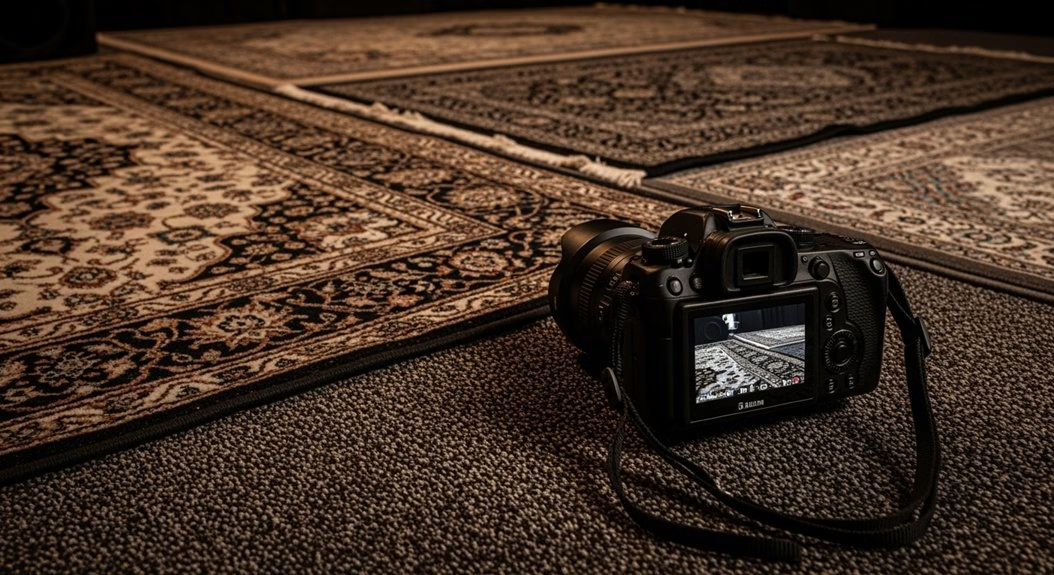
When you’re setting up a home cinema, thick rugs and carpets can make a world of difference in soundproofing. They absorb sound and reduce noise transmission, considerably boosting your space’s acoustic quality.
Opt for carpets with high knots per square inch (KPSI) and layer them with dense felt pads for ideal absorption. Vintage handwoven rugs, like those from Turkish or Persian origins, not only enhance aesthetic appeal but also provide excellent soundproofing due to their material and thickness.
Strategically place these rugs in high-traffic and reflective areas to cut down on reverberation, improving sound clarity. For an even more immersive experience, consider layering area rugs over thicker wall-to-wall carpeting, minimizing echoes and elevating your audio enjoyment.
Install Acoustic Panels
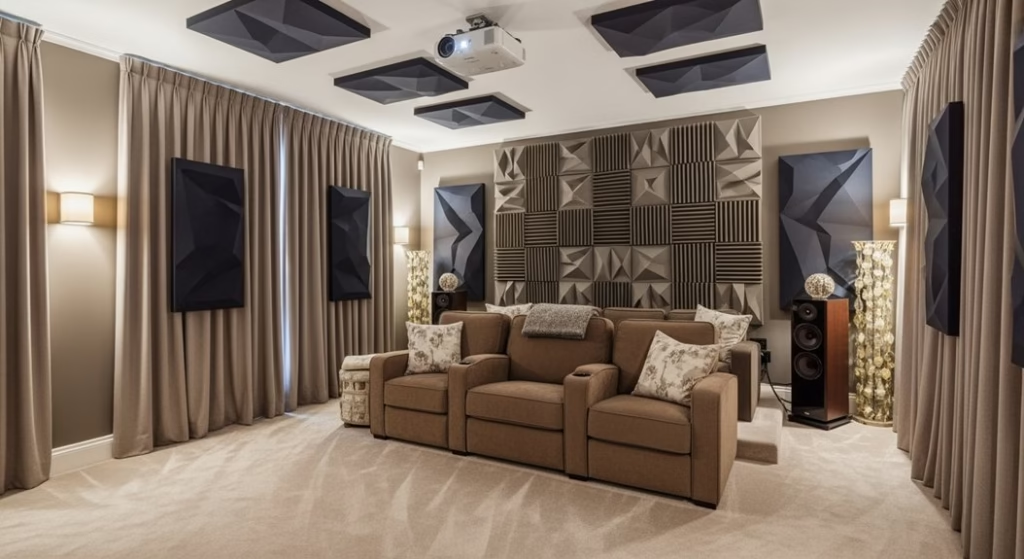
Installing acoustic panels in your home cinema can dramatically improve sound quality by reducing unwanted reflections. By absorbing high-frequency sound waves, these panels enhance dialogue clarity, making every word crisp and clear.
To maximize effectiveness, strategically place acoustic panels one-third from the front and back walls. A common choice is 2-inch thick sound-absorbing foam, striking a balance between performance and aesthetics.
Position acoustic panels one-third from front and back walls for optimal sound enhancement and aesthetic appeal.
The installation process is straightforward. You can mount the panels directly onto walls using adhesive or wall anchors, ensuring they’re securely fastened for ideal performance.
If you’re into DIY, create custom panels using sound-absorbing foam, fabric, and wood frames to match your cinema’s decor. This approach offers a personalized touch while effectively enhancing your viewing experience.
Seal Windows and Doors
Although often overlooked, sealing windows and doors is essential for optimizing soundproofing in your home cinema.
Start by using weatherstripping or acoustic sealant around the edges to prevent sound leakage. Even a tiny gap can let a lot of sound escape.
For doors, consider replacing hollow-core ones with soundproof doors, as solid-core doors provide better sound insulation due to their density and mass.
To tackle gaps and cracks around windows and doors, apply acoustical caulk to guarantee a tight seal.
If you’re dealing with existing windows, Indow Inserts offer a great solution to block sound.
Don’t forget to use draft stoppers at the bottom of doors. This simple addition helps prevent sound from sneaking underneath, enhancing your cinema experience.
Add Heavy Curtains
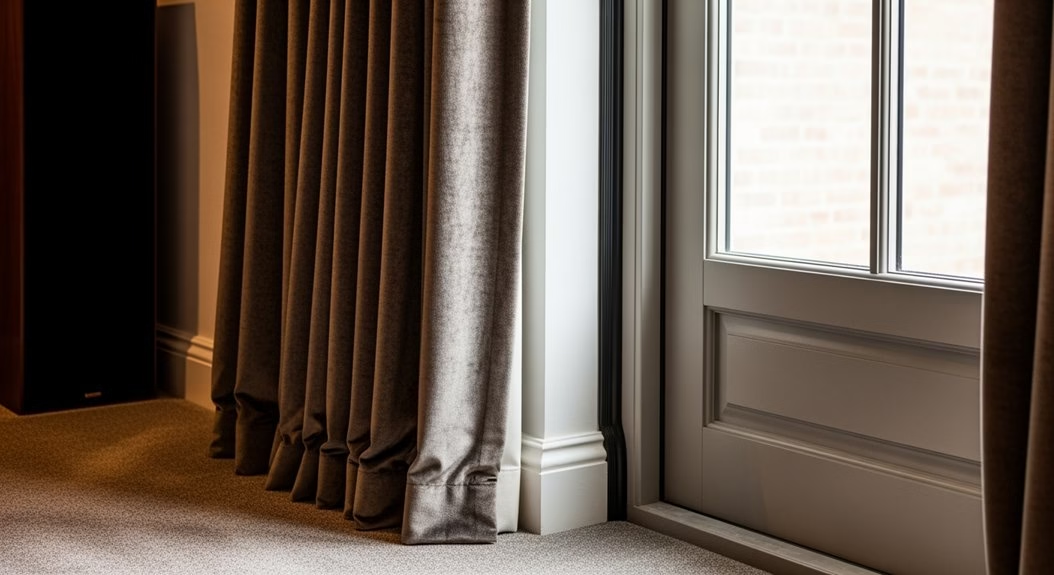
Sealing windows and doors helps keep sound in, but don’t underestimate the power of adding heavy curtains to your home cinema.
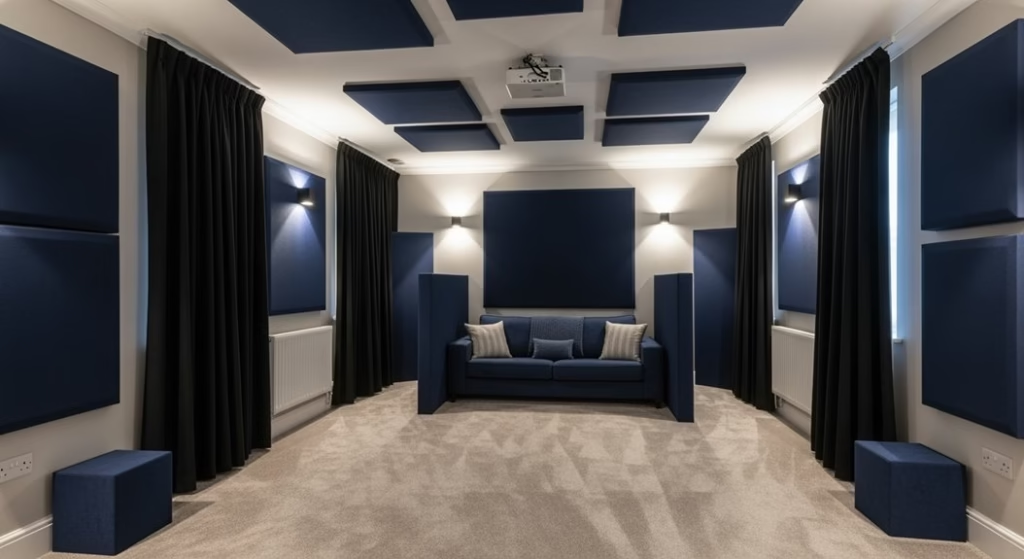
Heavy curtains, weighing between 12 oz to 18 oz per yard, are effective in blocking sound and reducing noise transmission. To achieve ideal sound dampening, make sure the curtains have 100% fullness. This means using double the fabric length of your window width; for a 50-inch window, you’ll need 100 inches of fabric.
Extend curtain rods 3 to 4 inches beyond the wall to create a sound-absorbing pocket. French-return style rods are perfect for preventing sound leakage.
Installing thick, heavy drapes is a cost-effective way to reduce outside noise and improve your home cinema’s acoustics considerably.
Incorporate Bass Traps

When creating a high-quality home cinema, you’ll want to enhance sound clarity by incorporating bass traps.
These essential elements help soundproof your home theater by absorbing low-frequency sound waves, reducing muddiness, and improving overall audio quality.
Placing bass traps in the corners of your room is most effective since low frequencies tend to accumulate there.
You can craft DIY bass traps using dense materials like rockwool or fiberglass insulation, wrapped in fabric to match your decor seamlessly.
Aim for a thickness of at least 4 inches to effectively dampen sound.
Testing and adjusting the placement of these traps can further optimize sound quality, allowing you to fine-tune the acoustics and create an immersive cinematic experience.
Build a Double Wall System
To take your home cinema soundproofing to the next level, consider building a double wall system. This involves constructing two separate 2×4 walls with a critical 1-inch air gap between them.
This design considerably reduces sound transmission, especially those pesky low-frequency sounds, making it ideal to soundproof a home theater. By adding mass through 2-4 layers of 5/8 type X drywall on each wall, you enhance the wall’s capacity to dampen sound vibrations.
Insulating each wall with materials like Owens Corning pink insulation or rockwool further improves the acoustic quality. Confirm the new walls are at least 1 inch from existing structures to prevent sound leakage.
This method enhances your room’s sound transmission class and elevates your cinematic experience.
Apply Mass-Loaded Vinyl

Although it might seem intimidating at first, applying mass-loaded vinyl (MLV) is a straightforward and effective way to enhance your home cinema’s soundproofing. MLV is perfect for blocking low-frequency sounds thanks to its high density. Here’s how to use it effectively:
- Cover all surfaces: Apply MLV on walls, ceilings, and floors where sound transmission is a concern. Make sure all seams are sealed to prevent sound leakage.
- Installation options: You can install MLV directly on existing surfaces with adhesive or layer it between drywall for better sound isolation.
- Combine techniques: Pair MLV with resilient channels or acoustic caulk for superior sound dampening in your home theater.
- Cost-effective choice: MLV costs $1-$3 per square foot, offering significant soundproofing without major renovations.
Utilize Soundproofing Foam
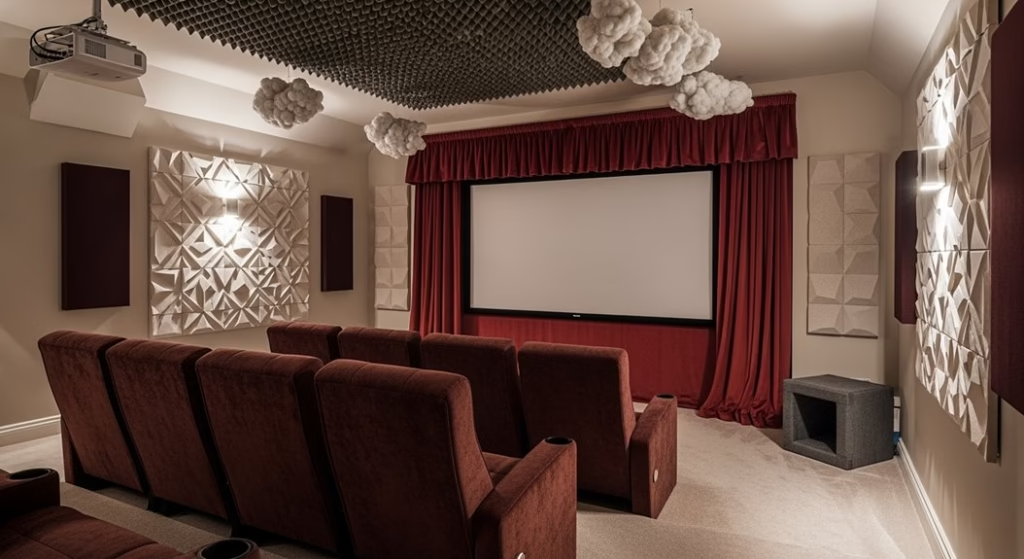
Soundproofing foam is a versatile solution for improving your home cinema‘s acoustics, especially in managing high-frequency sounds and minimizing distortion. By absorbing sound waves, acoustic foam panels effectively dampen the noise and reduce echo, creating a clearer audio experience.
To maximize their impact, choose panels with higher density and thickness, as they absorb sound over a wider frequency range. Strategically place these panels on walls and ceilings, particularly at reflection points, to enhance sound clarity.
Opt for dense, thick panels at reflection points to broaden sound absorption and enhance clarity.
For a DIY approach, consider crafting your own panels using 1.5-inch thick sound-absorbing foam attached to wooden frames or canvases. This adds both functionality and style to your space.
Regular cleaning and inspection of the foam guarantees it continues to perform at its best, keeping your home cinema’s sound environment exceptional.
Decouple Walls and Ceilings
When you want to elevate your home cinema’s sound quality, decoupling walls and ceilings is a highly effective strategy.
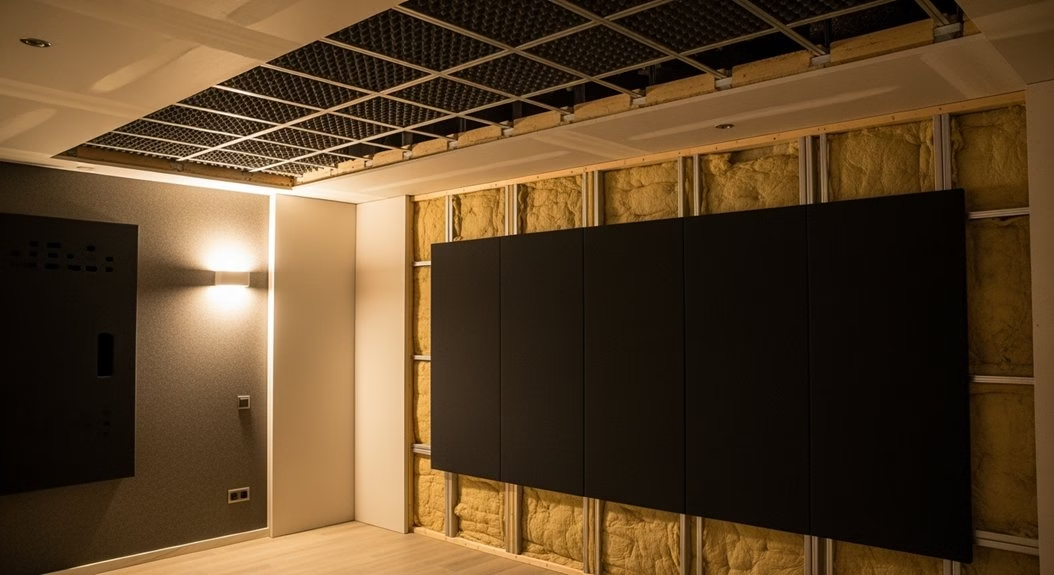
By decoupling walls, you construct a double wall system with a 1-inch air gap, greatly enhancing sound isolation. This prevents sound transmission between adjoining surfaces.
Here’s how you can implement this:
- Staggered Stud Wall: Alternate studs between two walls to minimize direct sound paths, absorbing low-frequency sounds efficiently.
- Structure-Borne Sound: Use resilient channels or sound isolation clips to attach drywall to studs, reducing structure-borne sound and achieving an STC rating above 60.
- Acoustic Clips for Ceilings: Suspend a new ceiling from existing joists with acoustic clips to improve isolation from overhead noise.
- Sound Isolation: Proper decoupling minimizes unwanted noise, enhancing your cinema experience.
Opt for Solid-Core Doors
Enhancing your home cinema’s sound quality involves more than just decoupling walls and ceilings; choosing the right door plays a vital role too.
Opt for solid-core doors, which are denser and heavier than their hollow-core counterparts, providing superior sound insulation by effectively blocking sound transmission between rooms. This is essential for a home theater where pristine audio is a must.
A solid-core door’s mass considerably reduces sound leakage, and when paired with acoustic seals on all four sides, you’ll further enhance your space’s soundproofing. Aim for a door thickness of at least 1.75 inches to optimize these benefits.
Upgrading to solid-core doors can improve your room’s Sound Transmission Class (STC) rating by 5-10 points, making it a wise investment.
Frequently Asked Questions
How to Make Home Theatre Sound Proof DIY?
To soundproof your home theater, start by installing wall insulation with DIY sound panels to absorb noise.
Use acoustic curtains over windows to dampen external sounds.
Don’t forget floor underlayment to reduce sound transmission through floors.
Consider adding ceiling tiles for extra sound absorption.
These elements create a thorough barrier against noise, ensuring your audio experience is immersive and clear.
Make sure to seal any gaps for maximum effect.
How Can I Soundproof My Home Cinema Room?
You won’t believe how easily you can transform your home cinema into a soundproof fortress!
First, install acoustic panels to absorb echoes that could wake the neighbors.
Next, drape luxurious soundproof curtains to block outside noise.
Don’t forget to lay floor underlayment for a silent foundation.
Insulate walls with dense material, and top it off with ceiling tiles to trap every decibel.
Your immersive movie experience will rival any professional theater!
What Is the Best Soundproofing Material for Home Theaters?
When you’re soundproofing your home theater, consider using acoustic panels to absorb echoes, and soundproof curtains to block noise through windows.
Floor underlay can reduce sound transmission from below, while wall insulation like rockwool or fiberglass dampens sound waves.
Ceiling tiles can also play a vital role by absorbing noise from above.
Combining these elements will effectively enhance the acoustics and soundproofing of your space.
What Material Absorbs Sound the Most?
When you’re looking to absorb sound effectively, consider using acoustic panels, which tackle mid to high-frequency sounds.
Soundproof curtains and foam tiles also help by absorbing sound waves and reducing echo.
Carpet padding is great for minimizing noise from footsteps, while wall insulation, like fiberglass, handles high and mid-range frequencies.
Each material offers unique benefits, so mix and match to suit your space’s needs.
Don’t underestimate their impact!
Conclusion
You’ve got the perfect recipe to transform your home cinema into a fortress of sound. By adding thick rugs, sealing windows, and hanging heavy curtains, you’ll create a sanctuary so quiet you could hear a pin drop in the next galaxy. With acoustic panels, bass traps, and solid-core doors, your movie nights will become legendary. So, roll up your sleeves and plunge into these DIY soundproofing ideas—your home cinema will thank you a million times over!