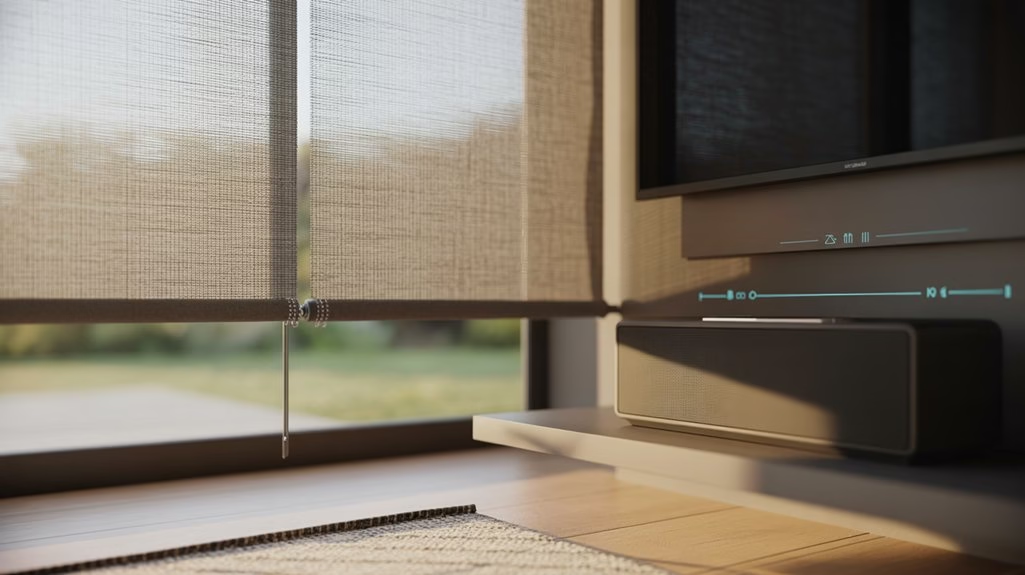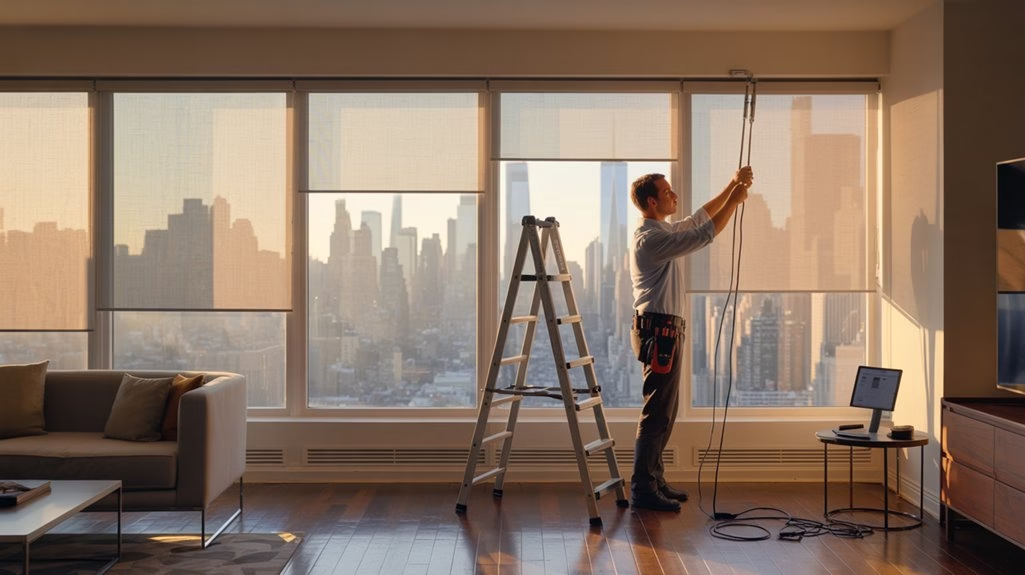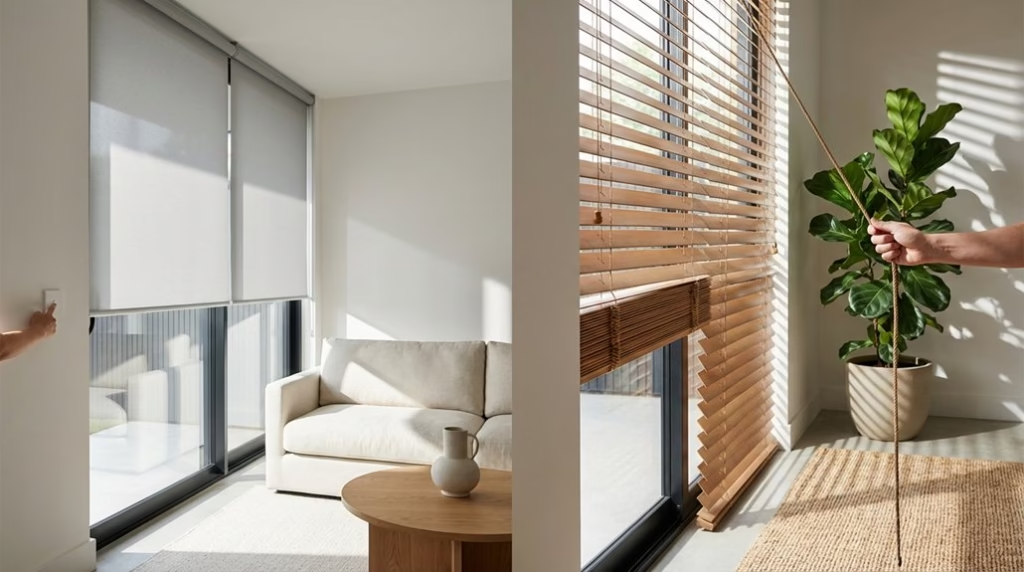
Motorized blinds do cost more upfront than manual options, but for many Tri-State homeowners and businesses, the upgrade quickly pays off—in comfort, efficiency, and control. When integrated with systems like Lutron, Somfy, or Hunter Douglas PowerView, automated shades can lower your heating and cooling costs by adjusting based on time of day, sun exposure, or occupancy. They also deliver precise privacy control in dense urban settings like Jersey City, Hoboken, and NYC, where street-level windows and close neighbors make manual blinds feel inadequate or inconvenient. For clients who value accessibility, smart home integration, and the ability to manage every window covering from a phone, keypad, or voice command, motorized shades are often the smarter long-term investment than basic manual blinds—especially when professionally designed and installed as part of a complete privacy and comfort strategy.
Quieter. Smarter. Perfectly Controlled.
Total Home Interiors specializes in custom soundproofing, motorized shading, and integrated automation for residential and commercial spaces. Let us show you what is possible.
Key Takeaways
- Motorized blinds and shades deliver everyday convenience, precise light control, and measurable energy savings that typically justify their higher upfront investment—especially in urban apartments and high-rise condos across NJ, NYC, Hoboken, and Jersey City.
- When professionally programmed, automated shades can significantly reduce heating and cooling costs by managing solar gain and insulation throughout the day—closing during peak sun and cold, opening when natural light can replace artificial lighting.
- Unlike manual blinds that often suffer from tangled cords, broken wands, and worn hardware, motorized systems from brands like Lutron, Somfy, and Hunter Douglas PowerView use robust, low-maintenance components designed for frequent daily use.
- Integrating motorized window treatments with a smart home system allows you to automate privacy and comfort—lowering shades at sunset, reducing glare on screens, protecting furnishings from UV, and coordinating with lighting and HVAC for true whole-home efficiency.
- For many Tri-State homeowners and condo dwellers, the choice between manual and motorized blinds comes down to short-term budget vs. long-term usability, comfort, and value. In spaces where privacy, noise, and light are constant challenges, professionally designed and installed motorized treatments deliver a level of control and quality that DIY manual options simply can’t match.
Quieter. Smarter. Perfectly Controlled.
Total Home Interiors specializes in custom soundproofing, motorized shading, and integrated automation for residential and commercial spaces. Let us show you what is possible.
Comparing the Upfront Costs of Motorized and Manual Blinds
When you’re comparing the upfront costs of motorized vs. manual blinds, you’re really weighing a lower initial price against long-term convenience, privacy, and control.
For a typical project, manual blinds usually offer the lowest starting cost at about $177.67 per window. Motorized solutions, depending on the brand, fabric, and control options, can start around $412.50 per window and go up for premium or fully integrated systems. On top of that, professional installation for motorized shades typically runs $75–$200 per window, especially when integrated cleanly with smart home controls and existing electrical or low-voltage wiring.
For a typical project, manual blinds cost about $177.67 per window, while motorized solutions start around $412.50 per window plus $75–$200 for installation.
To put that in context for a 14‑window home in the NJ/NYC area:
- Manual blinds: Approximately $1,300 total
- Motorized blinds: Roughly $2,800–$7,000+ depending on:
- Brand (Lutron, Somfy, Hunter Douglas PowerView)
- Fabric and openness
- Whether you’re tying into existing smart home platforms or building new control scenes
While motorized window treatments carry a higher upfront cost, many of our clients justify the investment because of:
- One-touch or automated control for privacy and glare
- Better energy efficiency through scheduled shading
- Seamless integration with lighting, HVAC, and voice control
- A cleaner, cordless aesthetic that’s safer for children and pets
Over time, the ability of motorized shades to automatically manage solar heat gain, insulation, and natural light levels can translate into meaningful heating, cooling, and lighting energy savings.
For homeowners and commercial clients in West Orange, Jersey City, Hoboken, and NYC, the decision usually comes down to whether you want “basic coverage” or a fully integrated privacy and comfort solution. Manual blinds can work when budget is the only priority; motorized shades make more sense when you care about convenience, long-term usability, and the overall feel and function of the space.
At Total Home Interiors, we help you run the real numbers for your specific home or office—window count, wiring access, control preferences—and design a solution that balances budget with performance, instead of pushing a one-size-fits-all package.
Evaluating the Energy-Saving Potential of Automated Shading Systems
Motorized shading does more than add convenience—it becomes a quiet, always-on energy manager for your space. For homeowners and businesses across West Orange, Jersey City, Hoboken, and NYC, properly programmed automated shades can significantly reduce solar heat gain in the summer and help retain warmth in the winter, taking pressure off your HVAC system.
Unlike manual blinds that depend on someone remembering to adjust them throughout the day, professionally installed automated systems respond on schedule or to real-time conditions. With the right fabrics, side channels, and integration, Total Home Interiors can help optimize natural light while cutting heating and cooling costs by as much as 10%—without sacrificing comfort or privacy. Just as with our centrally managed whole home AV systems, these shades can be intuitively controlled from a smartphone or tablet for truly effortless comfort.
When paired with smart lighting and thermostat control, your shades become part of a larger, coordinated energy strategy. Shades lower automatically during peak sun hours, lights dim based on daylight levels, and HVAC can run more efficiently—all managed from a single app or voice control. And despite their performance, motorized shades are extremely efficient themselves: over five years, a typical motorized shade system uses only around 50 kWh of electricity per window, making it a more energy-conscious and consistent solution than manual blinds.
Quieter. Smarter. Perfectly Controlled.
Total Home Interiors specializes in custom soundproofing, motorized shading, and integrated automation for residential and commercial spaces. Let’s show you what’s possible.
Assessing the Maintenance and Durability of Motorized vs. Manual Blinds
When it comes to maintenance and long-term durability, professionally installed motorized shades and blinds often outperform off‑the‑shelf manual options—especially in busy urban homes and commercial spaces.
Manual blinds may seem “low maintenance” at first glance, but cords, wands, and cheap hardware are the first things to fail, tangle, or become a safety concern. Slats bend, mechanisms wear, and replacements are rarely seamless, especially in high-use rooms or large window walls common in Jersey City, Hoboken, and NYC apartments.
Manual blinds may seem low-maintenance, but their components are prone to failure, tangling, and safety issues, especially in high-use urban areas.
High-quality motorized window treatments from brands like Lutron, Somfy, and Hunter Douglas PowerView are engineered for daily use, precise control, and long service life. The motors and controls are designed to operate smoothly for years when properly specified, installed, and programmed. While they do rely on electrical components that may eventually require service or replacement, those events are infrequent—and when you work with a firm like Total Home Interiors, they’re handled professionally, without the trial-and-error of DIY troubleshooting.
From a long-term perspective, motorized shading can be both cost-effective and more sustainable when integrated correctly. Automated schedules and smart-home integration (lighting, occupancy, and temperature sensors) can significantly reduce HVAC load and solar heat gain, improving comfort and lowering energy use. By tying your shades into preset scenes and single-button commands, you also save time you’d otherwise spend walking room to room adjusting lights, audio, and electronics by hand. That ongoing efficiency often offsets the modest power draw of the motors themselves. And because premium systems are built to last, you avoid the cycle of frequently replacing low-cost manual blinds that end up as landfill waste.
In short: if you’re looking for reliability, day-to-day ease, and better energy performance—not just the lowest upfront cost—professionally designed and installed motorized window treatments are the smarter long-term solution.
Quieter. Smarter. Perfectly Controlled.
Total Home Interiors specializes in custom soundproofing, motorized shading, and integrated automation for residential and commercial spaces. Let’s show you what’s possible.
Integrating Motorized Blinds With Smart Home Automation and Accessibility
Integrating motorized blinds and shades with a professionally designed smart home system transforms both comfort and control—especially in busy urban environments like Jersey City, Hoboken, and NYC. At Total Home Interiors in West Orange, NJ, we pair premium automated window treatments from Lutron, Somfy, and Hunter Douglas PowerView with robust home automation platforms so your privacy, natural light, and energy use are managed automatically, not manually. For open-concept homes and offices, integrating motorized shades with sound masking solutions can further reduce distractions and enhance acoustic comfort.
Instead of relying on off-the-shelf DIY motors and unreliable apps, our team engineers a complete solution around how you actually live and work. Voice control (Alexa, Google, Control4), wall keypads, and smartphone apps let you open, close, or tilt your shades from anywhere—no struggling with cords or reaching across furniture, which is especially important for clients with mobility or accessibility needs.
We can schedule your shades to respond to time of day, occupancy, or sunlight levels—lowering during peak afternoon heat to reduce cooling loads, rising in the morning to let in natural light, and closing at night for privacy and better sleep. When integrated with your lighting control, whole-home audio/video, and network infrastructure, your window treatments become part of a larger, intelligent system: one button or voice command can dim lights, lower shades, and start a movie in your home theater, or switch your home office into a glare-free, distraction-controlled workspace.
For commercial clients, automated blinds and shades help manage glare on screens, maintain consistent light levels, and enhance privacy in conference rooms and medical spaces—while still looking architecturally clean and professional. Every project is measured, specified, and installed by our specialists, ensuring quiet operation, perfect alignment, and seamless integration with existing systems.
Quieter. Smarter. Perfectly Controlled.
Total Home Interiors specializes in custom soundproofing, motorized shading, and integrated automation for residential and commercial spaces. Let’s show you what’s possible.
Choosing the Right Blind Option to Complement Your Home’s Style and Design
When you’re choosing between manual and motorized blinds for your home or apartment, the key is how they support the overall design, comfort, and privacy of your space—not just how they look on day one.
At Total Home Interiors, we focus on automated window treatments that don’t just complement your decor, but also integrate with your lifestyle and smart home systems.
Here’s how to think about the options from a design and experience standpoint:
– Overall Aesthetic & Clean Lines
Manual blinds can work in more traditional spaces, but visible cords and wands can interrupt clean sightlines—especially on large windows or floor-to-ceiling glass.
Motorized shades and blinds (from brands like Lutron, Somfy, and Hunter Douglas PowerView) offer a sleek, cordless appearance that feels intentional in modern condos, open-plan living rooms, and minimalist interiors.
– Design Integration with Architecture & Furniture
In design-forward homes and luxury apartments, motorized treatments can be recessed into ceiling pockets, aligned perfectly with mullions, and programmed to move as a group. This creates a unified, architectural look you simply can’t achieve with manual controls.
For secondary spaces—guest rooms, less frequently used areas—manual shades can still be an appropriate, budget-conscious solution while maintaining a cohesive style.
– Daily Living vs. Occasional Use
If you have tall, wide, or hard-to-reach windows (lofts, townhomes, high-rise apartments), manual operation becomes inconvenient and visually clumsy over time.
Motorized solutions let you adjust all shades at once, set scenes for “Morning,” “Movie Night,” or “Work-from-Home,” and ensure privacy the moment city lights come on—without touching a cord.
– Smart Home & Lighting Coordination
Motorized window treatments can be synchronized with your lighting control, thermostats, and even your home theater. Shades can lower automatically at sunset for privacy, reduce glare on your screens, and help control heat gain in south-facing rooms.
Manual blinds remain purely decorative and functional at the window; motorized treatments become part of a larger, intentional lighting and comfort strategy.
– Long-Term Value & Sophistication
Manual blinds are a lower upfront investment, but they don’t add the same level of perceived value or sophistication—especially in high-end urban properties.
Professionally designed and installed motorized shading elevates the overall feel of your home, supports energy efficiency, and is a key feature buyers and tenants now expect in premium spaces across NYC, Hoboken, Jersey City, and the surrounding NJ suburbs.
For most of our clients—especially those dealing with privacy needs, floor-to-ceiling glass, or serious glare in city apartments—motorized window treatments provide a better long-term fit both aesthetically and functionally. When we design your system, we look at your interior style, natural light patterns, and smart home ecosystem to recommend the right fabrics, hardware, and control options. For even greater comfort in busy urban environments, we can also integrate eco-friendly acoustic panels that enhance sound control while complementing your blinds and overall interior design.
Quieter. Smarter. Perfectly Controlled.
Total Home Interiors specializes in custom soundproofing, motorized shading, and integrated automation for residential and commercial spaces. Let’s show you what’s possible.
Frequently Asked Questions
Do Motorized Blinds Increase Home Value?
Yes—motorized blinds and shades can absolutely boost your home’s appeal and perceived value, especially in competitive markets like Hoboken, Jersey City, and NYC. Today’s buyers are looking for move-in-ready convenience, energy efficiency, and privacy, and automated window treatments check all three boxes.
When professionally designed and installed, motorized shades:
- Make the home feel more modern, luxurious, and “finished”
- Improve privacy and security with scheduled or one-touch control
- Help manage heat gain and glare, reducing energy use and protecting furnishings
- Integrate with smart home systems (lighting, voice control, scenes), which is a major selling point for tech-minded buyers
While exact dollar increases vary by property and market, homes with integrated motorized shading often show better overall presentation, stronger buyer interest, and smoother negotiations—especially in higher-end condos and townhomes where details matter. Working with a specialist like Total Home Interiors ensures the system is properly specified, neatly wired, and integrated with your existing or future smart home ecosystem, which is far more attractive to buyers than piecemeal DIY solutions.
Quieter. Smarter. Perfectly Controlled.
Total Home Interiors specializes in custom soundproofing, motorized shading, and integrated automation for residential and commercial spaces. Let’s show you what’s possible.
Conclusion
Motorized blinds are less about “gadgets” and more about everyday comfort, privacy, and control—especially in busy urban environments like Jersey City, Hoboken, and NYC. While they do cost more upfront than traditional manual blinds, the benefits add up quickly: precise light control at the touch of a button, scheduled automation for better energy efficiency, and seamless integration with smart home systems like Lutron, Somfy, and Hunter Douglas PowerView.
Instead of wrestling with cords or leaving shades half‑open for convenience, motorized window treatments let you quietly and effortlessly manage glare, heat, and privacy throughout the day—whether you’re home or away. For homeowners and designers looking to elevate both function and aesthetics, professionally installed motorized blinds are a strategic upgrade, not just a luxury.
Quieter. Smarter. Perfectly Controlled.
Total Home Interiors specializes in custom soundproofing, motorized shading, and integrated automation for residential and commercial spaces. Let us show you what is possible.