Motorized shades boost privacy, cut glare, and can reduce outside noise by up to 50% with blackout fabrics. Choose opacity by room: sheer for kitchens, light-filtering for offices, blackout for bedrooms and media rooms. Roller and cellular shades balance style, insulation, and sound absorption. Power options include battery, plug-in, hardwired, and solar. Add schedules, sensors, and voice control for security and energy savings up to 30%. Learn how to measure, mount, and pick systems that fit your home best.
Key Takeaways
- Motorized shades enhance privacy and security with scheduled closure at dusk and occupancy-simulating automation.
- Choose fabrics by opacity: sheer for daylight, light-filtering for glare control, blackout for full darkness and maximum noise reduction.
- Cellular, thick roller, and layered drapery improve sound absorption; blackout fabrics can cut outside noise by up to 50%.
- Power options include battery, plug-in, hardwired, and solar; control via apps, voice, schedules, and light/temperature sensors.
- Costs start around $170; smart scheduling can save up to 30% on heating and cooling while boosting daily comfort.
How Motorized Shades Enhance Privacy and Reduce Noise
Even before you touch a switch, motorized shades can secure your space and quiet it down.
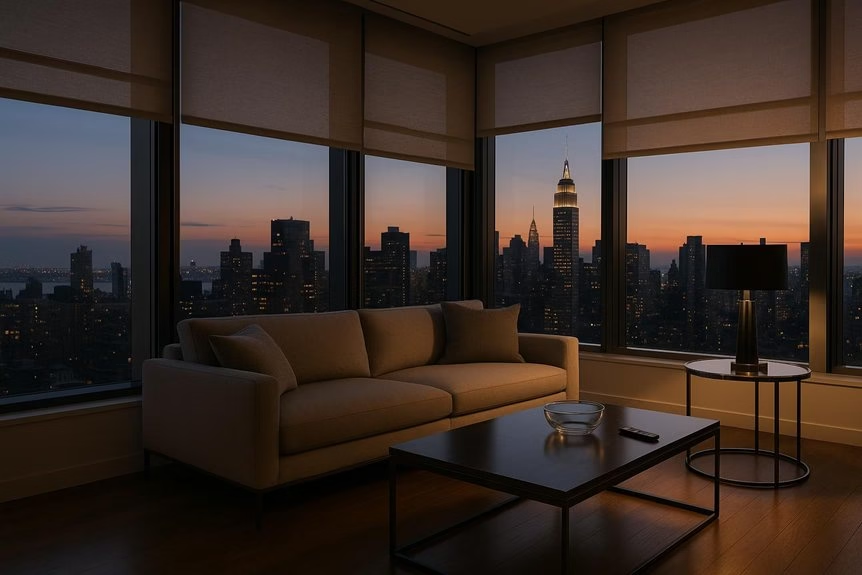
Program automated blinds to close at dusk so privacy stays consistent when lights come on, boosting home security without lifting a finger. With smart window coverings, you can trigger remote control blinds from anywhere, instantly blocking views and cutting street noise.
Choose blackout shades to combine privacy with serious noise control; studies show effective treatments can reduce outside sound by up to 50%, making rooms calmer for sleep and focus.
Layer sheer and blackout motorized shades for precise light control while keeping neighbors’ eyes out. Scheduled scenes improve energy efficiency by reducing heat gain and glare. In suburban New Jersey, pairing motorized shades with laminated glass or acoustic inserts in windows can further cut traffic noise and improve comfort.
Ultimately, motorized shades deliver quiet, comfort, and dependable privacy every day.
Fabric Opacity and Weave Choices for Sound and Light Control
Beyond smart scheduling and blackout scenes, your fabric choice drives how much light and noise your room handles.
Start with fabric opacity: sheer, light-filtering fabrics, and blackout shades define light control and privacy levels. Sheers invite daylight with minimal privacy. Light-filtering fabrics soften glare and keep interiors bright while obscuring views. Blackout shades block light completely for bedrooms or media rooms, boosting comfort and perceived quiet.
Sheer, light-filtering, and blackout fabrics set daylight, privacy, and comfort—tailor brightness to every room.
Weave matters for sound absorption. Thicker, tightly woven textiles reduce noise transmission better than thin, open weaves. If you’re targeting acoustic performance, look for engineered fabrics that damp outside sound while maintaining aesthetic flexibility.
Pairing higher opacity with denser weaves enhances both darkness and hush, creating a calmer indoor environment without sacrificing style or daily usability.
For even greater noise control around windows, consider pairing shades with acrylic window inserts, which flex to absorb sound energy and complement other soundproofing techniques.
Comparing Shade Types: Roller, Cellular, Roman, and Drapery
Choice defines performance. You’ll compare roller shades, cellular shades, roman shades, and drapery by how they handle light control, privacy, insulation, and sound absorption—and how each feels in your space.
All can be motorized for convenience and precise daily scheduling.
- Roller shades: Clean and minimalist, they range from sheer to blackout for targeted light control and privacy. They’re versatile and space-saving, ideal when you want a crisp profile without bulk.
- Cellular shades: The honeycomb design boosts insulation and energy efficiency while adding meaningful sound absorption. They’re excellent for bedrooms, nurseries, and street-facing rooms.
- Roman shades and drapery: Roman shades deliver tailored softness with adjustable light control; drapery adds maximum light blockage and robust sound dampening.
Pair them for layered privacy, warmth, and elevated style.
For even greater comfort and efficiency, motorized shades can integrate with solar sensors and lighting control to automatically balance daylight, privacy, and energy use throughout the day.
Motors and Power Options: Battery, Plug-In, Hardwired, and Solar
After you pick a shade style, the power source determines how it works day to day.
Battery-powered systems fit windows without outlets and give you clean installs. Use rechargeable batteries to cut waste, but expect periodic battery changes if you choose disposables.
Plug-in options connect to a nearby outlet, simplifying setup and eliminating battery swaps, though you’ll need cable management.
Hardwired systems tie into your electrical circuit, deliver steady torque, and often prove the most energy-efficient solution over time. They typically require professional help and careful installation requirements but minimal upkeep.
Solar-powered shades add a small panel that harvests daylight—an eco-friendly option when your window gets enough sun.
Confirm placement, wiring paths, and maintenance considerations for each approach before you order motors and fabrics.
Smart Home Platforms and Connectivity: Matter, Thread, Wi‑Fi, and Hubs
While your motor picks the muscle, connectivity decides how your shades think and talk to the rest of your home. You’ll tie motorized shades into a smart home ecosystem by choosing platforms that keep everything in sync.
Matter unifies brands so devices cooperate across smart home systems. Thread adds a low‑power mesh that boosts reliability and range for window treatments. Wi‑Fi gives straightforward setup and enables remote control and voice commands via popular assistants. Hubs like the Lutron Caséta Smart Hub coordinate scenes and bridge protocols.
1) Matter: future‑proof interoperability, simple pairing, broad device compatibility.
2) Thread: resilient mesh, low energy, strong coverage in larger homes.
3) Wi‑Fi and hubs: quick installs, network reach, centralized management for shades alongside lights, sensors, and switches—keeping your connectivity simple and dependable.
Control Methods: Apps, Voice, Schedules, and Sensors
Because control should be effortless, motorized shades let you manage privacy and light with apps, voice, schedules, and sensors.
Your control options start with a mobile app, so you can raise, lower, or tilt from anywhere at home, tweak groups, and save favorites.
Add voice control through smart home systems like Alexa or Google Home for true hands-free operation—perfect when your hands are full.
Set preset schedules to follow sunrise, bedtime, or work hours, improving privacy and energy efficiency without thinking.
With light and temperature sensors, motorized shades respond to glare and heat automatically, protecting interiors and stabilizing comfort.
For advanced behavior, build automation routines with IFTTT: close shades when you leave, open at arrival, or simulate occupancy while you’re away.
Measuring, Mounting, and Installation Tips for a Perfect Fit
Start with accurate measurements to get motorized shades that fit and operate flawlessly. For a perfect fit, measure width and height in three spots and use the tightest width. Note obstructions—handles, hinges, sensors—that could interfere with custom motorized tracks or brackets.
1) Measuring: Choose an inside mount for a clean, recessed look; an outside mount adds light blockage and privacy. Mark clearances for fascia and side channels if used.
2) Mounting: Use a level so brackets aren’t tilted; even a slight skew affects operation. Pre-drill pilot holes, then secure with appropriate screws and anchors for your substrate.
3) Installation: Gather tools—tape, pencil, level, power drill, bits, fasteners. Test-fit the shade before final snaps.
For hardwired installation, hire a qualified electrician to meet safety standards and warranty requirements.
Room-by-Room Recommendations for Privacy and Acoustics
Even as your style shifts from room to room, you can tune motorized shades to match each space’s privacy and acoustic needs.
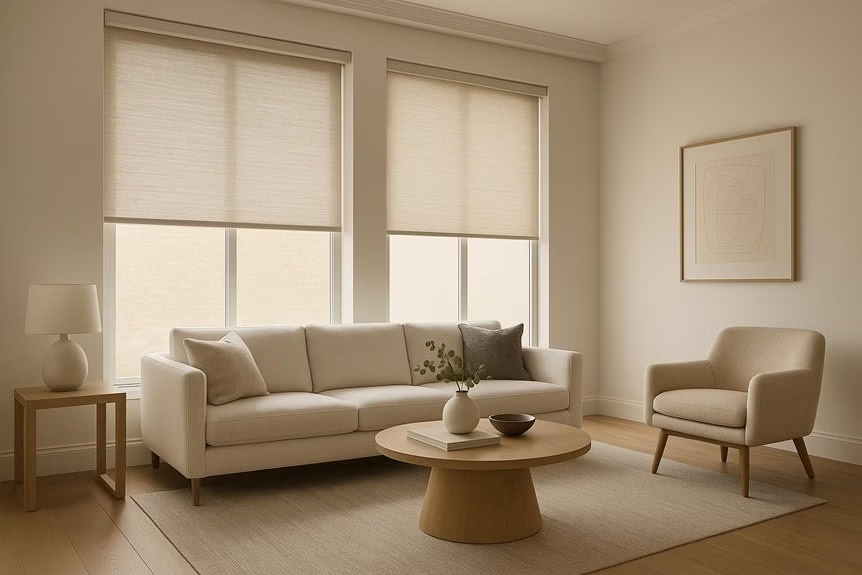
In living rooms, motorized shades balance privacy with adjustable light control, letting you host or relax without glare.
For bedrooms, choose blackout motorized shades to block streetlight, dampen noise, and support consistent sleep.
In a home office, light-filtering fabrics cut screen glare while preserving privacy and steady acoustics for calls.
Kitchens and dining areas benefit from sheer motorized shades that soften daylight, reduce outside views, and keep the space inviting.
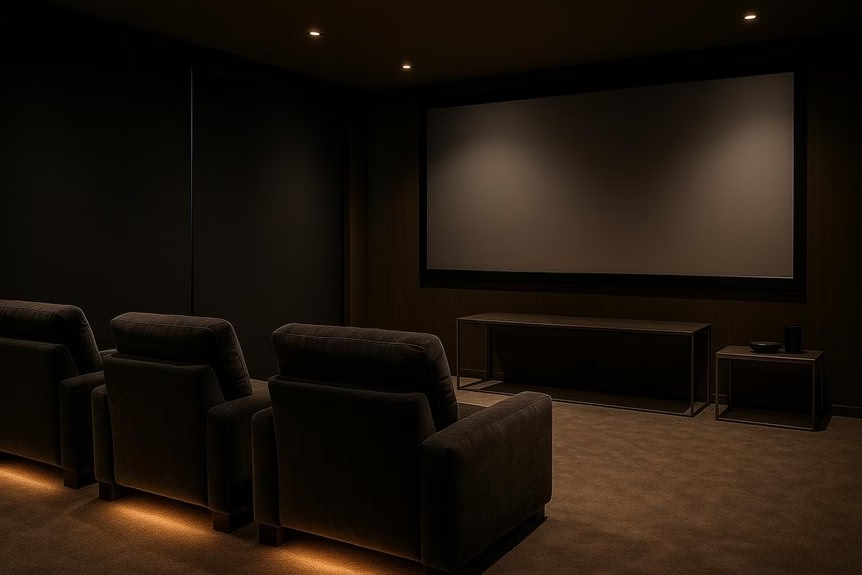
For media rooms or home theaters, pair heavy blackout motorized shades with side channels to achieve near-total darkness and improved sound isolation, sharpening contrast and dialog clarity for an immersive experience.
Consider pairing shades with acoustic panels or thick curtains to reduce echoes and low-frequency disturbances, especially in rooms adjacent to noisy spaces.
Cost, Energy Savings, and Long-Term Maintenance
While the upfront price varies widely, motorized shades deliver measurable returns through lower energy bills and low-touch upkeep. Expect a starting cost near $170 for basic smart window treatments, with premium options reaching $700+. You’ll offset that with energy savings, since motorized shades insulate: they cut winter heat loss and block summer gain. Many homeowners report up to 30% lower heating and cooling bills when automated window treatments follow sunlight.
Motorized shades start near $170 and can trim energy bills by up to 30%
1) Maintenance: Plan simple fabric cleaning and quick motor checks; battery-operated models may need replacements every few months, while hardwired units minimize long-term maintenance.
2) Efficiency: Scheduling boosts energy efficiency by aligning shade position with peak sun and cold.
3) Value: Smart, quiet operation supports daily comfort and increases home value without complex upkeep.
Top Product Picks and How to Choose the Right System
After weighing costs and maintenance, it’s time to pick a system that matches your privacy and sound goals.
For affordability and simplicity, choose SmartWings Motorized Light Filtering Roller Shades; they offer reliable light filtering and basic noise reduction. For premium performance, Lutron Serena Smart Roller Shades deliver stronger noise reduction and refined motion.
Match features to needs: use light filtering for daytime privacy, and upgrade to blackout capabilities for bedrooms or media rooms.
Verify smart home system compatibility—Lutron requires a Caséta Smart Hub, while SmartWings pairs via a Matter-compatible hub.
Prioritize customizable settings for schedules and scenes. Select power options that fit your space: battery, hardwired, or solar.
Finally, take precise measurements for custom-fit installation to maximize privacy, noise reduction, and performance.
You can also create a one-touch “Leaving Home” scene that lowers shades and adjusts lights via preset scenes to save time and streamline daily routines.
Frequently Asked Questions
What Are the Disadvantages of Motorized Blinds?
They can be costly and show pricing variations, plus you’ll face installation challenges for hardwired models.
Battery power source options add maintenance requirements, while remote control issues and compatibility concerns with hubs or apps can frustrate.
You might notice minor noise levels, aesthetic limitations with bulky heads, and mixed durability factors.
There’s a learning curve that affects user accessibility.
Battery swaps or wiring add upkeep, and connectivity hiccups can interrupt schedules and automations.
What Is the Best Brand of Motorized Window Shades?
Lutron’s the gold standard, like rockets for windows, thanks to reliable Lutron technology and stellar smart home integration. If you crave high end choices, it’s hard to beat.
On a budget, IKEA options and other budget brands impress with ease of installation and solid remote control. Consider fabric selection, energy efficiency, and user reviews.
Hunter Douglas rivals Lutron for luxury; SmartWings and Bali balance cost and features. Pick what fits your ecosystem and style.
Are Motorized Shades Worth the Cost?
Yes, motorized shades are worth the cost. You’ll see clear cost benefits from energy efficiency and improved privacy features, plus noticeable noise reduction.
Enjoy a smooth user experience with remote control, smart home integration, and flexible design options. The installation process is straightforward for pros, and maintenance requirements are minimal.
You’ll automate schedules, manage glare and temperature, and boost resale value. For mobility needs or convenience lovers, they’re a smart, long-term upgrade.
How Much Does It Cost to Have Motorized Blinds Installed?
Expect $200–$1,500 per window, plus $50–$200 for professional installation—think building a smart curtain in a theater.
Factor installation costs into budget planning, especially with custom designs, motorized blind features, and smart home integration.
DIY installation can trim labor, but maintenance requirements (batteries, checks) add ongoing costs. Energy efficiency can offset expenses over time.
Compare warranty options and direct-to-consumer pricing. Get itemized quotes to balance affordability, performance, and long-term value.
Conclusion
You’re ready to turn every room into a quieter, more private retreat. Worried motorized shades are complicated or pricey? You’ll find battery and solar options simple to install, and smart platforms make control effortless—no rewiring or tech degree needed. Start with the rooms that matter most, match fabric opacity to your privacy and sound goals, and pick a motor that fits your budget. You’ll gain comfort, energy savings, and dependable performance—without sacrificing style or convenience.