Smart Lighting Design: Creating Ambiance and Function in Every Room
Transform every room’s mood and utility with smart lighting that layers ambient, task, and accent LEDs. You’ll tailor brightness and color temperature by room and time, automate scenes by schedule or occupancy, and control everything by app or voice. Use Wi‑Fi, Zigbee, Z‑Wave, or Matter with a hub for reliable routines. Target about 20 lumens per square foot for ambient and 50+ for tasks. Expect energy savings and rapid ROI. You’re about to see how it all comes together.
Key Takeaways
- Combine ambient, task, and accent layers; target ~20 lumens/sq ft ambient, 50+ for tasks, and accent lighting three times brighter for depth.
- Use smart LEDs with Wi‑Fi, Zigbee, Z‑Wave, or Matter hubs for schedules, scenes, voice control, and remote access.
- Program scenes that adjust brightness and color temperature by time, activity, or occupancy for comfort and efficiency.
- Add motion and occupancy sensors to cut 30–50% energy use; automate dimming and shutoff to reduce bills.
- Design room-specific profiles: glare-free task light in kitchens/baths, warm ambient in living spaces, and accents to highlight art and finishes.
Understanding Smart Lighting Technology and Core Components
Even before you pick a fixture, it helps to know what makes smart lighting “smart”: a network of LED bulbs, sensors, and a control hub that talk wirelessly over protocols like Wi‑Fi, Zigbee, Z‑Wave, and Matter.
You’re working with smart lighting systems built from interconnected devices that rely on wireless communication for reliability and compatibility. LED bulbs deliver energy efficiency, using up to 80% less power than incandescents and lasting far longer.
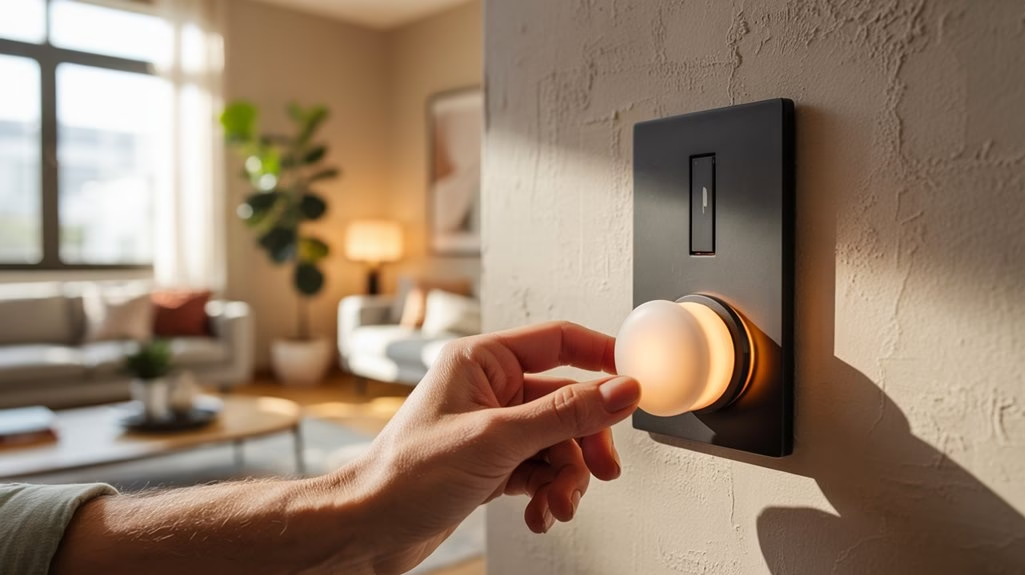
Adjust color temperature to tune ambient lighting from warm to cool, and set scenes that feel right at any hour. With centralized control hubs, you orchestrate automated routines, remote access, and voice control.
Tune warmth to cool, set scenes, and orchestrate routines, remote access, and voice control with a central hub.
Motion sensors trigger lights only when needed, saving energy and adding convenience. Advanced connectivity, including Wi‑Fi 6 and 5G, boosts responsiveness and stability.
Together, these components create a flexible platform that’s simple to manage, scalable, and ready for evolving features without rewiring.
Customized Brilliance for Every Room
While each room serves a different purpose, smart lighting lets you dial in the exact mood and function you need—bright and crisp for work, warm and soft for rest, and everything in between.
With Smart Lighting Design, you create personalized ambiance that adapts to your routines and your home style. Use customized light profiles to shift color temperature and brightness throughout the day, mirroring sunlight for a dynamic environment that supports energy and relaxation.
Turn kitchens and bathrooms into a functional space with targeted task lighting like under-cabinet strips and vanity bars that boost visibility without glare.
Pair ambient lighting with selective accent lighting to highlight finishes and art, reinforcing cohesion room to room. Keep controls simple—scenes, schedules, and sensors guarantee every room feels tailored without effort.
Layered Lighting Strategies for Balanced Spaces
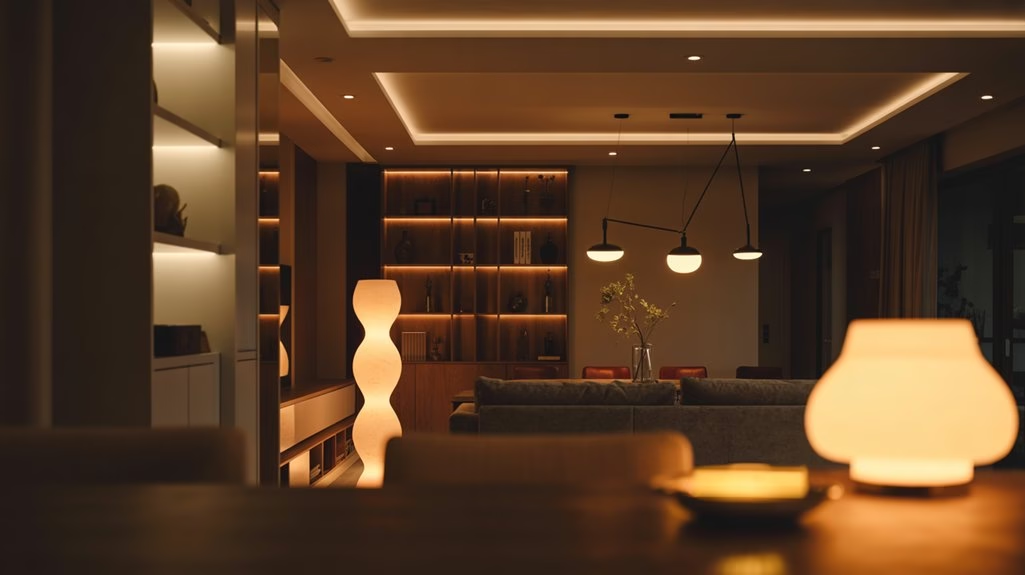
A layered lighting plan blends ambient, task, and accent light to balance comfort, clarity, and character in every room.
Use layered lighting to build a balanced environment that supports aesthetics and functionality. Start with ambient lighting for overall illumination—target about 20 lumens per square foot to set a comfortable base.
Layered lighting builds balance: begin with ambient illumination, targeting roughly 20 lumens per square foot.
Add task lighting where you read, cook, or work; aim for at least 50 lumens per square foot to improve visibility and reduce eye strain.
Finish with accent lighting that’s at least three times brighter than ambient to highlight art, textures, or architectural lines, creating depth and visual interest.
Combine these lighting strategies within your smart lighting design so you can fine-tune brightness and focus, ensuring adaptable, high-performing spaces throughout your home.
Personalized Scene Setting and Automation
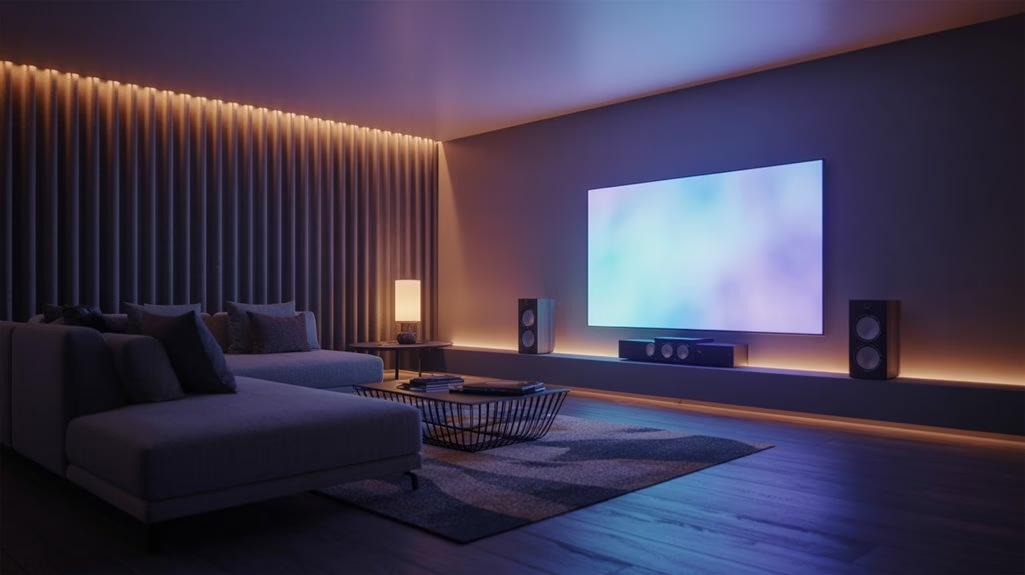
Build on your layered plan by programming scenes that match how you live—think “Wake Up,” “Focus,” “Dinner Party,” or “Movie Night.”
Smart systems let you set brightness, color temperature, and which fixtures activate with one tap or a voice command.
Use personalized scenes to align light with tasks and moods. With smart lighting systems, automate brightness adjustment and color temperature shifts across the day to enhance well-being.
Leverage automation features to trigger dynamic lighting by time, occupancy, or sunrise/sunset, all tuned to your user preferences.
Add voice-activated control for hands-free tweaks during cooking, workouts, or hosting.
Collaborate with a pro in lighting design to map scenes to rooms and circuits, ensuring smooth transitions and glare-free results.
Test, refine, and save your favorites so every activity launches instantly and consistently.
Human-Centric and Circadian Lighting Principles
Even indoors, your body still cues off light, so human-centric and circadian lighting aim to mirror the sun’s daily rhythm to support mood, focus, and sleep.
With smart lighting solutions, you can adjust color temperature and brightness to match your schedule. Use human-centric lighting to shift cool, bright task lighting (5000K–6500K) for daytime productivity, then change to warm ambient lighting (2700K–3000K) for evening relaxation.
Circadian lighting aligns exposure with natural patterns, influencing hormones that govern alertness and rest, supporting overall well-being.
Set dynamic scenes that change automatically by time of day, so your lighting design accounts for energy, mood, and spatial perception.
Prioritize layered control: targeted task lighting where you work, soft ambient lighting where you unwind. You’ll feel more satisfied, less stressed, and sleep better.
Energy Efficiency and Financial Benefits
While tuning light for comfort and sleep boosts well-being, it also pays off on your utility bill. With smart lighting technology, you cut energy consumption by 30–50% using occupancy sensors that shut lights when rooms are empty.
Swap in LED bulbs—they’re up to 80% more energy efficient than incandescents and last far longer, slashing replacement and electricity costs.
Automated scheduling lets you dim or power down by time of day, capturing savings without lifting a finger. Many homeowners see a return on investment within 2–3 years thanks to lower bills and the longevity of LEDs.
Add solar-powered lighting where feasible to reduce grid dependence, amplify sustainability, and buffer against rate hikes. Together, these upgrades deliver clear financial benefits and enduring efficiency.
Design Principles, Zoning, and System Integration
Because smart lighting is as much about intent as hardware, start with clear design principles: layer ambient, task, and accent light so each room feels cohesive and functions well.
Use layered lighting to balance mood and functional lighting: ambient lighting for base illumination, task lighting for precision, and accents to highlight architectural features.
Layer lighting intentionally: ambient for base, task for precision, accents to elevate architecture and mood.
Apply zoning strategies to control areas independently—set warm, dim scenes in living zones and brighter, cooler profiles in workspaces.
Align color temperature with circadian cues, progressing from warm mornings to cooler midday and back to warm evenings.
Prioritize system integration so scenes trigger across fixtures, trims, and coves, including under-cabinet runs.
Coordinate controls, sensors, and drivers.
For complex loads or mixed protocols, seek professional installation to validate wiring, compatibility, and performance.
Implementation Tips and Future Trends
With principles and zones in place, focus on practical rollout and what’s coming next. Start with phased installation: prioritize high-impact rooms for ambient lighting and controls, then expand.
These implementation tips help spread costs while revealing real usage patterns. Before buying, assess existing electrical infrastructure to confirm compatibility with your preferred smart lighting ecosystems and communication protocols.
Enable geofencing technology so lights adapt as you arrive or leave, boosting convenience and energy savings. Use schedules and sensors first, then layer scenes that evolve with time of day.
Choose platforms that embrace AI and machine learning to learn preferences and auto-tune brightness, warmth, and occupancy response.
Plan for sustainability: consider solar-powered solutions outdoors, energy-harvesting switches, and efficient drivers.
Keep firmware updated to maintain reliability, security, and future integrations.
Frequently Asked Questions
How Do You Create Ambient Lighting?
You create ambient lighting by combining ambient light sources with thoughtful lighting placement and layered lighting.
Use dimmable fixtures and choose color temperature wisely—2700K-3000K for cozy rooms, 3500K-4100K for tasks.
Balance natural light with decorative lamps and wall sconces to fill gaps.
Add indirect glow with cove or washed walls, and bounce light off reflective surfaces.
Aim for mood enhancement by adjusting brightness and layering accents to avoid glare and harsh spots.
What Are the Three Layers of Lighting for Every Space Include?
They include ambient, task, and accent lighting.
You’ll apply layered lighting techniques with smart fixture placement strategies and task lighting options for focused work.
Add decorative lighting choices and natural light integration to elevate style.
Consider color temperature effects, dimmer switch benefits, and lighting control systems for flexibility.
Choose energy efficient solutions to save power.
For accenting, go at least three times brighter than ambient.
Adjust for seasonal lighting trends to keep spaces adaptable.
What Are the Rules for Ambient Lighting?
Treat ambient lighting like a warm blanket: soft, even, and adaptable.
Use multiple ambient light sources with smart light fixture placement, considering room size and ceiling height effects.
Match lighting color temperature to mood; note wall color impact.
Embrace natural light integration.
Add dimmer switch benefits and adjustable lighting options for flexibility.
Prioritize energy efficiency tips with LEDs.
Avoid glare, balance layers, and adjust output for tasks and traffic patterns.
Which Type of Lighting Is Used to Create a Specific Ambiance in a Space?
You use mood lighting to create a specific ambiance in a space.
You’ll balance color temperature with dimmable fixtures and warm tones to shift vibes from cozy to energetic.
Blend accent lighting with task lighting for space versatility, and don’t ignore natural light.
Choose LED options and flexible light fixtures to fine-tune brightness and hue.
Layer these elements so the atmosphere adapts effortlessly to dining, relaxing, or focused work.
Conclusion
You’ve got the tools to make every room glow with purpose and personality. Start small: layer ambient, task, and accent light, then set scenes that match your routines. You’ll feel the difference with circadian-friendly schedules, and you’ll see it on your bill—smart LEDs can cut lighting energy use by up to 75%. Keep zoning tight, integrate with your ecosystem, and automate the rest. As standards evolve, your lighting will only get smarter—and your spaces more welcoming.