
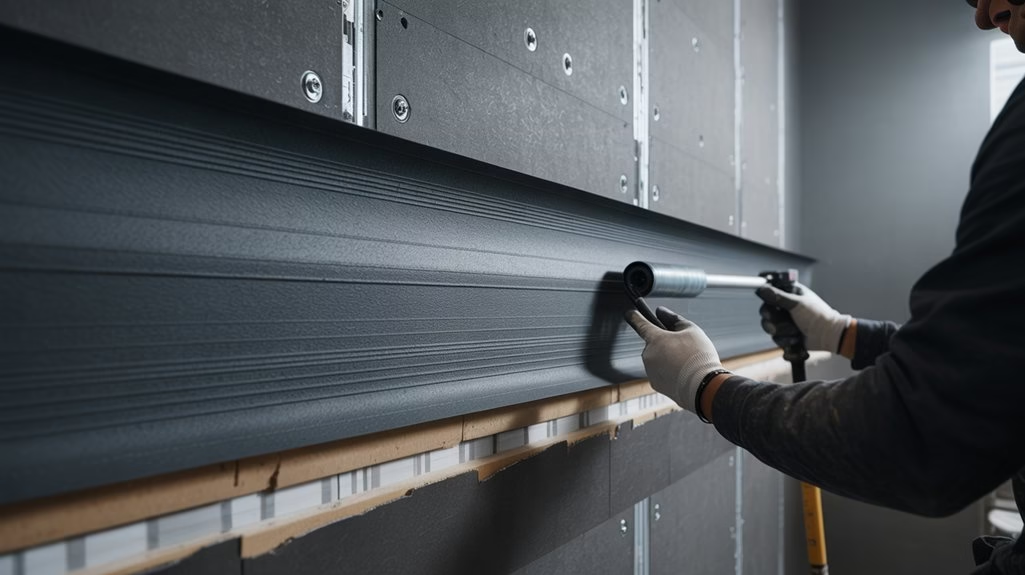
Install mass loaded vinyl like a pro: prep a clean, flat substrate and mark studs. Measure precisely, cut 1/8 inch short, and fasten to studs or joists every 8 inches with a cap stapler or nail gun. Stagger and overlap seams 1–2 inches. Seal all seams, perimeters, and penetrations with acoustic sealant. Use furring strips on uneven surfaces and avoid stretching MLV. Layer with drywall, Green Glue, or underlayment for higher STC. There’s more to boost performance further.
Not sure if DIY Mass Loaded Vinyl installation will actually solve the problem?
Tell us about your room, the type of noise you’re trying to block, and your soundproofing goals. We’ll help you determine whether DIY Mass Loaded Vinyl (MLV) installation is enough, or if your space would benefit from professional soundproofing, acoustic panels, or a complete noise control solution.
Key Takeaways
- Prepare surfaces: repair defects, clean thoroughly, locate studs, and plan staggered seams with 1–2 inches overlap for airtight coverage.
- Measure precisely: subtract 1/8–1/4 inch for fit; pre-mark stud lines and fastening points every 8 inches.
- Cut and handle correctly: score and snap straight edges; avoid overstretching MLV to preserve density and performance.
- Fasten securely: use cap stapler or nail gun into studs/joists; for ceilings, install with a helper; for floors, sandwich between rigid layers.
- Seal everything airtight: apply acoustic sealant to all perimeters, seams, and penetrations; verify with a tap test to find hollow or leaky spots.
Tools and Materials Required
You’ll need a small but reliable kit to install Mass Loaded Vinyl effectively: a utility knife or heavy-duty scissors for clean cuts, a measuring tape for precise layouts, and a cap stapler or nail gun to fasten MLV every 8 inches to studs or furring strips.
For efficient MLV Installation, gather mechanical fasteners that won’t tear the membrane, plus extra staples or nails. Bring acoustic sealant to seal gaps and seams after fastening; this step locks in soundproofing performance.
Keep stepladders ready for ceilings, and have a helper support sheets while you shoot the cap stapler or nail gun. Verify the substrate is clean and dry before you hang material.
Finish by inspecting seams and edges and applying acoustic sealant generously.
To maximize isolation, consider pairing MLV with a second drywall layer using Green Glue between sheets to boost overall STC performance.
Surface Preparation and Layout Planning
Before hanging any Mass Loaded Vinyl, prep the surface and plan your layout so the barrier performs as designed. Start with disciplined surface preparation: make the substrate clean, dry, and free of dust, oils, and loose material so tapes and sealants bond reliably.
Next, handle layout planning to reduce weak points and guide fastening.
- Use a stud finder to map and mark studs, avoiding utilities and ensuring fasteners land in solid framing.
- Measure the coverage area, then add 1–2 inches of overlap to guarantee full coverage and adjustment room.
- Pre-plan MLV strips so seams are minimized and staggered, boosting sound insulation and leak resistance.
- Where walls are uneven or finished, install furring strips to create a flat, continuous base and decouple the MLV from the structure.
For maximum performance, plan to seal all seams and perimeter edges with acoustical sealant to maintain airtightness and prevent leaks in the soundproofing assembly.
Precise Measuring and Cutting Techniques
With the surface prepped and layout mapped, move into precise measuring and cutting so each MLV strip fits tight and seals cleanly.
Begin with precise measuring: use a measuring tape to capture height and width, then subtract 1/8–1/4 inch from wall height so the mass loaded vinyl fits without crushing. Plan overlaps so you can seal the seams later; cut the MLV slightly longer where overlaps are required.
Set a T-square on your marks, score with a sharp utility knife, then snap for a clean, straight edge. Double-check every dimension and cut before installation to avoid waste and gaps that reduce sound blocking.
Mark fastening points every 8 inches along studs to guarantee secure attachment. Label strips, align edges, and keep cuts square for consistent results.
For maximum isolation, ensure seams and perimeters are sealed airtight with acoustic sealant, as airtightness is essential to minimize airborne sound transfer.
Wall, Ceiling, and Floor Installation Steps
Checklist in hand, shift from prep to installation by hanging, fastening, and sealing each surface methodically. On walls, measure height and cut mass loaded vinyl 1/8 inch short. Tack the top, let it plumb, then fasten every 8 inches; seal all seams and perimeter with acoustical sealant for airtight noise reduction.
For ceilings, recruit a partner to install MLV directly to joists, fastening every 8 inches to prevent sagging.
On floors, roll the MLV tightly between plywood or MDF layers, tape edges, and seal gaps to create a quieter room.
- Install MLV on walls: align, fasten, and caulk perimeters and seams.
- Ceiling steps: support, fasten tightly, and seal penetrations.
- Floor steps: roll the MLV, tape, and seal.
- Finish with complementary soundproofing material for higher STC ratings and proper installation.
For best performance, combine MLV with resilient channels to enhance decoupling and reduce structure-borne vibration transfer.
Sealing, Layering, and Decoupling for Higher STC
You’ve hung and fastened the MLV; now maximize its performance by making it airtight and coupling it with the right systems. Start with meticulous sealing: run continuous beads of acoustical sealant along all seams, perimeters, and penetrations. Any gap invites flanking sound transmission and undermines noise reduction.
Keep the membrane flat—no folds or wrinkles—so density and damping stay intact.
Boost the STC rating through strategic layering. Pair MLV with insulation materials in the cavities to absorb energy, then add soundproof drywall to block it.
For decoupling, install resilient channels or furring strips to break rigid paths and let the limp mass work. This combination—insulation, MLV, decoupling, and dense facing—significantly elevates attenuation, with documented noise reduction improvements and a stronger, broadband barrier.
For further gains, integrate MLV with acoustic panels and heavy curtains to reduce internal echo and enhance overall sound isolation.
Common Mistakes and Professional Best Practices
Although MLV can deliver impressive results, small missteps can cripple its performance. When installing mass loaded vinyl, don’t stretch it; overstretching thins density and invites noise transmission.
Although MLV excels, even small missteps cripple performance—never stretch it, or density drops and noise slips through.
Before hanging sheets, repair cracks, holes, and gaps so leaks don’t bypass your barrier. Seal every penetration and run continuous sealant around perimeters to prevent flanking noise. For best results, pair MLV with Green Glue between drywall layers to further reduce vibration transmission.
Finally, conduct a tap test to expose hollow spots and unsealed seams so you can correct them for maximum sound isolation.
- Prepare the substrate: repair cracks, fill gaps, and clean dust for reliable adhesion and soundproofing benefits.
- Hang without tension: let mass loaded vinyl drape; avoid stretching and puckering.
- Seal relentlessly: caulk perimeters, outlets, fasteners, and seams; add backer rod where needed.
- Verify performance: tap test, mark weak areas, and reseal—professional best practices.
Not sure if DIY Mass Loaded Vinyl installation will actually solve the problem?
Tell us about your room, the type of noise you’re trying to block, and your soundproofing goals. We’ll help you determine whether DIY Mass Loaded Vinyl (MLV) installation is enough, or if your space would benefit from professional soundproofing, acoustic panels, or a complete noise control solution.
Frequently Asked Questions
How to Install Mass-Loaded Vinyl for Soundproofing?
Cut MLV 1/8 inch shorter than height, then fasten to studs every 8 inches; keep it free-floating. Seal seams and penetrations with acoustical sealant.
For ceilings, get help to hold it flat; avoid wrinkles. You’ll gain mass loaded vinyl benefits using these soundproofing techniques, installation tools, and measuring acoustics.
Enhance wall treatments with acoustic panels, resilient channels, or soundproof drywall. Consider flooring options and ceiling treatments.
These DIY soundproofing noise reduction strategies boost STC.
Does Mass-Loaded Vinyl Work for Soundproofing?
Yes, mass-loaded vinyl works for soundproofing. You’ll see strong soundproofing effectiveness from its density and flexible barrier—acoustic properties explained by added mass.
Mass loaded vinyl benefits include better low-frequency control and long term durability. Expect installation challenges: weight, sealing seams, and handling.
In material comparisons, it outperforms drywall alone. Consider cost analysis and DIY vs. professionals.
Application areas include walls, ceilings, and cars. Combine with noise reduction techniques like resilient channels for best results.
Does MLV Require Professional Installation?
No, MLV doesn’t require professional installation, but you’ll weigh DIY installation against professional services.
You’ll get MLV benefits only if you manage installation challenges: sealing seams, avoiding flanking, and matching room acoustics.
For many soundproofing materials, user experiences show solid noise reduction with careful prep.
Cost considerations matter: pros add expense but reduce mistakes.
Check product comparisons for density and flexibility, then decide if your skills, tools, and time justify DIY over hiring help.
How Many Decibels Does Mass-Loaded Vinyl Reduce?
About 10–15 decibels, when installed properly.
Like a thick curtain against noise, you’ll hear the mass loaded vinyl effectiveness compared to other acoustic insulation options.
Vinyl weight importance matters: 2 lb/ft² beats 1 lb/ft².
Typical sound transmission class lands around 25–30, but pairing with drywall boosts results.
Use an installation techniques guide for best sound barrier benefits.
For residential soundproofing solutions or a soundproofing home theater, MLV vs foam?
MLV wins among soundproofing materials comparison.
Conclusion
By now, your toolkit, plans, and cuts align like studs behind drywall—coincidence that isn’t accidental. As you press MLV tight, seams kiss, beads of sealant meet their edges, and layers settle like midnight on a quiet street. You’re decoupling vibration the way doors hush when weatherstripped—each step stacking silence. Avoid the common slips, trust precise prep, and you’ll hear it: the sudden absence. Coincidentally, when everything’s right, nothing speaks. That’s when your room finally listens.
Not sure if DIY Mass Loaded Vinyl installation will actually solve the problem?
Tell us about your room, the type of noise you’re trying to block, and your soundproofing goals. We’ll help you determine whether DIY Mass Loaded Vinyl (MLV) installation is enough, or if your space would benefit from professional soundproofing, acoustic panels, or a complete noise control solution.