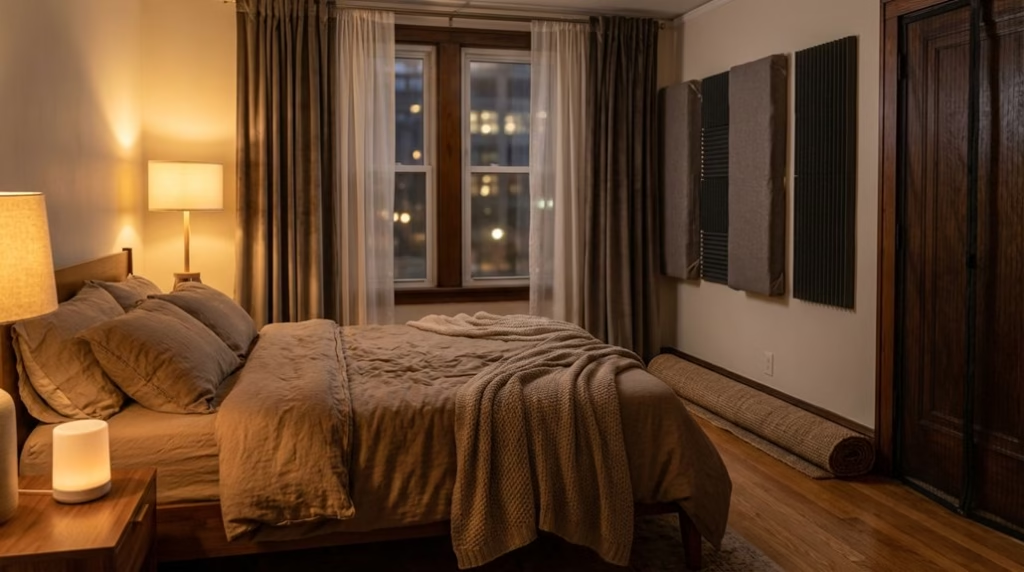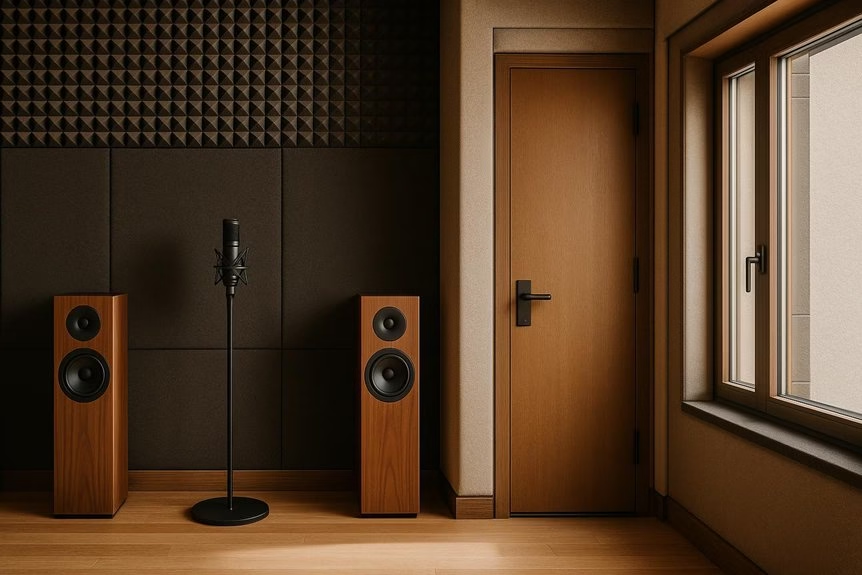
Choose acoustic treatment when the room itself sounds echoey, harsh, or muddy and you want clearer conversations, better TV audio, or more balanced music. Acoustic panels, ceiling treatments, and fabric wall systems help absorb reflections and reduce reverberation, improving how sound behaves inside the space. But they do not reliably block noise coming through walls, ceilings, doors, or windows.
If your goal is more privacy or relief from neighbor noise, street traffic, shared walls, or overhead impact noise, you need professional soundproofing. Real soundproofing requires the right construction methods—typically added mass, airtight sealing, and decoupling—not decorative foam or basic DIY fixes. The right solution depends on whether your problem is sound quality within the room or noise transfer through the barrier.
At Total Home Interiors, we help homeowners and commercial clients across West Orange, NJ, Hoboken, Jersey City, NYC, and the Tri-State area identify the source of the problem and recommend the right acoustic or soundproofing strategy for lasting results.
Key Takeaways
- Acoustic panels improve how a room sounds by absorbing reflections and reducing echo, reverberation, and muddy speech or music—ideal for media rooms, home offices, restaurants, conference rooms, and other spaces where sound clarity matters.
- Soundproofing is designed to reduce noise transfer through walls, ceilings, floors, doors, and windows using professional methods like added mass, air sealing, and decoupled construction.
- If your room feels harsh, hollow, or echoey, acoustic treatment is typically the right solution.
- If you’re hearing neighbors, traffic, footsteps, or shared-wall noise in your apartment, condo, or home, you need true soundproofing—not just decorative panels.
- Acoustic products are commonly compared by NRC, which measures sound absorption, while soundproofing assemblies are evaluated by STC, which measures how well they block sound transmission.
- At Total Home Interiors, we help homeowners and commercial clients across West Orange, Hoboken, Jersey City, and the NYC area identify whether they need better acoustics, real soundproofing, or a tailored combination of both.
Do Acoustic Panels Block Wall Noise?
Acoustic panels can make a room sound calmer, but they don’t reliably block noise coming through a wall. Their job is to absorb echo and reduce reverberation, which improves speech clarity and makes music sound better inside the space.
That helps the room feel quieter, but it does very little to stop sound transfer from neighbors or street noise.
In practical terms, lightweight fabric-wrapped panels are an acoustics solution, not a true soundproofing solution. Even when multiple panels are installed, homeowners often notice a big improvement in echo while outside or shared-wall noise remains largely unchanged.
This is because sound absorption improves room acoustics, while true soundproofing depends on structural isolation, added mass, and careful sealing.
If your goal is to reduce wall noise in an apartment, condo, or townhouse, the real solution is professional soundproofing: adding mass, sealing air gaps, and using better wall construction methods such as acoustic drywall, decoupling, or mass-loaded vinyl.
For homeowners in West Orange, Hoboken, Jersey City, and across the Tri-State area, Total Home Interiors designs custom solutions based on whether you need better acoustics inside the room, less noise transfer through the wall, or both.
Acoustic Panels vs. Soundproofing: What’s the Difference?
Put simply, acoustic panels and soundproofing solve two different problems. Acoustic panels improve how a room sounds by reducing echo and reverberation, while soundproofing is designed to limit how much noise passes through walls, ceilings, floors, and windows.
If your goal is better speech clarity, less harshness, and a more comfortable space, acoustic treatment helps. If your goal is blocking neighbor noise, street noise, or sound between rooms, you need true soundproofing construction.
That distinction is especially important for homeowners and businesses in Jersey City, Hoboken, NYC, and throughout the Tri-State area, where thin walls, shared structures, and outside noise are common frustrations.
Acoustic panels work by absorbing sound within the room, typically using porous materials that reduce reflected sound energy and lower reverberation. However, they generally do very little to stop noise from crossing a wall assembly.
That’s why acoustic products are often discussed in terms of NRC, which measures absorption, while soundproofing systems are evaluated with STC, which measures how well a partition blocks sound transmission.
In practical terms, installing panels alone won’t solve most privacy or noise-transfer problems.
If outside noise remains in the 48–52 dB range after nearby panel installation, that’s a clear reminder that absorption and isolation aren’t the same thing.
Effective soundproofing often relies on resilient channels, added gypsum board, and insulated wall cavities to improve isolation between shared spaces.
At Total Home Interiors, we help clients identify the right solution from the start—whether that means acoustic panels for echo control or professionally designed soundproofing systems using techniques like decoupling, acoustic drywall, and mass-loaded vinyl to reduce unwanted noise at the source.
Why Do Acoustic Panels Improve Room Sound?
Acoustic panels improve room sound by absorbing reflections instead of letting them bounce across hard surfaces. Built with high-performance porous cores such as fiberglass or mineral wool, they capture sound energy within tiny air pockets and reduce the buildup of echo and excess reverberation. The result is clearer speech, cleaner music, and a room that feels less boomy or muddy.
This is the core of acoustic treatment: improving sound quality inside the space. Acoustic panels don’t stop outside noise the way true soundproofing systems do, but they can make a room feel noticeably calmer and more controlled. Proper placement at first reflection points further improves dialogue clarity and reduces distracting echoes.
That distinction matters for homeowners and businesses dealing with noise challenges in places like West Orange, Hoboken, Jersey City, and NYC, where both sound quality and privacy often need professional attention.
At Total Home Interiors, we help clients choose the right acoustic solutions based on how the room is used, whether it’s a media room, home office, restaurant, conference room, or studio.
If you’re comparing products, NRC ratings can help indicate how effectively a panel absorbs sound overall—but proper placement and expert design are what deliver the best real-world results.
When Are Acoustic Panels Worth It?
When a room sounds echoey, harsh, or muddy, acoustic panels are often a smart investment because they improve the sound quality you experience inside the space. For homeowners, apartments, offices, conference rooms, studios, and home theaters, the right acoustic treatment can make conversations clearer, media more enjoyable, and the room less fatiguing to spend time in.
- You’ll get better reverberation control in spaces like offices, media rooms, and dedicated home theaters.
- You’ll notice stronger recording clarity and better speech intelligibility because fewer reflections blur voices and instruments.
- Strategic placement matters more than covering every wall. A professionally planned layout often delivers better results than random panel placement.
- Panel thickness plays a major role in absorption, especially in the lower midrange where rooms often sound boxy or congested.
Acoustic panels work by absorbing sound reflections, typically using high-performance core materials behind fabric-wrapped finishes or custom-designed surfaces. In home theaters, bass traps placed in corners can be especially important for controlling low-frequency buildup and improving overall clarity.
The result is a cleaner, more controlled acoustic environment that feels more comfortable and polished.
At Total Home Interiors, we help clients across West Orange, NJ and the Tri-State area determine when acoustic panels are the right solution—and when a room may need a broader soundproofing or acoustic strategy instead.
If your main goal is better clarity, less echo, and a more refined listening experience inside the room, professionally selected and installed acoustic panels are absolutely worth it.
When Do You Need Real Soundproofing?
If the issue isn’t echo within the room but noise traveling through a wall, ceiling, floor, window, or door, you need true soundproofing, not just acoustic panels. Acoustic treatments can make a room sound calmer by reducing reflections, but they don’t meaningfully block noise from neighbors, traffic, footsteps overhead, or household activity in adjacent spaces.
In these cases, the focus needs to be on construction-based isolation: added mass, airtight sealing, and mechanical decoupling. That means looking at STC performance rather than NRC ratings alone. Even premium acoustic panels may improve how a room sounds internally while doing very little to reduce the actual noise entering from outside the space. Materials like mass-loaded vinyl can significantly improve sound isolation in walls, ceilings, and floors by adding dense mass that helps block airborne noise.
When sound is passing through boundaries, the solution isn’t decorative treatment alone. It often requires professional soundproofing measures such as sealing door gaps, upgrading windows, reinforcing walls or ceilings, or building decoupled assemblies with specialized materials like acoustic drywall and mass-loaded barriers.
For homeowners and apartment residents in West Orange, Jersey City, Hoboken, and across the NYC area, this is often the difference between a room that sounds better and a room that’s genuinely quieter.
At Total Home Interiors, we help clients identify whether they need acoustic treatment, real sound isolation, or a combination of both—so the solution matches the problem and delivers meaningful relief.
Which Soundproofing Fixes Work Best?
For real noise reduction, the fixes that work best add mass, seal air leaks, and break the rigid paths sound uses to travel through walls, ceilings, floors, and doors.
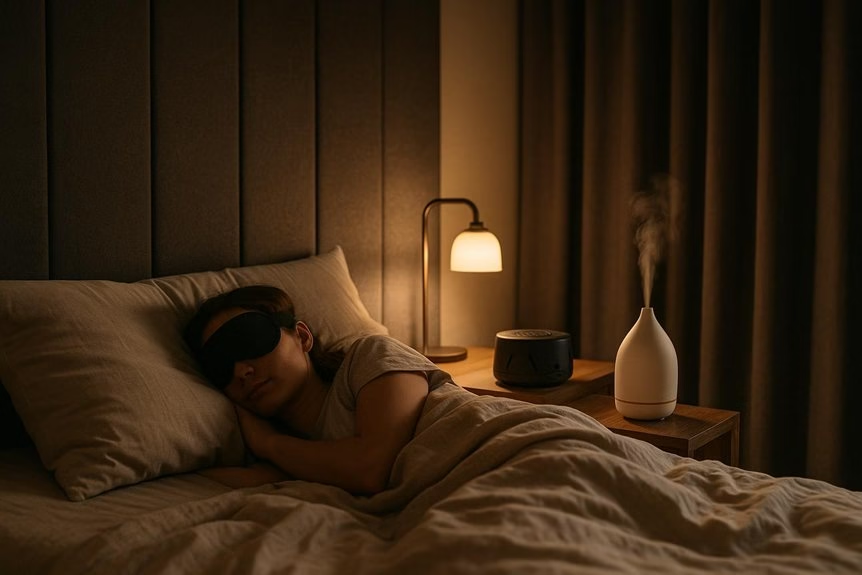
If you’re dealing with neighbor noise, street noise, or poor sleep from thin walls, it’s important to know that foam and most acoustic panels aren’t true soundproofing products—they help with echo inside a room, not noise coming through from outside.
At Total Home Interiors, we focus on professional soundproofing strategies that address how sound actually travels:
1. Add an additional layer of drywall with resilient channel or Z-furring to help decouple the wall surface and reduce vibration transfer.
2. Fill wall or ceiling cavities with mineral wool or rock wool insulation to improve airborne noise control between rooms or units.
3. Increase wall mass with mass-loaded vinyl and soundproofing drywall for stronger noise blocking performance.
Adding acoustic sealant around seams, edges, and penetrations also helps maintain an airtight barrier and prevents sound leaks that can weaken overall performance.
4. Seal door gaps with high-quality weather stripping and a door sweep, especially when sound leaks through bedroom or office doors.
These are the soundproofing solutions that make a meaningful difference in homes, apartments, and shared-wall spaces across Northern New Jersey and NYC.
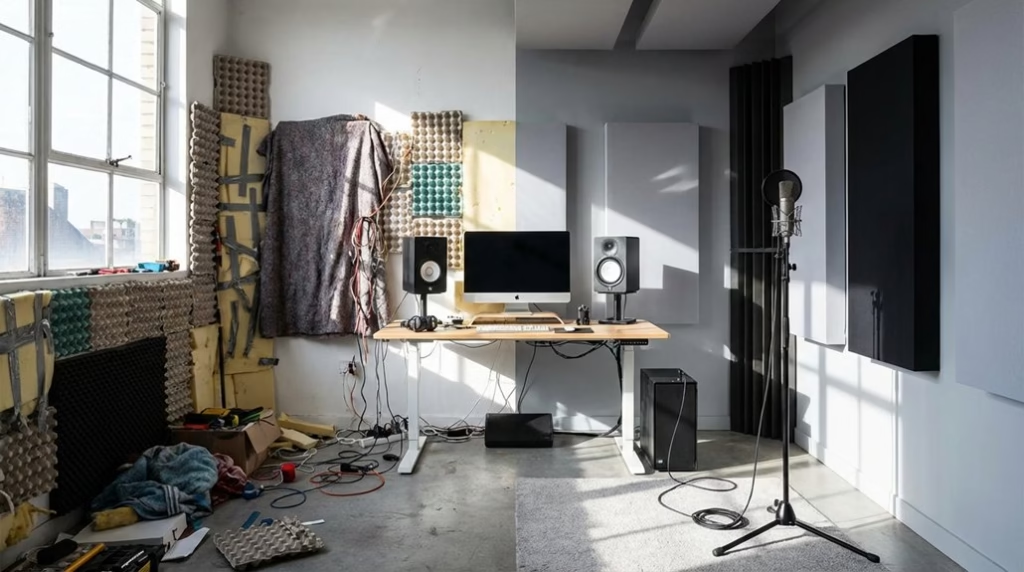
Thin panels and DIY foam rarely solve transmission problems.
If you want lasting quiet, professional design and installation matter.
How Much Do Acoustic Panels and Soundproofing Cost?
How much acoustic panels and soundproofing cost depends on the problem you’re trying to solve. If the issue is echo inside a room, acoustic panels are often the right solution. If the problem is noise coming through walls, ceilings, doors, or windows, you need true soundproofing construction.
Acoustic panels are typically a mid-range investment, with many quality options starting around $60 to $100 per panel. They can improve sound clarity and reduce reverberation, making them useful for media rooms, home offices, restaurants, and conference spaces.
However, panels aren’t designed to significantly block neighbor noise, traffic noise, or sound leaking through shared walls.
That distinction is where many DIY projects fall short. It’s possible to spend around $1,100 on multiple panels and still hear nearly the same level of outside noise, because echo control and noise isolation are two different goals.
If sound leakage is the real issue, basic improvements like door sweeps and perimeter sealing can be a smart first step.
For meaningful results, professional soundproofing usually involves layered systems such as mass-loaded vinyl, acoustic drywall, decoupled framing, Z-channel, or rock wool insulation to create a heavier, better-sealed barrier. These materials can also improve a room’s STC rating, helping reduce sound transfer more effectively.
At Total Home Interiors, we help homeowners and businesses across West Orange, NJ and the Tri-State area choose the right acoustic or soundproofing solution based on the actual source of the noise—so you invest in results, not guesswork.
Frequently Asked Questions
Can Acoustic Panels Be Installed on Ceilings?
Yes, acoustic panels can be installed on ceilings, and in many spaces they’re one of the most effective ways to improve sound quality.
Ceiling-mounted acoustic treatments help reduce echo and control reflections above seating, work, or listening areas, making rooms feel quieter and more comfortable.
In some cases, they can also help address certain sound buildup issues depending on the room layout and treatment plan.
For the best results, ceiling panels should be selected and installed based on the ceiling structure, panel weight, and the acoustic goals of the space.
Total Home Interiors provides professionally planned ceiling acoustic solutions for homes and commercial spaces throughout West Orange, NJ and the Tri-State area.
Do Acoustic Panels Help Reduce Microphone Feedback?
Yes—acoustic panels can help reduce microphone feedback by absorbing mid and high frequencies before they reflect back into the microphone. In reflective spaces, excess sound energy can rise significantly, making feedback more likely.
That said, panels alone won’t solve issues caused by improper gain settings, poor speaker placement, or incorrect microphone positioning. For the best results, professional acoustic treatment should be paired with thoughtful system setup and room-specific design.
Total Home Interiors helps homeowners and commercial clients across West Orange, NJ, Hoboken, Jersey City, and NYC create spaces with clearer sound, better control, and fewer acoustic problems.
Are Acoustic Panels Safe for Apartments and Rentals?
Yes, acoustic panels can be a safe option for apartments and rentals when they’re lightweight and installed with renter-friendly methods. Removable mounting strips, adhesive hooks, and freestanding solutions can help reduce the risk of wall damage, but it’s still important to review your lease before making any changes.
That said, not every acoustic product is ideal for every space. In bathrooms, kitchens, or other humid areas, some fabric or foam panels may hold moisture, leading to odors or mold over time.
For renters who want a cleaner, more reliable result, professionally selected acoustic treatments can help improve sound control while staying appropriate for the space and building conditions.
How Long Do Acoustic Panels Typically Last?
Acoustic panels typically last 10 to 20 years, depending on the material, installation quality, and the environment they’re placed in.
In homes, offices, restaurants, and studios throughout West Orange, Hoboken, Jersey City, and NYC, panels tend to perform best when they’re protected from moisture, prolonged direct sunlight, and physical damage.
Routine care like light dusting and periodic inspection of mounting hardware can also help preserve both appearance and acoustic performance.
Professionally specified and installed acoustic panels generally deliver a longer lifespan, more consistent sound control, and a better overall result than off-the-shelf DIY options.
Can Acoustic Panels Be Painted or Customized?
Yes—acoustic panels can be painted or customized, but the finish matters.
To preserve sound absorption, breathable coatings and acoustically appropriate finishes should be used, since heavy paint can limit performance.
Many clients choose fabric-wrapped panels, custom shapes, or printed designs to complement their interior style while improving sound quality.
For the best aesthetic and acoustic results, Total Home Interiors provides professionally specified custom acoustic panel solutions tailored to the room, décor, and performance goals.
Conclusion
If your room has too much echo, acoustic panels can improve the way it sounds by reducing reflections and creating a calmer, more comfortable environment. But if you’re dealing with street noise, loud neighbors, or sound leaking between rooms, acoustic treatment alone won’t solve the problem. In those cases, professional soundproofing is the right solution—using specialized construction methods and materials to reduce noise transfer through walls, ceilings, floors, and windows. The key is knowing whether you need better sound quality inside the space or real noise control from the outside. Total Home Interiors helps homeowners and businesses across West Orange, Hoboken, Jersey City, NYC, and the surrounding Tri-State area choose the right acoustic solution for lasting comfort and privacy.