Matter Smart Home: Future-Proofing Your Automation Investment
Choose Matter to future‑proof your smart home. It’s a secure, local‑first standard that lets lights, locks, and sensors work together across Apple, Google, and Amazon without extra hubs. Matter runs over Wi‑Fi and Thread for fast, reliable control and supports multi‑admin for shared management. Versions 1.0–1.3 already improved interoperability; 1.4 and 1.4.1 expand features. Start with a certified Matter controller under $150, favor brands with clear update roadmaps, and set local automations for privacy—there’s more that can sharpen your strategy.
Key Takeaways
- Choose Matter-certified devices and a controller under $150 that support Wi‑Fi, Thread, and BLE for local, reliable control.
- Favor brands with clear Matter update roadmaps; enable automatic firmware updates for security and longevity.
- Plan rolling upgrades every three years, prioritizing multipurpose devices and energy-efficient models to reduce long-term costs.
- Use Thread for self-healing mesh reliability; avoid hubs unless needed, and bridge legacy Zigbee/Z‑Wave thoughtfully.
- Verify platform quirks and multi-admin compatibility to ensure cross-ecosystem control without sacrificing features.
What Matter Is and Why It Matters
Matter is the common language your smart home has been missing. With Matter, you connect smart home devices from Apple, Google, and Amazon without juggling separate apps or hubs. It’s an open-source connectivity standard built for true interoperability, so lights, locks, and sensors work together reliably.
You’ll benefit from local control over Wi‑Fi, Thread, and Bluetooth Low Energy, which boosts responsiveness and keeps core functions running even if the internet drops.
Multi-admin support lets you manage the same device across multiple platforms at once. Security stays strong with AES encryption and secure commissioning, protecting your home and data.
Manage devices across platforms with multi-admin, while AES encryption and secure commissioning safeguard your smart home.
When you see the Matter logo, you know you’re buying into a future-proof foundation for automation that reduces complexity, costs, and setup headaches.
Timeline of Matter Releases and Updates
Although the standard is still young, the timeline of Matter releases shows steady, practical progress. You saw Matter 1.0 arrive in 2022 with the first wave of certification and broad Matter support, turning the idea into deployable products.
By May 2023, Matter 1.1 refined interoperability and added device types, smoothing real-world setups. In October 2023, Matter 1.2 broadened capabilities again, reinforcing reliability and feature coverage.
Looking ahead, Matter 1.3 (May 2024) targets more features and polish, keeping your devices current without lock-in. Then 1.4 (November 2024) and 1.4.1 (May 2025) continue the cadence, tightening performance and expanding categories.
This predictable rhythm helps you plan upgrades and align purchases. As the smart home landscape evolves, consistent Matter support guarantees your ecosystem grows without constant reinvention.
How Matter Compares to Zigbee, Z-Wave, and Thread
Even if you’ve used Zigbee or Z-Wave for years, the key shift with Matter is its IP-first design that runs over Wi‑Fi and Thread for built‑in interoperability across platforms.
You’re no longer juggling bridges just to speak a common language. Matter rides standard networking, so devices discover each other natively and keep working across ecosystems with local control.
Here’s how it compares:
1) Protocols: Zigbee and Z-Wave use proprietary radios; Matter uses IP over Wi‑Fi and Thread, enabling broader interoperability.
2) Mesh: Thread’s self-healing mesh lets devices act as routers, boosting reliability beyond many legacy approaches.
3) Hubs: Zigbee/Z-Wave often need dedicated hubs; Matter minimizes extra boxes while preserving local control.
4) Future-proofing: Zigbee’s ecosystem is mature, but Matter’s standardized model better positions you for advanced integrations.
Device Categories Supported Today and What’s Next
While the standard keeps evolving, you can already outfit a home with core Matter devices like smart lights, plugs, switches, and locks, complete with on/off and brightness control—and now scenes thanks to the 1.3 update.
These device categories cover everyday smart devices you’ll use constantly, giving you reliable smart home automation without juggling multiple apps. The Matter 1.3 update unified scenes across platforms, so your routines translate cleanly through the broader Matter ecosystem.
What’s next? The roadmap points to Matter 1.4, planned for November 2024, which should add new device types and deeper features, expanding smart home integrations and future-proofing your setup.
One gap remains: home security cameras and video doorbells aren’t supported yet, but with 550+ companies collaborating, the ecosystem’s growth trajectory looks strong.
Real-World Use Cases You Can Enable Now
You can put those Matter-compatible lights, plugs, switches, and locks to work right now with practical automations that run the same across Apple Home, Google Home, and Alexa.
With Matter devices in your smart home system, you’ll unify control devices and scenes, even alongside existing devices. Local control keeps routines snappy and reliable, whether the internet’s up or not, and you’ll future‑proof as Matter adoption grows.
- Arrive home: open the door, turn on the entry light, and warm a lamp via a smart plug using one scene.
- Bedtime mode: secure doors, dim lights, and switch off TVs and chargers with a single command.
- Energy trim: auto‑shut off idle plugs and lights after motion clears.
- Vacation schedule: randomize lights and toggle smart plugs locally for lived‑in presence.
Platform and Manufacturer Limitations to Watch
Despite Matter’s promise of cross‑platform control, platform quirks and brand lock‑ins can trip you up. Some manufacturers still gate advanced features behind proprietary apps, so even with Matter, interoperability can feel partial.
You’ll also face gaps with existing devices: many Zigbee, Z‑Wave, or older Thread products won’t get firmware updates, leaving compatibility stranded.
Matter 1.3 adds scenes across devices, but controller and bridge options remain limited, narrowing your choices today. SmartThings users, for example, will need a Matter controller or bridge to guarantee full compatibility as the platform evolves.
As Matter iterates (1.1 and beyond), manufacturers must keep certifying devices to stay relevant in the smart home ecosystem. Verify roadmaps, check firmware policies, and confirm controller support before you buy to avoid stranded gear.
Choosing Hubs and Controllers That Maximize Compatibility
Locked features and partial interoperability make the right hub your best defense against stranded gear.
Pick Matter-ready hubs and controllers that elevate compatibility and cross-platform integration so your smart home won’t box you in. Aim for devices that act as both Matter controllers and bridges; they expand device support and simplify management. Options like the Aqara M3, Tuya-based hubs, and IKEA’s Dirigera (with evolving Matter bridge support) show where the ecosystem’s heading.
Expect affordable controllers under $150, so you can standardize without overspending. Favor platforms like SmartThings, Hubitat, and Homey to keep integration flexible across Apple Home, Google Home, and SmartThings.
1) Choose hubs that are certified Matter controllers and bridges.
2) Confirm platform interoperability.
3) Prioritize active firmware roadmaps.
4) Validate local fallback behavior before purchase.
Setup Essentials: Networks, Apps, and Local Control
Foundations first: set up a reliable home network, install the right apps, and confirm local control so Matter works as promised.
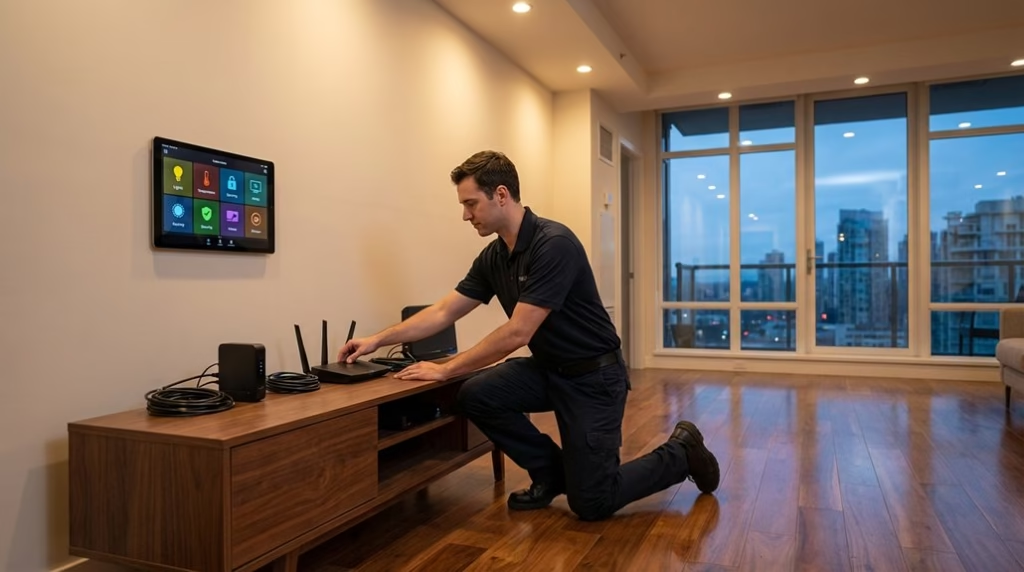
Start by verifying you have a compatible Matter controller—smart speakers or hubs from Apple, Amazon, Google, or Samsung. Use their apps to onboard devices and enable multi-admin so each ecosystem sees the same gear.
Prioritize local control. Place controllers where Wi‑Fi or Thread signal is strong, and keep 2.4 GHz available for onboarding.
Build out Thread to form a resilient mesh network; add powered Thread border routers to extend range and speed.
Bridge legacy gear with Matter-compatible hubs, like Aqara M3 or Tuya, to unify old and new devices.
Finally, stay current on firmware and hardware releases to protect your automation investment.
Security, Privacy, and Data Ownership in a Matter Home
While Matter simplifies device setup, it also hardens your home’s defenses by default. You get robust security without extra effort: AES encryption shields traffic, blockchain-based commissioning verifies devices, and local control keeps most data off third‑party clouds. That translates into tighter privacy and faster responses across your smart home.
Here’s how you stay in charge of security, privacy, and data ownership:
- Set granular permissions so you decide what each device shares, with whom, and when inside the Matter ecosystem.
- Prefer local automations to minimize exposure and keep sensitive interactions on your own network.
- Enable automatic updates; Matter’s continuous patching stays ahead of emerging threats.
- Monitor network‑wide alerts; collaborative threat detection helps isolate and remediate risks quickly.
With Matter, you own your data—and your smart home stays resilient.
Buying Strategy to Future‑Proof on a Budget
Even on a tight budget, you can future‑proof your smart home by prioritizing Matter‑compatible gear and a capable, affordable controller. Start with a hub or controllers expected under $150 that support Matter, Thread, and Wi‑Fi. That guarantees interoperability across platforms and keeps options open as ecosystems evolve.
Plan a rolling upgrade cycle: allocate budget to replace a few devices every three years. You’ll stay current with features while spreading costs. Choose devices that use Wi‑Fi, Thread, or Zigbee for reliability and low congestion.
Favor multipurpose hardware—smart plugs with energy monitoring, motion sensors with temperature, or switches that control scenes and bulbs—so each purchase delivers more value.
Buy from brands with clear Matter roadmaps and update policies. Avoid single‑purpose or cloud‑locked gear.
Frequently Asked Questions
Is Matter Smart Home Dead?
No, it’s not dead. You’re seeing Matter ecosystem growth, with major brands onboard and expanding Matter device availability.
While Matter compatibility issues and Matter security concerns exist, updates keep improving stability. You benefit as Matter user adoption rises and the Matter industry impact pushes interoperability across platforms.
If you’re cautious, start with a Matter-enabled hub and a few certified devices, then scale as the ecosystem matures and vendors refine features and reliability.
Is Matter the Future of Smart Home?
Yes, Matter looks like the future of smart home.
You’ll benefit from the Matter Protocol’s Cross Platform Compatibility, enabling seamless Smart Home Integration across Apple, Google, and Amazon. You’ll enjoy local control, faster responses, and Enhanced Device Security.
With strong Industry Standards and open-source momentum, you can expect rapid updates and broader device support.
Ultimately, you’ll get a more consistent User Experience that reduces lock-in and keeps your setup flexible as new devices emerge.
What Are the Top 3 Home Automation Companies?
Like a well-tuned orchestra, the top 3 home automation companies are Amazon, Google, and Apple.
You’ll benefit from Alexa with Ring Security and Wyze Cameras, Google’s Nest Learning ecosystem, and Apple’s secure HomeKit.
For lighting, Philips Hue shines across platforms.
Prefer broader control? You’ll love the SmartThings Hub tying devices together.
For comfort, an Ecobee Thermostat adds smart energy savings.
Choose the ecosystem you already use daily and expand confidently.
What Is the Future Scope of Smart Home Automation?
The future scope is hyper-personalized, context-aware automation that anticipates your needs.
You’ll see smart technology trends deliver stronger home automation benefits, while user experience design gets simpler and more intuitive.
Expect powerful energy efficiency solutions and predictive maintenance.
Despite IoT integration challenges, enhanced security and granular permissions will protect privacy.
Open ecosystems will spur interoperability, meeting future consumer expectations with seamless device orchestration, AI-driven insights, and eco-conscious routines that reduce costs and streamline daily life.
Conclusion
You’re ready to build a Matter home that’s flexible, private, and future-proof. Start with a Thread-capable hub, prioritize multi-ecosystem badges, and keep control local. Add devices that solve daily pain points and expand as standards mature. Security stays strong with end‑to‑end encryption and on‑device credentials. One telling stat: by 2028, analysts expect over 5 billion Matter‑capable devices in market, driving prices down and interoperability up. Buy smart, avoid lock‑in, and you’ll enjoy a smoother, longer-lasting setup.