Acoustic Design Myths Busted: What Really Works for Sound Control?
Don’t fall for the myth that simply scattering acoustic panels or bass traps will solve noise issues completely. Effective sound control requires strategic placement, understanding room acoustics, and a mix of both materials and design principles. Remember, sound absorption isn’t the same as soundproofing, and reducing noise effectively often demands a thorough approach. There’s more to explore about what really works, and we’re just getting started.

Key Takeaways
- Sound absorption materials do not equate to soundproofing; true soundproofing requires addressing structural design and isolation.
- Room shape and layout significantly affect acoustics, not just the materials used.
- Acoustic panels improve sound quality but alone cannot eliminate noise; comprehensive strategies are needed.
- Bass traps enhance low-frequency control but must be correctly placed and designed for effectiveness.
- Sustainable materials are increasingly recognized for their role in effective and eco-friendly sound control.
Understanding the Role of Acoustic Panels
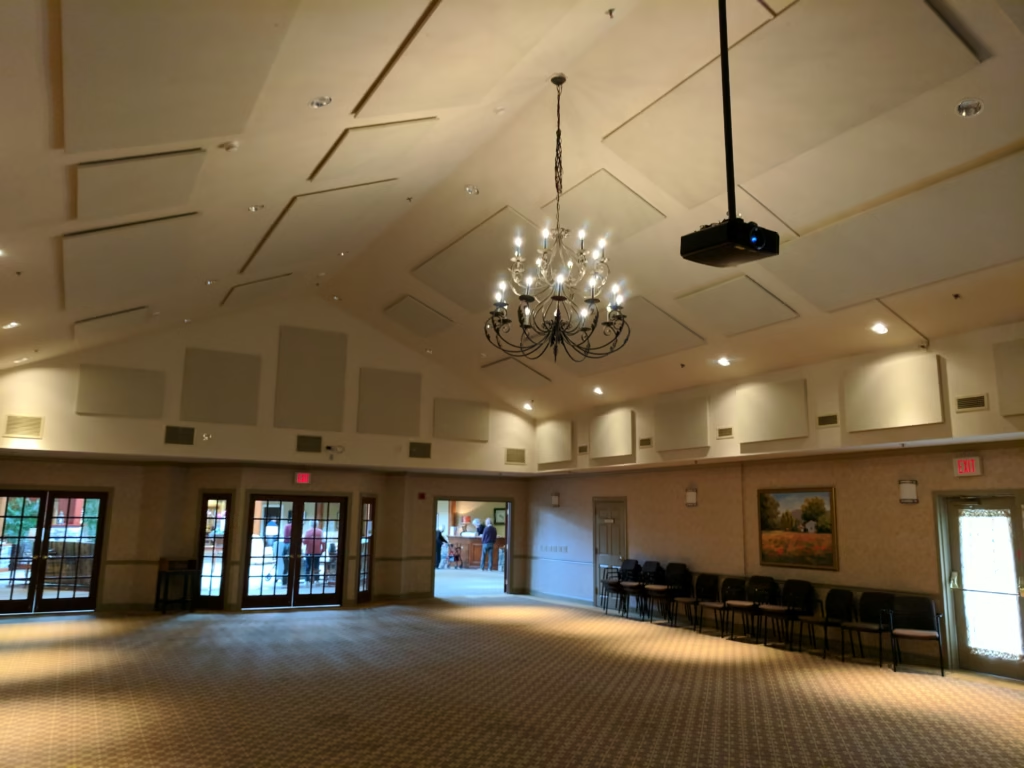
While acoustic panels are often seen as mere decorative elements, they play an essential role in enhancing sound quality by reducing noise and reverberation. You mightn’t realize it, but effective acoustic panel design considerably impacts absorption efficiency, especially in environments like classrooms. By strategically placing panels, you can create acoustic conditions aligning with ANSI guidelines, which improves speech intelligibility. Wood composite panels are utilized in classrooms to improve learning environments through sound absorption. It’s vital to take into account factors like thickness, density, and porosity to maximize absorption efficiency. Perforated surfaces can boost absorption coefficients, allowing panels to handle specific frequencies better. However, remember that effectiveness varies with distance; seating positions further from sound sources might experience decreased word recognition. Ultimately, thoughtful design and placement guarantee these panels truly elevate the acoustic environment.
Debunking Bass Trap Effectiveness
Despite common misconceptions, bass traps can indeed be effective at controlling low frequencies if designed and placed correctly. Many bass trap myths stem from misunderstandings about low frequency absorption.
While broadband bass traps may struggle below 80 Hz, they can still work down to 40 Hz if you use enough of them. Placement is key—an air gap behind the trap greatly boosts its performance.
Straddling traps in corners minimizes air leaks, enhancing their effectiveness. For best results, use deeper materials or combine with air gaps. Removing reflections addresses these acoustic problems effectively, ensuring a more balanced sound environment.
Even though commercial traps often aren’t tested below 100 Hz, real-world use shows they can reduce bass peaks. So, don’t dismiss bass traps; proper design and placement make them a powerful tool for low-frequency control.
Exploring the Limits of Sound Elimination
As you explore the domain of sound elimination, it’s crucial to understand that complete noise cancellation by physical barriers alone is a challenging feat. Noise barriers, like walls or enclosures, reduce sound by obstructing the direct line of sight, but the reduction is often minimal, around 3 dB with specific designs. Sound isolation is frequency dependent, and barriers usually offer only partial attenuation. Acoustic linings and inline baffle silencers further aid in noise reduction but fall short of achieving total elimination. Achieving high Sound Transmission Class (STC) ratings requires more than lightweight materials; it demands integrated architectural solutions. While large spaces benefit from a mix of isolation and absorption strategies, the goal remains reducing noise to acceptable levels, not zero. The Dynamic Insertion Loss (DIL) is a crucial factor that influences how effective these techniques can be, as it measures the difference in sound levels due to the placement of noise control devices.
Multidirectional Sound Absorption
Understanding multidirectional sound absorption is essential for optimizing acoustic environments where sound arrives from various directions. Multidirectional absorption techniques target sound waves coming from different angles rather than a single point, using acoustic material optimization to disperse and dissipate energy.
By employing geometric complexity, like lattice structures or multi-layered inclusions, you can control wave paths and frequencies absorbed. Incorporating viscoelastic and porous media with rigid scatterers enhances broadband absorption, converting sound to heat via friction.
Optimize absorber thickness, inclusion size, and spatial arrangement to manage performance across varied incidence angles. Multi-layer coatings with embedded inclusions, like steel, offer broadband sound absorption.
Advanced lattice structures and synergetic resonance in metasurfaces further refine sound control without excessive thickness. Anechoic coatings enhance the acoustic stealth of underwater equipment by effectively reducing sound reflection.
Strategic Panel Placement
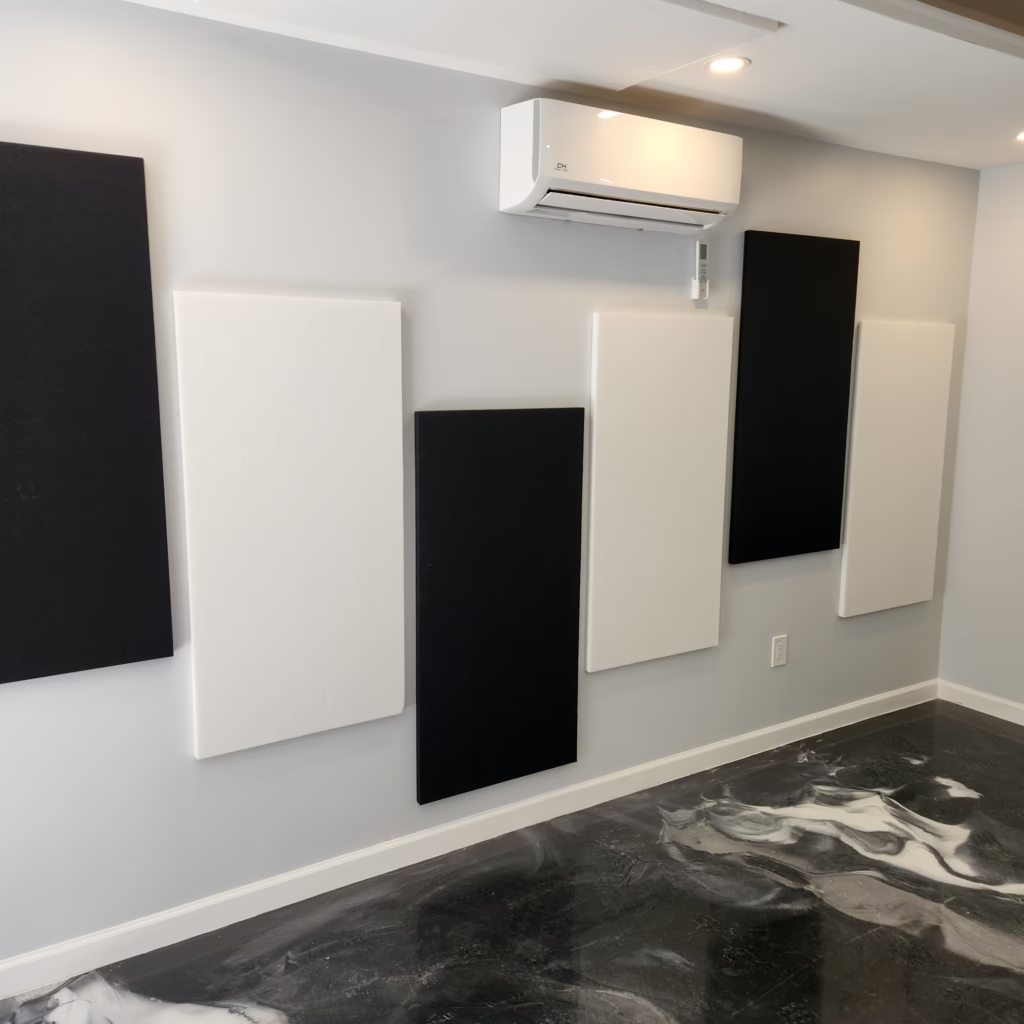
When designing an acoustic space, strategic panel placement is essential for sound control and clarity. Focus on first reflection points, where sound bounces directly between the source and listener. Place panels on side walls, ceilings, and rear walls with appropriate panel density to capture these reflections effectively. Corners benefit from bass traps to manage low-frequency accumulation, while diagonal placements can address specific reflection angles, especially in irregularly shaped rooms. Identify areas where sound echoes or bounces the most to ensure that panels are placed strategically for maximum effectiveness. Use clusters for better absorption, avoiding isolated panels that aren’t as effective. Alternate vertical and horizontal layouts to diffuse sound evenly and prevent focused reflections. Prioritize areas directly opposite speakers and around listening positions to improve clarity. Make sure panels cover multiple reflection sites to achieve a balanced acoustic environment across the room.
The Reality of Sound Masking
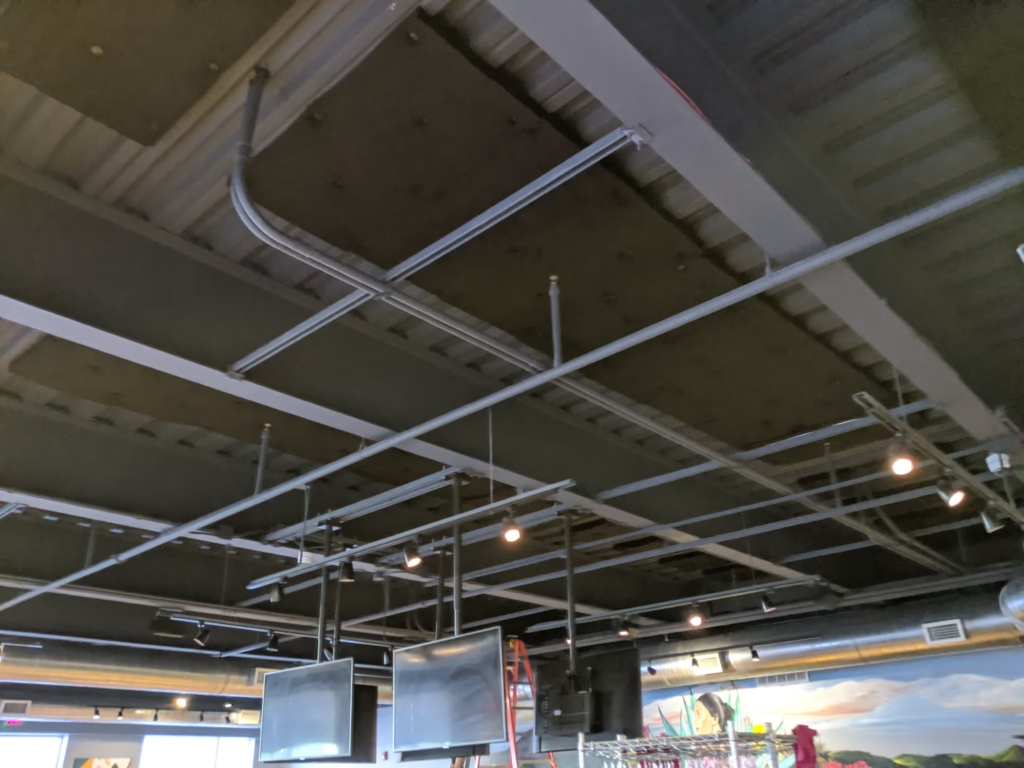
Sound masking plays an essential role in enhancing acoustic satisfaction by reducing the distraction of background speech noise. By using low-pitch, speech-shaped noise, you can greatly improve acoustic comfort in indoor spaces. Research shows that sound masking not only boosts acoustic satisfaction scores but also enhances speech privacy, particularly in offices and shared environments. The statistical importance of these improvements (p < 0.01) highlights the effectiveness of sound masking. Sound masking technology has been employed in various settings, including public spaces such as food courts, to provide a more pleasant auditory environment. Achieving ideal results requires balancing sound levels and spectral characteristics, typically around 43-45 dB LAeq, to prevent over-masking. Proper implementation involves considering room geometry and absorber placement, which help minimize speech reflections.
Achieving Comprehensive Acoustic Control
To truly achieve extensive acoustic control, it’s crucial to integrate both active and passive noise management strategies. Active noise control (ANC) can effectively cancel low-frequency noise by generating an “anti-sound” wave, though its impact decreases with higher frequencies. To maximize effectiveness, consider these steps:
- Combine Strategies: Use ANC in targeted areas like mechanical rooms and complement it with passive materials to cover a broader frequency range.
- Select Materials Wisely: Choose absorptive materials for mid- to high-frequency noise and mass-loaded barriers for lower frequencies. Confirm ideal thickness and density.
- Leverage Technology: Employ modern acoustic analysis tools and predictive modeling to map noise sources and transmission paths, guaranteeing efficient design choices. Sound pressure level measurement is a critical technique for identifying areas with high noise levels, ensuring targeted interventions for noise control.

Frequently Asked Questions
Can Acoustic Panels Improve Sound Quality in Outdoor Spaces?
You might think acoustic panels could improve outdoor acoustics, but they’re not ideal for this purpose.
These panels are designed for indoor use, focusing on absorbing sound rather than blocking it. In outdoor settings, they lack weather resistance and don’t greatly impact ambient noise.
Instead, consider strategic panel placement with specialized outdoor-friendly alternatives like acoustic fences or water-resistant panels to better control sound in open environments.
How Do Temperature and Humidity Affect Acoustic Panel Performance?
When it comes to acoustic panel performance, don’t let temperature and humidity throw a wrench in the works.
Temperature effects alter air density, speeding or slowing sound waves, while humidity influence changes air’s moisture, impacting mid to high frequencies. Fluctuations can create sound anomalies, compromising acoustic control.
Keep your environment steady with consistent temperature and humidity to guarantee your panels perform like a well-oiled machine, delivering reliable sound absorption and diffusion.
Are There Eco-Friendly Alternatives to Traditional Acoustic Materials?
You might wonder if there are eco-friendly alternatives to traditional acoustic materials.
Absolutely! You can choose options like recycled materials and natural fibers. Products like recycled PET panels, hempcrete, and wool insulation offer excellent sound control with minimal environmental impact.
They’re made from sustainable sources, often featuring high recycled content. These solutions not only enhance acoustics but also contribute to healthier indoor air quality and a reduced carbon footprint.
What Is the Lifespan of Typical Acoustic Panels?
Did you know some perforated commercial acoustic panels can last up to 30 years?
When considering acoustic panel lifespan, focus on panel material durability.
Wooden panels typically last 15-20 years but beware of moisture.
Polyester panels offer 10-20 years with good care.
Foam panels, however, degrade quickly in 5-10 years.
Choose materials wisely, and invest in maintenance to guarantee your panels maintain both their functionality and appearance over time.
How Do Acoustic Panels Impact Interior Design Aesthetics?
You might underestimate how acoustic panels can transform your space’s aesthetics.
By choosing the right acoustic panel colors and patterns, you can greatly enhance design integration. Panels with vibrant designs can serve as visually striking focal points that complement your room’s theme.
Whether you opt for bold colors or subtle hues, these panels don’t just control sound; they seamlessly blend into your decor, elevating both style and functionality in your interiors.
Conclusion
You’ve journeyed through the labyrinth of acoustic myths, and now the truth resonates with clarity. Picture sound waves as elusive whispers, tamed by strategic panel placements and multidirectional absorption. Bass traps aren’t the magic bullets they seem, but allies in your quest for harmony. Sound masking weaves an invisible curtain, achieving peace without silence. Embrace these truths, and transform your space into a symphony of controlled sound where every note dances precisely as intended.