To soundproof a home office for clearer calls and better focus, start by addressing the biggest sound leaks: the door, frame, trim, and wall joints. Professional-grade perimeter seals, an automatic door bottom or threshold seal, and a solid-core door can make a major difference in limiting noise transfer. Windows are another common weak point, often requiring laminated glass or custom interior window inserts for meaningful results. When outside noise or low-frequency sound is more severe, effective solutions usually involve construction methods such as decoupled walls or ceilings with upgraded acoustic assemblies—not simple DIY fixes. After blocking noise intrusion, improve the room’s sound quality with rugs, drapery, and professionally selected acoustic panels to reduce echo and make calls sound more natural. For a truly quiet workspace, ventilation should also be considered, with ERV systems, lined ducts, and acoustic baffles designed so comfort does not come at the expense of silence.
Key Takeaways
- For a home office that supports clear calls and deep focus, Total Home Interiors recommends sealing the full door assembly with acoustic perimeter seals, an automatic door bottom or threshold, and upgrading to a solid-core door to address one of the biggest sound leak points.
- Professional soundproofing also requires sealing hidden flanking paths, including trim-to-drywall gaps, wall joints, ceiling lines, and electrical or HVAC penetrations, so noise does not bypass the main construction.
- To reduce street noise and improve privacy, window assemblies can be upgraded with airtight laminated glass or custom acoustic window inserts, with careful sealing at the frame-to-wall connection for maximum performance.
- If your office sounds echoey on Zoom or Teams calls, acoustic treatments such as custom fabric-wrapped panels, rugs, and drapery help control reflections, improve speech clarity, and create a more comfortable working environment.
- For severe noise issues, especially in condos, apartments, or homes near traffic, the most effective solution is a professionally designed soundproofing system using decoupled wall or ceiling assemblies, insulation, acoustic drywall, and fully sealed perimeters.
- Serving West Orange, NJ and the Tri-State area, Total Home Interiors designs and installs premium soundproofing and acoustic solutions that go far beyond DIY fixes for homeowners who want lasting quiet, privacy, and performance.
Seal the Biggest Leaks in Your Home Office
The biggest sound leak in most home offices is the door assembly. For better speech privacy and work-from-home focus, professionally installed perimeter seals and door-bottom solutions help reduce the gaps where noise typically escapes. Just as important, the frame must be sealed at trim-to-drywall transitions and surrounding joints so sound doesn’t flank around the opening.
Most home-office sound loss happens at the door, where sealing gaps at the perimeter, bottom, and frame makes the biggest difference.
In higher-performance soundproofing projects, additional treatment may be needed at the wall assembly around the door, especially where isolated construction or decoupled framing is used.
Smaller flanking paths at trim lines, wall-to-wall transitions, wall-to-ceiling joints, and mechanical penetrations should also be addressed as part of a complete soundproofing strategy.
Materials like acoustic seals and solid-core doors can further reduce noise leaks at common weak points around office entries.
At Total Home Interiors, we design and install comprehensive soundproofing solutions for home offices, apartments, and shared-wall spaces across West Orange, NJ and the Tri-State area, helping homeowners create quieter, more private interiors with professional-grade materials and construction methods.
Soundproof the Door With Seals and Threshold Control
Because a door opening is often one of the biggest sound leak paths in a home office, improving the perimeter can make a meaningful difference. Professional-grade perimeter seals at the top and sides help reduce the airborne noise that commonly travels through small cracks around the door.
At the bottom, an acoustic door sweep or threshold seal helps limit sound leakage through the undercut. Dense neoprene seals around the door perimeter can further improve the airtight barrier and support better noise control.
For stronger performance, a solid-core door is typically a better choice than a hollow-core slab. In some applications, additional door and frame reinforcement may also be recommended to improve fit, stability, and long-term sealing performance.
Where wall assemblies are being upgraded as part of a broader soundproofing project, installers may also address sound transfer around the frame with specialized isolation materials and precise perimeter sealing.
At Total Home Interiors, we evaluate the full assembly—not just the door itself—to recommend solutions that support quieter calls, better focus, and improved privacy for homeowners across West Orange, Hoboken, Jersey City, NYC, and the surrounding Tri-State area.
Upgrade Windows With Airtight Laminated Glazing
Upgrading windows with airtight laminated glazing can significantly reduce outside noise, but the best results come from a professionally designed soundproofing system rather than a simple glass swap. For homeowners dealing with traffic, voices, and neighborhood noise, Total Home Interiors designs window soundproofing solutions that improve isolation while preserving the look and performance of the home.
Airtight laminated glazing helps reduce outdoor noise, but professionally designed window soundproofing delivers the strongest, most consistent acoustic improvement.
High-performance assemblies may incorporate laminated glass, specialized sealing methods, and carefully detailed frame construction to help limit both airborne noise and vibration transfer. Acrylic window inserts can also enhance performance through sound absorption by flexing and helping reduce window-conducted noise. Just as important, every frame-to-wall connection must be treated as part of the home’s overall airtight envelope, since even small gaps can compromise performance.
Weatherstripping, frame condition, and installation quality all play a major role in the final result.
For homes in West Orange, Hoboken, Jersey City, and the greater NYC area, Total Home Interiors provides expert guidance on window soundproofing as part of a broader acoustic strategy—helping create quieter bedrooms, more focused home offices, and more comfortable living spaces.
Build Decoupled Walls and Ceilings for Bass Control
For serious bass control in a home office, surface upgrades alone usually aren’t enough.
The most effective solution is a professionally designed decoupled wall-and-ceiling assembly that reduces low-frequency noise transfer at the construction level.
A typical approach begins with existing exterior mass, such as brick or plaster, followed by an air gap of about 30 mm and a separate metal-framed inner wall.
Perimeter joints should be sealed with backer rod and acoustic sealant so the wall and ceiling assemblies remain isolated, while rockwool or fiberglass insulation within the cavities helps damp vibration.
To improve low-frequency isolation even further, the ceiling should also be fully decoupled from the structure and supported from the inner wall framing rather than tied directly to the original ceiling.
Additional mass can then be introduced with approximately 18 mm OSB and multiple gypsum layers.
For even greater isolation, installers may add Mass-Loaded Vinyl between drywall layers to help block low-frequency bass transmission.
To limit flanking paths, details such as fire-stopping separation, isolated brackets, and properly treated blocking paths are essential.
Penetrations for electrical or mechanical services should be routed through acoustically lined, chimney-style duct paths with rubber interfaces to preserve isolation.
At Total Home Interiors, we design and install soundproofing systems like these for homeowners across West Orange, Hoboken, Jersey City, NYC, and the surrounding Tri-State area who need real relief from neighbor noise, street noise, and work-from-home distractions.
When bass isolation is handled correctly at the wall and ceiling level, the room also becomes more responsive to acoustic treatments, improving overall sound quality and making bass trap placement far more effective.
Add Rugs, Drapes, and Acoustic Panels for Calls
Call quality improves when a room is treated as part of the system—not just with décor, but with materials chosen to control reflections and reduce echo. At Total Home Interiors, we help homeowners and professionals across West Orange, Hoboken, Jersey City, NYC, and the surrounding Tri-State area create quieter, more intelligible spaces for meetings, video calls, and daily work.
Here’s where strategic acoustic treatment and window coverings make the biggest difference:
- Add a thicker rug with a quality pad to improve sound absorption and reduce harsh floor reflections around your desk or meeting area.
- Upgrade to heavier drapery or automated window treatments that help soften the room while also improving privacy, light control, and comfort.
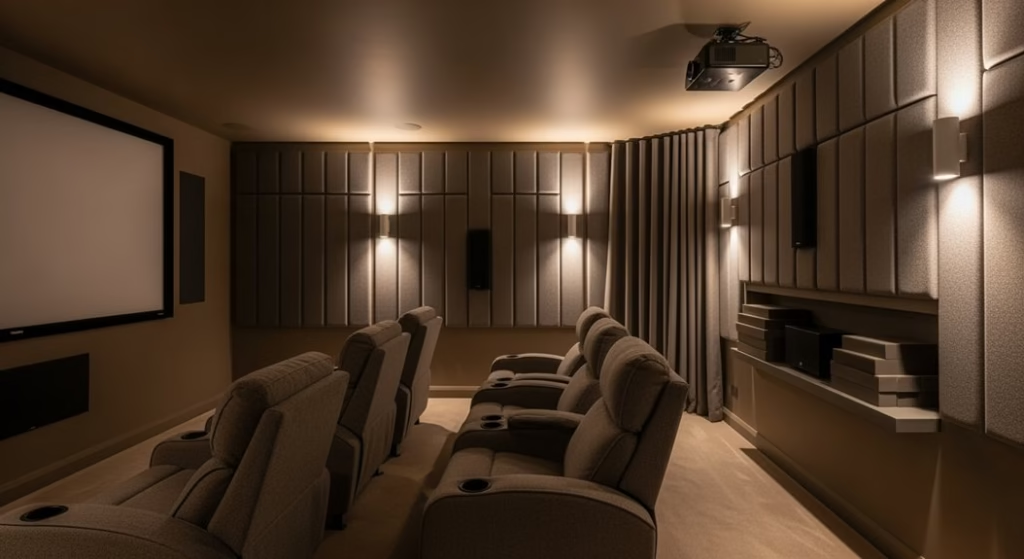
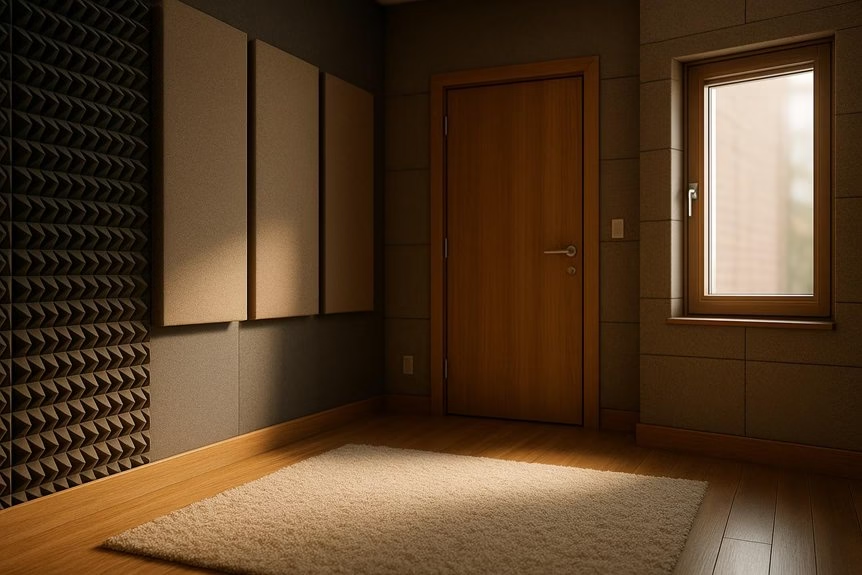
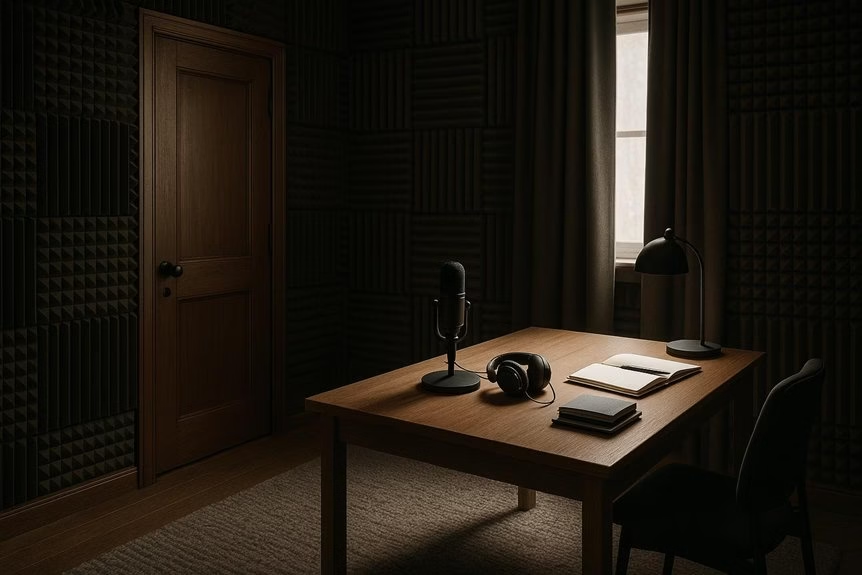
- Install professionally selected acoustic panels near primary reflection points to improve speech clarity and strengthen echo reduction during calls.
- Choose clean, secure mounting and placement that complements the room’s design while delivering consistent acoustic performance.
Panels with a high NRC rating are especially effective at minimizing reverberation and improving speech intelligibility in work-from-home environments.
Together, rugs, drapery, and acoustic panels help reduce lingering reverberation and make voices sound clearer, closer, and more professional. For the best results, Total Home Interiors designs integrated acoustic and window treatment solutions that look refined while performing far beyond basic DIY fixes.
Add Quiet Ventilation With an ERV and Baffles
Even a well-sealed home office still needs fresh air, but ventilation should never undermine the quiet you invested in. At Total Home Interiors, we design ERV ventilation strategies that support comfort while protecting acoustic performance, so you can bring in fresh air without creating a new path for street, beach, or neighborhood noise.
Fresh air belongs in a quiet home office, but only when ventilation is designed to protect the silence you built.
For single-room office applications, a compact ERV such as a Lifebreath 30 ERV can often provide around 60 CFM while helping maintain temperature and humidity balance. The key isn’t just the equipment itself, but how the system is integrated into the room’s overall soundproofing plan.
To reduce noise transfer through the ductwork, supply and return paths should be routed through properly built baffle boxes and planned with duct noise zoning in mind. Lined ducts, using materials such as black HVAC duct liner or second-skin audio duct liner, can help absorb sound while preserving airflow when specified correctly.
Insulated duct runs, careful routing, and additional attic insulation where needed all work together to limit airborne noise and vibration. In spaces where sound clarity matters, addressing first reflection points can further reduce distracting echoes and improve overall acoustic control.
Wall and ceiling penetrations are equally important. Rather than treating these openings as simple cut-throughs, we recommend chimney-style through-wall passes built with heavy drywall or plywood and decoupling details to help preserve the integrity of the sound envelope.
The final step is precise ERV airflow balancing, ensuring the system performs quietly, efficiently, and as intended.
This is where professional design matters. In homes and offices throughout West Orange, NJ and the Tri-State area, Total Home Interiors helps clients integrate ventilation, soundproofing, and acoustic control into one cohesive solution for quieter, more comfortable spaces.
Frequently Asked Questions
How Much Does Professional Home Office Soundproofing Typically Cost?
Professional home office soundproofing typically costs $1,500 to $10,000+, depending on the room size, the level of noise control needed, and the construction methods involved.
Basic acoustic improvements may start around $1,500, while more advanced soundproofing systems using premium materials like mass-loaded vinyl, acoustic drywall, and decoupled wall assemblies can exceed $10,000.
In many cases, costs range from about $20 to $100 per square foot, especially for specialized projects in apartments, condos, and urban properties across Northern New Jersey and NYC.
Because every space has different noise and privacy challenges, a professional assessment is the best way to compare solutions and build an accurate budget.
Can I Soundproof a Rental Office Without Permanent Modifications?
Yes—you can improve sound control in a rental office without permanent modifications, but truly effective soundproofing usually requires professional construction methods.
Landlord-friendly options like freestanding acoustic panels, removable wall treatments, portable door seals, draft-blocking strips, and heavy window treatments can help reduce echo, soften noise, and improve privacy without damaging the space.
For stronger results, portable acoustic booths and professionally selected temporary treatments offer a more polished solution.
At Total Home Interiors, we help clients in West Orange, NJ and across the Tri-State area identify rental-friendly acoustic upgrades that enhance comfort now and can move with you later.
How Long Does a Full Soundproofing Project Usually Take?
You can expect a full soundproofing project to take anywhere from a weekend to about three weeks, depending on the scope of work.
At Total Home Interiors, timelines are based on the construction method, material availability, and installation scheduling.
Simpler upgrades like acoustic panels, door seals, or targeted treatment solutions can often be completed quickly.
More involved soundproofing work—such as upgrading walls, ceilings, floors, doors, or windows to reduce noise transfer—typically requires more time.
The best way to keep your project moving efficiently is to plan early, approve materials in advance, and schedule professional installation as soon as possible.
Which Noise App Can Measure Office Sound Levels Accurately?
If you’re using a noise app to check office sound levels, the NIOSH Sound Level Meter on iPhone is one of the most trusted options for practical readings.
On Android, apps like Sound Meter by Smart Tools can be useful, but results vary more by device, so accuracy should always be verified.
When choosing an app, look for features like calibration, A-weighting, and data logging.
For better results, take measurements at different times of day, from multiple locations, and with the phone positioned consistently.
That said, apps are best for general awareness—not professional-grade diagnosis.
If office noise is affecting privacy, focus, or comfort, a proper acoustic assessment is the better next step.
Total Home Interiors helps businesses and homeowners across West Orange, NJ, Jersey City, Hoboken, and NYC identify noise problems and implement professional soundproofing and acoustic solutions that go far beyond what an app can measure.
Will Soundproofing Increase My Home Office Resale Value?
Yes—soundproofing can improve your home office resale appeal, but it usually adds more marketability than a major price increase.
Buyers increasingly value quiet, flexible work-from-home spaces, especially in condos, apartments, and homes affected by street or neighbor noise.
Professionally installed soundproofing that feels integrated into the home—such as upgraded walls, ceilings, windows, or acoustic treatments—can positively influence buyer perception and may support appraisal value when the work is permanent, polished, and well executed.
In most cases, the biggest return is making your home stand out as more comfortable, private, and functional.
Conclusion
A truly quiet home office starts with understanding how noise travels: through door gaps, underperforming windows, shared walls, HVAC pathways, and hard reflective surfaces. Effective soundproofing means more than adding décor—it requires a professionally designed system that seals air leaks, upgrades weak openings, reinforces partitions, and improves the room’s acoustic balance. At Total Home Interiors, we help homeowners across West Orange, Hoboken, Jersey City, NYC, and the Tri-State area create offices where calls sound clearer, distractions fade, and focused work becomes possible.