What Are DIY Soundproofing Tips for Home Cinema?
To soundproof your home cinema, choose a room away from noise with thick walls. Add acoustic panels with a high NRC rating to reduce echo. Use thick soundproof curtains to block noise and seal windows and doors with weatherstripping and acoustic caulk. Consider insulating walls and ceilings using soundproof drywall or materials like mass loaded vinyl. Floor coverings like carpets can reduce sound transmission. For more insights, explore additional techniques.
Key Takeaways
- Install high NRC acoustic panels on walls and ceilings to reduce echo and improve sound quality.
- Use thick soundproof curtains to block external noise and enhance acoustics.
- Apply weatherstripping to doors and windows for airtight seals and prevent sound leakage.
- Combine mass loaded vinyl and acoustic foam to insulate walls and ceilings for better sound isolation.
- Create DIY acoustic panels with fiberglass or foam wrapped in fabric for cost-effective soundproofing.
Choosing the Right Room for Soundproofing
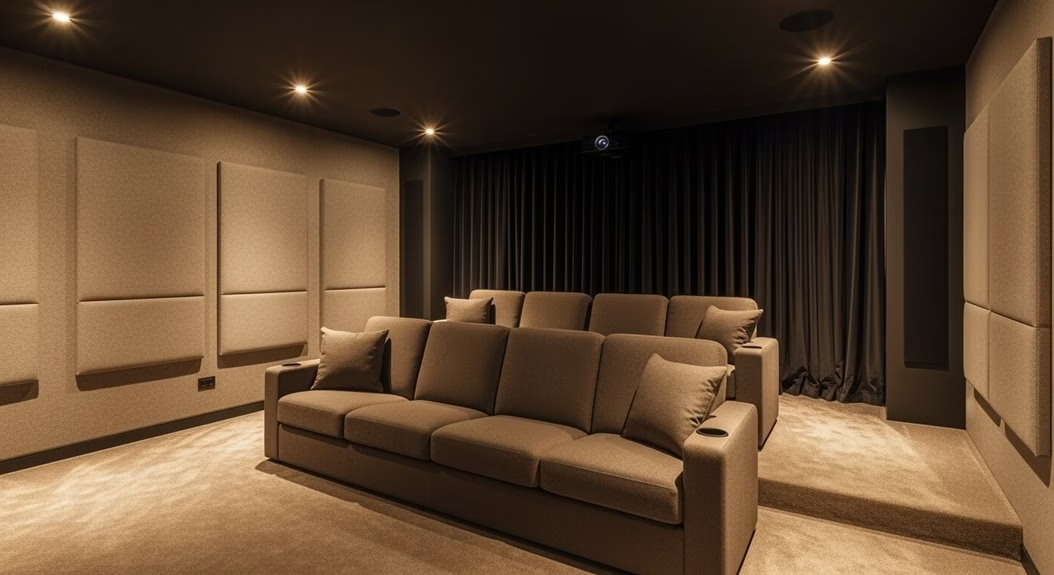
When you’re setting up a home cinema, choosing the right room for soundproofing is crucial to enhancing your viewing experience.
Start by selecting a room distanced from external noise like busy streets or common areas. This helps reduce noise interference.
Choose a room away from busy streets to minimize noise interference and enhance your viewing experience.
Look for a space with thick walls or double-pane windows to improve sound isolation.
Consider the room’s dimensions; rectangular shapes usually offer better acoustics than square ones, aiding in sound projection and absorption within your home theater.
Make sure the room has enough space for all necessary equipment and furniture, promoting ideal sound distribution and comfort.
Finally, assess the proximity to other noise sources, such as neighboring rooms, to make certain your chosen space effectively isolates sound for an immersive experience.
Installing Acoustic Panels for Enhanced Sound Quality
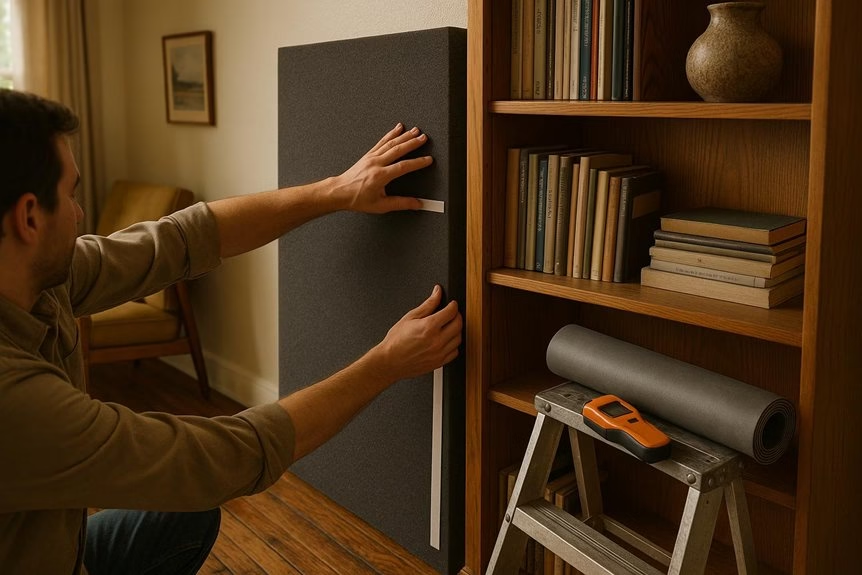
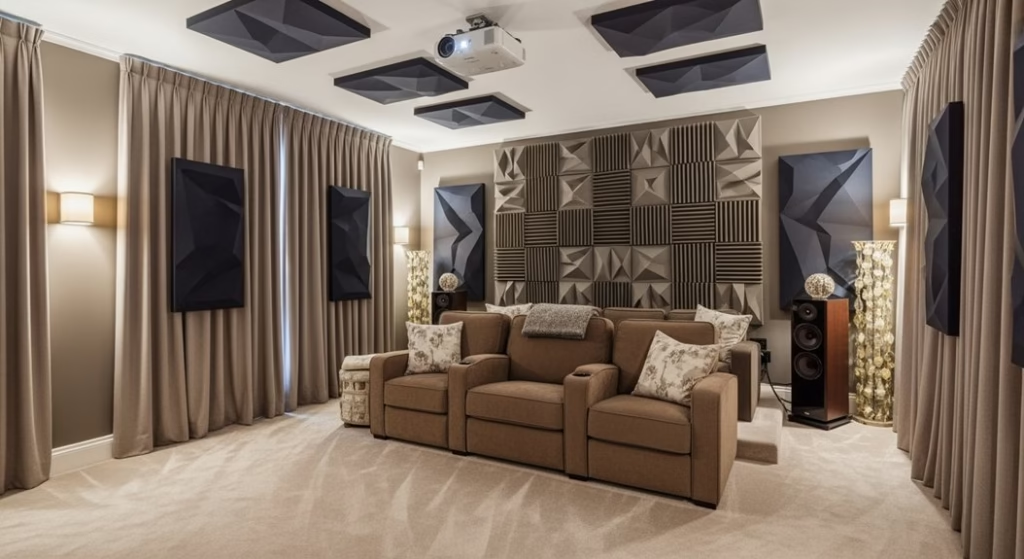
To elevate your home cinema experience, installing acoustic panels is a smart move that enhances sound quality by minimizing echo and reverberation.
These panels are designed to absorb sound waves, greatly reducing unwanted noise and improving clarity. Look for acoustic panels with a high NRC rating, ideally close to 1.00, to guarantee maximum sound absorption.
Strategically position your panels on walls and ceilings, focusing on reflective surfaces and corners where sound tends to bounce.
You can even create your own DIY acoustic panels using materials like fiberglass or foam wrapped in fabric, which not only boosts sound absorption but also adds visual interest.
Utilizing Soundproof Curtains for Noise Reduction

Although creating an immersive home cinema experience requires attention to sound quality, soundproof curtains offer an effective solution for reducing unwanted noise.
These curtains, made from thick fabric, can block significant external noise, cutting it by 21-25 decibels, which translates to about an 80% noise reduction.
Soundproof curtains cut external noise by up to 25 decibels, achieving approximately 80% noise reduction.
For ideal performance, choose curtains with a high NRC rating, ideally 1.00, to absorb sound waves thoroughly.
Installation is essential; make certain that the curtains extend beyond the window frame to create a proper seal, minimizing any sound leakage.
Layering soundproof curtains with blackout curtains enhances sound and light control.
Additionally, their dense construction aids in energy efficiency by insulating the room, reducing heating and cooling costs in your home cinema.
Sealing Doors and Windows to Prevent Sound Leakage
Effectively sealing doors and windows is essential in preventing sound leakage and enhancing your home cinema experience.
Start soundproofing your home theater by applying weatherstripping along the edges of doors and windows. This creates airtight seals, reducing noise transmission by up to 20 dB.
Replace hollow doors with solid core doors to reduce sound more effectively, blocking 20-30% more noise thanks to their density. Use acoustic caulk around window and door frames to fill any gaps or cracks, decreasing sound leakage even further.
For an extra layer, consider heavy sound-dampening curtains or soundproof window inserts, which can block up to 99% of external noise.
Regular maintenance of seals and weatherstripping will improve overall soundproofing, ensuring a superior cinema experience.
Insulating Walls and Ceilings for Better Sound Isolation
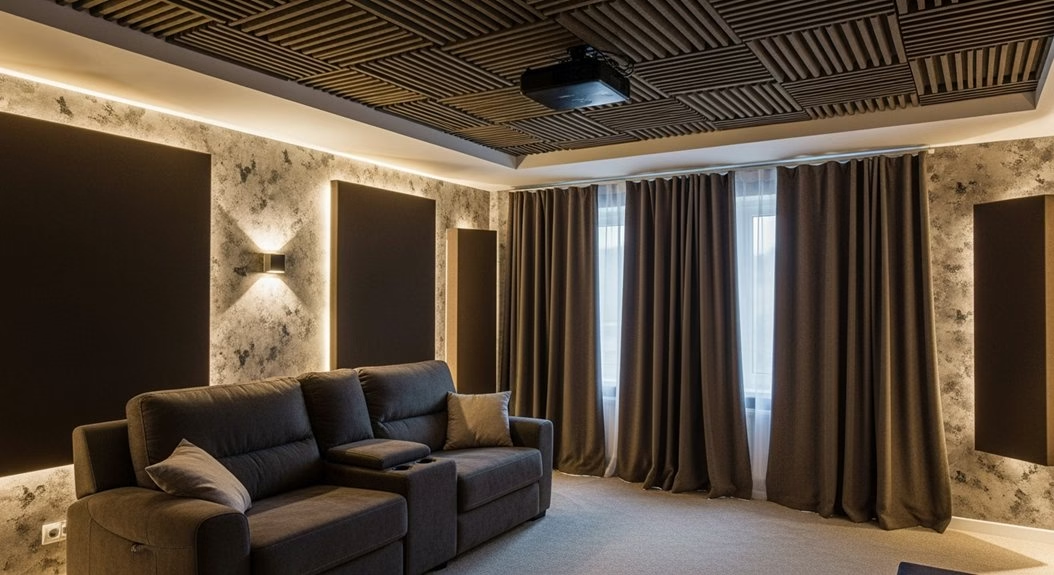
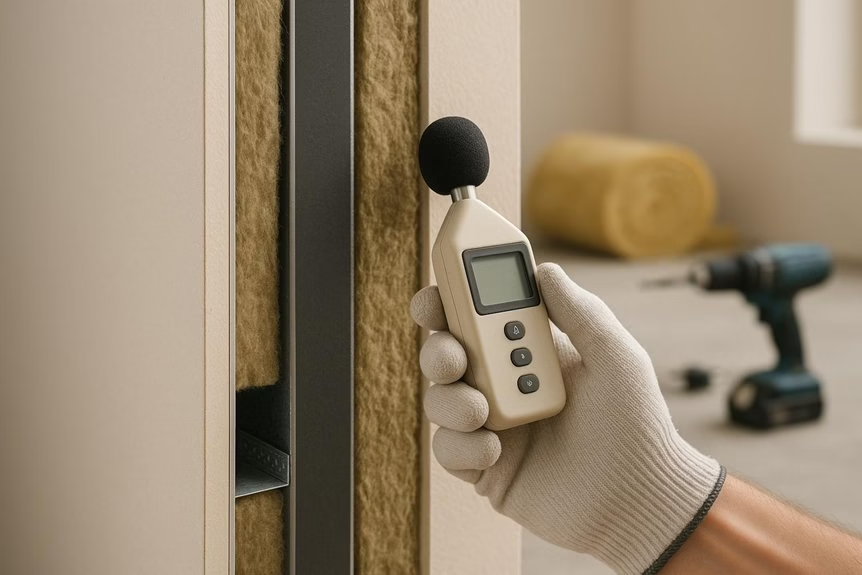
When you’re looking to enhance sound isolation in your home cinema, insulating walls and ceilings is an essential step.
Start with soundproof drywall to boost the sound transmission class (STC) rating by 5-10 points. Here’s how to improve your setup:
- Combine Soundproofing Materials: Use mass loaded vinyl and acoustic foam panels to absorb high and mid-range frequencies, enhancing sound quality.
- Implement Decoupling Techniques: Utilize resilient soundproofing clips to prevent vibrations from transferring between surfaces, which is key for low-frequency sound transmission.
- Install High-Performance Insulation: Opt for QuietFil Wall Batting within wall cavities to effectively reduce sound transmission, ensuring even better sound isolation.
Optimizing Floor Materials for Reduced Sound Transmission
To reduce sound transmission in your home cinema, focus on optimizing floor materials.
Start by using thick carpets or rugs with a soundproof underlay to effectively absorb sound waves and reduce vibrations. This will greatly reduce sound transmission between floors.
For minimizing impact noise, consider rubberized flooring or soundproof vinyl, which come with sound-dampening properties to improve acoustics.
To block low-frequency sounds, install a layer of mass-loaded vinyl (MLV) beneath your flooring materials.
Complement these floor treatments with acoustic tiles or foam panels on the ceiling to enhance the overall sound quality.
Don’t forget to seal gaps and seams with acoustic caulk to prevent sound leakage, ensuring your home theater remains isolated and immersive.
Frequently Asked Questions
How to Make Home Theatre Sound Proof DIY?
You can make your home theater soundproof by installing acoustic panels and wall treatments.
Use sound barriers like mass-loaded vinyl and insulation materials such as rock wool to dampen noise.
Opt for floor coverings and ceiling tiles that absorb sound.
Add door seals and window inserts to block sound leakage.
Choose heavy fabric for curtains as a soundproofing technique.
These steps help create a quieter, more immersive cinema experience at home.
How to Soundproof a Home Cinema?
To soundproof a home cinema, think of it as wrapping your room in a cozy sound blanket.
Start by installing acoustic panels to absorb echo. Hang soundproof curtains and use floor underlayment for noise control.
Insulate walls with soundproofing foam and choose ceiling tiles designed for sound absorption. Seal doors with airtight door seals and use window plugs.
Add bass traps in corners, and lay area rugs to dampen sound vibrations.
What Is the Best Soundproofing for Home Theaters?
To achieve the best soundproofing for home theaters, you should focus on acoustic panels and sound barriers.
Use insulation materials for wall treatments, and choose floor coverings that dampen noise.
Ceiling designs with proper insulation can also help.
Make certain window seals and door sweeps are tight to block sound leaks.
Incorporate bass traps to manage low frequencies and enhance noise reduction.
This combination will greatly improve your home theater’s acoustic environment.
What Absorbs Sound Really Well?
When it comes to sound absorption, “a stitch in time saves nine.”
You should focus on acoustic panels and soundproof curtains for excellent noise reduction.
Carpet flooring and wall insulation work wonders, while ceiling tiles and bass traps handle low frequencies.
Proper furniture arrangement, like adding upholstered pieces, enhances sound absorbing qualities.
Don’t forget window seals to block external noise.
With these elements, you’ll create a serene and immersive environment.
Conclusion
You’ve transformed your home cinema into a sonic haven. Did you know that proper soundproofing can reduce noise by up to 70%? Imagine the difference that makes during a gripping scene, where every whisper and rustle is crystal clear. By choosing the right room, adding acoustic panels, using soundproof curtains, sealing doors and windows, insulating walls and ceilings, and optimizing floor materials, you’re ensuring your cinematic experience is immersive and uninterrupted. Enjoy your private theater!