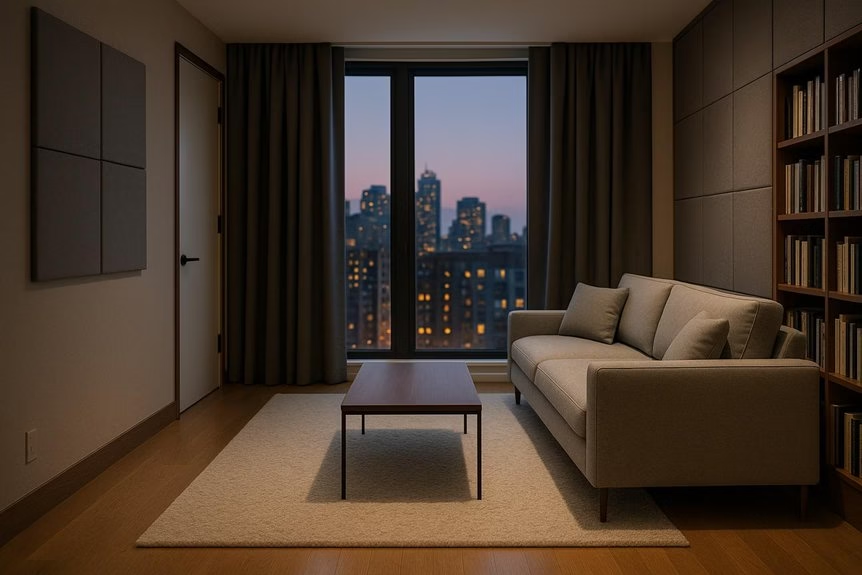
Set clear performance targets from day one: STC/IIC 50+ as a baseline, 55–60 where premium comfort is expected. Our team maps every noise path—airborne leaks, impact bridges, and mechanical bypasses—and prioritizes the intersections that matter in urban multifamily buildings.
We specify zone-based assemblies that work for your space:
- Soundproofing: Decoupled party walls, resilient underlayments, isolated ceilings, and acoustic glazing using premium mass-loaded vinyl, specialty acoustic drywall, and clip-and-channel systems. All seams, perimeters, and penetrations are professionally sealed for airtight results.
- Acoustics: Fabric-wrapped panels, fabric wall systems, acoustic ceiling treatments, and sound masking to tame echo and improve speech clarity in living areas, offices, and media rooms.
- Window Treatments: Motorized shades, blinds, and drapery from Lutron, Somfy, and Hunter Douglas PowerView—integrated for privacy, light control, and energy efficiency in city apartments and condos.
- Home Automation: Lighting scenes, whole-home audio/video, robust networking and WiFi, and voice control (Alexa, Google, Control4) to unify comfort and convenience.
- Home Theater: Theater design, Dolby Atmos layout, projector/screen selection, luxury seating, and lighting control—paired with room acoustics for cinematic performance without disturbing neighbors.
We build realistic budgets by assembly with 10–30% contingencies, plan logistics around building rules and elevator access, and coordinate inspections. Before finishes, we verify performance—testing for flanking paths and confirming isolation targets—so there are no surprises later.
Serving New Jersey, NYC, Hoboken, and Jersey City, Total Home Interiors delivers quiet, privacy, and control that DIY and budget options can’t match. From eliminating street and neighbor noise to integrating automated shades and smart controls, there’s a proven, professional path to peace—and we manage every step. Ready to solve noise and privacy for good? Let’s schedule an on-site assessment.
Key Takeaways
- Set performance targets by zone early—STC 50+ and IIC 50+ for urban condos and multi-family—then map every noise path. Our West Orange team pinpoints flanking routes between units so you avoid costly retrofits and get results the first time.
- Schedule a professional sound audit. We document airborne leaks, impact bridges, and mechanical bypasses at walls, floors/ceilings, windows, and shafts. You’ll receive a clear plan detailing where premium mass-loaded vinyl, decoupled wall systems, and specialty acoustic drywall will deliver the biggest gains.
- Prioritize intersections where multiple paths converge—party walls, column lines, floor/ceiling transitions, and shaft walls. We design fully decoupled assemblies with resilient channels and acoustic sealants, then pair them with acoustic treatments (panels, ceilings, sound masking) for balanced privacy and comfort.
- Budget smart, by assembly and category. We provide transparent line items for materials and labor, plus realistic contingencies (10–30%) and any relocation or swing-space needs to keep projects in NYC, Hoboken, and Jersey City on schedule.
- Integrate finishes and systems for a turnkey result. Our team coordinates approvals and installs:
- Soundproofing: MLV barriers, decoupled framing, acoustic drywall
- Acoustics: Custom fabric-wrapped panels, fabric wall systems, acoustic ceilings, sound masking for offices and restaurants
- Window Treatments: Motorized shades/blinds/drapery from Lutron, Somfy, and Hunter Douglas PowerView—privacy, glare control, and energy savings for urban living
- Home Automation: Lighting scenes, whole-home AV, robust networking/WiFi, and voice control (Alexa, Google, Control4)
- Home Theater: Theater-grade acoustics, Dolby Atmos, projector/screen packages, luxury seating, and lighting control
Why Total Home Interiors
- Local expertise in multi-family noise control and urban privacy
- Premium materials, meticulous installation, and measurable STC/IIC outcomes
- Seamless integration of smart shades and automation for everyday convenience
- White-glove project management from assessment to final tuning
Serving West Orange, NJ and the Tri-State area. Book a consultation to get a tailored soundproofing and acoustic plan that delivers peace, privacy, and performance.
Set Soundproofing Targets: STC/IIC and Quick-Win Assemblies
Set clear acoustic targets early to lock in performance, budget, and coordination. In multifamily and urban projects across NJ and NYC, we typically design to STC 50 and IIC 50 or better—meeting code while delivering the peace, privacy, and sleep our clients expect. With defined metrics, Total Home Interiors can specify proven assemblies that blend mass, airtightness, and decoupling for maximum impact without unnecessary structural changes.
Smart, cost-effective assemblies:
- Walls (residential and commercial): Upgrade to specialty acoustic drywall with a decoupled system (resilient clips and hat channel or double-stud where appropriate), paired with premium mass-loaded vinyl and meticulous perimeter sealing. This combination boosts airborne isolation and tames speech and TV noise from neighbors or adjacent rooms.
- Floors/Ceilings: Combine high-performance resilient underlayments with isolated ceiling interfaces to elevate IIC and reduce footfall/impact noise. We coordinate finishes, heights, and building constraints to keep costs predictable while delivering quiet.
These decisions belong in design, not after bidding. When we set STC/IIC targets up front, your proposals reflect the correct materials, and trades align on details—no surprises, no compromises. You’ll satisfy code, improve comfort, and protect resale value.
Beyond soundproofing, we finish the experience:
- Acoustics: Fabric-wrapped panels, fabric wall systems, sound masking, and acoustic ceilings to eliminate echo and improve clarity in living rooms, offices, restaurants, and studios.
- Window Treatments: Motorized shades, blinds, and drapery from Lutron, Somfy, and Hunter Douglas PowerView for privacy, glare control, and energy efficiency—fully integrated with your smart home.
- Home Automation: Lighting scenes, whole-home AV, robust WiFi, and voice control (Alexa, Google, Control4) for effortless living.
- Home Theater: Theater design, acoustics, projection, Atmos audio, luxury seating, and lighting control for a cinematic escape that sounds as good as it looks.
Serving West Orange, Hoboken, Jersey City, and the greater NYC area, Total Home Interiors delivers premium materials, precise installation, and results you can hear—and not hear—every day. Want a quieter home or workspace? Let’s set your targets and design the right solution from the start. For added isolation and control of low-frequency energy, we often integrate corner bass traps with wall and ceiling acoustic treatments to reduce muddiness and improve clarity.
Map Noise Paths in Multi-Family Buildings
Silencing Multi-Family Noise Starts With a Professional Noise Path Map
If you’re hearing your neighbor’s TV, hallway chatter, or footsteps overhead, the fastest way to a quieter home is a professional noise path assessment. Total Home Interiors walks your units, corridors, and mechanical rooms to trace exactly how sound is getting in—so we can stop it with the right solution and an accurate budget. To ensure lasting results without overspending, we target an STC rating of 55–60 using decoupling techniques and dense materials identified during the assessment.
A professional noise path assessment pinpoints how sound enters—so we can stop it with targeted, budget-accurate solutions.
What we look for
- Airborne routes: Gaps at doors, electrical outlets, plumbing penetrations, window perimeters, and duct junctions that let speech, TV, and street noise leak through.
- Impact routes: Floor/ceiling assemblies and structure-borne connections that carry footsteps, chair movement, and elevator vibrations.
- Mechanical bypasses: HVAC, risers, and shafts that link zones and transmit noise across floors and between apartments.
How we document and prioritize
- Tag each path: Airborne leak, impact bridge, or mechanical bypass.
- Record assemblies and details: Wall types, floor/ceiling build-ups, window systems, and recurring defects common in Tri-State multifamily construction.
- Focus on intersections: Unit-to-unit party walls, floor/ceiling transitions, shaft borders, and corridor interfaces—where multiple noise paths converge and minor fixes won’t cut it.
What we recommend and install
- Soundproofing (stop transfer): Decoupled wall systems, double-stud or resilient channel assemblies, premium mass-loaded vinyl, specialty acoustic drywall, and floating ceilings/floors to interrupt vibration and block neighbor or street noise.
- Acoustics (tune the room): Fabric-wrapped panels, custom fabric wall systems, acoustic ceilings, and sound masking to reduce echo and improve clarity in living rooms, bedrooms, and home offices.
- Window treatments (privacy + quiet): Motorized shades and drapery from Lutron, Somfy, and Hunter Douglas PowerView to tighten window seals, add absorption, improve privacy, and boost energy efficiency—fully integrated with your smart home.
- Home automation: Scene-based lighting, whole-home audio, robust WiFi, and voice control (Alexa, Google, Control4) for seamless, quiet comfort.
- Home theater: Purpose-built theaters with acoustic design, Dolby Atmos, projector/screen integration, luxury seating, and precise sound isolation so late-night movies don’t wake the neighbors.
Why it matters
- Precision over guesswork: Mapping ensures we target the exact paths causing your noise problems—no wasted spend on the wrong materials.
- Premium results: We use proven assemblies and premium materials designed for dense urban buildings in Jersey City, Hoboken, and NYC.
- End-to-end execution: Assessment, design, materials, installation, and commissioning by a specialist team that understands co-op/condo constraints and building management requirements.
Get started
If you’re battling street noise, neighbor noise, or lack of privacy, schedule a professional noise path assessment. We’ll deliver a prioritized plan and turnkey proposal to create real quiet—backed by Total Home Interiors quality and craftsmanship.
Choose Soundproofing Systems by Zone: Units, Party Walls, Floors, Amenities
Choose Soundproofing Systems by Zone: Units, Party Walls, Floors, Amenities
With noise paths identified, Total Home Interiors engineers zone-specific solutions that stop the exact leaks you’re hearing—without guesswork or DIY compromises.
Units (apartments, condos, brownstones)
- Build dense, decoupled walls using specialty acoustic drywall, premium mass-loaded vinyl, and double-stud or hat-channel assemblies to block neighbor voices and TV.
- Add resilient floor underlayments and ceiling isolation to tame footfall from above and protect those below.
- Upgrade windows with acoustic glazing strategies and motorized shades for privacy, light control, and energy efficiency—seamlessly integrated with Lutron, Somfy, or Hunter Douglas PowerView.
Party Walls and Demising Assemblies
- Use fully decoupled wall systems with mass barriers to raise STC and eliminate sound bridging.
- Treat electrical and plumbing penetrations with pro-grade acoustic seals to maintain performance at weak points.
- Ideal for multifamily and townhouse separations where code minimums aren’t enough.
Floors and Ceilings
- Specify resilient underlayments to cut impact noise and improve IIC.
- Add ceiling isolation (resilient channels, isolation clips) with specialty acoustic drywall layers to reduce airborne transfer between levels.
- Finish with fabric-wrapped acoustic panels where room echo needs tuning.
Amenity Spaces and Open Areas
- Control reverberation with acoustic ceilings, fabric wall systems, and architectural panels so noise doesn’t spill into nearby units.
- Deploy sound masking in lounges, fitness rooms, offices, and medical suites for speech privacy without overbuilding.
Performance Targets and Integration
- We design to practical zone-based goals—STC 50 and IIC 50 or higher where feasible—to minimize costly retrofits while delivering noticeable results.
- For urban living, we combine acoustic treatment with motorized window treatments and home automation: privacy on demand, quieter rooms, and smarter control from your phone or voice (Alexa, Google, Control4).
Why Total Home Interiors
- Premium materials only: mass-loaded vinyl, specialty acoustic drywall, decoupled assemblies, and custom acoustic panels.
- Professional design, installation, and commissioning for residential and commercial projects across West Orange, NJ, Jersey City, Hoboken, and NYC.
- One team for soundproofing, acoustics, automated shades, lighting control, and home theater—so every layer works together.
Ready to solve noise for good? Book a site assessment and we’ll map your noise paths, set clear STC/IIC targets, and deliver a tailored plan that fits your space, brand, and budget.
To further boost isolation where needed, we pair dense insulation with Green Glue between drywall layers and targeted acoustic sealant at penetrations to lift STC toward 55–60 while maintaining airtightness.
Select Soundproofing Materials: Underlayments, MLV, Decoupling
A smarter soundproofing plan pairs premium underlayment, mass, and decoupling so your walls, ceilings, and floors reliably achieve STC/IIC 50+ without overbuilding. For hard-surface floors in condos and brownstones, we start with a high-performance acoustic underlayment to cut impact noise from footsteps and moving furniture while trimming airborne transfer—crucial for stacked units in Jersey City, Hoboken, and NYC co-ops.
To further improve inter-floor isolation, layer underlayment with thick carpets and dense padding to absorb reflections and reduce impact noise.
Next, we add mass where partitions leak. On shared walls and ceilings, we use premium mass-loaded vinyl (MLV) and specialty acoustic drywall in strategic layers behind finished surfaces to raise STC and block cross-unit transmission without adding bulky thickness. In concrete or densified assemblies, we apply MLV to close remaining gaps and address flanking paths for predictable results.
Finally, we decouple. Resilient channels or clip-and-channel systems interrupt vibration between framing and finishes, dramatically reducing structure-borne transfer. When appropriate, we integrate acoustic ceiling treatments or fabric wall systems to refine room sound and reduce echo after we’ve contained the noise.
This professional, building-specific approach—premium MLV, engineered underlayments, and proven decoupling—delivers measurable isolation and a quieter, more private home. As a West Orange-based team serving the Tri-State area, Total Home Interiors handles design, installation, and coordination with building requirements, ensuring code compliance, HOA approval, and a clean, turnkey finish.
Plan Your Build Sequence to Keep Noise Out
Plan Your Build Sequence to Keep Noise Out
Don’t wait for punch list problems. At Total Home Interiors, we engineer sound control into your project from day one—so your space is quiet, private, and ready for modern living the moment you move in. Install double-pane windows with airtight seals early in the build to block unwanted outside noise and prevent costly rework later.
Build a Budget: Materials, Labor, Contingencies, Relocation
Build a Soundproofing Budget That Works in the Tri-State Area
At Total Home Interiors, we build budgets that reflect real-world conditions in New Jersey, Hoboken, Jersey City, and NYC high-rises—so there are no surprises mid-project. Here’s how we structure a reliable, decision-ready budget for premium soundproofing, acoustics, window treatments, home automation, and home theater work, with a focus on noise control and privacy for urban living. For enhanced flexibility and wellness, consider incorporating intelligent acoustic zoning with movable partitions to tailor noise control across collaborative and quiet areas.
1) Establish clear budget categories
- Materials: Premium mass-loaded vinyl (MLV), decoupled wall systems (double stud, isolation clips and channels), specialty acoustic drywall, acoustic sealants, and attenuation backer boxes.
- Labor: Union or non-union as required; precise labor planning by phase and building type (brownstones, condos, co-ops, commercial suites).
- Contingencies: 10–30% to cover hidden conditions, assembly refinements, and integration changes.
- Relocation/Swing Space: Tenant decanting, short-term rentals, storage, and building-required notices for apartment/condo projects.
2) Price materials by assembly and performance
- Double stud walls: Highest isolation, thicker footprint—great for party walls or bedrooms needing true quiet.
- Clips and channels: Strong performance in tight footprints—ideal for condos where space is at a premium.
- MLV barriers: Flexible mass for walls, ceilings, and floors; integrates well with specialty acoustic drywall.
- Windows: Laminated acoustic glass, secondary glazing, and perimeter sealing for street noise.
Use local cost indices and building-specific logistics (freight elevators, union rules, after-hours work) to refine unit pricing and labor rates. We factor in coordination with building management and DOB requirements in NYC.
3) Scope labor in phased detail
- Demolition and substrate prep
- Framing and decoupling hardware
- Insulation (high-density mineral wool where required)
- Specialty acoustic drywall and fastening patterns
- Perimeter/penetration sealing and putty pads
- Finishes, paint, and touch-ups
- HVAC/electrical coordination: Backer boxes, duct silencers, and airtight penetrations to protect isolation
For commercial clients, include off-hours scheduling, dust control, and phasing to keep spaces operational.
4) Integrate complementary services from day one
- Acoustics: Fabric-wrapped panels, fabric wall systems, sound masking, and acoustic ceilings—budget panels by coverage percentage and NRC goals to avoid over/under-spec.
- Window treatments: Motorized shades (Lutron, Somfy, Hunter Douglas PowerView) for privacy and energy savings; include wiring, programming, and smart home integration.
- Home automation: Lighting control, scenes, whole-home AV, robust networking/WiFi; budget structured cabling early to prevent rework.
- Home theater: Room design, isolation strategy, acoustic treatments, projector/screen, Dolby Atmos, seating, and lighting control—budget holistically to align performance with aesthetics.
5) Plan for relocation and logistics
- Residential: Temporary housing or swing spaces when bedrooms/living areas are offline; elevator reservations; material staging; dust and noise mitigation plans.
- Commercial: Night/weekend work premiums, phased areas, IT and conference room downtime, and sound masking transition plans.
6) Set and manage contingencies
- 10–15% for well-documented remodels and new construction
- 20–30% for older buildings, unknown wall assemblies, or complex integrations (historic brownstones, co-ops with strict rules)
Contingency covers concealed conditions, design refinements after mockups, and integration conflicts across trades.
7) Align budget with design milestones
- Schematic: Range-based allowances (assembly type, target STC/IIC, acoustic coverage).
- Design development: Lock assemblies, panel quantities, window treatment selections, and device counts.
- Construction documents: Final pricing with logistics, schedule, and permit considerations.
- Procurement: Lead times for specialty materials, Lutron shades, and custom acoustics baked into schedule and carrying costs.
Why Total Home Interiors
- Local expertise: We navigate co-op/HOA approvals, NYC DOB, union requirements, and high-rise logistics.
- Premium materials and craftsmanship: Proven assemblies, not guesswork or DIY shortcuts.
- Integrated delivery: Soundproofing, acoustics, window treatments, automation, and theaters planned together for better performance and lower rework risk.
- Transparent budgeting: Itemized scopes, realistic labor, and contingencies that protect your investment.
Ready to build a quiet, private, and beautifully integrated home or workspace? Schedule a site consultation in West Orange, Hoboken, Jersey City, or NYC, and we’ll deliver a clear, phased budget you can trust.
Field-Test STC/IIC and Prevent Cost Creep
Stop noise problems before they start. At Total Home Interiors, we plan and verify acoustic performance early—so you don’t pay for fixes after finishes. Building inspections rarely include sound tests, which is why we field-test and fine-tune before drywall goes up.
Our approach for multi-family, brownstones, and luxury homes:
- Soundproofing, not guesswork: Insulation alone won’t deliver code-level results. We design for STC/IIC 50+ using mass, decoupling, and damping—premium MLV, specialty acoustic drywall, resilient clips, and HushFrame-style ceiling systems to cut both airborne and impact noise.
- Acoustic comfort, not echoes: We pair sound isolation with in-room acoustic treatments—fabric-wrapped panels, fabric wall systems, acoustic ceilings, and sound masking—to ensure conversation clarity, privacy, and a calm soundscape.
- Smart privacy layered in: Motorized shades from Lutron, Somfy, and Hunter Douglas PowerView integrate with your smart home to block views, reduce street noise transmission at the window, and improve energy efficiency—ideal for urban living.
- Integration-ready: We coordinate with lighting control, whole-home audio/video, networking, and voice assistants (Alexa, Google, Control4) so your quiet home is also a smarter home.
- Home theater excellence: Theater design with proper isolation, bass management, acoustic treatment, Dolby Atmos layouts, and controlled lighting for cinematic performance without disturbing the rest of the home.
Proven process to prevent cost creep:
1) Pre-construction acoustic analysis and mockup field testing. We test assemblies on-site and refine details before drywall—saving rework.
2) Value-driven comparisons. We evaluate standard insulated assemblies versus decoupled, damped systems and specify the solution that meets targets at the lowest lifecycle cost.
3) Lock the spec, verify the result. We write acoustical requirements and test milestones into contracts to prevent substitutions, coordinate penetrations and flanking paths, and retest after rough-in.
We also specify panel types and placement with an eye on first reflections and corner bass control, using high NRC treatments and bass traps to manage echoes and low-frequency buildup for superior in-room clarity.
Serving West Orange, NJ and the Tri-State area, Total Home Interiors delivers premium noise control, acoustic treatment, automated window treatments, and smart home integration—done right the first time. Ready for peace, privacy, and performance? Let’s schedule your on-site assessment.
Frequently Asked Questions
How Do Acoustical Upgrades Impact Insurance or Liability in Multi-Family Properties?
Proactive acoustical upgrades can lower insurance exposure and sharpen liability protection for multi-family properties—especially in dense markets like Jersey City, Hoboken, and NYC.
Here’s how Total Home Interiors helps owners and boards translate technical performance into risk reduction and better terms:
- Reduce complaints and claims: Proper soundproofing (decoupled wall/ceiling assemblies, premium mass-loaded vinyl, specialty acoustic drywall, and floor underlayments) and tuned acoustics (fabric-wrapped panels, ceiling treatments, sound masking) dramatically cut noise disputes, habitability claims, and nuisance actions.
- Strengthen defensibility: Verified lab and field ratings (STC/IIC) and documented commissioning demonstrate due diligence if a tenant or neighbor alleges excessive noise or inadequate privacy.
- Underwriting advantages: Carriers and specialty underwriters often view third-party tested assemblies, brand-name materials, and professional installation favorably—potentially improving premiums, deductibles, or terms for properties with a history of noise complaints.
- Privacy and compliance: In offices and mixed-use buildings, sound masking and acoustic treatments support speech privacy and help align with guidelines like HIPAA-adjacent best practices for medical and professional suites, reducing accidental disclosure risk.
- Smart controls add proof and prevention: Integrated automation (scenes for quiet hours, occupancy-based audio limits, motorized Lutron/Somfy/Hunter Douglas shades for privacy and façade noise buffering) provides policy enforcement and digital logs that clarify responsibility.
Risk and documentation best practices we implement:
- Specify assemblies to target code or board-defined STC/IIC goals; capture submittals, cut sheets, and as-builts.
- Perform field testing where appropriate; archive test reports, photos, and installation checklists.
- Maintain materials provenance and warranties; schedule periodic inspections for seals, penetrations, door sweeps, and shade mechanics.
- Update leases/house rules to define quiet hours, flooring standards (e.g., approved underlayments for hard surfaces), and window treatment use for privacy and light control.
- Coordinate with your broker and counsel: Endorse improvements on the policy, ensure contractor COIs and indemnification are in place, and align coverage with building code, condo bylaws, and manufacturer warranty requirements.
Where we fit:
- Soundproofing: Walls/ceilings/floors/windows to block street and neighbor noise in apartments and condos.
- Acoustics: Fabric wall systems, ceiling treatments, and sound masking to improve speech privacy and reduce echo in corridors, lobbies, amenity spaces, offices, and restaurants.
- Window treatments: Motorized shades integrated with smart home systems to enhance privacy, reduce exterior noise impact, and improve energy efficiency.
- Home automation: Centralized control and reporting that support policy compliance and incident documentation.
Next step: Schedule a site assessment. We’ll map existing construction, model STC/IIC outcomes, recommend code-aligned assemblies, and provide a documentation package your insurer and board will appreciate.
What Tenant Communication Plan Reduces Complaints During Soundproofing Construction?
Predictability is peace—start with a published construction calendar and keep it. Total Home Interiors issues weekly rollups and same-day alerts before any high-decibel work. A 24/7 hotline and dedicated project inbox route concerns to a real person, fast.
Engage early. Host kickoff briefings (in-person or virtual), provide a clear FAQ on soundproofing phases (framing, decoupling, MLV, acoustic drywall), and translate materials for multilingual buildings. For commercial spaces, include how acoustic panels, fabric wall systems, and sound masking will reduce echo and improve speech privacy as phases complete.
Reduce impact, not just report it. Offer quiet hours during peak WFH times, bookable quiet rooms, or on-site courtesy spaces. Schedule the loudest tasks (demolition, fastening specialty acoustic drywall) within defined windows. For window treatments, coordinate short, low-noise install slots and communicate when shade motors will be tested. For automation and theater work, group drilling and calibration to minimize repeated disturbances.
Be transparent with data. Implement noise monitoring in corridors and common areas; publish decibel trends and milestones (e.g., MLV installed on floors 3–5; expected 8–12 dB reduction after acoustic caulking and sealing). Share before/after acoustic measurements in amenity spaces and restaurants when panels or ceiling treatments go in.
Put people on the floor. Assign an on-site Tenant Liaison and a Building Manager counterpart for rapid resolution, daily walk-throughs, and sign-offs after each phase (walls closed, ceiling treatments complete, shade commissioning). Maintain a live issue log so residents see status and resolutions.
Make goodwill tangible. If disruptions exceed agreed thresholds (noise windows, dust, elevator holds), offer credits or gift cards, or complimentary upgrades like a bedroom sound masking device or a motorized shade control add-on. For offices, consider complimentary acoustic consults for conference rooms impacted by the schedule.
Close the loop. Send short satisfaction check-ins after each milestone (soundproofing completion, acoustic treatment install, window treatment commissioning, theater calibration). Track response time, noise limit compliance, and tenant sentiment, and publish a summary at project end with actual dB improvements and what’s next.
Deliverables package:
- Construction calendar with noise windows and daily alerts
- Multilingual FAQ covering soundproofing, acoustics, window treatments, automation, and theater phases
- 24/7 hotline + on-site Tenant Liaison
- Noise monitoring dashboard with weekly summaries
- Goodwill policy for over-threshold disruptions
- Post-phase surveys and final report showing measurable noise reduction and acoustic improvements
This plan lowers complaints by setting expectations, minimizing disruption with professional sequencing, and proving progress with real metrics—hallmarks of Total Home Interiors’ premium approach.
Can Soundproofing Improve Energy Efficiency or HVAC Sizing Assumptions?
Yes—done right, soundproofing can improve energy efficiency and inform smarter HVAC sizing. When we design a soundproof assembly, we’re also adding mass, airtight layers, and often decoupling—all of which reduce heat transfer and infiltration. The result: steadier indoor temperatures, fewer drafts, quieter ductwork, and lower peak loads.
What this means for your project:
- Residential (apartments/condos, townhomes): Denser wall and ceiling systems, premium acoustic drywall, and mass-loaded vinyl can tighten the envelope and calm street/neighbor noise while cutting unwanted air leakage.
- Commercial (offices, restaurants, studios, medical): Decoupled wall systems and specialty barriers improve speech privacy and thermal stability—helping HVAC run more efficiently and reducing short cycling.
- Window treatments: Motorized shades and drapery from Lutron, Somfy, and Hunter Douglas PowerView add a thermal layer, reducing solar gain and nighttime heat loss. Integrated scenes automate energy savings without sacrificing comfort or privacy.
Our process:
- We coordinate with your mechanical engineer to model added R-values, air sealing, and mass effects, validating any downsizing opportunities.
- We ensure ventilation, humidity, and condensation control remain balanced—critical in airtight, high-mass assemblies.
- We specify premium materials and installation details that deliver both noise control and measurable comfort gains.
Considering soundproofing, acoustics, or automated shades in the Tri‑State area? Total Home Interiors designs integrated solutions that are quieter, more comfortable, and more efficient—without DIY compromises.
How Do We Phase Work in Occupied Buildings Without Major Rent Loss?
Phasing upgrades in occupied buildings without disrupting rent means planning like a general contractor and executing like a concierge. Here’s how Total Home Interiors delivers soundproofing, acoustics, window treatments, home automation, and home theater improvements with minimal downtime:
- Plan by tier or vertical stack: We phase work floor-by-floor or riser-by-riser so tenants remain safely occupied. Life-safety is non-negotiable: clear egress, dust control, and quiet-hour compliance.
- Predictable, short work blocks: We stack trades in tight windows to complete scopes in a day or two per unit, then move to the next. No lingering punch lists.
- Proactive tenant communication: Pre-notice residents, set expectations, and offer day-use relocations when needed. Loud tasks are scheduled midday to avoid early morning/evening disruptions.
- Mock-ups first, then standardize: We install a model unit to confirm performance and finish quality for soundproofing, acoustic panels, motorized shades, lighting control, and AV—then replicate consistently.
- Offsite staging and modularity: We pre-cut acoustic panels, pre-program shades (Lutron, Somfy, Hunter Douglas PowerView), and preconfigure control systems to shorten on-site time. Materials arrive just-in-time.
- Same-day closeout per unit: Seal, clean, and hand back spaces daily—especially for soundproofing upgrades (mass-loaded vinyl, decoupled walls, specialty acoustic drywall) and shade installs—to preserve livability.
- Noise and dust management: Temporary barriers, negative air where required, and quiet tool strategies reduce impact—critical for offices, restaurants, medical suites, and residences.
- Nightly QC and inspections: We verify isolation details, test automation scenes, confirm WiFi/network stability, and document acoustical results before moving to the next phase.
- Milestone tracking and turnover-based billing: Payments align with unit/stack completion to keep schedules honest and ownership confident.
Where this shines:
- Residential soundproofing and privacy: Walls, ceilings, floors, windows—plus automated shades for urban privacy and energy efficiency.
- Commercial acoustics: Fabric-wrapped panels, fabric wall systems, sound masking, and ceiling treatments that improve speech privacy and comfort without closing your doors.
- Home automation and theater: Pre-programmed lighting scenes, whole-home AV, voice control, and Dolby Atmos theaters executed in tight phases to minimize disruption.
Result: Measurable noise reduction, better privacy, and smart convenience—delivered on a predictable schedule that protects occupancy and revenue.
What Documentation Proves Compliance for Lenders and Future Buyers?
Proving compliance for lenders and future buyers starts with professional documentation—organized, verified, and specific to your project. At Total Home Interiors, we build a complete compliance package around our core services (soundproofing, acoustics, window treatments, home automation, and home theater) so you can demonstrate quality, safety, and code adherence with confidence.
What we include:
- Stamped drawings and approved permits for any construction related to soundproofing, acoustic treatments, motorized window treatments, low-voltage wiring, and home theater build-outs
- Inspection sign-offs and final Certificates of Occupancy (where applicable)
- Pre- and post-install acoustic test reports (STC/NC/RT60), with lab data for premium materials (mass-loaded vinyl, specialty acoustic drywall, decoupled assemblies, acoustic panels, sound masking systems)
- Manufacturer documentation: product data sheets, installation manuals, and certifications for Lutron, Somfy, and Hunter Douglas PowerView, plus warranties for motors, controls, and fabrics
- System commissioning reports for lighting control, whole-home audio/video, networking, and voice control integrations (Alexa/Google/Control4), including scenes, device lists, and as-built network maps
- Contractor and manufacturer warranties, along with maintenance schedules and service logs
- Change orders and fully marked as-built drawings reflecting final field conditions
- Professional code-compliance letters from licensed architects/engineers for assemblies impacting fire rating, egress, electrical/low-voltage, and energy compliance
- Environmental clearances (as needed), lien waivers, insurance certificates, and proof of licensed trades
- A compliance matrix that crosswalks applicable codes and standards (IBC, NFPA, NEC/low-voltage, acoustical performance targets) to the exact assemblies and devices installed
- Window treatment safety compliance (child-safety standards, anchoring, load ratings) and shade fabric specifications (fire rating, openness, UV performance, energy benefits)
How we package it:
- A digital project binder with date-stamped files, signatures, version control, and chain-of-custody for all reports and tests
- Clear indexing by space (e.g., bedrooms, living room, office, theater) so lenders and buyers can quickly verify performance and compliance
- A concise executive summary highlighting key approvals, test outcomes, and warranties for easy lender review
This level of documentation not only satisfies lenders and future buyers—it also showcases the superior materials, engineering, and craftsmanship that distinguish a professionally executed solution from DIY or budget installs.
Conclusion
You’ve set targets, specified premium assemblies by zone, and aligned budgets and schedules—now lock in performance with on-site verification. Field testing is where great plans become quiet homes.
Here’s why it matters for multi-family projects in NJ/NYC:
- Flanking is the real culprit. In our experience (and industry studies), most noise complaints trace back to flanking paths—not the rated assemblies. We identify and correct those weak links before finishes go in.
- Control cost creep. Early validation lets us capture quick wins—like the right underlayment, acoustical sealants, and specialty drywall—while reserving contingency for true surprises, not guesswork.
- Deliver measurable results. We test, adjust, and document STC/IIC in the field so owners, boards, and residents know the investment is paying off.
Our approach
- Soundproofing: Decoupled wall and ceiling systems, mass-loaded vinyl, and specialty acoustic drywall—installed with meticulous attention to seals, penetrations, and transitions where flanking hides.
- Acoustics: Fabric wall systems and custom panels to tame echo in lobbies, amenity spaces, and home offices—without compromising design.
- Window treatments: Motorized Lutron, Somfy, and Hunter Douglas shades integrated for privacy and energy efficiency—critical for street-facing units and glass-heavy elevations.
- Home automation: Quiet comfort meets convenience—scenes for sleep, focus, and entertainment; whole-home audio; robust networking; and voice control.
- Home theater: Purpose-built rooms with Dolby Atmos, projection, acoustic treatments, and lighting control for immersive performance without disturbing neighbors.
Serving Jersey City, Hoboken, NYC, and across North Jersey, Total Home Interiors partners with developers, boards, and homeowners to eliminate noise transfer and elevate living comfort. Ready to verify before you occupy? Let’s schedule field testing, fine-tune details, and hand over quieter homes—with fewer callbacks.