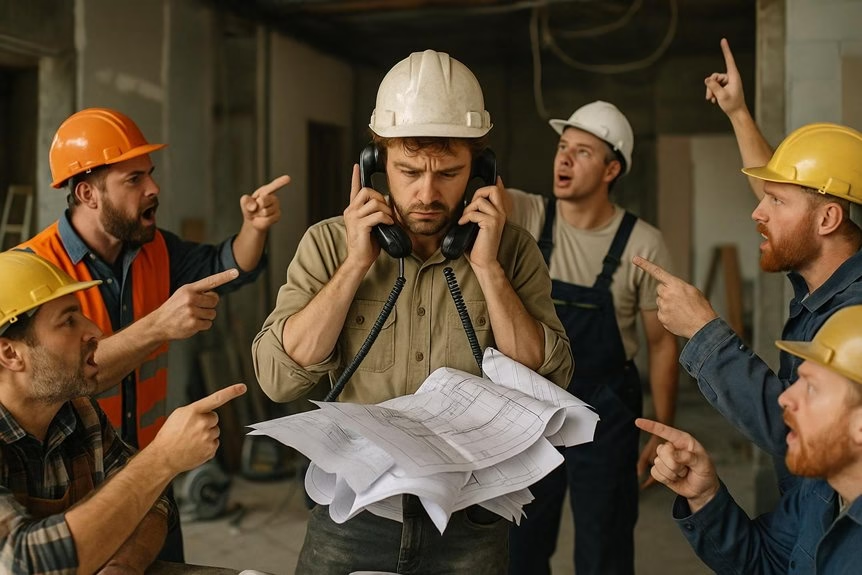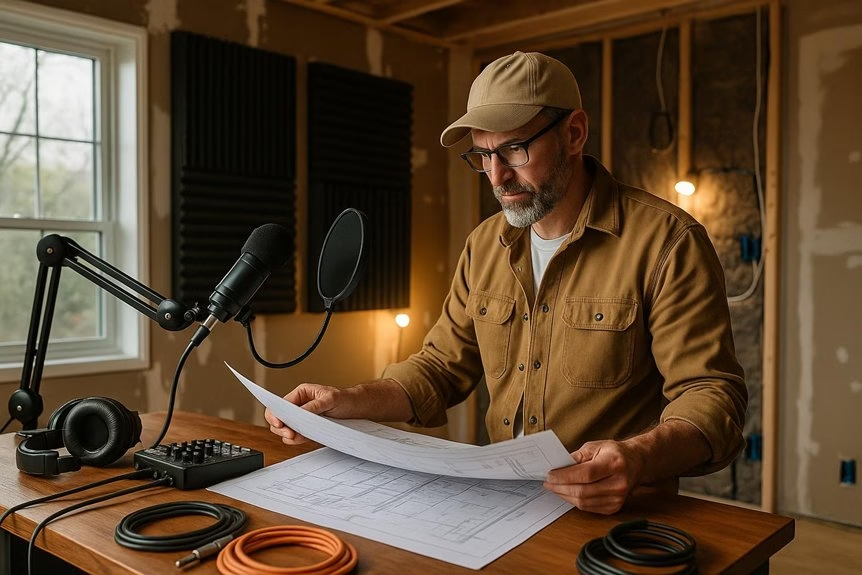
Before hiring a contractor to build your podcast studio, define exactly how the space will be used: how many people need to fit comfortably, whether the room is audio-only or also for video, and what level of sound isolation you expect. For the best results, budget separately for construction, soundproofing, acoustic treatment, and technology integration. A qualified professional should evaluate room size, ceiling height, layout, and structural conditions early, since these factors affect both recording quality and noise control. It’s also important to plan ventilation, dedicated power, lighting, networking, and cable pathways before construction is finished. When reviewing bids, compare them line by line and look closely at isolation methods, acoustic materials, wiring scope, equipment coordination, warranties, and what is actually included. For homeowners and creatives in West Orange, NJ, Jersey City, Hoboken, and NYC, working with an experienced firm like Total Home Interiors helps ensure your studio is designed for performance, comfort, and long-term reliability—not trial-and-error fixes later.
Key Takeaways
- Define the podcast studio’s purpose early—solo remote, multi-host, audio-only, or video—because room layout, acoustic treatment, lighting, camera placement, and infrastructure all need to be designed around how the space will actually be used.
- Choose the room carefully, prioritizing width, ceiling height, quiet surroundings, and enough clearance for microphones, lighting, cameras, and professional acoustic treatments that improve clarity and reduce echo.
- Budget for construction and soundproofing first, including decoupled assemblies, insulation, doors, seals, and acoustic materials, before spending heavily on recording gear that cannot overcome a poorly built room.
- Plan sound isolation, ventilation, power, lighting, and cable routing together from the beginning so noise leaks, HVAC interference, and wiring issues do not undermine studio performance.
- Require clean, labeled wiring, accessible service locations, and contractor verification steps—such as sound leak checks and HVAC noise testing—before final sign-off to ensure the studio performs to professional standards.
Define Your Podcast Studio Needs
Before you call a contractor, define exactly how your podcast studio needs to perform.
Before hiring a contractor, get clear on exactly how your podcast studio needs to function.
Start with workflow: do you need a remote setup for a single-person production, or an in-person room for multiple hosts and guests? That decision affects everything from layout and equipment to the level of acoustic treatment and sound isolation required.
Next, decide whether the space will be audio-only or built for video production too.
Audio-only studios are typically more straightforward, while video podcasting adds lighting design, camera placement, background aesthetics, and often more demanding power and control requirements.
Measure the room early and be realistic about size limitations; around 32 square feet is generally the minimum functional footprint, and smaller spaces can quickly become uncomfortable once microphones, seating, lighting, and control gear are installed.
It’s also important to identify your non-negotiables upfront: microphone stand placement, proper mic orientation, 3-point lighting positions, sound control around doors and HVAC ducts, and quiet ventilation with controlled airflow.
For the best results, these details should be planned alongside professional acoustic treatment and soundproofing strategies—especially if your goal is clean recordings in a home or mixed-use urban environment where outside noise, neighbor noise, or mechanical noise can easily interfere.
If outside noise is a concern, ask your contractor about assemblies that improve STC ratings through added mass, damping, decoupling, and airtight sealing.
Set a Budget for Your Podcast Studio
Once you’ve defined how your podcast studio needs to function, the next step is building a realistic budget around construction, technology, and the support systems that make the space perform reliably.
For most projects, the budget should begin with the room itself—not just the recording gear.
If your goal is professional sound quality, soundproofing and acoustics need to be addressed early, especially in homes, apartments, and mixed-use buildings where outside noise, neighboring rooms, or structural sound transfer can undermine the space before recording even starts.
For construction budgeting, account for more than framing and finishes.
A well-performing studio may require upgraded wall assemblies, ceiling treatments, decoupling methods, insulation such as mineral wool, and acoustic materials designed to reduce noise transfer and control reflections inside the room.
This is where professional planning makes a measurable difference, particularly for clients in NYC, Hoboken, Jersey City, and throughout Northern New Jersey who are dealing with traffic noise, shared walls, or limited space.
In many cases, decoupling methods can offer one of the most effective ways to limit sound transfer between your studio and adjacent rooms.
Next, separate your equipment budget into audio and video.
Audio-only studios are typically more cost-effective, while video podcasting often requires multiple cameras, lighting, switching hardware, capture devices, and a more polished background or on-camera set.
Then factor in the infrastructure that supports daily use, such as LED lighting, control systems, reliable network connections, and smart integration for a smoother production workflow.
Finally, leave room for the smaller items that are often missed during early planning: cables, mounts, microphone stands, pop filters, tripods, and additional acoustic treatment.
These details add up quickly, but they also affect how professional, comfortable, and dependable the finished studio feels.
A well-planned budget helps ensure your investment delivers both technical performance and long-term usability.
Pick the Best Room for Your Studio
Start by choosing the room itself, because the space you build around will affect acoustics, camera placement, lighting design, and the level of sound isolation your contractor can achieve. For a functional home studio, prioritize a room with enough square footage to support filming distance, equipment spacing, and professional acoustic treatment without making the layout feel cramped. Proper placement at first reflection points will also help your contractor improve dialogue clarity and reduce echo more effectively.
- Favor wider rooms during planning, because they give you more flexibility for camera angles, lighting placement, and acoustic panel layouts.
- Look for strong ceiling clearance, since higher ceilings create better options for overhead lighting, cleaner mounting locations, and improved sound control.
- Compare spare bedrooms, offices, or attics carefully. If stairs, low ceilings, or awkward access create limitations, a different room—or even a commercial space—may be the better long-term investment.
The right room should do more than hold equipment. It should support smoother recording, stronger visuals, and the kind of acoustic performance a professional installation team can optimize efficiently.
Plan Soundproofing and Ventilation
While your contractor may be focused on framing, drywall, and finishes, soundproofing and ventilation need to be planned together from the start.
A podcast studio can look complete and still underperform if air leaks, duct penetrations, and HVAC noise are left unchecked.
Every opening matters—doors, windows, cable pathways, and mechanical penetrations can all become paths for unwanted sound transfer.
Professional-grade sealing, weather stripping, door perimeter treatments, and acoustic detailing should be addressed before finish materials conceal problem areas.
Dense neoprene seals, door sweeps, and acoustic door seals can help create the airtight perimeter needed to reduce sound leakage at entry points.
Ventilation also needs to support both comfort and acoustic performance.
A small recording space still requires properly designed airflow, but “quiet” vents alone aren’t enough if they restrict circulation or allow noise to pass through the system.
Duct sizing, lined sections near intake runs, controlled return paths, and thoughtful routing all help reduce HVAC-related noise while maintaining usable airflow.
Shorter runs, limited flexible duct, and post-installation testing—including leak checks and HVAC-on/off recordings—help confirm the room performs as intended.
For homeowners and studio clients in West Orange, NJ and across the Tri-State area, this is where expert planning makes the difference between a room that simply looks finished and one that truly sounds professional.
Plan Power, Lighting, and Cable Runs
Before walls are closed or ceiling elements are finished, plan power, lighting, and low-voltage wiring around how the space will actually function. For home theaters, media rooms, and smart home environments, that means coordinating dedicated power, lighting control, network infrastructure, and AV cabling early—so performance, reliability, and aesthetics are never compromised.
- Run dedicated cabling for displays, projectors, audio components, and control systems, with clearly labeled connections for faster service and cleaner long-term maintenance.
- Pre-plan power and control access for motorized shades, lighting keypads, acoustic treatments, and ceiling-mounted AV equipment, so installations remain seamless and visually refined.
- Allow proper cable slack, structured terminations, and organized tie-off points at racks, processors, and network hubs to support upgrades, serviceability, and dependable daily use.
If sound isolation is part of the build, coordinate wiring paths with mass-loaded vinyl layers, batt insulation, and acoustic sealing so penetrations do not weaken overall soundproofing.
That level of preparation helps protect system uptime, preserve clean interior sightlines, and ensure your technology performs as beautifully as the room looks.
Compare Contractor Bids, Scope, and Warranties
Once you’ve mapped power, lighting, and low-voltage runs, the next step is comparing contractor bids so you can see exactly what is—and is not—included. For a fair comparison, ask for a line-item scope covering surface preparation, insulation type, framing depth, outlet quantities, HVAC modifications, acoustic materials, and finish selections. For soundproofing and acoustics work, request measurable deliverables such as treated wall and ceiling areas, STC- or assembly-specific details, and clearly marked locations for outlets, data cabling, lighting, speakers, shades, and control interfaces. Ask bidders to specify whether assemblies use decoupling methods such as isolation clips, double-wall construction, mass-loaded barriers, or damping compounds so you can compare sound isolation approaches on an apples-to-apples basis.
Avoid vague promises. Get clear warranty terms for both materials and workmanship, and confirm whether any acoustic or sound isolation results are guaranteed, estimated, or provided on a best-effort basis. Review change-order pricing in advance, including labor rates, markup, and potential schedule impact, so there are no surprises once construction begins.
Before selecting a contractor, verify experience with studio, theater, and residential acoustic projects, and make sure the proposal aligns with your lighting control plan, quiet HVAC strategy, sealing methods, and any smart home or motorized shade integration requirements.
For homeowners and commercial clients in West Orange, NJ and across the Tri-State area, this level of detail helps protect your investment and ensures the finished space performs as intended—not just visually, but acoustically and functionally.
Frequently Asked Questions
How Much Would It Cost to Build a Podcast Studio?
A podcast studio can cost anywhere from about $1,300 for a very basic audio-only booth shell to $2,000–$10,000+ for a more complete space, but the real investment depends on how much sound isolation, acoustic treatment, and system integration you need.
For homeowners and professionals in places like NYC, Hoboken, Jersey City, and West Orange, costs often rise when the goal is to block street noise, reduce neighbor noise, improve ventilation, and create a polished recording environment that actually performs well.
Audio-only studios are typically more affordable, while adding video, lighting control, motorized shades, or smart automation increases the overall budget.
Because every room is different, the best approach is to get professional estimates that account for room size, construction requirements, HVAC modifications, acoustics, and equipment selection.
How Much Does a Podcast With 10,000 Listeners Make?
If you’re dealing with noise, privacy, or poor sound quality in a home or commercial space, the value of a professional solution can be significant. At Total Home Interiors, we help clients throughout West Orange, NJ, Jersey City, Hoboken, NYC, and the Tri-State area improve comfort, quiet, and performance through expertly designed soundproofing, acoustic treatments, motorized window treatments, home automation, and home theater systems.
The right investment depends on several factors, including the size of the space, the construction type, the severity of the noise issue, and the level of system integration you want. For example, soundproofing a condo wall for neighbor noise requires a different approach than treating echo in a restaurant, automating shades in a luxury residence, or designing a fully integrated home theater.
Results also vary based on materials, installation methods, and how customized the solution is. Premium products like mass-loaded vinyl, decoupled wall assemblies, acoustic drywall, fabric-wrapped acoustic panels, Lutron or Somfy motorized shades, and professionally programmed smart home controls all contribute to long-term performance, convenience, and aesthetics.
While DIY options may seem appealing, they often fall short when the goal is true noise reduction, speech privacy, seamless automation, or high-end theater performance. Professional design and installation help ensure the system works as intended, looks refined, and delivers lasting value.
If you’re looking for a tailored solution for street noise, echo, privacy, smart control, or immersive entertainment, Total Home Interiors can evaluate your space and recommend the right approach.
Are Podcasts Growing or Declining?
Podcasting is still expanding overall, not broadly declining—and the same is true of homeowner demand for smarter, quieter, better-performing living spaces across Northern New Jersey and the Tri-State area.
At Total Home Interiors, we see continued growth in requests for professional soundproofing, acoustic treatment, motorized window treatments, and integrated smart home solutions as more homeowners and businesses prioritize privacy, comfort, and convenience.
While needs vary by property type, budget, and application, the broader trend is clear: demand remains strong for expertly designed systems that reduce noise, improve acoustics, and elevate how a space looks and functions.
If you’re evaluating solutions for street noise, echo, lack of privacy, or home automation, it makes sense to view this category as growing—especially for professionally installed, high-performance solutions tailored to the way you live or work.
Conclusion
Build your podcast studio with purpose, and you’ll avoid costly revisions later. When you define your recording goals, establish a realistic budget, select the right room, and plan for acoustics, ventilation, power, lighting, and isolation from outside noise, you give your contractor a clear roadmap to execute. For podcast studios in West Orange, NJ and across the Tri-State area, professional acoustic planning is especially important—because sound quality depends on far more than microphones alone. Compare bids carefully, ask about materials, installation methods, and warranties, and don’t overlook the details that affect clarity, comfort, and long-term performance. The right contractor won’t just build a room—they’ll help create a studio that sounds polished, feels comfortable, and supports your show for years to come.