You don’t have to rip your walls open to get real relief from noise—but you do need more than stick-on foam. At Total Home Interiors, we treat noise the same way we treat any other design challenge: with planning, proper materials, and professional installation tailored to your space.
For condo and apartment owners in NYC, Hoboken, Jersey City, and the surrounding NJ suburbs, we start by identifying your primary issue:
- Airborne noise – voices, TV, music, street and traffic noise
- Impact noise – footsteps from above, doors slamming, building vibration
From there, we design a wall soundproofing system that adds mass, improves isolation, and seals every weak point—without tearing your home apart:
- High-density soundproof barriers like mass-loaded vinyl and acoustic drywall installed as a new layer over existing walls
- Decoupling and isolation techniques to reduce vibration transfer between you and your neighbors
- Precision sealing around outlets, baseboards, and perimeter gaps to stop sound leaks
- Coordinated ceiling, window, and door treatments so you’re not fixing one wall while noise leaks in from everywhere else
We never rely on thin foam “acoustic” panels to solve transmission problems—they’re for echo control, not blocking your neighbor’s bass. When echo or harsh sound is also an issue, we add architectural acoustic treatments—fabric-wrapped wall panels, ceiling treatments, or fabric wall systems—to calm the room and improve clarity.
For clients who also want privacy and convenience, we integrate:
- Motorized shades and drapery (Lutron, Somfy, Hunter Douglas PowerView) for an added acoustic and privacy layer at the windows
- Smart home control so your shades, lighting, and audio all work together—quiet, comfortable, and effortless
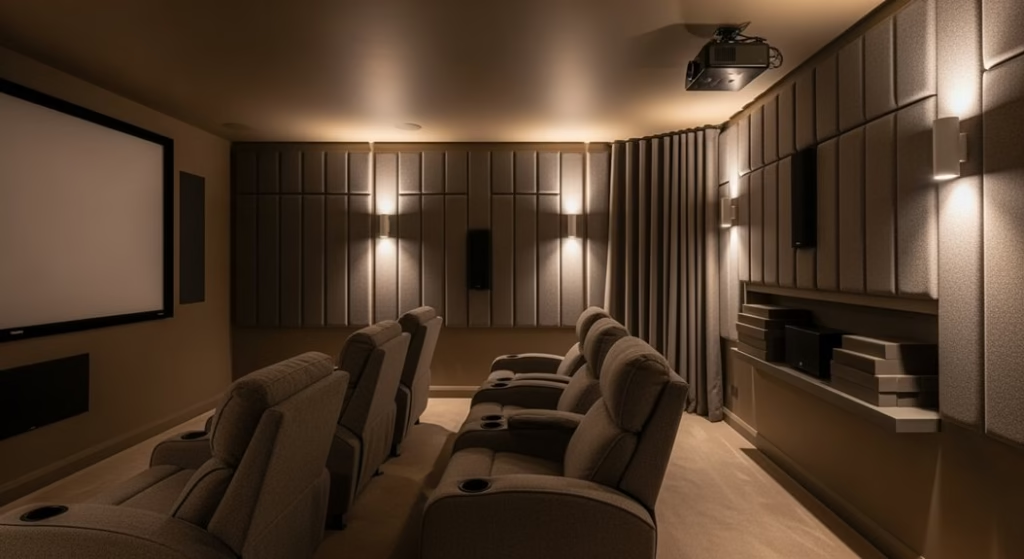
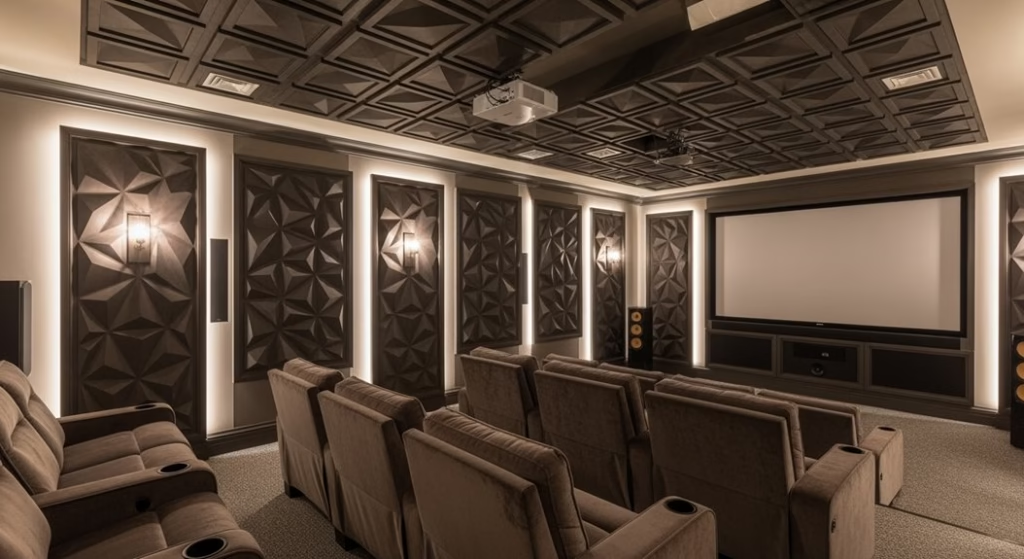
- Dedicated home theater solutions where isolation, room acoustics, and immersive audio are engineered as a complete system
If you’re struggling with street noise, neighbor noise, or lack of privacy in the Tri-State area, we design and install turnkey solutions—no guesswork, no wasted money on ineffective DIY products.
Key Takeaways
- Start by identifying the type of noise you’re fighting. Airborne sounds (voices, TV, traffic) demand added mass and airtight construction, while impact noise (footsteps, subwoofer bass, HVAC vibration) requires decoupling and resilient mounting—solutions best designed and installed by a professional soundproofing contractor.
- For meaningful airborne noise reduction without tearing down your wall, we typically layer mass-loaded vinyl with 5/8-inch acoustic drywall over the existing structure. At Total Home Interiors, we engineer these assemblies for your specific condo, brownstone, or office, so you get measurable reductions in neighbor and street noise.
- Seal every weak point with a building-science approach, not guesswork. Electrical outlets, baseboards, window casings, seams, and tiny gaps all act like “leaks” in your sound barrier. Our team uses acoustical sealants, putty pads, and detailed trim strategies to close these paths and protect the performance of the upgraded wall.
- Don’t expect foam panels to “soundproof” a wall. They’re useful for reducing echo and improving clarity inside a room, but they offer minimal sound transmission loss. When appropriate, we specify true acoustic treatment—fabric-wrapped panels, fabric wall systems, or ceiling treatments—to complement a properly soundproofed structure.
- Address the whole space, not just one wall. Noise often bypasses a single upgraded wall by traveling through windows, ceilings, floors, and adjacent rooms (flanking paths). Total Home Interiors designs integrated solutions: soundproofing assemblies, acoustic treatments, and motorized window treatments (Lutron, Somfy, Hunter Douglas PowerView) that work together to reduce noise, improve privacy, and tie into your smart home system for complete comfort and control.
What Noise Are You Trying to Stop?
Start by identifying the kind of noise you’re actually trying to stop, because the solution for a Jersey City condo is very different from a Hoboken restaurant or a West Orange home office.
At Total Home Interiors, we separate noise into two main categories because each one requires a different approach:
- Airborne noise – Voices, TV, music, traffic and street noise traveling through the air, then through walls, ceilings, doors, and windows.
- This is where soundproofing with added mass and isolation comes in: acoustic drywall, mass-loaded vinyl, decoupled wall and ceiling systems, and properly treated windows.
- In apartments and brownstones with thin party walls, this is usually the primary issue.
- Impact and structural noise – Footsteps from the unit above, chairs dragging, bass vibrations traveling through framing, or HVAC/ mechanical noise humming through the structure.
- Here, mass alone isn’t enough.
- We design decoupled ceilings and floors, resilient mounting systems, and targeted treatments to reduce mechanical coupling so vibration doesn’t pass directly into your space.
From there, we look at whether you need to control sound quality inside the room** or block sound between rooms**:
- If your main complaint is echo, harsh sound, or poor clarity (for example, a glass-heavy living room, an open office, or a restaurant with loud chatter), we focus on acoustic treatments:
- Fabric-wrapped acoustic panels
- Custom fabric wall systems
- Ceiling treatments and sound masking in offices
These don’t “soundproof” a room, but they dramatically improve comfort, clarity, and privacy inside it.
- If your priority is keeping noise out or in (neighbors, street noise, kids’ rooms, conference rooms, therapy offices, recording spaces), we focus on soundproofing construction:
- Heavier, layered wall and ceiling assemblies
- Mass-loaded vinyl and acoustic drywall
- Sealing flanking paths where sound slips around barriers (gaps at outlets, doors, windows, and ceilings)
It’s also important to understand what common “quick fixes” can and can’t do.
Foam panels and hanging blankets may slightly reduce echo inside a room, but they rarely make a meaningful difference in sound transfer between apartments, offices, or treatment rooms.
For real noise control, you need the right combination of mass, decoupling, and airtight detailing—planned and installed correctly. In multi‑unit buildings, combining flooring underlayments with barrier systems and resilient channels is often what turns a noisy space into a genuinely quiet one.
For many urban homeowners and commercial clients in the Tri-State area, the best solution combines multiple service pillars:
- Soundproofing + Acoustics for quiet, comfortable bedrooms, home offices, restaurants, and studios
- Motorized window treatments (Lutron, Somfy, Hunter Douglas PowerView) to add privacy and help tame street noise while improving light control and energy efficiency
- Home automation to tie everything together—lighting scenes, audio, privacy shades, and even sound masking in offices
- Home theater design with dedicated sound isolation and tuned acoustics so movie nights don’t disturb the rest of the home (or your neighbors)
Once we understand the specific noise type and how it’s traveling, we can engineer a tailored solution instead of guesswork—whether that’s quieting a Jersey City bedroom facing a busy street or improving speech privacy in a Midtown medical office.
How to Soundproof a Wall With Drywall
One of the most effective professional ways to reduce noise through an existing wall—without tearing it open—is to add mass with another layer of acoustic drywall as part of a properly designed soundproofing system.
For typical urban problems like voices through party walls or TV noise from next door, mass and construction method matter far more than basic surface treatments.
In many cases, a 5/8-inch acoustic drywall system will outperform 1/2-inch, especially when combined with mass-loaded vinyl (MLV) and a decoupled wall assembly.
At Total Home Interiors, we design these wall systems specifically for apartments and condos in Jersey City, Hoboken, and NYC where you often can’t fully rebuild walls but still need meaningful reduction in neighbor and street noise.
Before any new layer goes up, we focus on air sealing and weak points****.
Electrical outlets, switches, trim, and small gaps can significantly reduce the effectiveness of your soundproofing investment.
As part of a professional installation, we:
- Seal penetrations and gaps with acoustic sealant
- Address flanking paths around edges, baseboards, and adjacent surfaces
- Coordinate with building constraints (fire codes, shared walls, condo rules)
If you want more performance in a thinner profile, we often recommend adding mass-loaded vinyl across the entire wall surface, not just in sections.
Full coverage and properly sealed seams with MLV tape are critical; otherwise sound simply finds the weak spot and bypasses your upgrade.
In commercial spaces—offices, treatment rooms, studios—this same approach helps improve speech privacy and reduce distractions between rooms.
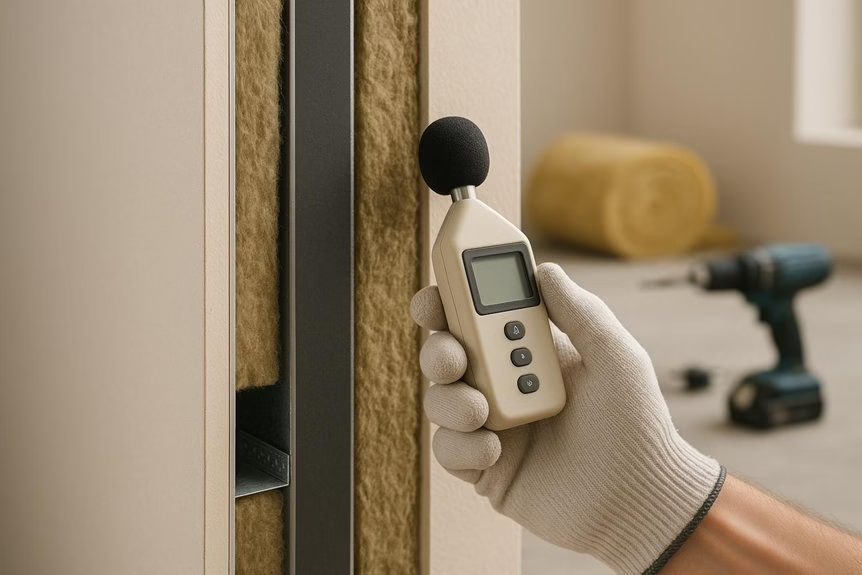
After installation, we can verify performance with before-and-after measurements so you know exactly how much airborne noise has been reduced and whether further steps—like acoustic panels to refine sound quality or motorized shades to add privacy at the windows—would help complete the solution.
If you’re dealing with:
- Neighbor noise through a shared wall
- Street noise bleeding into a bedroom or home office
- Confidential conversations leaking between offices or conference rooms
Total Home Interiors can design and install a complete soundproofing and acoustic package—including wall upgrades, acoustic treatments, and even integrated motorized shades and smart home control—so your space is quieter, more private, and easier to live or work in.
Why Foam Won’t Soundproof a Wall
That’s also why foam panels are never a true wall soundproofing solution for our clients in NYC, Hoboken, Jersey City, or West Orange. Open‑cell foam can help tame echo and reflections inside a room, but that’s an acoustics treatment, not soundproofing. It changes how sound behaves in the space; it doesn’t stop sound from leaving—or entering—through the wall. Voices, TV, footfall, and street noise still hit the drywall, transfer into the studs, and travel through the building structure because the wall assembly doesn’t have enough mass or proper decoupling. Mounting foam directly on studs or over existing drywall typically provides only 1–2 dB of transmission loss, which is essentially no real reduction in what you’ll actually hear from next door. While foam panels can absorb reflections and improve clarity, even covering 20–30% of your walls with acoustic foam panels mainly reduces echo rather than blocking noise transmission through the structure. Gaps, outlets, and weak points in a typical wall allow sound to “slip around” foam. It simply isn’t a dense, continuous barrier. For clients who truly need quieter bedrooms, home offices, or conference rooms, we design assemblies with added mass (such as acoustic drywall or mass‑loaded vinyl), decoupled framing, and professional sealing—solutions that actually block noise, rather than just softening echo inside the room.
How to Use Mass Loaded Vinyl Correctly
Most homeowners get dramatically better results from mass loaded vinyl when it’s installed as a continuous, full-wall sound barrier—not as a small patch or quick DIY fix. MLV works by adding substantial mass across the entire assembly, so professional, full-coverage installation matters far more than trying to treat just “one noisy spot.” If you leave gaps, sound will still pass through those weak points and undermine the investment. Because MLV is thin but extremely heavy, handling and fastening it correctly is critical. Larger, thicker rolls aren’t designed to be hung by one person; trying to do so often leads to wrinkles, air gaps, tears, or sagging that reduce performance. Our installation teams at Total Home Interiors carefully plan seams, penetrations, and overlaps so the system performs as a true sound barrier, not just an added layer. For many projects, pairing MLV with batt insulation and acoustic caulk inside the wall assembly can further raise the overall STC rating and reduce both airborne and structure-borne noise. Just as important as coverage is seam treatment. Every joint should be sealed with specialized mass loaded vinyl tape, creating a single, continuous sound-blocking membrane. We also coordinate MLV with the rest of the wall assembly—typically finishing with 5/8-inch acoustic or Type X drywall rather than standard 1/2-inch board. That added mass, combined with proper fastening patterns and optional decoupling techniques, can make a noticeable difference in real-world noise reduction for condos, brownstones, and mixed-use buildings in the Tri-State area. If you’re dealing with neighbor noise, street noise, or office privacy concerns, our team can design a complete soundproofing package—using MLV along with decoupled framing and acoustic drywall—so you get a quieter, more private space instead of a trial-and-error DIY project.
How to Soundproof a Ceiling for Footsteps
When you’re trying to quiet heavy footsteps from the floor above, the problem isn’t just “noise in the air.” Those impacts travel as vibration through the flooring, into the joists, and straight down into your ceiling.
That’s why laying another layer of drywall or foam panels almost never solves it. To make a real difference, you need true vibration isolation and a professionally designed decoupling system. For the best results, impact noise control should be combined with soundproof underlay above and decoupled ceilings below to minimize structure-borne transmission.
At Total Home Interiors, we address impact noise at the construction level, not with surface-level quick fixes.
For condo and apartment ceilings in Jersey City, Hoboken, Manhattan, and the surrounding NJ suburbs, that typically means:
- Resilient ceiling clip systems that physically separate your new ceiling from the existing joists, dramatically reducing vibration transfer from the floor above.
- Sound isolation clips with properly installed resilient channels, engineered to support added mass (acoustic drywall, mass-loaded vinyl) without creating rigid “short circuits” back to the structure.
- Airtight detailing around the perimeter, light fixtures, junction boxes, and all penetrations, so airborne noise and flanking paths don’t undermine the isolation system.
- Strict bridging prevention at every screw, seam, and contact point, ensuring no fastener or bracket accidentally reconnects your isolated ceiling to the structure and kills the performance.
Footstep and impact noise control is highly sensitive to design and installation quality.
Our team handles assessment, design, materials, and installation—coordinating with building requirements and existing finishes—so you end up with a ceiling system that actually performs, not an expensive DIY experiment that doesn’t change much.
If you’re dealing with loud neighbors upstairs or constant footfall over your bedroom, nursery, or home office, we can evaluate your existing structure and design a ceiling soundproofing solution tailored to your space and noise problems.
Best Soundproofing Fix for Your Situation
If you’re trying to solve a serious noise problem, the first step is understanding what type of sound you’re actually dealing with. Voices, TV, and street noise behave very differently from footsteps, bass, or mechanical vibration—and each requires a different approach.
At Total Home Interiors, we focus on permanent, construction‑grade solutions rather than quick DIY fixes.
At Total Home Interiors, we deliver permanent, construction-grade soundproofing solutions built for real-world noise problems—not temporary DIY fixes.
For airborne noise like conversation, TV, or traffic, the priority is adding mass and sealing air gaps—not sticking foam on the wall. Strategic use of mass loaded vinyl and dense insulation helps you approach the kind of high STC ratings needed for serious home theater–level isolation.
In many Jersey City, Hoboken, and NYC apartments, an effective wall build‑up often includes:
- A continuous sound barrier layer, such as mass-loaded vinyl (MLV), installed across the entire wall surface
- All seams and penetrations sealed so sound can’t “leak” through cracks, outlets, or gaps
- An additional layer of acoustic or 5/8″ drywall, properly detailed to improve real‑world decibel reduction
Just as important, we address hidden transmission paths—flanking through ceilings, floors, side walls, and even window assemblies—so you’re not investing in a wall that still lets noise in around the edges.
If your main issue is impact noise from above—footsteps, chairs dragging, low‑frequency thumps—thin add‑ons or blankets won’t solve it.
These require true structural decoupling and isolation:
- Resilient clip and hat channel systems to separate your ceiling from the structure above
- Damped, multi‑layer ceiling assemblies designed to reduce both impact and airborne sound
For urban homeowners and commercial clients in the Tri‑State area, we design and install complete soundproofing systems—walls, ceilings, floors, and windows—using professional materials and methods that go far beyond typical DIY approaches.
Frequently Asked Questions
Can I Soundproof a Wall Without Losing Much Room Space?
Yes—but the most effective way to do it’s with a professionally designed, low-profile system rather than bulky DIY fixes. At Total Home Interiors, we frequently treat shared condo and apartment walls in Jersey City, Hoboken, and NYC where every inch of floor space matters.
Instead of thick framing, we use high‑performance, minimal‑depth solutions such as:
- Acoustic drywall and mass-loaded vinyl (MLV) applied directly over existing walls to add significant sound-blocking mass with only about an inch of added thickness.
- Decoupling strategies targeted to the loudest shared walls, so you reduce neighbor noise without “building the room in again.”
- Slim, fabric-wrapped acoustic panels or fabric wall systems on select wall sections to control echo and improve comfort without visually shrinking the room.
Because we design and install these systems specifically for urban homes and condos, we can often integrate them with custom millwork, window treatments, or planned wall décor so the space feels finished and tailored—not crowded with DIY foam or temporary fixes.
If you’re dealing with thin walls, street noise, or loud neighbors and want to preserve every inch of living space, a professional acoustic assessment will determine the least invasive way to get meaningful noise reduction in your specific room.
How Much Does Wall Soundproofing Usually Cost?
You’ll typically invest between $1 and $12 per square foot—roughly $300 to $2,000 per wall—for professional wall soundproofing in the Tri-State area, depending on the construction approach and finish level.
In practice, effective sound control is less about quick fixes and more about building a proper barrier: sealing every gap, adding mass, and, when needed, decoupling the wall structure so vibration can’t pass through.
At the lower end of that range, Total Home Interiors may recommend targeted upgrades like mass-loaded vinyl and acoustic drywall to add density and reduce sound transfer without major reconstruction.
On the higher end, especially for serious neighbor or street noise in apartments and brownstones, we design and build fully decoupled wall systems, often paired with acoustic treatments and smart window solutions for a complete, turnkey result.
Do Soundproofing Methods Work in Rental Apartments?
Yes—but in most rental apartments, “soundproofing” with basic DIY products only goes so far.
Thick rugs and curtains can help with echo, but they won’t stop serious street or neighbor noise coming through walls, ceilings, and windows.
If you own your apartment or condo in Jersey City, Hoboken, or NYC—or you’re planning a renovation—this is where professional solutions make a real difference.
At Total Home Interiors, we don’t rely on temporary fixes.
We design and install:
- True soundproofing for shared walls, ceilings, floors, and windows using methods like decoupled wall assemblies, mass-loaded vinyl, and acoustic drywall to block noise transfer between units and from the street.
- Acoustic treatments—such as custom fabric-wrapped panels, fabric wall systems, and ceiling treatments—to control echo and improve speech clarity in open-plan living rooms, bedrooms, and home offices.
- Motorized window treatments from Lutron, Somfy, and Hunter Douglas PowerView that add a layer of privacy, reduce outside noise, and integrate with your smart home for automated comfort.
- Integrated smart home systems that tie your shades, lighting, and whole-home audio together, giving you one-touch “Quiet Time” or “Sleep” scenes for a more peaceful environment.
- Home theater design with proper room acoustic planning and isolation so movie nights don’t disturb neighbors—and outside noise doesn’t ruin your experience.
For renters, we can often recommend non-destructive acoustic treatments and motorized shades that improve comfort now and can move with you later.
For owners, we specialize in permanent, construction-based solutions that dramatically reduce noise and increase privacy, tailored to the realities of dense urban living in the Tri-State area.
How Long Does It Take to Soundproof One Wall?
You can address one problem wall in as little as a few hours—or over one to two days—depending on whether you’re making a quick acoustic improvement or doing true soundproofing.
At Total Home Interiors, we start with a professional on-site assessment: identifying where noise is actually entering (neighboring unit, hallway, street side) and what the wall is made of (standard stud-and-drywall, masonry, shared party wall, etc.).
That dictates whether you need:
- Acoustic treatments (panels or fabric wall systems) to control echo and improve sound quality in a room—typically installed in a single visit.
- Full soundproofing construction (mass-loaded vinyl, acoustic drywall, decoupled framing) to block noise transfer between spaces—often a one- to two-day process for a single wall, depending on access and finishes.
For condo and apartment owners in Jersey City, Hoboken, and NYC, that usually means a carefully planned, minimally disruptive visit: we protect floors and furnishings, complete the installation, and leave the space clean and ready to use.
Can Soundproofing Also Improve Room Acoustics?
Yes—when it’s designed correctly, soundproofing can dramatically improve how your room sounds, not just how quiet it is. By adding the right combination of isolation and acoustic treatment, you reduce harsh echoes, tame overly “live” or boomy areas, and cut down on intrusive street or neighbor noise that competes with conversation, music, or TV.
At Total Home Interiors, we typically pair soundproof construction (acoustic drywall, mass-loaded vinyl, and decoupled wall or ceiling assemblies) with targeted acoustic treatments like fabric-wrapped panels, ceiling treatments, or fabric wall systems.
In a Hoboken living room, a Jersey City home office, or a Manhattan condo bedroom, this approach transforms the space into a quieter, more controlled environment where speech is clearer, music is more detailed, and everyday listening feels more comfortable and private.
For clients who want an elevated solution, we can extend this same acoustic expertise into home theaters and multi-purpose media rooms—designing the entire space around balanced sound, controlled reflections, and seamless integration with motorized shades and smart lighting.
Conclusion
Soundproofing a wall doesn’t have to mean tearing your home—or your lease—apart. The key is understanding what kind of noise you’re dealing with, then applying the right professional solution instead of chasing DIY quick fixes that rarely work in apartments and brownstones.
At Total Home Interiors, we design and install custom soundproofing systems for urban living: adding mass and isolation to walls with materials like mass-loaded vinyl and acoustic drywall, and decoupled assemblies that actually stop noise transfer between apartments, condos, and townhomes. For many clients in Jersey City, Hoboken, and NYC, that means quieter bedrooms, workable home offices, and real privacy—even with thin party walls and busy streets outside.
And because walls are only one piece of the puzzle, we also address echo and sound quality with tailored acoustic treatments—fabric-wrapped panels and fabric wall systems that look architectural, not “studio DIY.” Paired with automated window treatments (Lutron, Somfy, Hunter Douglas PowerView) to block street noise at the glass and add privacy at the touch of a button, we create a complete acoustic envelope that feels calm, controlled, and intentional.
Instead of stacking foam on the wall and hoping for the best, start with a professional assessment of your biggest noise and privacy problems. From there, we can recommend the right combination of soundproofing, acoustics, and smart shading—integrated with your home automation or home theater if you choose—so the difference isn’t subtle. It’s a level of quiet and comfort you can actually hear the moment you walk into the room.