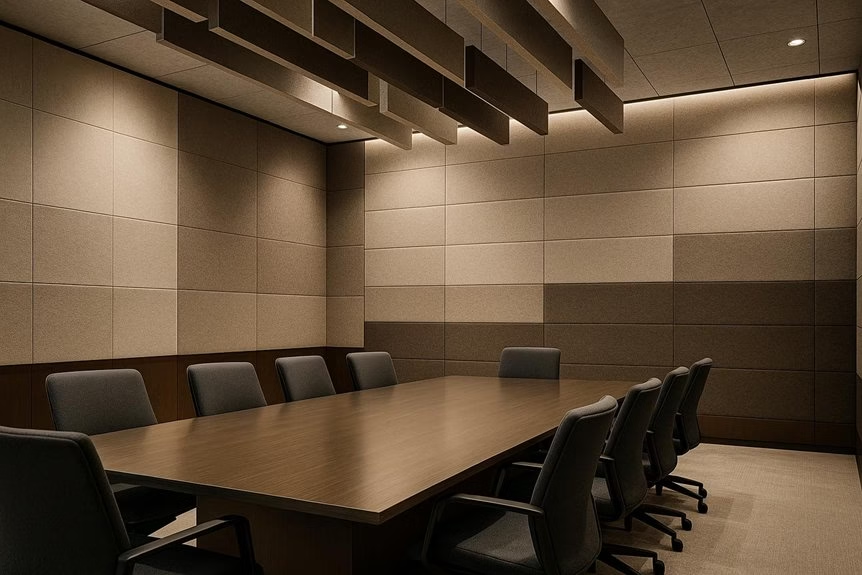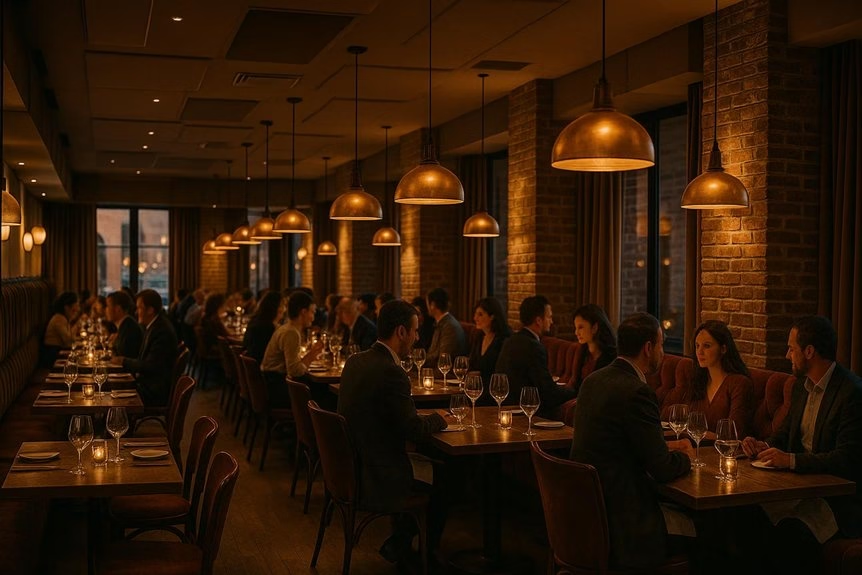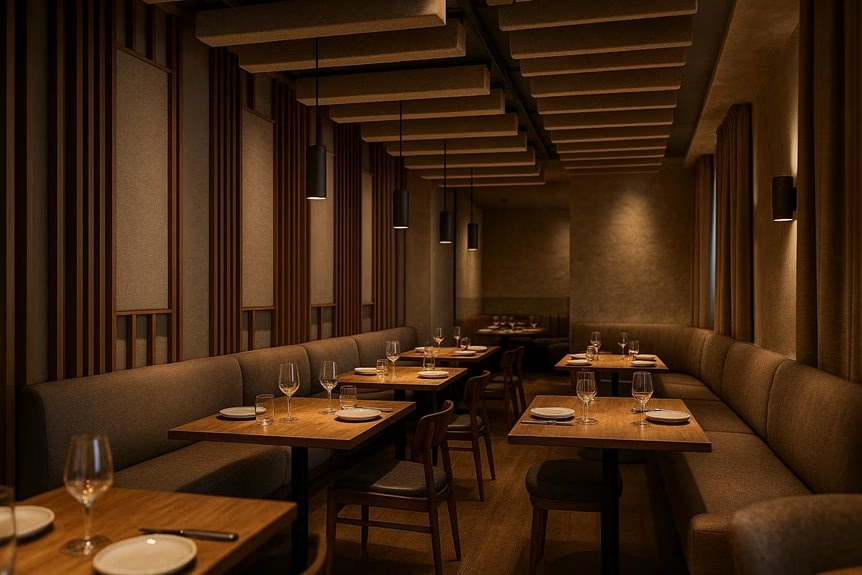
Professional restaurant acoustic treatment begins with an expert assessment of where sound is breaking down—whether the issue is excessive volume, poor speech clarity, or both. In busy restaurants throughout New Jersey and the Tri-State area, that typically means evaluating dining zones, entryways, bar areas, kitchens, and hard reflective finishes such as glass, tile, and exposed walls. From there, the right solution is not to over-treat the entire space, but to strategically install premium acoustic panels, fabric wall systems, acoustic drapery, and ceiling treatments at key reflection points. This professional, design-conscious approach helps reduce echo, improve conversation, and preserve the visual identity of the space while guiding smarter long-term investment decisions.
Key Takeaways
- Diagnose whether the restaurant’s issue is excessive noise buildup or poor speech clarity, especially during peak service when conversations from multiple tables overlap and make the space feel chaotic.
- Identify echo and reverberation sources by evaluating glass, mirrors, hard walls, exposed ceilings, and other reflective surfaces near dining and bar areas.
- Install professionally specified acoustic wall panels that complement the restaurant’s interior design while absorbing disruptive reflections in the areas that affect conversation most.
- Treat key reflection points near glass, hard walls, and high-noise seating zones to improve speech intelligibility and dining comfort without relying on unnecessary, wall-to-wall coverage.
- Combine acoustic drapery, ceiling treatments, and expert acoustic planning to reduce reverberation, improve the guest experience, and focus investment on targeted solutions that deliver measurable results.
Start With Restaurant Noise Problems
Before choosing any acoustic treatment for a restaurant, identify the specific noise problem you need to solve. In many dining rooms, the issue isn’t just overall loudness.
Before adding restaurant acoustic treatment, identify whether the real problem is excessive volume or poor speech clarity.
More often, background chatter builds to the point that it masks conversation, making it hard for guests to hear each other and leaving the space feeling chaotic. The first step is to pinpoint where speech clarity breaks down and where customer frustration is highest.
Observe the restaurant during peak service, especially when multiple tables are speaking at once. Pay attention to whether the problem is strongest in main seating areas, near the entrance, adjacent to the kitchen, or alongside hard reflective surfaces like glass, tile, or exposed walls.
If voices seem to blur together and guests are leaning in, repeating themselves, or raising their volume, the real issue is likely poor acoustic control rather than simply “too much noise.”
Once that pattern is clear, the right solution usually involves professional acoustic treatment focused on absorption and reflection management. Reverberation times above 1.4 seconds can significantly reduce speech intelligibility in busy restaurant environments. For restaurants in NJ, NYC, Hoboken, and Jersey City, Total Home Interiors designs tailored acoustic solutions that improve speech intelligibility, reduce echo, and create a more comfortable guest experience—without relying on trial-and-error equipment changes or unnecessary replacements.
Find Restaurant Surfaces Causing Echo
When you’re trying to identify what’s causing echo in a restaurant, start with the surfaces that reflect sound instead of absorbing it. Large areas of glass, mirrors, polished wall finishes, and other hard, smooth materials are often the biggest contributors, since they send sound back into the space and reduce speech clarity. Pay close attention to windows near booths, wall surfaces beside dining areas, and ceilings that reflect voices back toward guests. Professional acoustic panels help reduce reverberation by absorbing mid and high frequencies, especially when placed at first reflection points.
Next, look for long runs of hard parallel walls or ceilings that allow sound to bounce repeatedly across the room, increasing reverberation and making conversations harder to follow. Bars, host stands, and entry areas are also common trouble spots because dense finish materials in these zones can create fast, noticeable reflections during face-to-face interaction. Identifying these reflective surfaces is the first step toward a professional acoustic treatment plan.
For restaurant owners in West Orange, NJ, and across the Tri-State area, Total Home Interiors provides expert acoustic solutions designed to improve sound quality without compromising interior design. Rather than relying on temporary fixes, we design tailored treatments such as acoustic panels, fabric wall systems, and ceiling solutions that help create a more comfortable dining experience for guests and staff alike.
Use Restaurant Acoustic Panels That Blend In
Because restaurant dining rooms need both comfort and style, Total Home Interiors designs custom acoustic wall panels that reduce echo without disrupting the look of the space. Rather than relying on obvious, industrial-looking treatments, we specify professionally integrated acoustic solutions that feel intentional and aligned with the restaurant’s interior design.
Custom acoustic wall panels reduce restaurant echo while preserving a polished, design-forward dining atmosphere.
Custom fabric-wrapped and decorative acoustic panels can be sized to suit the room and visual layout, helping control harsh reflections while preserving a polished atmosphere. For restaurants that want acoustic performance without sacrificing aesthetics, art-style panel finishes can conceal high-performance sound-absorbing materials behind a refined surface.
This approach allows the treatment to blend into the overall design while still improving speech clarity and guest comfort.
Our restaurant acoustic solutions are engineered for both appearance and performance, using premium materials and proven installation methods to create a calmer, clearer dining experience. When needed, panels can also be mounted with spacing that improves absorption and helps the room sound more controlled. Professionally placed panels at primary reflection points can further reduce echoes and improve speech clarity throughout the dining area.
For restaurant owners in West Orange, NJ and across the Tri-State area, Total Home Interiors provides expert acoustic treatment solutions that elevate both ambiance and customer experience.
Place Acoustic Treatment Where Speech Fails
If guests keep leaning in and repeating themselves, the issue usually isn’t the speakers—it’s the room. In restaurants and hospitality spaces, speech tends to break down near glass, mirrors, hard wall surfaces, and between the loudest table groups. That’s where reflections and crowd noise blur consonants and make conversation tiring.
At Total Home Interiors, we recommend starting with conversational mapping to identify the real speech-failure zones before treating the space. Instead of covering every surface, targeted acoustic treatment delivers a cleaner, more comfortable result. Using the mirror technique can also help identify primary reflection points where sound is most likely to interfere with speech clarity.
- Add acoustic panels near glass, mirrors, and other reflective wall surfaces.
- Place treatment between noisy tables and nearby seating areas where conversation overlap is highest.
- Address the worst speech-intelligibility problem areas before investing in speaker or PA changes.
- Use custom panelized acoustic solutions to improve comfort without a full renovation.
When acoustic treatment is placed strategically, glare drops, overlapping speech becomes less intrusive, and guests can follow conversations more naturally. The goal isn’t silence—it’s a room that supports clear speech, better comfort, and a more polished guest experience.
Total Home Interiors provides professionally designed acoustic solutions for restaurants, commercial spaces, and hospitality environments across West Orange, NJ and the Tri-State area.
Use Drapery and Ceiling Panels for Echo
Even a beautifully designed dining room can still feel noisy when sound reflects off glass, drywall, flooring, and other hard finishes. A more effective acoustic solution is to combine strategically spaced acoustic drapery with ceiling-mounted acoustic panels rather than relying on one continuous curtain to do all the work.
By placing acoustic drapery where reflections are most problematic, you can interrupt flutter echo and reduce the slap-back effect that makes conversation tiring and unclear.
Overhead, ceiling-hung acoustic panels—such as custom 4-by-6 artwork-style treatments—can be installed along key reflection points to absorb excess sound without compromising the room’s design. Positioning these treatments at primary reflection points helps maximize absorption and improve speech clarity throughout the space.
When built with a rigid acoustic core and installed with proper spacing below the ceiling, these treatments deliver stronger performance by controlling reflections at the source.
This is where professional acoustic treatment outperforms common DIY assumptions: the goal isn’t simply to block noise, but to improve how sound behaves within the room.
When Total Home Interiors targets echo-prone areas with the right mix of acoustic drapery and ceiling treatments, homeowners and commercial clients alike benefit from clearer speech, less background noise fatigue, and a more comfortable dining experience—without needing to raise voices or overdrive the sound system.
Set a Restaurant Acoustic Treatment Budget
A restaurant acoustic treatment budget should start with professional planning and targeted absorption, not a blanket approach or a quick speaker upgrade. In many dining spaces, clearer conversation and lower background chatter come from reducing reflected sound first rather than investing heavily in more PA equipment.
For restaurants in West Orange, NJ and across the Tri-State area, Total Home Interiors recommends budgeting around the materials, installation method, and placement strategy needed to improve speech intelligibility and guest comfort without over-treating the space. Costs are typically influenced by panel size, finish level, mounting requirements, and the acoustic goals of the room.
- Request vendor pricing for core acoustic treatment materials, finish fabrics, framing components, and installation hardware.
- Prioritize professionally built acoustic panels that are effective, durable, and appropriate for the restaurant’s design aesthetic.
- Include labor allowances for secure mounting systems, ceiling or wall attachment hardware, and code-conscious installation.
- Focus treatment on key reflection zones and problem areas instead of trying to cover every surface.
Using quality absorptive materials with strong STC ratings can also support long-term sound control value while helping reduce disruptive noise transfer.
If rigid acoustic panels aren’t the right fit for the budget or interior design, acoustic drapery can be included as an alternative or complementary line item. In the right application, professionally specified drapery can help soften reflections, improve comfort, and support a more intelligible dining environment.
For restaurant owners in NJ, NYC, Hoboken, and Jersey City, Total Home Interiors provides expert acoustic treatment solutions that balance performance, appearance, and long-term value.
Frequently Asked Questions
How to Acoustically Treat a Restaurant?
You acoustically treat a restaurant by professionally reducing echo and improving speech clarity in the areas where guests and staff feel it most.
At Total Home Interiors, that typically means identifying reflective surfaces like glass, mirrors, hard walls, and exposed ceilings, then specifying commercial-grade acoustic panels, fabric wall systems, and ceiling treatments that blend with the restaurant’s design.
Instead of simply turning up the music or changing speakers, the goal is to control reverberation over dining areas, bar zones, and other high-noise sections so conversation feels easier and the space sounds more comfortable.
For restaurant owners in NJ, NYC, Hoboken, and Jersey City, expert acoustic treatment delivers a more refined guest experience than trial-and-error fixes.
What Are the Three C’s in a Restaurant?
The three C’s in a restaurant are Comfort, Clarity, and Control. In busy dining spaces, these principles directly affect how guests experience the room.
Comfort comes from reducing harsh echo and excessive reverberation, helping the space feel more relaxed.
Clarity improves speech intelligibility so guests and staff can communicate without strain.
Control means limiting how far noise travels between tables, bar areas, and service zones through professionally designed acoustic treatments.
For restaurants in West Orange, NJ, NYC, Hoboken, and Jersey City, Total Home Interiors provides expert acoustic solutions that create dining environments that feel calmer, more polished, and more inviting.
Conclusion
If you want your restaurant to sound as polished as it looks, acoustic treatment needs to be part of the design from the start. By identifying reflective surfaces, installing professionally placed acoustic panels and ceiling treatments, and incorporating fabric wall systems or drapery where needed, you can reduce echo and make conversation far more comfortable for guests and staff. In busy restaurants throughout West Orange, NJ, NYC, Hoboken, and Jersey City, professional acoustics isn’t an extra—it’s a key part of hospitality, comfort, and overall guest experience.