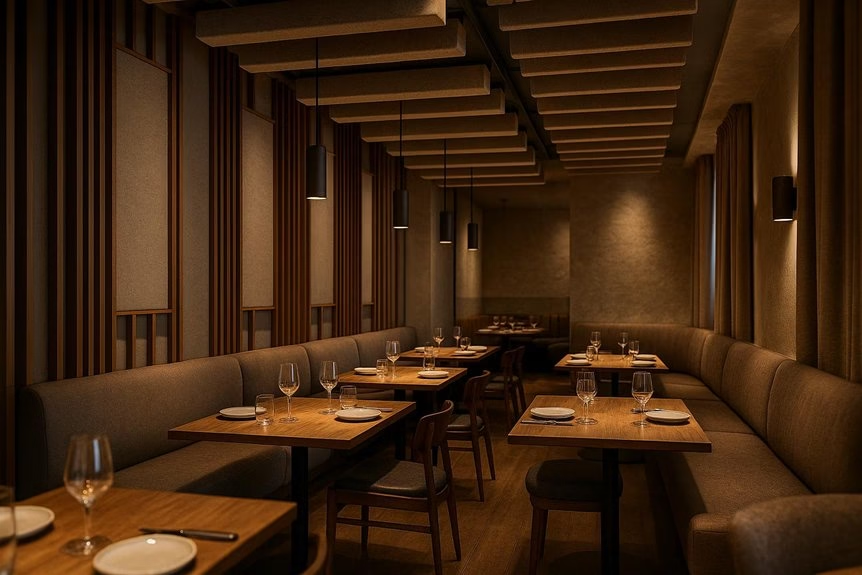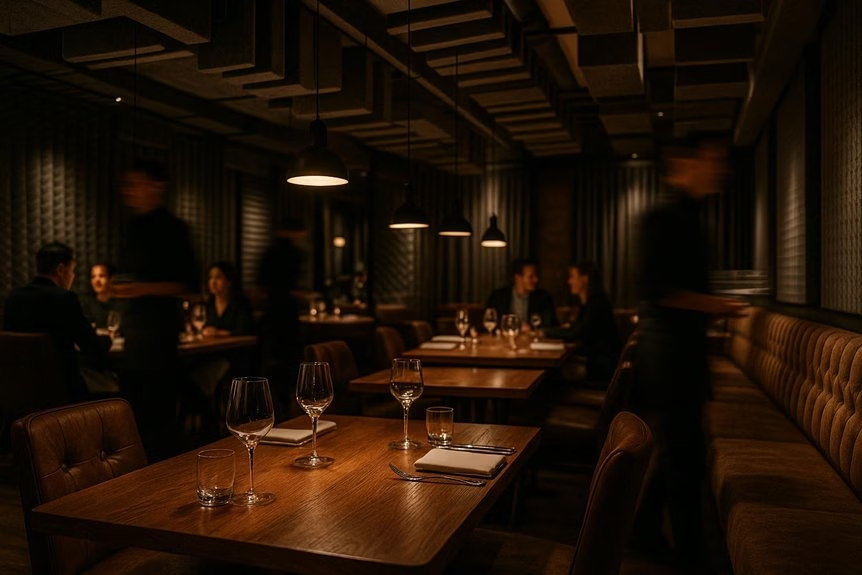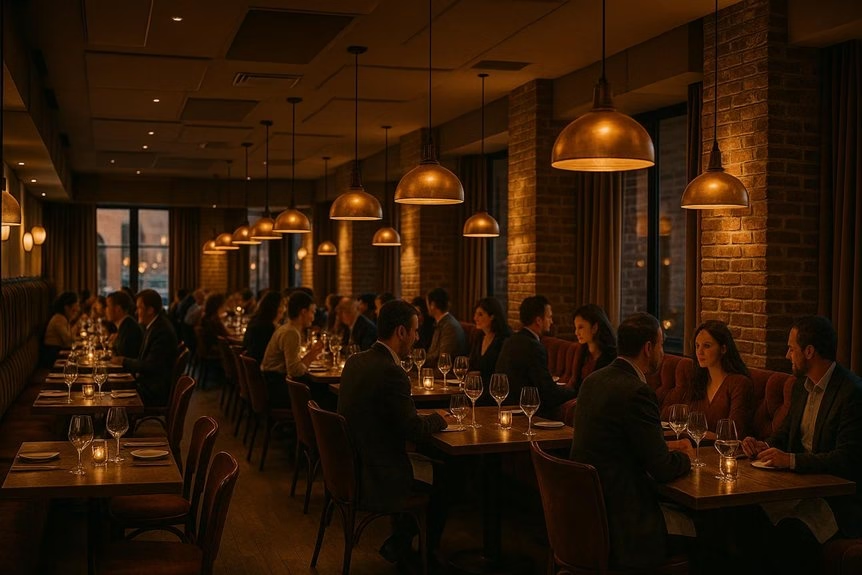
You can reduce restaurant noise without losing atmosphere by addressing reverberation first. In most dining spaces, the ceiling is the largest reflective surface and one of the biggest contributors to echo, so professionally designed ceiling treatments often deliver the greatest improvement. Acoustic wall panels placed at key reflection points near seating areas can further improve speech clarity and guest comfort without changing the character of the space. Zoning louder areas like bars, kitchens, and main dining sections also helps control sound spill and create a more balanced experience. With custom acoustic solutions that match your restaurant’s design, Total Home Interiors helps Tri-State businesses preserve energy, improve conversation, and create a more comfortable environment for guests and staff.
Key Takeaways
- Start with the ceiling, as it is often the largest reflective surface and a major source of restaurant echo. Professionally designed acoustic ceiling treatments can significantly reduce noise while preserving the energy diners expect.
- Add acoustic wall panels at key reflection points and along broad wall sections near seating to improve speech clarity and guest comfort. Custom fabric-wrapped panels can blend with the restaurant’s design rather than look like an afterthought.
- Control the Lombard effect by reducing reverberation, helping prevent guests from continually raising their voices as overall noise levels climb. This is one of the most effective ways to maintain a lively atmosphere without letting the room become overwhelming.
- Use acoustic zoning to separate bars, kitchens, and private dining areas, limiting sound spill between spaces while keeping each area functional and inviting. Thoughtful acoustic planning is especially valuable in busy NJ and NYC-area hospitality environments where every seat matters.
- Target reverberation times around 0.7–0.9 seconds for fine dining and 0.9–1.2 seconds for more energetic bistro or bar settings. A professional acoustic assessment helps determine the right balance for your concept, layout, and customer experience goals.
Why Restaurants Get So Noisy
A major reason restaurants get so noisy is the way many modern dining rooms are built. Glass, concrete, stone, and metal look sleek, but they reflect sound instead of absorbing it.
As voices, dishes, and music bounce around the room, reverberation builds, speech becomes harder to understand, and guests have to work harder to hold a conversation. That often triggers the Lombard effect, where people naturally start speaking louder as background noise rises, causing the entire space to get louder and louder.
Noise also travels in from kitchens, bars, banquet areas, and service stations, making the dining room feel chaotic even when it’s only moderately busy.
Without the right acoustic treatment, a restaurant can quickly develop the kind of overwhelming “cocktail party” effect that hurts comfort, conversation, and the overall guest experience.
Reverberation times above 1.4 seconds can significantly reduce speech intelligibility, making it even harder for guests to communicate comfortably.
At Total Home Interiors, we help restaurants across West Orange, NJ and the Tri-State area solve these problems with professionally designed acoustic solutions.
From custom acoustic panels and ceiling treatments to sound control strategies that reduce echo and improve speech clarity, our approach is built to create dining environments that feel more comfortable, polished, and guest-friendly.
Treat the Ceiling First
In many dining rooms, the ceiling is the largest uninterrupted hard surface, which makes it one of the biggest contributors to echo and excessive noise. When a restaurant feels too loud, the ceiling is often the first place to address—especially in spaces with higher ceilings and hard finishes that allow sound to bounce above diners.
A professional acoustic strategy typically begins with ceiling treatments such as suspended acoustic clouds or ceiling-mounted panels. Proper acoustic cloud placement helps capture early reflections before they build into a louder, more chaotic room, improving speech clarity and making conversations easier without dramatically changing the design of the space. Adding acoustic panels along ceiling reflection points can further reduce echo and reverberation while preserving the room’s atmosphere.
Even modest improvements in reverberation time can make a noticeable difference for guest comfort and intelligibility. In one restaurant project, Calva began with a reverberation time of about 0.8 seconds and a 2.6-meter ceiling, yet still required meaningful acoustic reduction to better support clear conversation.
Add Wall Panels Where Sound Bounces
Once the ceiling is addressed, the next priority is the wall surfaces where sound reflects back into the dining area. Glass, concrete, stone, and other hard finishes can push conversation noise back at guests, reducing speech clarity and making the room feel louder as everyone tries to talk over it.
The most effective approach is to add acoustic wall panels on large vertical surfaces near seating areas, especially where early reflections are strongest. Using the mirror technique can help identify the primary reflection points so panels are placed where they will have the greatest effect.
- Install panels where acoustic measurements show excessive reverberation and reflection.
- Prioritize broad wall sections beside or directly across from dining zones.
- Select professionally integrated solutions such as fabric-wrapped acoustic panels, Flat Panel VMT, or VicStrip Lite to complement the interior design.
- Combine wall and ceiling treatments, since addressing only one surface rarely delivers the level of control most restaurants need.
With the right wall treatment plan, restaurants can improve speech intelligibility, reduce echo buildup, and create a dining experience that feels more comfortable, polished, and aligned with the brand atmosphere.
Use Different Fixes for Dining Areas
While every restaurant benefits from a lively atmosphere, each dining zone needs a different acoustic strategy to keep energy from becoming fatigue. Start with the ceiling, often the largest reflective surface in the room. Professionally specified acoustic ceiling panels, clouds, or baffles can reduce reverberation quickly without compromising the design intent.
From there, targeted wall treatments help improve speech clarity in areas where reflections still interfere with conversation. Proper placement at first reflection points can further reduce echoes and improve conversation clarity across the dining room.
Bars, open kitchens, private dining spaces, and main seating areas should be acoustically zoned so sound doesn’t spill into tables meant for comfortable dining.
In open-plan restaurants or spaces with challenging ceiling conditions, suspended treatments and fabric-based acoustic solutions can help control sound travel more effectively. Upholstered seating, flooring selections, and mechanical noise management can further improve comfort, but performance should always be verified with acoustic testing such as RT measurements.
In many cases, a reverberation target of about 0.7 to 0.9 seconds suits fine dining, while 0.9 to 1.2 seconds may be appropriate for bistros or bar-forward environments.
For restaurant owners in NJ and NYC, professional acoustic treatment is the difference between a space that simply looks good and one that sounds right for guests, staff, and service.
Control the Lombard Effect
As a restaurant gets louder, guests naturally raise their voices to be heard. That reaction triggers the Lombard effect, where each conversation adds energy to the next and noise levels keep climbing. Even a moderately busy dining room can cross that threshold quickly, leading to guest strain, reduced comfort, and faster speaker fatigue.
For restaurants in New Jersey and the Tri-State area, controlling this cycle starts with professional acoustic treatment:
- Reduce reflections first with ceiling absorption.
- Add wall treatments where speech impact is strongest.
- Limit hard surface dominance from glass, stone, concrete, and metal.
- Use sound masking strategically to stabilize the room’s soundscape.
Treating roughly 30-40% of wall space can help reduce reverberation more effectively while preserving a comfortable, lively dining atmosphere.
When the room is acoustically balanced, conversations no longer amplify the entire space. That helps preserve the lively atmosphere guests want without letting noise snowball into discomfort. A well-designed acoustic plan also supports practical reverberation targets, improving speech comfort and helping diners stay engaged without feeling the need to talk louder.
Total Home Interiors delivers custom acoustic solutions for restaurants, offices, and other commercial spaces throughout West Orange, NJ, Hoboken, Jersey City, NYC, and the surrounding Tri-State area—helping businesses create environments that sound as good as they look.
Set the Right Reverb for Conversation
Controlling the Lombard effect starts with setting a reverberation time that supports easy conversation, not just a lively atmosphere. For strong speech clarity, restaurant acoustics typically target about 0.7–0.9 seconds in fine dining spaces and roughly 0.9–1.2 seconds in bistro or bar environments, where some energy is welcome but excessive echo is not. These benchmarks help balance ambience and comfort so guests can hear one another without strain.
In more reflective or higher-occupancy spaces, those targets often need to be reduced through professional acoustic treatment. At Restaurant Calva, for example, an initial 0.8-second RT supported intelligible conversation for only 22 guests; accommodating 55 guests required a recommendation closer to 0.4 seconds.
In many restaurants, ceiling treatments provide one of the most effective improvements because the ceiling is such a large reflective surface. Custom acoustic solutions like ceiling absorption and fabric-wrapped wall panels can make a measurable difference in speech intelligibility under real operating conditions. Strategically treating first reflection points on walls and ceilings can further improve conversational clarity without making the room feel acoustically dead.
For restaurant owners in NJ, NYC, Hoboken, and Jersey City, this is where expert acoustic design matters. Rather than relying on guesswork, Total Home Interiors evaluates reverberation in context, recommends the right acoustic treatment strategy, and verifies post-installation performance on site to ensure the space supports the guest experience you want.
Make Acoustic Panels Match Your Design
Restaurant acoustic panels should enhance your design, not compete with it. At Total Home Interiors, we specify acoustic treatments that control reverberation and improve speech clarity while aligning with your restaurant’s finishes, layout, and brand identity.
- Start with the ceiling using clouds or flat acoustic panels, since it’s typically the largest reflective surface and a major cause of excessive reverberation in dining spaces.
- Use material and finish matching to coordinate panels with your interior palette, and integrate brand colors so the acoustic solution feels intentional and design-driven.
- Add selective wall treatment where needed to absorb lingering reflections; a balanced ceiling-and-wall approach helps reduce echo, supports conversation, and limits the tendency for guests to raise their voices.
- Customize panel shapes and layouts to suit the architecture with dimensional options, strip systems, decorative grid designs, and logo integration when appropriate—delivering acoustic performance that meets your target RT range without sacrificing aesthetics.
This approach helps achieve speech clarity while preserving the atmosphere and visual identity of the space.
When to Get a Restaurant Acoustic Assessment
Even high-quality acoustic panels aren’t a complete fix, which is why a professional restaurant acoustic assessment is the right next step when noise becomes a recurring guest complaint. If reviews consistently mention excessive noise, or conversations feel strained across much of the dining room, it’s time to evaluate the space.
When guest complaints about noise become routine, a professional acoustic assessment helps identify what panels alone can’t solve.
Testing is especially valuable early when hard surfaces, open kitchen layouts, and service stations are likely to amplify sound and force guests to speak louder. A detailed assessment can measure reverberation, identify problem zones, and determine whether the room can comfortably support your intended occupancy without sacrificing speech clarity. It can also reveal where noise leaks around doors, windows, or shared walls may be undermining otherwise well-planned acoustic treatments.
In many restaurants, the difference between a pleasant atmosphere and an overwhelming one comes down to how the space actually performs during peak service.
Before a build-out or major renovation, an acoustic assessment also helps confirm that treatment plans align with performance goals and code-related requirements where applicable. With expert guidance, restaurant owners can move beyond guesswork and invest in targeted acoustic solutions that improve conversation, comfort, and the overall guest experience.
Frequently Asked Questions
How to Improve the Atmosphere in a Restaurant?
Improve a restaurant’s atmosphere by focusing on the two factors guests notice most: comfort and sound.
Professional acoustic treatment helps control excessive noise, reduce echo, and make conversations easier without draining the energy from the room.
Ceiling treatments, fabric-wrapped acoustic panels, and balanced wall solutions can create a dining space that feels lively, private, and polished.
For restaurants in NJ, NYC, Hoboken, and Jersey City, Total Home Interiors designs acoustic solutions that enhance guest experience while supporting a more refined, comfortable environment.
How to Dampen Sound in a Dining Room?
To dampen sound in a dining room, start with the ceiling. In most restaurants and dining spaces, hard ceilings reflect the greatest amount of noise, so professionally installed acoustic clouds or ceiling panels typically deliver the fastest improvement.
From there, add acoustic wall panels in conversation-heavy areas to reduce echo and improve speech clarity.
Underfoot, carpet and padding can help minimize chair scrape and footfall noise, especially in busy service environments.
The right solution depends on your dining concept, layout, and noise goals. Fine dining spaces usually benefit from lower reverberation for more intimate conversation, while livelier venues may want to preserve some energy without letting noise become overwhelming.
When renovation options are limited, solutions like sound masking or acoustic zoning can help create a more comfortable guest experience.
For the best results, Total Home Interiors designs and installs custom acoustic treatments for restaurants and commercial spaces across New Jersey and the Tri-State area, combining performance, aesthetics, and long-term comfort.
Conclusion
You don’t have to choose between a lively dining room and a comfortable guest experience. With professionally designed acoustic treatments for ceilings, walls, and key dining zones, restaurants can preserve energy and atmosphere while reducing the harsh noise that makes conversation difficult. The right restaurant acoustics create a space that feels vibrant, clear, and balanced—not echoing or overwhelming. If your restaurant sounds louder than it should, Total Home Interiors provides expert acoustic solutions in West Orange, NJ and across the Tri-State area, helping commercial spaces transform excess noise into a warmer, more refined environment.