Soundproof Curtains Vs. Acoustic Panels: Which Works Best For Your Home Theater?
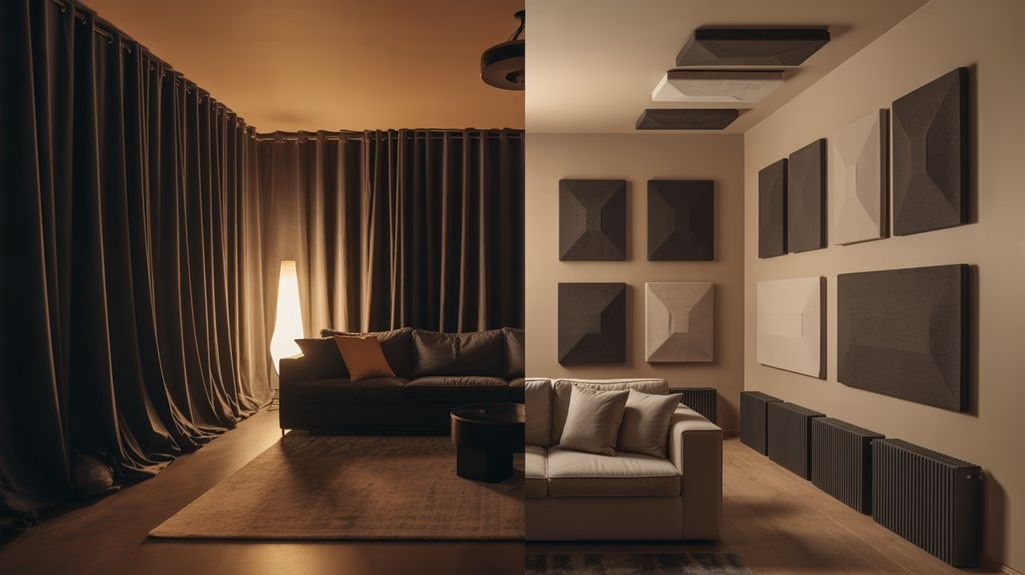
For a home theater, you’ll tame outside noise with soundproof curtains and sharpen clarity with acoustic panels. Curtains add mass at windows and doors and cut traffic noise, but absorb modestly (often NRC <0.4). Panels made of foam or mineral wool absorb reflections across mids/highs (NRC up to ~0.95), boosting dialogue and imaging. Place panels at ear height and above seating; add bass traps in corners. Many rooms benefit from both, plus sealing gaps. Here’s how to choose smartly next.
Key Takeaways
- Use soundproof curtains to block outside noise at windows/doors; they add mass but absorb sound modestly (NRC usually <0.4).
- Choose acoustic panels to improve in-room clarity by absorbing mids/highs; higher NRC (0.3–0.95) enhances dialogue and imaging.
- For best results, combine both: curtains for external noise control, panels for internal acoustics and echo reduction.
- Place panels at ear height on front/side walls, add ceiling panels, and treat corners with bass traps for low-frequency control.
- Start with curtains for quick, budget-friendly gains; add panels as needed for precise tuning and better overall sound quality.
What Each Option Does for Your Sound
At the source and at the boundaries, these options solve different problems.
In your home theater, Acoustic panels treat room acoustics by absorbing in-room reflections and reducing echoes, so dialogue snaps into focus and music gains detail. They absorb sound across mids and highs—critical for speech—and often carry a higher Noise Reduction Coefficient than fabrics, giving you tangible clarity and better imaging. Bass traps add low-frequency control that curtains can’t match.
Soundproof curtains work at openings. They block sound mostly at windows and doors by adding mass, cutting some outside noise like traffic or neighbors. They can absorb sound a bit near glass, but their NRC is modest and bass control is limited. Combine both: curtains for boundary transmission, panels for precise, immersive playback.
For best results, identify and treat first reflection points to maximize clarity and imaging in your home theater.
Materials, Ratings, and Real-World Performance
You’ve seen how panels refine what you hear and curtains tame what gets in; now it’s time to look at what they’re made of and how they measure up.
Acoustic panels use dense materials like foam, fiberglass, or mineral wool with strong sound-absorbing properties. Their noise reduction coefficient (NRC) commonly ranges from 0.3 to 0.95, meaning they absorb sound across mid to high frequencies and enhance sound quality in home theaters by cutting echoes and reverberation.
Soundproof curtains stack multiple dense layers—often wool and mass-loaded vinyl. Their NRC is usually below 0.4, so they don’t absorb sound as efficiently, but they’re excellent at blocking external noise, especially at windows.
In real-world use, acoustic panels dominate studios and conference rooms; soundproof curtains suit homes.
Combine both for balanced control. For best results, prioritize panels with high NRC ratings and add bass traps in corners to manage low-frequency buildup.
Placement Strategies for Home Theaters
Three placement priorities will reveal better sound in your home theater: treat first reflections, control corners, and seal windows.
Start with room placement that targets sound reflections. Mount acoustic panels at seated ear height on the front and side walls to improve sound quality and sound absorption, then add ceiling panels above the seats.
Mount panels at ear height on front and side walls; add ceiling panels above seats.
Tuck panels or bass traps into front corners to control noise and reduce buildup. Hang soundproof curtains directly over windows to lower noise levels from outside and tighten isolation. Balance coverage without over-deadening the room to enhance audio experience.
- Place panels opposite speakers to catch first reflections
- Add ceiling panels above the main listening position
- Treat corners with thicker panels or traps
- Install soundproof curtains over every window and door opening
For even better isolation, thoroughly seal all penetrations with acoustic caulk to stop sound leakage through outlets, fixtures, and gaps.
When to Use Curtains, Panels, or Both
With your placement plan set, choose treatments based on the problem you’re solving. If external noise leaks through windows or you live on a busy street, prioritize soundproof curtains for noise control. They limit outside disruptions but won’t absorb sound waves as effectively inside the home theater.
When your goal is to improve sound quality—taming echoes and tightening dialogue—use acoustic panels. Their higher NRC ratings (often 0.3–0.95) reveal superior absorption compared to curtains.
Use combination solutions when you need both defenses: curtains to block external noise, panels to refine the room’s acoustics. In flexible spaces, start with soundproof curtains as a first line, then add acoustic panels where reflections persist. This targeted approach keeps noise out and delivers clear, immersive playback. For a budget-friendly boost, seal door and window gaps with weather stripping to reduce sound leakage and complement both treatments.
Budget, Aesthetics, and Installation Trade-offs
Although both treatments can elevate a home theater, budget, aesthetics, and installation push you toward different choices.
If you’re cost-conscious, soundproof curtains win on budget and hassle-free installation—hang them like standard drapes. They tame incoming noise and are easy to remove, but their industrial look and modest sound absorption limit performance. For a budget boost, pair curtains with door seals and weather-stripping to target sound entry points and further reduce leakage.
Acoustic panels cost more and require mounting, yet they deliver superior sound quality by reducing echoes and tightening dialogue clarity. They also offer broad aesthetics with colors and prints that blend into your room.
- Prioritize budget: choose soundproof curtains for affordable, quick improvement.
- Prioritize aesthetics: select acoustic panels with fabric finishes that match decor.
- Prioritize installation ease: curtains install fast and stay flexible.
- Prioritize sound absorption: panels best address internal reflections and acoustic needs.
Quick Picks for Common Home Theater Setups
Two quick rules simplify your choice: treat the room’s sound first, then tame outside noise.
For a small apartment home theater near traffic, mount acoustic panels on first reflection points and ceiling; use soundproof curtains over windows for extra noise reduction.
In a medium living room, prioritize panels with higher NRC ratings (0.7–0.95) to absorb sound and tighten dialog; add curtains only if street noise leaks in.
For a dedicated basement, go panel-heavy on walls and a cloud; curtains are optional.
If you host movie nights and care about aesthetic preferences, pick fabric-wrapped panels that match decor; curtains add a soft look.
For gaming and casual recording studios-style control, panels deliver the most reliable sound control; curtains help mainly with window-borne noise.
To maximize value and performance, aim for materials and assemblies that achieve an STC rating in the mid‑50s or higher when feasible, and seal gaps with acoustic caulk or weather-stripping to prevent sound leaks.
Frequently Asked Questions
What Is the Difference Between Soundproof Curtains and Panels?
They differ in purpose: you block noise with curtains and absorb echoes with panels.
You’ll weigh soundproof materials, curtain effectiveness, and panels’ higher absorption rates (better room acoustics, noise reduction).
Panels need fixed panel installation; curtains hang easily.
Consider aesthetic appeal—panels offer designs; curtains look bulkier.
Do a cost comparison—curtains are cheaper upfront.
Maintenance requirements vary: vacuum panels, launder curtains.
For precision, choose panels; for flexible control, choose curtains.
Are Acoustic Panels Good for a Home Theater?
Yes—you’ll love how acoustic panels upgrade your theater. Coincidentally, as lights dim, you’ll see echoes fade.
You get acoustic panel benefits like superior sound absorption effectiveness and measurable performance metrics (NRC). For home theater soundproofing, choose material options—foam, fiberglass, mineral wool—that match design aesthetics.
Follow installation tips: first reflections, rear wall, ceiling. Compare cost: panels beat heavy curtains long-term.
Maintenance requirements are simple—vacuum dust. You’ll enjoy clearer dialogue and tighter bass.
Are Sound Proofing Panels Better Than Acoustic Panels?
No—“sound proofing panels” aren’t universally better than acoustic panels.
You’ll choose based on goals: sound absorption versus noise reduction. Acoustic panels excel at absorption; dense soundproofing boards block transmission.
Compare material types, installation process, and effectiveness comparison for your room size.
Consider aesthetic appeal and cost analysis—panels vary from budget foam to premium fabric or MLV composites.
Check user reviews for real results. Often, you’ll combine both for balanced performance.
What Are the Disadvantages of Acoustic Panels?
They’ve downsides. You’ll face cost considerations, plus installation challenges if you don’t want permanent mounts.
Their effectiveness range focuses on sound absorption, not blocking noise. Aesthetic limitations can clash with decor, depending on material choices.
You must plan smart placement strategies, which reduces flexibility. Expect maintenance requirements like cleaning or re-covering, and potential durability issues over time.
Panels can be bulky, hard to relocate, and scaling a room gets expensive fast.
Conclusion
In the end, you don’t pick a winner so much as build a team. Soundproof curtains tame outside noise and tame echoes a bit, while acoustic panels shape what you actually hear. Match materials and ratings to your room, place them smartly, and balance budget with looks. If you crave cinematic clarity, panels lead; if you’re battling street noise, curtains help. Use both when you can. Do that, and your home theater will sing like a well‑tuned orchestra.