If you want a door that actually helps block noise, a solid-core door is the better choice over a hollow-core model. The added mass can improve speech privacy, often raising performance from around STC 20–25 to roughly STC 27–30. But in real-world homes and apartments, the door slab is only part of the solution. Sound usually leaks through the perimeter, undercut, and frame, which is why professional-grade seals, weatherstripping, and an automatic door bottom matter just as much as the door itself.
For bedrooms, home offices, media rooms, and shared-wall spaces in places like Jersey City, Hoboken, and NYC, this upgrade can make a noticeable difference in comfort, sleep, and focus. At Total Home Interiors, we look beyond the door alone to identify the full path of noise transfer and recommend complete soundproofing solutions that perform better than basic DIY fixes.
Key Takeaways
- Solid-core doors block more airborne noise than hollow-core doors because greater mass helps reduce sound transmission.
- Hollow-core doors typically perform around STC 20–25, while solid-core doors are more often in the STC 27–30 range.
- For bedrooms, home offices, and other privacy-focused spaces, a solid-core door in the STC 27–30 range offers noticeably better speech privacy.
- Door performance depends on more than the slab itself—gaps at the frame, jamb, and threshold can significantly reduce real-world noise control.
- For the best results, Total Home Interiors recommends a complete soundproofing approach: a solid-core door, precise frame fit, perimeter seals, and an automatic door bottom as part of a professionally integrated acoustic solution.
Best Soundproof Door Type
If you want the best soundproof door type, a solid-core door is typically the strongest starting point. Compared with hollow-core doors, the added mass helps reduce airborne noise more effectively, making it a better choice for bedrooms, home offices, media rooms, and shared living spaces where privacy matters.
A well-made solid-core door may perform around STC 27 to 30, which can reduce everyday speech to a softer, less distracting background sound. But door slab weight alone isn’t enough.
Real sound control depends on the full assembly: tight frame fit, perimeter sealing, and closing the gap at the bottom. Even a dense door will underperform if sound leaks around the edges.
Adding dense neoprene seals and an automatic door bottom can create an airtight seal that helps block traffic noise and reduce drafts at the same time.
At Total Home Interiors, we help homeowners in West Orange, Hoboken, Jersey City, and across the Tri-State area improve privacy with professionally integrated soundproofing solutions.
When a door is part of a larger noise problem, we often recommend combining it with wall, ceiling, or window soundproofing for a more complete result than a DIY door upgrade alone can provide.
Hollow Core vs. Solid Core Doors
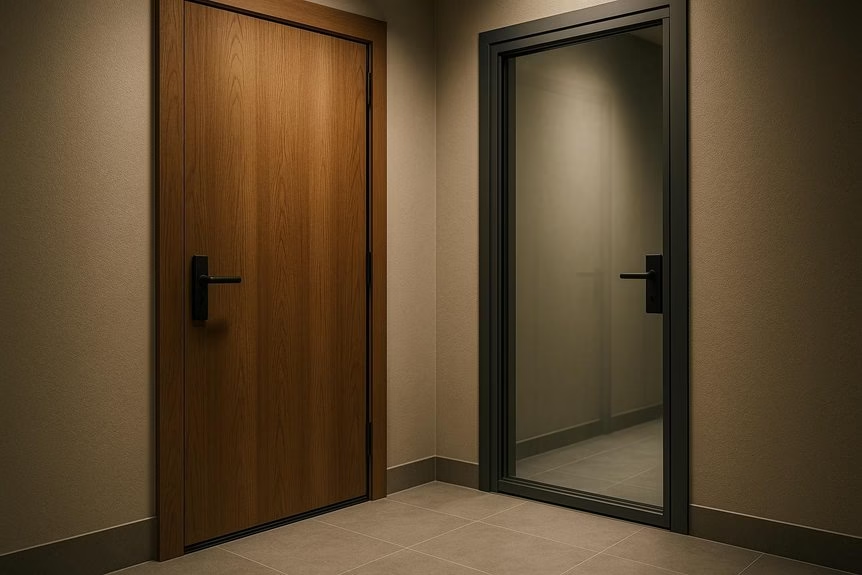
When comparing hollow core vs. solid core doors, the difference in privacy and noise control is noticeable. Door Core Construction plays a major role in how much speech and everyday sound travels from room to room.
Hollow core doors use a lightweight honeycomb or cardboard-style interior, which is why they typically perform at only about STC 20–25—low enough that normal conversation can still be heard through the door.
Hollow core doors offer minimal sound control, with STC 20–25 performance that still allows normal conversation to pass through.
- Hollow core doors usually weigh around 25 pounds, and that lower mass allows more airborne sound to pass through.
- Solid core doors use denser composite or engineered wood fills and often weigh 60–80 pounds, giving them better sound-blocking performance.
- In an STC Range Comparison, solid core doors commonly fall around STC 27–30, helping reduce voices and improve everyday privacy compared to hollow core options.
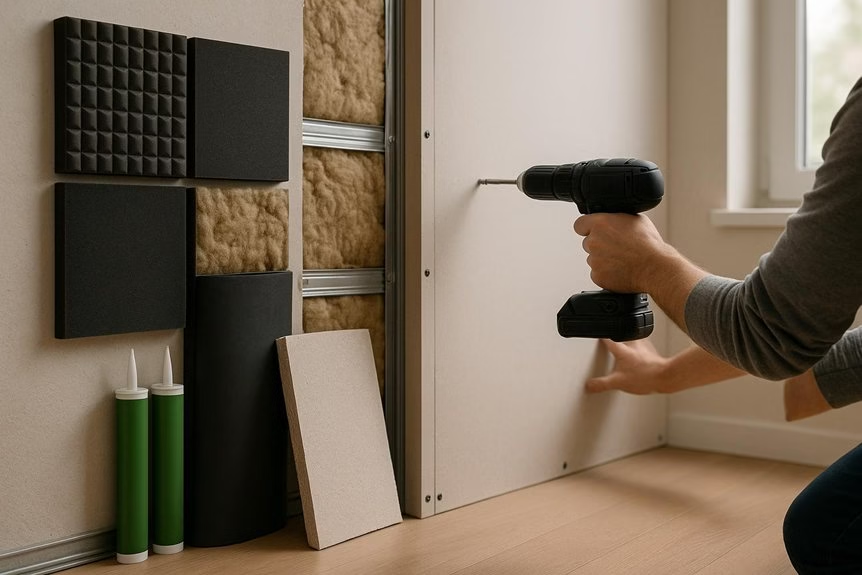
Using acoustic sealant around the door frame can further reduce sound leakage by closing small gaps that let noise pass through.
For homeowners dealing with bedroom, office, or shared-wall noise, a solid core door is typically the better choice for practical day-to-day noise reduction.
At Total Home Interiors, we help clients across West Orange, NJ and the Tri-State area evaluate privacy weak points as part of a larger professional soundproofing strategy—because real acoustic comfort usually depends on more than just the door alone.
What STC Rating Should You Choose?
How high should your STC rating be? The right target depends on how much noise reduction and speech privacy you need.
For a noticeable improvement over a typical hollow-core door, start around STC 25. At that level, everyday conversation may still be heard, but it should sound less intrusive.
If your goal is better privacy for bedrooms, home offices, or shared interior spaces, STC 27 to 30 is a stronger benchmark. That range is common with many solid-core interior doors and can make voices less clear from the other side.
For clients in apartments, condos, and busy homes across West Orange, Hoboken, Jersey City, and NYC, this is often where sound control starts to feel meaningfully more comfortable.
If you want a quieter, more private environment, especially for work-from-home spaces or media rooms, consider STC 36 or higher. At that level, normal speech is often reduced to a faint murmur.
Keep in mind that performance always depends on the full assembly, not just the door itself. Gaps, seals, frames, walls, and surrounding construction all affect the final result. Adding weather-stripping foam tape and a door sweep can help reduce leakage around the door and improve real-world performance.
As a reference point, hollow-core doors typically rate around STC 20 to 25, while solid-core doors often fall in the STC 27 to 30 range or higher.
Also, STC measures performance across a range of speech-related frequencies, making it a useful starting point when comparing doors and soundproofing options.
If you need more than a basic door upgrade, professionally designed soundproofing solutions can deliver significantly better results than DIY fixes alone.
Why Door Gaps Ruin Soundproofing
Even the best-rated soundproof door won’t perform as intended if gaps around the frame, jamb, or threshold allow sound to leak through. A high-STC door slab can only do so much when small openings around the perimeter create direct acoustic pathways that let noise bypass the door’s dense core. If light gets through, sound usually does too.
- Check the fit first: if the door isn’t properly aligned within the opening, consistent gaps at the top, sides, or bottom can compromise performance.
- Use the light test: when the door closes without visible light at the perimeter, you’re closer to achieving effective door frame sealing and dependable acoustic contact.
- Watch for perimeter bypass: in many homes and apartments, noise travels around the door slab rather than through it.
That’s why professional installation matters just as much as the door itself. Poor perimeter contact can undermine the sound rating you paid for and significantly reduce real-world noise isolation. Adding door seal kits and acoustic sealant around the frame can help close off the small leakage paths that let airborne sound escape.
For homeowners in West Orange, Jersey City, Hoboken, and across the Tri-State area dealing with privacy issues, street noise, or neighbor noise, proper door detailing is a critical part of a complete soundproofing strategy.
Best Weatherstripping and Door Sweeps
A soundproof door performs best when its perimeter is professionally sealed with compressible weatherstripping and a properly calibrated bottom sweep or automatic door bottom. Rubber, vinyl, or high-quality acoustic seals around the jamb and edges help the door close with firm, even contact, reducing the small air gaps that allow surprising amounts of airborne noise to pass.
Proper door seal placement and gasket compression are critical. If the seal is too loose, noise leaks through; if it’s too tight, the door becomes difficult to latch and won’t perform consistently.
At the threshold, sweep height must be carefully adjusted so the seal maintains reliable contact without dragging, snagging, or wearing unevenly. Applying weather-stripping foam tape around the door frame can also create a more airtight seal and reduce sound leakage at a relatively low cost.
In homes and apartments with uneven flooring, an automatic door bottom often delivers better long-term performance than a standard sweep.
For homeowners in West Orange, Hoboken, Jersey City, and NYC dealing with hallway noise, street noise, or lack of privacy, these details can make a noticeable difference.
At Total Home Interiors, we focus on integrated soundproofing solutions that go beyond basic DIY fixes, ensuring every component works together for lasting acoustic control.
Best Rooms for a Soundproof Door
While nearly any interior opening can benefit from better acoustic control, bedrooms are often the best place to start. A professionally selected soundproof door can reduce everyday conversation, soften nighttime disruptions, and improve privacy where comfort matters most.
Bedrooms are often the smartest first upgrade, helping reduce everyday noise and improve privacy where comfort matters most.
For homeowners in West Orange, Hoboken, Jersey City, and NYC dealing with thin walls, shared hallways, or busy households, solid-core doors paired with tight perimeter seals typically deliver the biggest improvement.
- Choose a home office door when focus and speech privacy matter during calls or meetings. Dense door construction and proper perimeter sealing help reduce airborne voice transfer far better than standard hollow-core doors.
- Upgrade bathroom doors for stronger privacy and better control of routine household noise. Solid-core models help keep sound from traveling between adjacent rooms and hallways.
- Target openings near family rooms, kitchens, or shared corridors first. These are often the biggest trouble spots for hallway noise, frequent foot traffic, and everyday sound leakage.
Wherever you install a soundproof door, the seal matters as much as the door itself. Gaps at the frame and bottom sweep can quickly undermine performance, which is why professional installation is key to getting meaningful noise reduction. A well-sealed, dense door can also improve overall STC rating by limiting sound leakage through common weak points.
Frequently Asked Questions
Can a Soundproof Door Help With Smells and Drafts Too?
Yes—when properly specified and professionally installed, a soundproof door can also reduce smells and drafts.
The same features that limit noise transfer—solid, dense door cores, perimeter seals, automatic door bottoms, and quality thresholds—also help block the air gaps that let smoke, cooking odors, dust, and cold air pass from room to room.
While a soundproof door isn’t a substitute for correcting ventilation or HVAC issues, it can make a noticeable difference in comfort, privacy, and indoor air quality.
Do Soundproof Doors Affect Fire Safety or Building Code Compliance?
Yes—soundproof doors can affect both fire safety and code compliance. The key is choosing the right door assembly for the space.
In many homes, apartments, offices, and commercial buildings, a door may need to meet specific fire-rating requirements, use approved hardware, and comply with local building codes. If a rated door is replaced, altered, or paired with the wrong frame, seals, or hardware, it can compromise fire protection and create problems during inspection.
At Total Home Interiors, we always recommend verified, tested door assemblies when sound control and safety both matter. This is especially important in multi-family residences, mixed-use buildings, and commercial spaces across NJ and NYC, where code requirements can be strict.
Before installing a soundproof door, confirm the fire rating, review local permitting requirements, and make sure the full assembly remains compliant. Professional guidance helps prevent costly mistakes and ensures you improve acoustic privacy without sacrificing safety.
How Much Does Professional Soundproof Door Installation Usually Cost?
Professional soundproof door installation usually ranges from $800 to $4,000, depending on the door assembly, labor rates, frame modifications, and acoustic hardware.
For higher-performance systems, custom-sized doors, or commercial-grade applications, costs can exceed $5,000.
In many cases, homeowners and businesses should also budget for perimeter seals, automatic door bottoms, thresholds, and possible wall or frame upgrades to reduce sound leakage effectively.
Most standard installations can be completed in a day, while more advanced acoustic door systems may take several days, especially when structural changes or commercial inspections are involved.
For the best results, professional installation is essential, since even small gaps can significantly reduce soundproofing performance.
Can Renters Soundproof a Door Without Permanent Modifications?
Yes—renters can reduce door noise without making permanent changes, but temporary fixes only go so far.
Removable door seals, draft stoppers, and over-the-door acoustic blankets can help limit sound leaking through gaps, making a room feel a bit quieter without risking your security deposit.
If noise is a daily issue, however, the most effective results typically come from professionally designed soundproofing solutions that address the full space—not just the door.
Total Home Interiors helps homeowners and apartment residents across West Orange, NJ, Hoboken, Jersey City, and NYC create quieter, more private interiors with expert acoustic and soundproofing strategies.
How Do Soundproof Doors Impact Ventilation and Airflow Between Rooms?
Soundproof doors typically reduce ventilation and airflow between rooms because effective noise control depends on tight seals that close off the gaps air usually travels through. In other words, the same construction that helps block sound transfer also limits passive air movement and fresh-air exchange.
For homeowners and commercial clients dealing with privacy or noise issues, this is a common tradeoff in professional soundproofing design.
If a space needs both acoustic separation and proper circulation, Total Home Interiors can recommend integrated solutions such as acoustically lined transfer grilles, engineered vent pathways, or mechanical ventilation strategies that preserve comfort without undermining sound isolation.
Conclusion
For real noise control, a solid core door is a strong starting point—but the full result depends on the entire assembly. A higher STC-rated door, combined with professional perimeter sealing, weatherstripping, and an acoustic door sweep, helps block the weak points where sound usually leaks through. For bedrooms, home offices, nurseries, studios, and commercial spaces, the right door setup can make a noticeable difference in privacy, comfort, and focus. At Total Home Interiors, we know that lasting soundproofing comes from getting every detail right—not just the door itself, but how it’s installed and sealed for true performance.