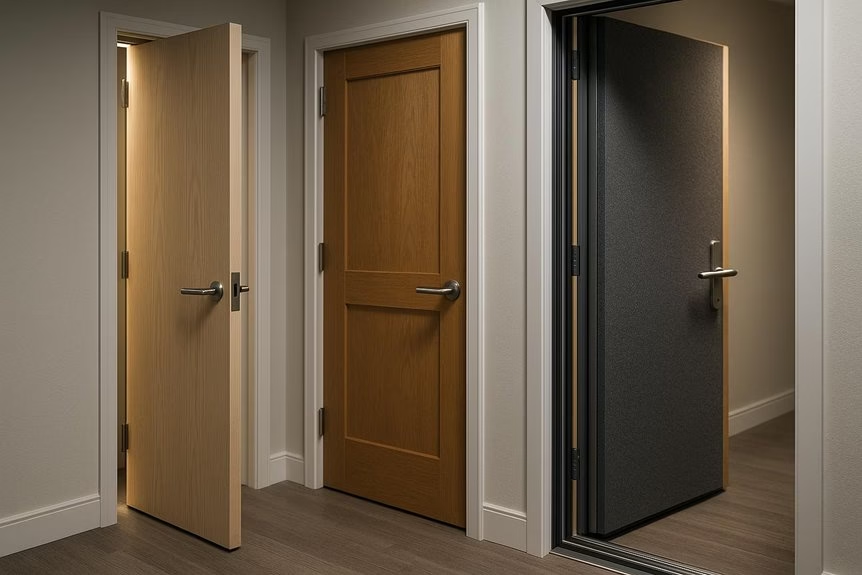
You’ll block dramatically more noise with a properly sealed, solid-core door than with a standard hollow-core interior door. In real homes and apartments across North Jersey, Hoboken, Jersey City, and NYC, we routinely see solid-core doors reach roughly STC 27–30, while hollow-core doors often sit closer to STC 20–25 and let normal conversation pass through much more clearly.
But the door slab is only half the story. Any gaps around the frame or at the threshold can ruin performance. To get meaningful privacy—whether it’s for a bedroom, home office, or conference room—you need a professionally installed solution with:
- Continuous perimeter gasketing around the jamb and head
- An automatic drop seal at the bottom of the door
- A properly built and insulated wall assembly around the frame
At Total Home Interiors, we design and install complete soundproofing systems, not just “better doors.” That means combining solid-core or specialty acoustic doors with the right wall construction (mass-loaded vinyl, acoustic drywall, decoupled framing) and, where needed, acoustic treatments inside the room to control echo and intelligibility.
If your goal is real speech privacy and quieter living—especially in multi-family buildings or busy commercial spaces—these details are where professional soundproofing separates itself from DIY weatherstripping.
Key Takeaways
- Solid-core doors are a clear upgrade over hollow-core doors for blocking everyday airborne noise like speech and TV, thanks to their added mass—but on their own, they’re rarely enough for true “soundproofing” in an urban apartment or brownstone.
- Standard hollow-core interior doors typically test around STC 20–25, while solid-core doors may reach STC 27–30. That’s an improvement in privacy, but still below what most Jersey City, Hoboken, or NYC homeowners expect when they’re trying to block hallway or neighbor noise.
- If you want conversation outside the room to be faint or mostly unintelligible—whether for a bedroom, nursery, home office, or therapy/consult room—aim for a door system that contributes to an overall wall assembly of roughly STC 36+ rather than relying on a generic “soundproof” label.
- Performance is determined by the entire opening, not just the slab. Door frames, casing, bottom undercuts, and poorly sealed jambs act like open windows for sound, especially in older condos and multifamily buildings where gaps and out‑of‑square frames are common.
- Professionally designed door systems that combine a high-mass solid-core (or acoustic-rated) door with continuous perimeter seals, a quality threshold, and an automatic drop seal at the bottom will dramatically outperform DIY foam tape or basic door sweeps—and can be integrated into a broader soundproofing plan that addresses walls, ceilings, and adjoining spaces.
- At Total Home Interiors, we don’t just swap a door and hope for the best. For clients across West Orange, Jersey City, Hoboken, and NYC, we evaluate how that door interacts with the rest of the construction—wall composition, adjacent glass, shared ceilings/floors—and, when needed, pair upgraded doors with proven soundproofing methods like mass-loaded vinyl, acoustic drywall, and decoupled wall assemblies. This holistic approach is what actually delivers the quiet, privacy, and peace of mind most homeowners and commercial clients are looking for.
Which Interior Soundproof Doors Work Best?
If you’re serious about cutting noise between rooms, look for solid-core interior doors with a properly engineered seal system—not standard hollow-core slabs.
The denser the door, the more effectively it blocks sound. Typical solid-core doors fall around STC 27–30, while hollow-core doors often sit closer to STC 20–25, which is usually not enough for meaningful privacy in urban apartments or busy households.
Denser solid-core doors reduce sound far better than hollow-core doors, making them the smarter choice for real interior privacy.
For real separation between spaces, you’ll want at least STC 25, and closer to 36 if you want conversation in the next room to drop to a faint murmur.
Mass and density are critical: heavier, solid cores and thicker door constructions outperform lightweight honeycomb interiors every time.
Solid wood and engineered solid-core designs generally provide much better acoustic performance than cardboard-based or hollow options.
Upgraded acoustic interior doors can push performance even further, but they only deliver their rated results when they’re professionally installed with tight tolerances, high-performance perimeter seals, and a properly sealed door bottom or automatic drop seal.
At Total Home Interiors, we typically treat soundproof doors as one part of a complete sound control strategy. Pairing these doors with well-installed perimeter sealing and exterior sound defenses can further cut street and traffic noise that finds its way indoors.
For clients in NYC, Hoboken, Jersey City, and across North Jersey, that often means pairing solid-core doors with:
- Soundproof wall and ceiling construction (mass-loaded vinyl, acoustic drywall, decoupled framing)
- Acoustic treatments to reduce echo and improve speech clarity
- Motorized shades or drapery for added privacy and sound absorption at glass
- Smart home controls to manage privacy, lighting, and noise-masking systems
If you’re dealing with neighbor noise, street noise, or a lack of speech privacy in a home office or bedroom, we can evaluate your existing doors, walls, and windows and design a cohesive solution—not just a single upgraded slab—so you get the quiet and privacy you’re actually paying for.
Should You Choose Hollow or Solid Core Doors?
When sound control really matters in an apartment, condo, or home office, a solid-core door is almost always the better choice than a hollow-core slab. The extra mass in a solid-core door blocks significantly more airborne noise—footsteps in the hallway, TV in the next room, late-night conversations—making it a smart first step in any privacy or soundproofing plan.
A typical hollow-core interior door might weigh around 25 pounds and uses a lightweight honeycomb interior, so more room noise and voices pass through it. By contrast, a solid-core door usually weighs 60–80 pounds, and that higher core mass can noticeably improve speech privacy between rooms—important for bedrooms, nurseries, and work-from-home spaces in busy buildings across NYC, Hoboken, Jersey City, and North Jersey. When you combine a solid-core leaf with well-sealed frames and walls designed for higher STC ratings, the overall system does a much better job of blocking both everyday speech and home theater sound.
However, the door itself is only one piece of the noise-control puzzle. Finish and style matter less than the construction and how the door is integrated into a full soundproofing strategy. Even engineered solid cores with a veneer can outperform hollow-core doors, but if there are gaps around the frame, undercuts at the bottom, or poorly sealed jambs, much of that benefit is lost.
At Total Home Interiors in West Orange, we typically treat interior doors as part of a broader sound-control plan, especially in multi-family buildings and townhomes:
- Soundproofing Integration: We can pair solid-core doors with upgraded frames, perimeter seals, and automatic door bottoms, and tie them into wall upgrades using acoustic drywall, mass-loaded vinyl, and decoupled framing to reduce noise transfer between rooms or between units.
- Acoustics & Privacy: In offices, therapy rooms, conference rooms, and home workspaces, we often combine solid-core doors with acoustic panels or fabric wall systems. This not only helps block sound between spaces but also improves clarity and reduces echo inside the room.
- Smart Privacy & Window Treatments: If your noise issues come with visibility and light concerns—street-facing bedrooms, glass office fronts, or open-plan living—motorized shades from Lutron, Somfy, or Hunter Douglas PowerView can add instant privacy, integrate with your smart home system, and support better sleep and focus alongside your upgraded doors.
- Home Automation & Home Theater: In dedicated home theaters or media rooms, solid-core doors help contain sound so the rest of the home stays quiet. We design these spaces holistically—door selection, wall construction, acoustic treatments, immersive audio, and smart lighting all working together for both performance and privacy.
If you’re in the Tri-State area and struggling with noise between rooms or units, swapping to solid-core doors is often a high-impact upgrade—but you’ll get the best results when they’re specified, installed, and sealed as part of a complete soundproofing and acoustic plan. Total Home Interiors can evaluate your current doors, walls, and windows, then design a targeted solution to deliver the quiet and privacy you’re actually looking for.
What STC Rating Should a Soundproof Door Have?
- At STC 25, you’ll still clearly hear normal speech through a closed door—there’s little meaningful conversational privacy, especially in apartments and shared home offices.
- Around STC 30–35, you reach a more livable threshold for urban homes and condos. Kid noise, hallway traffic, and doorbell-level sounds are noticeably reduced, making it easier to sleep, work from home, or take calls without constant disruption.
- At STC 36+, typical conversation behind the door drops to faint, often unintelligible speech. For bedrooms, offices, treatment rooms, or executive spaces, this level starts to feel genuinely private and much quieter. In New Jersey, choosing a well‑sealed, higher‑STC door can also help you stay under residential noise limits during nighttime quiet hours by containing sound within your home.
In practice, your door should be designed to complement the performance of the surrounding construction.
Many interior walls in the Tri‑State area test in the mid–high 30s for STC, so upgrading a door to a similar rating—combined with proper seals, thresholds, and framing—often delivers the best return.
And because STC focuses on mid‑range frequencies, it’s important to pair any sound-rated door with proper wall, ceiling, and window soundproofing for low‑frequency issues like traffic rumble or bass from neighbors.
Total Home Interiors designs complete soundproofing packages—doors, walls, windows, and acoustic treatments—so your STC-rated door isn’t working alone, but as part of a coordinated privacy and noise-control solution for your home or commercial space.
Do Glass Panels Make Soundproof Doors Worse?
Glass panels are great for bringing in light and opening up a space, but from a pure performance standpoint, they almost always make a “soundproof” door weaker than the same door with a solid core. You’re reducing mass across part of the door, and mass is what stops airborne noise. That’s why even a high-quality solid-core slab will usually outperform a similar door with a large glass insert when it comes to blocking sound between rooms or from a noisy hallway. In many projects, doors with glass are paired with acoustic treatments on surrounding walls and ceilings to reduce echo and keep overall noise levels down.
Glass brings in light, but from a soundproofing standpoint, a solid-core door almost always blocks more noise.
That doesn’t mean you have to choose between daylight and quiet—especially in dense areas like Jersey City, Hoboken, and NYC, where both privacy and natural light matter. It does mean the details of the door and glass construction become critical. Standard tempered glass (what you’d find in most off-the-shelf interior doors) does very little for noise control. To keep conversations private and reduce transfer between spaces, you need:
- Acoustic laminated glass, not standard tempered
- Smaller, strategically placed glass inserts, rather than full-height glazing
- Properly sealed frames and perimeter gasketing, so air gaps don’t undo the benefit of the upgraded glass
At Total Home Interiors, we treat glass doors as part of a complete sound control strategy—not as a standalone DIY swap. For clients dealing with office or conference room privacy, home offices that face noisy hallways, or bedrooms near common areas, we design door assemblies that integrate:
- Soundproofing around the opening (acoustic drywall, mass-loaded barriers, and proper framing)
- Acoustic treatments in the room to reduce echo and keep voices from carrying
- Motorized window treatments on adjacent windows or sidelites for both privacy and additional sound softening
- Smart controls so doors, shades, and lighting scenes work together—especially in home theaters, offices, and media rooms
If you’re in the Tri-State area and considering glass doors for style or daylight, but you’re worried about noise and privacy, this is exactly where a professional design approach matters. We can evaluate your existing doors, recommend whether and where glass makes sense, and specify the right acoustic glass, seals, and surrounding treatments so you gain natural light without turning your door into an acoustic weak point.
Why Door Gaps Ruin Soundproofing
Even the best solid-core “soundproof” door will disappoint if air can slip around it. In multi-family buildings across Jersey City, Hoboken, and NYC, we see this all the time: the door itself is heavy, but noise still pours in through the smallest openings around the frame and threshold.
Sound travels anywhere air can move, so even a very tight-looking door can be undermined by:
1. Side and head gaps
Small perimeter gaps at the sides and top let hallway conversation, elevator dings, and neighbor noise bypass the door slab entirely.
2. Misaligned or flexible frames
If the frame isn’t plumb, square, and securely anchored, it creates hairline cracks that open and close as the door latches—especially common in older city buildings. In these cases, professional installation matters just as much as the door’s mass.
3. Undersized bottom clearances
The largest leaks are usually under the door. A visible gap at the threshold is enough to let in footsteps on the landing, lobby noise, and street sound from undercut apartment entry doors.
Effective soundproofing is about continuous, reliable contact. If the seals around your door aren’t compressing properly all the way around, you’ll never get the level of privacy or quiet you’re paying for—no matter how “soundproof” the door is on paper. Adding soundproof insulation in the surrounding wall and carefully sealing gaps with acoustic sealant ensures the door system works as part of a true sound barrier, not just a heavier slab.
At Total Home Interiors, we don’t just swap out a slab and hope for the best. We:
- Assess the frame, threshold, and surrounding wall to identify all actual leak paths
- Specify and install high-performance perimeter seals, automatic door bottoms, and proper thresholds
- Integrate the door solution with broader soundproofing (walls, ceilings, and even windows) so your entry isn’t the weak link in an otherwise quiet home or office
Before you assume you “need a better door,” it’s worth having a professional assessment to pinpoint how and where the noise is entering. In many Tri-State apartments and condos, a properly sealed door system—designed and installed as part of a complete soundproofing plan—can transform hallway noise into a barely noticeable background.
Which Door Seals Block the Most Noise?
Once you know the gaps are the problem, the next step is choosing the right type of seal and, just as importantly, having it installed correctly.
For serious noise reduction, a continuous perimeter gasket around the door frame is the most effective approach. When it’s properly specified and adjusted, it compresses evenly on all sides every time the door closes, drastically reducing sound transfer compared with peel‑and‑stick foam or relying on the door slab alone. This is the type of solution we design and install in apartments, condos, and offices where neighbor or hallway noise is an issue.
At the bottom of the door, an automatic drop seal typically outperforms a basic surface‑mounted sweep. A quality drop seal engages when the door closes and presses firmly against the finished floor, creating a consistent seal even on slightly uneven surfaces—critical in older NYC and Hoboken buildings where thresholds are rarely perfect. If a sweep is used, it needs to maintain continuous, firm contact, not just lightly graze the floor, or sound will leak through.
As part of our soundproofing approach at Total Home Interiors, we don’t just swap in a seal and hope for the best. We perform visual and light-gap checks around the entire door assembly and also look at nearby flanking paths—such as HVAC grilles, undercut doors to hallways, or adjacent walls and ceilings. In many urban apartments and commercial spaces, the door is only one part of the problem; real results come from treating the full sound path with proper soundproofing construction, acoustic treatments where needed, and—in offices or medical environments—sound masking to protect speech privacy. When door seals are paired with soundproof insulation and other mass‑adding materials, they become part of an integrated system that blocks airborne noise far more effectively than seals alone.
Why Installation Matters for Soundproof Doors
Proper installation is just as critical as the sound-rated door itself—especially in dense urban buildings in Hoboken, Jersey City, or Manhattan where even small gaps can let neighbor or street noise pour through.
Soundproof performance depends on creating a true acoustic seal:
- Perimeter sealing must be continuous around the entire jamb—no breaks, no weak points—so air (and sound) can’t sneak through.
- Gasket compression has to be precisely calibrated. Too loose, and you get flanking noise. Too tight, and the gasket can’t sit correctly or maintain long-term contact.
- Bottom sweep contact has to sit flat and consistent against the floor or threshold with no voids along the span.
If you can see light, you’ll hear sound. Any misalignment at the head, sides, or threshold will undermine the STC rating you paid for and limit how much relief you get from hallway, elevator, or upstairs noise. In busy New Jersey homes and offices, properly installed soundproof doors—paired with solid-core doors and acoustic seals—can significantly cut the urban noise that hurts focus, productivity, and long‑term well‑being.
This is why Total Home Interiors treats soundproof doors as a complete system—not just a slab:
- We assess the surrounding wall, floor, and ceiling construction as part of a broader soundproofing plan (mass-loaded vinyl, acoustic drywall, decoupled framing where needed) so the door isn’t the only weak link.
- Our installers are trained in acoustic detailing—shimming, sealing, and gasketing specifically for noise control, not just for looks.
- We integrate door solutions with your overall acoustic strategy (panels, fabric wall systems, sound masking) for offices, studios, and quiet home workspaces.
For most homeowners and commercial spaces in the Tri-State area, professional installation isn’t a luxury—it’s the difference between a door that “looks solid” and a door that actually delivers quieter bedrooms, private offices, and calmer living rooms.
Which Rooms Benefit Most From Soundproof Doors?
Bedrooms, home offices, bathrooms, and any room off a busy hallway see the biggest upgrade from a properly sound-rated door—especially in urban buildings where walls are thin and noise travels.
For bedrooms, swapping a hollow-core door (typically STC 20–25) for a solid-core or acoustically upgraded door (STC 27–30 and above) delivers a noticeable reduction in hallway, TV, and conversation noise. When we pair that with perimeter sealing and proper thresholds, clients in Jersey City, Hoboken, and Manhattan usually report deeper, less interrupted sleep—even when the rest of the home is still active.
Home offices benefit just as much, but for a different reason: speech privacy. Around STC 25, people outside the room can still follow your conversations. Once you move toward STC mid-30s and higher—combined with strategic soundproofing in surrounding walls (acoustic drywall, mass-loaded vinyl, and decoupled framing)—voices drop to a muffled background sound instead of intelligible speech. That’s critical for Zoom calls, sensitive meetings, or creative work that demands focus. Adding soundproof drywall or a double-layer drywall assembly with damping compounds in the adjacent walls can further boost STC and keep office conversations from leaking into nearby rooms.
Bathrooms and powder rooms also improve significantly when we specify better doors and seals. Containing everyday household noise is a comfort and privacy issue, especially in smaller condos or apartments where bathrooms open directly into common areas or bedrooms.
In homes and condos where bedrooms face a family room, TV space, or high-traffic hallway, we typically look beyond the door itself and design a complete solution: upgraded solid-core or acoustically rated door slabs, high-performance seals, and, when needed, adjacent wall soundproofing to control low- and mid-frequency noise (bass from TV, footsteps, kids running). For clients on busy streets, we often layer this with acoustic window upgrades and automated shades to further cut traffic and exterior noise.
Total Home Interiors designs and installs these systems as part of a broader noise-control plan—integrating door upgrades with wall/ceiling soundproofing, acoustic treatments, and even smart home control—so you gain real, measurable improvements in privacy, comfort, and day-to-day quality of life.
When Should You Upgrade to a Solid Core Door?
If you can still clearly hear conversations through a closed door, it’s usually time to move from a hollow-core slab to a solid core door—especially in dense urban buildings in Hoboken, Jersey City, or NYC where construction is often light and sound carries.
Hollow-core doors typically fall around STC 20–25, which means speech remains very intelligible. A properly selected and installed solid core door can push you into the STC 27–30 range and higher, significantly reducing how clearly you hear voices and everyday noise. That’s where professional design and installation matter. In many projects, we also look at door seals and thresholds as part of a complete soundproofing system so that mass, airtightness, and surrounding wall construction are all working together.
Here’s when Total Home Interiors typically recommends upgrading to solid core doors as part of a broader soundproofing strategy:
1. You Need Real Privacy (Bedrooms, Bathrooms, Home Office)
If you can hear every word from the hallway, kids’ rooms, or a shared bathroom, a solid core slab is often the first serious upgrade. In apartments and condos, we often pair solid core interior doors with targeted wall and ceiling soundproofing so you get both speech privacy and a quieter overall space.
2. You’ve Sealed the Frame but Noise Still Leaks Through
Door seals, thresholds, and proper framing are essential—but if the slab itself is hollow, it becomes the weak point. As a soundproofing contractor, we often see clients who’ve tried stick-on seals or DIY kits and are disappointed with the results. Once we install a solid core door with proper perimeter seals and, when needed, acoustic upgrades to the surrounding wall, the improvement is immediately noticeable.
3. You’re Especially Noise-Sensitive or Working from Home****
For people who are easily distracted or working from a home office, the added weight of a solid core door makes a real difference. A hollow-core door might weigh around 25 pounds; solid core doors are often in the 60–80 pound range, and that mass directly helps block airborne sound like conversations, TV audio, and hallway noise.
In many Hoboken and Jersey City apartments, we combine solid core office doors with acoustic treatments—such as fabric-wrapped wall panels—to control echo inside the room and make calls and video meetings more private and professional.
That extra mass in a solid core door is what you’re paying for—but the real performance comes from treating the entire opening and surrounding construction as a system.
For clients in the Tri-State area, Total Home Interiors can:
- Evaluate your doors as part of a full soundproofing plan (walls, ceilings, and floors, not just the slab).
- Combine door upgrades with acoustic treatments so rooms sound quieter and more controlled, not just “less noisy.”
- Integrate doors with smart home and privacy solutions, including automated shades on glass doors and windows to reduce both sound intrusion and visual exposure.
If you’re hearing clear conversations through closed doors today, you’re in classic hollow-core territory. A professionally selected solid core door—installed as part of a comprehensive noise control plan—is often the fastest way to reclaim privacy and quiet in your home.
Frequently Asked Questions
Can Acoustic Foam on a Door Actually Block Outside Noise?
Foam on the door will tame echo inside the room, but it won’t meaningfully block outside noise. To actually reduce neighbor or hallway sound, you need two things: more mass and better sealing.
At Total Home Interiors, we approach this as a full door assembly project rather than a quick DIY fix. That typically includes:
- Adding mass to the door with proper soundproofing materials (like mass-loaded vinyl or acoustic drywall layers) to slow sound transmission.
- Sealing all gaps around the frame with high-quality perimeter seals and an upgraded door sweep at the bottom to stop sound leaks.
- Addressing adjacent walls and construction where necessary, so the door isn’t the only weak link.
For apartments and condos in Hoboken, Jersey City, and NYC, we design and install complete soundproofing solutions around entry doors, bedroom doors, and home office doors—often as part of a broader noise control plan for walls, ceilings, and windows.
If you’re hearing too much hallway or neighbor noise through your door, we can assess the existing construction and recommend a customized soundproofing approach that actually delivers quieter, more private rooms, rather than just adding foam and hoping for the best.
Are Automatic Door Bottoms Worth the Extra Cost?
Yes—automatic door bottoms are often worth the extra cost, especially in dense urban buildings where every small gap lets in hallway noise, neighbor sound, and drafts.
Even a 1% gap around a door can noticeably reduce the effectiveness of a soundproofing or acoustic plan.
Unlike basic door sweeps, an automatic door bottom drops down only when the door closes, creating a tighter, more consistent seal without dragging on the floor or wearing out the threshold.
In a professionally designed noise-control strategy, that difference matters.
At Total Home Interiors, we typically recommend automatic door bottoms as part of a broader soundproofing package—paired with perimeter weatherstripping, upgraded door cores, and, when needed, wall and ceiling soundproofing.
For bedrooms, home offices, and conference rooms in the Tri-State area, they’re a relatively small investment that can significantly improve both privacy and overall quiet.
Do Heavy Curtains Help Soundproof a Noisy Door?
Yes—with the right expectations. Heavy curtains can help reduce some of the noise that comes through a door, especially higher frequencies and echo in the room, but they’ll not truly soundproof it on their own.
At Total Home Interiors, we typically treat heavy or motorized drapery as a finishing layer in a complete noise-control strategy, not the primary solution.
For clients in Jersey City, Hoboken, NYC, and across North Jersey dealing with hallway noise, elevator lobbies, or street sound bleeding through an entry door, we focus first on:
- Proper soundproofing construction around the door area
- Adding mass (e.g., acoustic doors, sound-rated assemblies)
- Addressing wall, ceiling, and floor transmission near the doorway
- Using professional soundproofing materials such as acoustic drywall and mass-loaded barriers in adjacent structures
- Acoustic control inside the space
- Installing acoustic panels or fabric wall systems to reduce echo and make remaining noise less intrusive
- Using ceiling treatments or sound masking in work-from-home setups, offices, and conference rooms
Once the structure and gaps are correctly addressed, then heavy, lined, or even motorized drapery over or near the door can:
- Help tame reflections and echo in the room
- Add a soft, absorptive surface that improves perceived quiet and privacy
- Integrate with a smart home system (Lutron, Somfy, Hunter Douglas PowerView) for scheduled closure at night or during focused work hours
If your goal is noticeable, reliable noise reduction—not just a slight muffling—you’ll get far better results with a professionally designed solution that combines:
- Soundproofing of the surrounding structure
- Acoustic treatments to control echo and improve comfort
- Automated window treatments or drapery as a complementary layer
- Optional home automation integration so everything works at the touch of a button or voice command
For a noisy door in an apartment or condo, the most effective next step is a site visit and acoustic assessment. We can measure the actual noise paths, recommend a realistic solution, and design it to match your interior style while dramatically improving peace and privacy.
Can I Soundproof a Door Without Replacing It?
Yes—you can dramatically improve the sound performance of an existing door without replacing it, especially when it’s part of a broader, professionally designed noise-control plan.
For many of our clients in Jersey City, Hoboken, and NYC, the “door problem” is really a gaps-and-leaks problem. Even a heavy door will leak sound if it isn’t sealed and integrated properly with the wall and surrounding construction. Instead of a one-off DIY fix, we look at the entire opening as a system:
– Perimeter door sealing
We upgrade the seals around the frame with high-quality acoustic weatherstripping and, where appropriate, automatic door bottoms. This reduces the flanking paths where hallway chatter, elevator noise, or neighboring units bleed into your space.
– Threshold and floor interface
At the bottom of the door, we address that common light-and-sound gap with professional-grade threshold solutions that maintain smooth operation while tightening the acoustic seal—especially important for bedrooms, home offices, and treatment rooms in medical or commercial spaces.
– Door mass and surface treatments
When the door itself is too light, we add mass and damping using materials we regularly deploy in our soundproofing work, such as mass-loaded vinyl or acoustically treated panel systems. Unlike basic stick-on foam, these are selected and installed to work with the door hardware, hinges, and surrounding wall construction.
These targeted upgrades become even more effective when they’re part of a complete soundproofing strategy—walls, ceilings, and adjacent rooms included—rather than an isolated door “band-aid.”
For clients who also care about interior design, we can integrate acoustic panels or fabric wall systems around the doorway to control echo and improve room sound quality.
If you’re dealing with hallway noise, neighbor conversations, or lack of speech privacy, we can assess your existing doors and surrounding construction and design a solution that fits your space, whether it’s an apartment, home office, or professional practice in the Tri-State area.
What Floor Threshold Works Best With a Door Sweep?
For serious noise control, pair your door sweep with a solid, raised aluminum or hardwood threshold that’s installed and aligned professionally—not a basic stick-on strip. A properly sized, raised threshold lets an automatic door sweep “drop” into a consistent, tight seal that blocks both sound and drafts, instead of dragging or leaving uneven gaps.
At Total Home Interiors, we’ll match the threshold height to your existing flooring and correct any warping or misalignment in the door so the sweep and threshold make even, reliable contact across the entire width.
In many urban condos and brownstones, we also combine this with perimeter weatherstripping and, when needed, broader soundproofing upgrades—like adding acoustic door seals or addressing noisy walls and floors around the doorway—to get the level of quiet our clients expect.
If you’re in North Jersey, Hoboken, Jersey City, or NYC and relying only on a basic sweep or big-box threshold and still hearing hallway or street noise, that’s usually a sign the door assembly needs a more professional, acoustically focused solution, not another DIY strip.
Conclusion
When you’re serious about quiet, the door is only the starting point. A hollow-core door will always leak conversation and hallway noise; a solid-core slab with proper mass performs better—but it still won’t solve the problem if sound is pouring through adjacent walls, ceilings, or glazing.
At Total Home Interiors in West Orange, we look at the entire envelope, not just the door. For urban homes and condos in NYC, Hoboken, Jersey City, and across North Jersey, that often means:
- Soundproofing the structure around the door: adding mass-loaded vinyl, acoustic drywall, and decoupled framing so voices and impact noise don’t simply bypass the door through the wall or ceiling.
- Controlling room acoustics so conversations stay intelligible and private without harsh echo—using fabric-wrapped acoustic panels or full fabric wall systems that complement your interior, not fight it.
- Integrating window treatments where street noise and glass reflections are part of the problem—motorized Lutron, Somfy, or Hunter Douglas shades tied into a smart home system for timed privacy, better sleep, and reduced exterior noise reflection.
- Coordinating with your home automation so doors, lighting, shades, and whole-house audio work together: a single “Focus,” “Sleep,” or “Theater” scene can lower shades, adjust lights, and isolate noise where you need it.
- Designing dedicated home theater or media spaces with proper door selection, sound isolation, and Dolby Atmos acoustics, so movie nights stay immersive inside—and quiet outside.
You don’t need a recording studio; you need a space that feels calm, private, and under control. The right solution isn’t a single product off the shelf—it’s a professionally designed soundproofing and acoustic plan for your specific home or commercial space.
If you’re in the Tri-State area and ready to turn constant interruptions into dependable quiet, Total Home Interiors can evaluate your doors, walls, windows, and existing smart systems and design a complete, installed solution—not a DIY experiment.