During a professional soundproofing consultation, a qualified specialist will identify where noise begins, how it travels through the structure, and which spaces are most affected. In homes and apartments across West Orange, Hoboken, Jersey City, and NYC, that often means evaluating street noise, neighbor noise, impact sound, and privacy concerns that DIY fixes rarely solve completely. The consultation should include a detailed inspection of walls, ceilings, floors, doors, windows, vents, and other penetrations, along with baseline sound measurements to pinpoint airborne, impact, and vibration-related issues. From there, you should expect tailored recommendations based on proven construction methods, such as sealing air gaps, adding mass-loaded vinyl, upgrading with acoustic drywall, insulating cavities, or building decoupled wall and ceiling assemblies. A professional should also explain realistic performance expectations, outline the scope of work clearly, and provide post-installation verification so you know the solution is delivering meaningful results. Keep reading to learn how to prepare for your consultation and choose the right soundproofing expert.
Key Takeaways
- A professional soundproofing consultation starts with a detailed discussion of where the noise is coming from, which rooms are affected, when it happens, and whether the issue involves airborne sound, impact noise, or structural vibration.
- An experienced consultant will assess construction details throughout the space, including wall and ceiling assemblies, room dimensions, doors, windows, vents, outlets, plumbing penetrations, and other common weak points where sound can leak or travel.
- In many cases, baseline sound measurements and frequency readings are taken to better understand how noise is entering the space and whether it is moving through direct paths, shared surfaces, or flanking routes.
- Recommendations should be based on confirmed sound transmission paths—not guesswork—and may include sealing gaps, adding mass-loaded vinyl, insulation, damping treatments, decoupled wall or ceiling systems, acoustic drywall, or upgraded doors and windows.
- A qualified consultant should clearly explain what level of improvement is realistic, how results may vary depending on the noise type and frequency, and whether post-installation testing will be used to confirm performance.
- For homeowners and businesses in West Orange, NJ and the Tri-State area, working with a professional like Total Home Interiors helps ensure the solution is tailored to the space, the building conditions, and the goal of achieving meaningful noise reduction rather than relying on temporary DIY fixes.
What Happens During a Soundproofing Consultation?
During a soundproofing consultation, the process begins with a detailed discussion about the noise problem itself. You’ll talk through where the noise is coming from, which rooms are affected, and whether the issue involves voices, footsteps, traffic, mechanical sounds, or bass-heavy entertainment noise. The consultant will also ask how often the disturbance happens, when it’s most noticeable, and how it impacts daily life, whether that means poor sleep, lack of privacy, or difficulty concentrating while working from home.
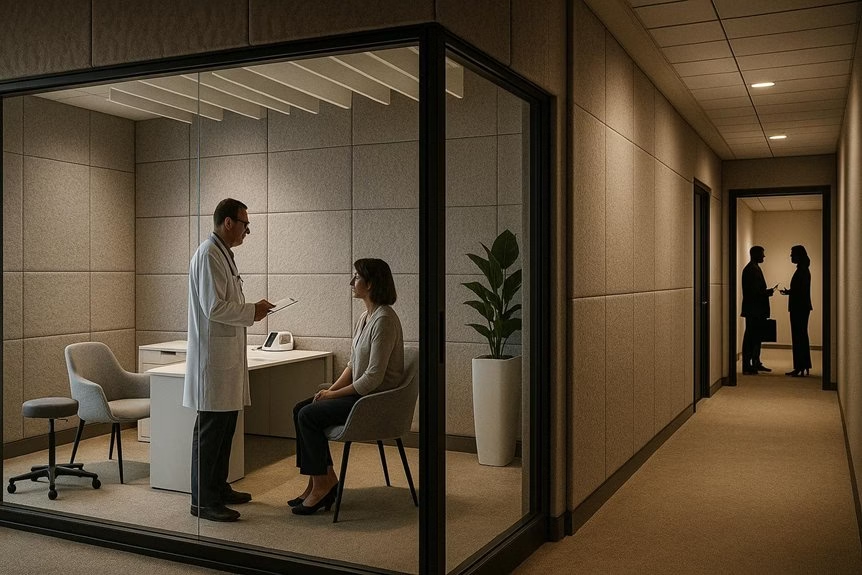
A soundproofing consultation starts by pinpointing the noise source, affected rooms, and how the disruption impacts your daily life.
From there, a professional assessment helps identify how sound is entering or traveling through the space. This may include measuring baseline noise levels, evaluating walls, ceilings, floors, windows, and doors, and determining whether the issue is airborne noise, impact noise, or vibration transferring through the structure. In some cases, the consultant may also discuss target STC ratings and whether decoupling, added mass, or insulation upgrades are needed to improve isolation.
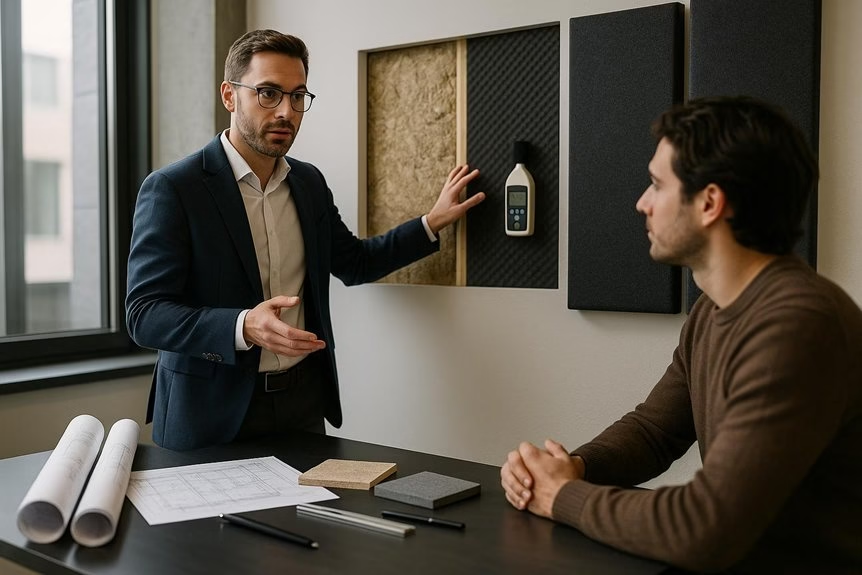
Rather than relying on guesswork or DIY assumptions, the consultant maps the sound paths and connects the findings to proven construction-based solutions.
Once the source and transmission routes are clear, you’ll review recommendations tailored to the property. These may include upgraded wall or ceiling assemblies, decoupling methods, acoustic drywall, mass-loaded vinyl, specialty insulation, sealing details, or window-related strategies designed to reduce outside noise.
The consultant will explain what level of improvement is realistic, how installation would be sequenced, and what verification testing may be used after completion.
The goal is to give you a clear, professional roadmap to a quieter, more comfortable home or commercial space.
What Does a Soundproofing Inspection Cover?
A soundproofing inspection is designed to identify exactly how and where noise is entering or traveling through your space, so the solution is based on facts rather than guesswork. At this stage, a Total Home Interiors soundproofing specialist evaluates the likely noise source, determines whether the issue is airborne or structure-borne, and identifies the frequencies causing the most disruption. Baseline sound measurements may also be taken, along with reverberation checks when needed, to show how the current walls, ceilings, floors, or other assemblies are performing.
The inspection typically includes a detailed review of walls, ceilings, floors, doors, windows, and other common weak points such as vents, electrical outlets, and plumbing penetrations. Inspectors may also note whether upgrades such as solid core doors, double-pane windows, or added insulation could help reduce sound leakage at key openings. For more challenging problems like intermittent impact noise or bass-heavy sound, frequency analysis can help reveal how low-frequency noise is moving through materials like wood or concrete.
Noise source mapping and transmission path testing then connect those findings to professional recommendations, which may include sealing gaps, adding mass-loaded materials, improving isolation, upgrading insulation, or incorporating acoustic treatments where appropriate. For homeowners and businesses in West Orange, NJ and across the Tri-State area, this process creates a clear path toward quieter, more private interiors.
How Does a Soundproofing Consultant Find Noise Paths?
Once the inspection identifies the likely source and type of noise, a soundproofing consultant then traces the exact path that sound is taking through the space. At Total Home Interiors, this step is critical because effective soundproofing depends on solving the real transmission route, not guessing.
Using calibrated sound meters and analysis tools, the consultant measures sound and vibration levels in the affected room and surrounding areas, identifying which frequencies are passing through, from low bass rumble to higher-frequency speech or impact noise.
They then compare readings between the source space and adjacent rooms to determine whether the issue is airborne noise, structure-borne vibration, or a combination of both.
By mapping how specific frequencies behave across walls, ceilings, floors, and penetrations, they can identify likely weak points such as wall intersections, recessed outlets, ceiling assemblies, ductwork, or HVAC openings.
When necessary, an accelerometer is used to locate vibration hotspots within the building structure itself.
Additional testing may be performed while the noise source is active, and sometimes with HVAC systems running, to confirm the dominant noise path before recommending a professional soundproofing solution. In multi-unit buildings, this analysis also helps determine whether assemblies may need higher STC ratings or added decoupling to properly control sound transmission.
Which Soundproofing Solutions Might Be Recommended?
What a consultant recommends depends on the noise path they identify and the frequencies involved. At Total Home Interiors, soundproofing solutions are based on confirmed conditions, not guesswork.
If low-frequency bass is traveling through framing, the right approach may include denser wall or ceiling assemblies, mass-loaded vinyl, acoustic drywall, insulation within stud bays, or decoupling methods that reduce structure-borne sound transfer. In many cases, consultants may also recommend Green Glue damping compound between drywall layers to convert sound energy into heat and improve overall isolation.
When airborne noise is entering through weak points, recommendations often focus on higher-performance doors, window solutions, acoustic seal kits, draft control, and sealing around penetrations and other gaps.
If mechanical systems are adding noise, treatment may involve HVAC isolation, flexible duct connectors, and corrections for vibration or resonance.
When the goal is improving the sound quality inside a room rather than blocking outside noise, acoustic solutions such as fabric-wrapped panels, ceiling treatments, or sound masking may be recommended to reduce echo and improve speech clarity.
A professional consultant should connect every recommendation to your goals, whether that means better sleep, more privacy, improved concentration, or stronger STC and NIC performance.
Most importantly, the solution should be validated with post-installation testing to confirm real-world results.
What Results Can You Realistically Expect?
At Total Home Interiors, we evaluate noise issues frequency by frequency to identify what you’re hearing, how it’s entering the space, and which construction weaknesses are contributing most, whether that’s a door, window, HVAC run, wall assembly, floor/ceiling system, or another flanking path.
A proper assessment should help you understand:
- How low-frequency bass behaves differently from mid and high frequencies
- Which areas are allowing the most airborne leakage versus structure-borne transmission
- What performance targets, such as STC-related goals, are realistic for your space
- How baseline findings compare to expected post-installation improvements
- How construction type, ventilation requirements, and flanking paths can affect final decibel reduction
Rather than suggesting one blanket fix, your consultant should estimate improvement by sound path and by frequency range.
In many homes, condos, apartments, and commercial spaces throughout West Orange, Jersey City, Hoboken, and NYC, the best results come from combining multiple strategies, such as sealing air gaps, adding mass, upgrading assemblies, and decoupling surfaces where needed. In some cases, that may include adding mass-loaded vinyl between drywall layers to increase mass and improve wall or ceiling isolation.
Real-world soundproofing results are usually incremental and strategic.
The goal is to achieve meaningful improvement where the problem is most disruptive, whether that’s street noise, neighbor noise, impact sound, or speech privacy.
A qualified expert should explain where major gains are possible, where limitations may remain, and which solutions will deliver the greatest benefit for your specific space.
How Should You Prepare for a Soundproofing Consultation?
Before your soundproofing consultation, gather the details that will help a professional diagnose the noise issue accurately.
Make a list of every noise source you experience—voices, footsteps, music, traffic, HVAC, or plumbing sounds—and note when it happens and where it seems to travel.
If possible, identify whether the noise feels airborne, like speech or TV audio, or structure-borne, like impact noise through floors, walls, or ceilings.
It also helps to prepare site notes with room dimensions, ceiling height, construction details, window and door locations, and any shared walls, plumbing lines, or electrical penetrations.
In New Jersey, understanding quiet hours and local residential noise limits can also help your consultant assess whether the issue may involve ordinance-related concerns in addition to building performance.
Next, organize any documentation that gives your consultant a clearer picture of the problem.
Bring previous sound test results if available, along with photos, videos, or baseline recordings that capture the issue.
Describe whether the noise is a low rumble, mid-range conversation, or sharp high-frequency sound, since each type requires a different soundproofing strategy.
Be clear about your goals as well—better sleep, more privacy, improved work-from-home focus, reduced restaurant noise, or a specific performance target.
You should also clarify whether you need true soundproofing to reduce noise transfer, acoustic treatment to improve sound quality within the room, or a combination of both.
Finally, share the practical details that shape the final recommendation.
Let your consultant know your timeline, budget range, building restrictions, and whether the project is in a condo, apartment, brownstone, office, studio, or medical space.
Mention any HVAC, ventilation, lighting, or motorized window treatment considerations that may affect construction or comfort.
At Total Home Interiors, this preparation allows us to recommend tailored solutions for homes and commercial spaces across West Orange, Hoboken, Jersey City, NYC, and the surrounding Tri-State area—delivering professional results that go far beyond a DIY fix.
How Do You Choose the Right Soundproofing Consultant?
How do you choose the right soundproofing consultant? Start with someone who approaches noise problems scientifically, not with guesswork. A qualified professional should measure both noise and vibration, identify the frequencies involved, and determine whether the issue is airborne sound, structure-borne vibration, or both before recommending any solution.
At Total Home Interiors, we believe effective soundproofing should also fit your budget, project scope, installation timeline, compliance requirements, and long-term performance expectations.
When evaluating a consultant, ask a few key questions:
1. How do you test the space?
Look for professionals who use tools such as real-time analyzers and vibration-measurement equipment to diagnose the problem accurately.
2. What performance standards do you reference?
Experienced consultants should be able to explain ratings such as STC, NRC, and NIC and how they apply to your walls, ceilings, floors, windows, or doors.
3. Can you show similar project results?
Ask for examples of residential or commercial soundproofing work, especially before-and-after findings for spaces similar to yours.
4. Do you verify results after installation?
A true expert doesn’t stop at product selection. They confirm that the completed system performs as intended.
You should also expect a thorough inspection of common sound leak paths, including doors, windows, ductwork, and HVAC penetrations.
A strong consultant may also recommend layered solutions such as mass-loaded vinyl, resilient channels, or acoustic insulation when the space requires both sound blocking and absorption.
If a consultant can’t clearly explain how sound is traveling through your space or avoids post-installation validation, that’s a red flag.
Good soundproofing guidance should always be specific, measurable, and tailored to the way your home or business is built.
For homeowners and businesses in West Orange, Hoboken, Jersey City, and the greater NYC area, professional soundproofing isn’t just about adding materials—it is about designing the right assembly for lasting quiet, privacy, and comfort.
Frequently Asked Questions
How Long Does a Typical Soundproofing Consultation Appointment Take?
A typical soundproofing consultation takes about 60 to 90 minutes, while larger homes, apartments, offices, or more complex noise issues may require up to two hours.
During the appointment, a soundproofing specialist will walk through the space with you, identify likely noise entry points, and evaluate walls, ceilings, doors, windows, floors, and mechanical systems to understand how sound is traveling.
You’ll also discuss your biggest concerns—such as neighbor noise, street noise, or privacy—and receive professional recommendations tailored to your space, construction type, and budget, so you can move forward with a clear plan for effective noise control.
Do I Need to Move Furniture Before the Consultant Arrives?
No, in most cases you don’t need to move furniture before your acoustic consultant arrives. We recommend leaving the room set up as it normally functions so we can accurately evaluate how sound behaves in the space, where noise enters, and which surfaces may be contributing to echo or sound transfer.
If large items completely block access to walls, windows, or doors, clearing only those areas can be helpful.
During the consultation, we assess the room layout, identify likely noise paths, and discuss professional soundproofing or acoustic treatment options based on your goals, the construction of the space, and the level of performance you want to achieve.
Will I Receive a Written Report After the Consultation?
Yes—after the consultation, you’ll typically receive a written report outlining the findings and recommended solutions for your space.
For soundproofing or acoustic concerns, this usually includes the likely source of the noise, how the assessment was conducted, and professional recommendations based on your room construction, layout, and goals.
In many cases, the report also explains the expected quote timeline and next steps, so you know how to move forward with clarity and confidence.
Can a Consultation Help With Neighbor Noise Disputes or Legal Documentation?
Yes, a professional consultation can help you document ongoing neighbor noise issues and better understand your options. At Total Home Interiors, our assessments can include on-site observations, identification of likely noise paths through walls, ceilings, floors, or windows, and recommendations for proven soundproofing solutions.
This kind of documentation can support your records during a dispute and give you a clearer picture of whether the problem calls for construction-based noise control rather than temporary DIY fixes.
While we don’t provide legal advice, our findings can be useful alongside guidance from an attorney or property management team, giving you credible information and a more confident path toward resolution.
How Much Does a Professional Soundproofing Consultation Usually Cost?
A professional soundproofing consultation usually costs about $200 to $1,000 or more, depending on the space, the noise problem, and the level of analysis involved.
Pricing typically reflects site-specific conditions, the consultant’s expertise, and whether the visit includes testing, preliminary recommendations, or a detailed written plan.
Larger homes, apartments with complex neighbor or street noise issues, and commercial spaces often require more in-depth evaluation and therefore higher fees.
In most cases, the scope of the project is the biggest factor in the final cost.
Conclusion
A professional soundproofing consultation gives you a clear, expert understanding of how noise is entering or traveling through your space—whether that’s through walls, ceilings, floors, windows, or structural gaps. At Total Home Interiors, we identify the true source of the problem, recommend custom solutions for your home or business, and explain what level of noise reduction is realistically achievable. Instead of relying on guesswork or DIY fixes, you can make informed decisions with confidence, knowing your property is on the path to greater comfort, privacy, and quiet.