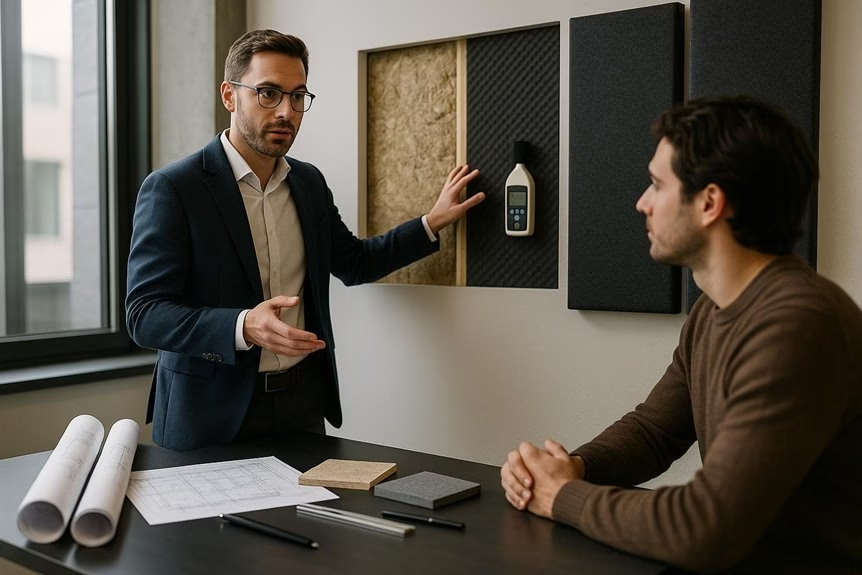
Your acoustic contractor should start by diagnosing the real source of sound issues in your yoga studio—whether that’s airborne noise, impact noise from an upper floor, low-frequency vibration, or excessive echo within the room itself. From there, they’ll evaluate the full space, including walls, ceilings, doors, windows, vents, lighting penetrations, and electrical outlets, to identify sound leaks and weak construction points.
At Total Home Interiors, our approach focuses on professional soundproofing and acoustic treatment solutions tailored to the root cause. Recommendations may include sealing gaps, upgrading doors, adding mass-loaded vinyl or acoustic drywall, installing insulation, damping materials, or decoupled wall and ceiling assemblies to reduce noise transfer. If the issue is poor sound quality inside the studio, acoustic panels, ceiling treatments, or fabric-based solutions may be recommended to create a calmer, more balanced environment.
Costs, timelines, and performance expectations will depend on the structure of the space and the type of noise involved—but a qualified acoustic contractor should provide a clear plan based on proven methods, not guesswork.
Key Takeaways
- Expect your acoustic contractor to begin with a professional assessment to determine whether your yoga studio’s issue is airborne noise, impact noise, or low-frequency structure-borne vibration before recommending the right soundproofing or acoustic treatment.
- A qualified team should inspect the full space—including walls, ceilings, floors, doors, windows, outlets, and other penetrations—to identify sound leaks, weak assembly points, and opportunities for better privacy and performance.
- For noise coming from above or through shared building construction, expect solutions such as detailed sealing, added mass, acoustic insulation, damping, and decoupling systems like clips and resilient channel rather than surface-level fixes.
- In many yoga studios, acoustic treatment is just as important as soundproofing, helping create a calmer environment with clearer instruction and reduced echo through acoustic panels, ceiling treatments, drapery, and bass control where needed.
- Most yoga studio projects start around $1,000 to $5,000, though costs can increase when structure-borne noise, upgraded doors or windows, or more extensive ceiling reconstruction is required for meaningful results.
What Does an Acoustic Contractor Check First?
At the first walkthrough, an acoustic contractor identifies the dominant noise issue first: airborne sound like voices, TV, or traffic, impact noise from footsteps above, or low-frequency vibration from HVAC and building equipment. That diagnosis drives every recommendation that follows during the site noise audit and helps determine whether the solution calls for true soundproofing, acoustic treatment, or both.
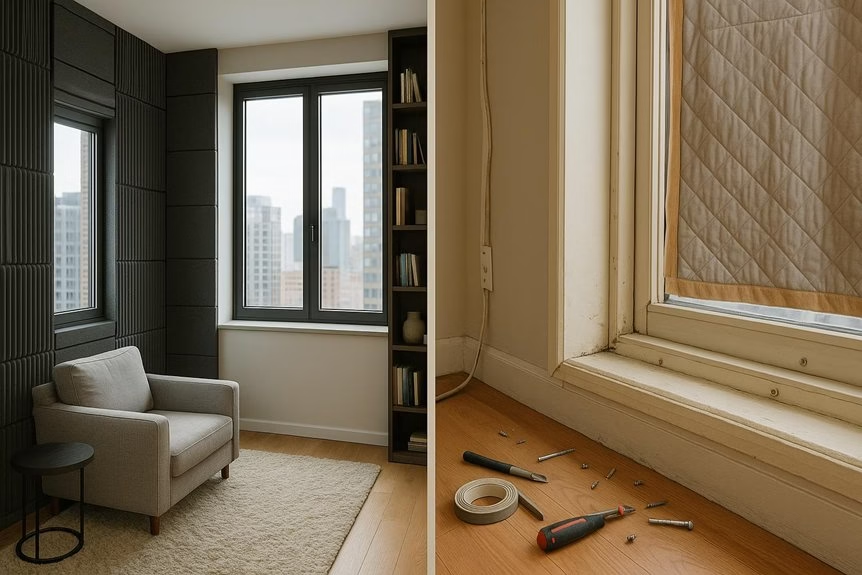
Next, the contractor inspects the assemblies most likely to leak sound—walls, ceilings, floors, windows, and doors. They look for cracks, penetrations, recessed fixtures, unsealed outlets, and missing door sweeps or automatic door bottoms, because even premium materials can underperform if seal integrity is weak.
Hollow-core doors, older windows, and lightweight shared walls are flagged quickly, along with opportunities for added mass, insulation, or decoupling using professional-grade soundproofing methods such as acoustic drywall or mass-loaded vinyl. They may also recommend resilient channels or flexible fasteners where wall and ceiling assemblies need better decoupling to reduce airborne and impact noise transfer.
They also evaluate shared ceilings, floor/ceiling cavities, and structural details that influence noise transfer between units, which is especially important in apartments, condos, and mixed-use buildings across NJ and NYC.
Inside the room, they assess echo, speech clarity, and reflective first-hit surfaces to determine whether acoustic panels, ceiling treatments, or fabric wall systems are needed.
For clients in West Orange, Hoboken, Jersey City, and the greater Tri-State area, this first inspection is where Total Home Interiors separates symptoms from root causes and outlines a solution built for lasting quiet, privacy, and comfort.
How Do You Stop Noise From Above?
When noise comes from above, the first step is identifying how it’s traveling. In many apartments, condos, and multi-level homes across West Orange, Hoboken, Jersey City, and NYC, overhead noise is usually either airborne sound—like voices, TV audio, or music leaking through ceiling gaps—or impact noise from footsteps, furniture movement, and activity transferring through the structure.
At Total Home Interiors, we approach overhead soundproofing with targeted construction methods, not guesswork or cosmetic fixes. A professional acoustic contractor will evaluate how sound is moving through the ceiling assembly and recommend solutions designed to improve true isolation. For stronger overhead sound control, contractors may also use Mass Loaded Vinyl as a barrier layer to help block noise transmission through the ceiling assembly.
- Air gaps around lights, vents, cracks, and other penetrations are sealed with acoustic sealant to help reduce airborne sound leakage.
- Additional mass, such as acoustic drywall or specialty barrier layers, may be added to strengthen the ceiling assembly, especially where there’s access above a suspended ceiling or plenum.
- When footfall noise is the main issue, ceiling decoupling with resilient channels or isolation clips is often essential, because impact sound typically doesn’t improve significantly unless the finished ceiling is separated from the structural joists.
Just as important, a qualified contractor will explain the difference between absorption and isolation. NRC-rated materials can help control echo within a room, but they don’t stop sound transfer from the floor above. If your goal is real overhead noise reduction, the solution has to focus on soundproofing construction, not just soft finishes.
How Does the Contractor Build a Soundproofing Plan?
Because every noise issue behaves differently, a professional contractor begins by determining whether the problem is airborne sound—such as voices, TVs, music, or traffic—or impact noise like footsteps, jumping, and dropped objects. That diagnosis shapes the soundproofing plan from the start, helping identify the noise source, the transmission path, and whether the solution should focus on added mass, air sealing, or decoupling.
Next, the contractor evaluates the room for leakage points and structural weak spots that allow sound to pass through walls, ceilings, floors, doors, windows, and small penetrations. In homes and apartments throughout West Orange, Hoboken, Jersey City, and NYC, these hidden gaps are often a major reason noise problems persist.
Rather than relying on a single product, Total Home Interiors designs a complete soundproofing assembly using proven materials such as mass-loaded vinyl, acoustic insulation, decoupling systems, and upgraded drywall layers to reduce noise transfer effectively. They may also specify Green Glue damping between drywall layers to help convert sound energy into heat and improve overall sound isolation.
The contractor also maps out the proper installation sequence, seals gaps with acoustic sealant, and ensures every detail aligns with the space’s performance goals. This professional, system-based approach delivers far better results than DIY fixes and is especially important for urban homeowners, offices, studios, and other spaces where privacy and quiet truly matter.
How Do You Treat Walls, Doors, and Windows?
Once the soundproofing plan is finalized, Total Home Interiors focuses on walls, doors, and windows because these are the most common paths for noise transfer. The goal is to reduce vibration, seal air leaks, and improve overall comfort without sacrificing the look and function of your space.
- Walls: We use a combination of added mass, damping, sealing, and decoupling to limit sound transmission. Depending on the space, this may include acoustic drywall, mass-loaded vinyl (MLV), acoustic sealant at perimeter gaps, and resilient channels or isolation clips to reduce vibration passing through the wall assembly.
- Doors: Hollow-core doors are a weak point in almost any soundproofing project, so we typically recommend upgrading to solid-core doors. We also install acoustic seals and door sweeps to help create a tighter seal around the frame and threshold, which is critical for blocking sound leaks.
- Windows: For street noise, neighbor noise, and other exterior sound issues common in NYC, Hoboken, Jersey City, and Northern New Jersey, we may recommend acoustic glazing, interior window inserts, or improved air gaps. While heavy drapery and automated window treatments can enhance privacy, light control, and room comfort, they aren’t a substitute for true soundproof window upgrades when meaningful noise reduction is the priority. In many cases, laminated glass and acoustic inserts can work together to deliver more substantial traffic noise reduction.
Which Yoga Studio Acoustic Treatments Work Best?
In most yoga studios, the most effective acoustic treatments begin with absorption, not full soundproofing, because the first priority is improving speech clarity, music balance, and the overall calm of the room.
In most yoga studios, better acoustics start with absorption, improving clarity, balance, and the calm students and instructors immediately feel.
Professionally specified fabric-wrapped mineral wool or fiberglass acoustic panels typically deliver far better results than thin foam products, especially on large flat wall surfaces and first reflection points where sound bounces back into the space.
Studios with higher ceilings often benefit from acoustic ceiling clouds or baffles, which reduce reverberation while preserving lighting and HVAC performance.
In rooms with noticeable low-frequency buildup, corner bass traps can help create a smoother, more balanced sound environment.
Heavy drapery can also improve acoustics at reflective window areas while adding privacy and light control—an especially valuable consideration for wellness spaces.
For yoga studios that need both flexibility and a refined appearance, free-standing fabric dividers or custom fabric wall systems can define practice zones, improve privacy, and add absorption where it matters most.
Acoustic treatment plans should also prioritize first reflection points on walls and ceilings to reduce echoes and improve clarity throughout the studio.
For the best outcome, acoustic treatment should be professionally planned around the studio’s dimensions, finishes, and use patterns to create a quieter, more restorative experience for both instructors and students.
What Budget, Timeline, and Results Should You Expect?
For a yoga studio soundproofing project, many installations fall in the $1,000 to $5,000 range, though costs rise when the noise issue involves low-frequency impact or structure-borne sound from above and the solution requires more advanced construction methods like resilient channels, isolation clips, added mass, and upgraded insulation. At Total Home Interiors, we help clients across West Orange, NJ, Jersey City, Hoboken, NYC, and the Tri-State area understand where budget is best spent for meaningful results.
- Budget realities: The best return usually comes from targeting the biggest weak points first—such as door seals, ceiling soundproofing, and one high-transfer wall—instead of treating every surface. Professional assessment helps avoid spending on acoustic products that improve echo but do little to block sound transfer.
- Timeline buffers: Projects involving opening ceilings or walls, adding soundproofing layers, or decoupling assemblies typically take longer than simple acoustic treatment installations like panels or baffles. Product availability and material lead times can also affect scheduling, so it’s smart to plan for some operational disruption.
- Results: Echo control and sound-quality improvements can often be noticed quickly with acoustic panels or ceiling treatments. But if your goal is to reduce noise coming from above or adjacent spaces, effective soundproofing usually requires a combination of air sealing, added mass, insulation, and decoupling. In most cases, you should expect fewer interruptions and a calmer environment—not complete silence unless you invest in major structural upgrades.
Frequently Asked Questions
How Much Does It Cost to Soundproof a Studio?
You can expect studio soundproofing costs to start around $1,000 for limited acoustic improvements, but professionally built soundproofing projects often range from $5,000 to $25,000+ depending on the size of the space, the level of noise control required, and the construction methods involved.
Costs increase when the project calls for decoupled walls, acoustic drywall, mass-loaded vinyl, ceiling isolation, upgraded solid-core doors, or specialized treatments for low-frequency sound.
In many cases, a complete solution also includes acoustic panels or ceiling treatments to improve sound quality inside the room—not just reduce noise transfer.
At Total Home Interiors, we design custom studio soundproofing solutions for clients across West Orange, NJ and the Tri-State area, with recommendations based on the room’s structure, performance goals, and finish expectations.
How Well Do Acoustic Panels Work for Soundproofing?
Acoustic panels are highly effective for improving acoustics, reducing echo, and making speech sound clearer, but they aren’t a complete soundproofing solution.
In homes, apartments, offices, and studios, panels help calm a room by absorbing reflected sound on walls and ceilings, especially when placed at key reflection points and other large hard surfaces.
However, noise from neighbors, traffic, footsteps, or adjacent spaces can still pass through walls, windows, floors, and ceilings.
For true soundproofing, Total Home Interiors recommends professionally designed construction-based solutions such as upgraded wall assemblies, acoustic drywall, decoupling methods, and other high-performance materials that address noise transfer at the source.
What Materials Block High Frequency Sound?
High-frequency sound is best controlled with dense, airtight construction materials and professionally designed assemblies. At Total Home Interiors, we typically recommend solutions like mass-loaded vinyl, acoustic drywall, and decoupled wall or ceiling systems to help reduce treble noise transfer from adjacent rooms, neighbors, or busy streets.
Just as important, every gap must be sealed with acoustic caulk and gasketed protection around outlets, HVAC penetrations, and perimeter joints, since even small openings can let sound leak through easily.
For homes and apartments in West Orange, Hoboken, Jersey City, and NYC, window and door performance also play a major role. Upgrading to better-insulated window systems and addressing door perimeter gaps can significantly improve privacy and reduce outside noise intrusion.
Inside the space, acoustic panels and other acoustic treatments help control reflections and harshness, creating a quieter, more comfortable environment for sleeping, working, or relaxing.
For the best results, high-frequency noise control should be approached as a complete system rather than a simple DIY material upgrade.
How Quiet Should a Studio Be?
A studio should feel calm enough that outside voices or music aren’t intelligible during class, while instruction remains clear, natural, and easy to follow.
In most cases, the goal isn’t absolute silence, but a professionally engineered level of soundproofing that reduces distracting noise events to a noticeable minimum.
Speech clarity inside the room should also be carefully maintained, so instructors never have to strain to be heard.
If noise from above is the main issue, effective results typically require targeted ceiling soundproofing and impact-noise control, since acoustic absorption alone won’t stop footfall noise from transferring through the structure.
Conclusion
When you hire an acoustic contractor for a yoga studio, you’re investing in more than quieter walls—you’re creating the peaceful experience your students expect. The most common sound leaks are often hidden in places many owners overlook, such as ceiling cavities, standard hollow-core doors, and untreated window lines. A qualified professional will identify how noise enters and travels through the space, then recommend a coordinated soundproofing plan using proven construction methods and premium materials. With a realistic budget and expert guidance, you can achieve a studio environment that feels calm, private, and professionally designed for focus.