If apartment noise is disrupting sleep, privacy, or your ability to work from home, the first step is identifying where sound is entering—typically around doors, windows, vents, outlets, and baseboards. While temporary DIY fixes can offer modest improvement, meaningful results usually require a more strategic approach. Professionally installed sealing methods, upgraded window solutions, and properly selected soundproofing materials can significantly reduce street noise and neighbor noise without compromising the look of your space.
For shared walls and ceilings, effective soundproofing goes beyond surface treatments. Solutions such as mass-loaded vinyl, acoustic drywall, and decoupled construction methods are far more effective than basic consumer products when the goal is real noise reduction. In many apartments and condos throughout Jersey City, Hoboken, and NYC, impact noise and voice transfer require a customized plan based on how sound is actually traveling through the structure.
At Total Home Interiors, we design tailored soundproofing and acoustic solutions for urban homes that need more peace, privacy, and comfort. From reducing outside noise at windows to improving wall and ceiling performance, we help clients throughout West Orange and the Tri-State area create quieter, more livable interiors with premium materials and expert installation.
Key Takeaways
- Start by identifying the main noise entry points—doors, windows, vents, outlets, and wall seams—since effective soundproofing begins with diagnosing where sound is traveling.
- Basic gap sealing with acoustic caulk, weather stripping, and door sweeps can help reduce minor air leaks, but meaningful sound control typically requires a more comprehensive approach.
- Windows and doors are often major weak points, which is why professionally integrated solutions deliver better results than temporary inserts or perimeter fixes alone.
- Adding heavier surface materials like curtains or blankets may soften the space slightly, but they do not replace true soundproofing built with the right mass, isolation, and construction methods.
- Impact noise such as footsteps is one of the hardest problems to solve with surface products alone and usually requires ceiling, floor, or wall assembly upgrades for noticeable improvement.
- For apartment and condo owners in NJ and NYC, Total Home Interiors designs custom soundproofing solutions that address real-world noise issues with premium materials and professional installation.
Find the Worst Apartment Sound Leaks
Before investing in panels or rugs, identify where sound is actually entering the apartment. Start by walking the room and listening carefully at doors, windows, electrical outlets, HVAC vents, recessed lighting, and ceiling seams.
In many apartments, hollow-core doors and worn perimeter seals are major weak points, especially along the top, bottom, and latch side.
It also helps to observe noise patterns at different times of day so the source can be matched to the likely path of entry.
Street noise often points to window assemblies, particularly older single-pane glass or loose frames.
Acoustic inserts that create airtight seals can significantly reduce street noise at these window leak points, especially on older single-pane windows, and acoustic inserts may block up to 70% of outside noise.
Voices and television noise may transfer through outlet boxes, light fixtures, shared wall intersections, and other small construction gaps.
Footfall noise can seem like it’s coming directly from above, but it often travels through ceiling junctions and penetrations.
Shared HVAC pathways can also carry sound surprisingly well between neighboring units.
By identifying the most disruptive leak points first, property owners can better understand whether they’re dealing with a soundproofing issue, an acoustics issue, or both.
For apartment and condo owners in Jersey City, Hoboken, and NYC, this step is essential before selecting professional noise-control solutions that address the real source of the problem rather than just masking symptoms.
Seal Gaps to Soundproof an Apartment
Because even small openings can leak a surprising amount of noise, sealing gaps is one of the most important first steps in apartment soundproofing.
Once leak points are identified, cracks along baseboards, wall joints, and door frame gaps should be sealed with acoustic caulk or other appropriate sealants.
- Inspect penetrations such as cable holes, plumbing openings, and HVAC sleeves. Larger voids may require backer rod before acoustical sealant is applied for a more complete barrier.
- Address outlet perimeters and switch boxes, which are common weak points for sound transfer. Professional treatment can help reduce noise moving through these openings.
- Seal the full frame perimeter anywhere air passes through trim, casing, or wall joints, not just the most visible cracks.
This matters because sound travels through air paths. Closing those pathways can noticeably reduce noise intrusion, improve comfort, and create a quieter, more private living environment.
Professional installation can also help ensure precise sealing that minimizes sound leakage and reduces the risk of missed problem areas.
For apartments and condos in West Orange, Jersey City, Hoboken, and across the Tri-State area, Total Home Interiors provides professionally designed soundproofing solutions that go beyond basic sealing alone—addressing the real causes of neighbor and street noise with expert materials and installation.
Soundproof Apartment Windows and Doors
When outside noise is entering through your apartment’s weakest points, windows and doors are often the next areas that need professional attention. In many Jersey City, Hoboken, and NYC apartments, window noise control requires more than temporary fixes. While renter-friendly inserts and heavy curtains may offer limited improvement, they rarely match the performance of a properly designed soundproofing solution.
At Total Home Interiors, we address window noise with custom acoustic strategies tailored to the construction of the space. Depending on the source of the noise and the window assembly, this may include upgraded sealing, acoustic-grade materials, and integrated treatments designed to reduce sound transfer without compromising the look of the room. Acrylic window inserts can also help reduce window-conducted sound by flexing and absorbing sound energy more effectively than glass. Even small gaps around a frame can significantly reduce performance, which is why precise installation matters.
Doors also play a major role in privacy and noise control. The most effective results come from sealing the perimeter, improving the threshold, and, when needed, upgrading the door assembly itself. Basic foam products do little to block sound, while professionally selected materials and construction methods can make a meaningful difference.
For homeowners and apartment residents dealing with persistent street noise, hallway noise, or neighbor disturbance, Total Home Interiors provides expert soundproofing solutions that go beyond DIY measures—delivering cleaner aesthetics, better performance, and long-term comfort.
Add Mass to Apartment Walls
If noise is still coming through after addressing windows and doors, the next area to evaluate is the shared wall.
If windows and doors are not the issue, the shared wall is often the next and most important place to investigate.
In apartments and condos throughout Jersey City, Hoboken, and NYC, that partition is often the biggest path for airborne noise from the neighboring unit.
Before adding materials, seal gaps around baseboards, outlets, and other electrical penetrations so sound leaks don’t reduce performance.
At Total Home Interiors, we typically improve wall sound isolation with professionally selected mass and layering strategies, including:
- Mass Loaded Vinyl (MLV) to introduce dense sound-blocking mass within a properly planned wall assembly.
- Layered wall treatments, such as MLV paired with an air gap, acoustic panels, or other acoustic treatment systems depending on the noise issue and wall construction.
- Full-wall coverage whenever possible, since partial treatments rarely deliver the same level of improvement.
Mass performs best as part of a complete soundproofing system rather than a simple DIY add-on attached directly to thin drywall.
Proper spacing, layering, and installation all affect results.
Adding a second drywall layer with damping compound can improve STC rating and further reduce sound transmission through the wall.
This approach is especially effective for voices, TV, and music, though structure-borne vibration may require more advanced construction methods.
Reduce Footstep Noise From Above
Even after addressing windows, doors, and shared walls, footstep noise from the unit above is often one of the most difficult apartment noise problems to solve.
Because impact noise travels through the structure of the building, quick fixes inside your space usually offer only limited improvement.
The most effective results typically come from professional soundproofing strategies at the source or within the ceiling assembly itself.
In some cases, asking an upstairs neighbor to use thick area rugs with dense pads can help reduce noise in high-traffic areas, but this is rarely a complete solution.
Within your unit, acoustic ceiling treatments such as fabric-wrapped panels or ceiling clouds can help reduce reflected sound, making overhead footsteps feel less harsh and intrusive.
For more meaningful improvement, a professionally designed ceiling soundproofing system may include added mass, isolation methods, and acoustic materials that reduce noise transfer more effectively than DIY approaches.
Systems that use resilient channels can decouple drywall from framing, helping interrupt vibration paths that carry impact noise.
Sound masking can also help soften the perception of intermittent thuds, especially in bedrooms, home offices, and media spaces.
For apartment and condo owners in Jersey City, Hoboken, NYC, and throughout Northern New Jersey, Total Home Interiors provides customized acoustic and soundproofing solutions designed for real-world residential noise challenges.
Combine Cheap Apartment Soundproofing Fixes
Because no single low-cost fix will truly soundproof an apartment, temporary DIY measures work best as short-term improvements—not complete solutions. For the best budget-conscious results, layer them in the right order while understanding their limits.
- Seal first: address door edges, window seams, outlets, and other air gaps with acoustic caulk and weather stripping. Even small openings can let in a surprising amount of noise and reduce the effectiveness of everything else.
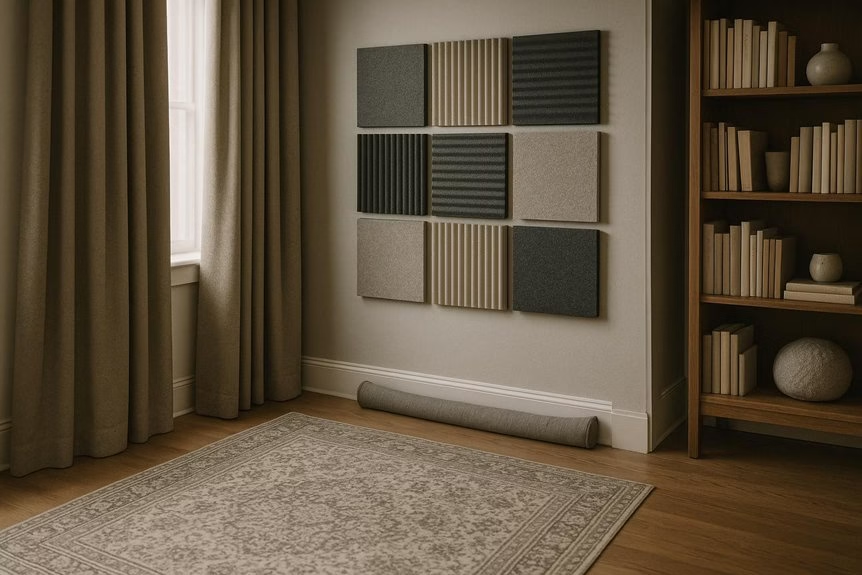
- Add mass where possible: use heavy curtains, moving blankets, or removable mass-loaded vinyl barriers if your building allows them. At the entry door, combine perimeter sealing with a door sweep to reduce sound leaking through the bottom gap. Thin but dense materials like mass-loaded vinyl can help block airborne noise more effectively than lightweight coverings alone.
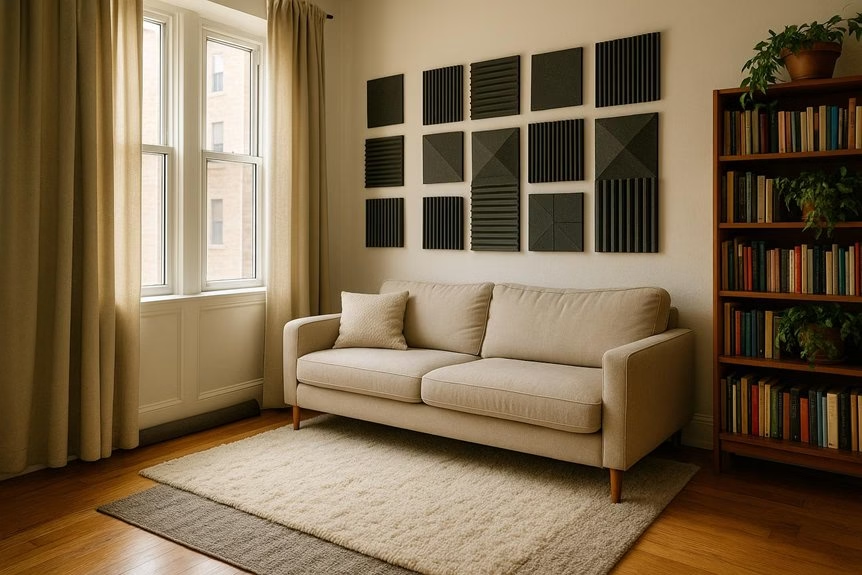
- Improve windows and room acoustics: removable window inserts can help reduce exterior noise, especially when sealed properly with foam tape. Fabric-wrapped acoustic panels can also make a room feel quieter by reducing echo and harsh reflections, though they don’t block sound transfer the way professional soundproofing does.
For ceiling noise, soft furnishings below and coordination with the unit above may help with comfort, but impact noise usually requires a more advanced assembly.
This is where professionally designed soundproofing systems—such as upgraded ceiling treatments, decoupling methods, and high-performance materials—deliver far better results than DIY fixes alone.
At Total Home Interiors, we help homeowners in West Orange, Hoboken, Jersey City, and across the Tri-State area move beyond temporary noise patches with customized soundproofing and acoustic solutions designed for real, lasting performance.
Frequently Asked Questions
Can Renters Soundproof an Apartment Without Losing the Security Deposit?
Renters can reduce apartment noise without putting a security deposit at risk, but the safest results come from reversible upgrades and professional guidance. Temporary weatherstripping, door sweeps, acoustic curtains, and layered rugs can help soften everyday noise without damaging walls or floors.
For stronger performance, professionally selected removable acoustic treatments may offer better results than DIY products that rely on nails, permanent adhesives, or unapproved modifications.
Before making changes, review your lease carefully and document the space so you preserve both your quiet and your deposit.
How Much Does Renter-Friendly Apartment Soundproofing Usually Cost?
Renter-friendly apartment soundproofing typically costs about $50 to $300 for basic temporary measures, while more effective renter-safe upgrades often range from $300 to $1,000.
While DIY options like rugs, curtains, and draft blockers can help slightly, they rarely solve serious noise problems from neighbors, hallways, or city streets.
For better results, start with a clear noise assessment so you know whether the main issue is coming through doors, windows, walls, or ceilings.
Products like weatherstripping, door sweeps, and removable acoustic panels can improve comfort, but performance is limited compared with professionally designed soundproofing systems.
For apartment and condo owners in West Orange, Jersey City, Hoboken, and NYC, Total Home Interiors provides expert guidance on noise control, acoustic treatment, and privacy-focused solutions that go beyond temporary fixes—especially when better sleep, work-from-home focus, and long-term comfort matter most.
What Sounds Are Hardest to Block in an Apartment?
The hardest sounds to block in an apartment are low-frequency vibrations and impact noise.
Footsteps from above, slamming doors, shared-wall bumps, and plumbing noise don’t just travel through the air—they move through the building structure itself.
That’s why rugs, curtains, and basic DIY fixes offer limited relief.
For meaningful results, these problems typically require professional soundproofing strategies such as added mass, decoupled wall or ceiling assemblies, and other construction-based solutions designed to reduce noise transfer.
Will Soundproofing Make My Apartment Feel Hotter or Darker?
Yes, soundproofing can make an apartment feel slightly warmer or darker, depending on the solution, but a professionally designed system keeps those trade-offs manageable.
Acoustic window treatments, motorized shades, and layered drapery can help reduce outside noise while also improving privacy, glare control, and energy efficiency.
Denser soundproofing materials may retain more heat, which can feel beneficial in winter and less comfortable in summer if airflow is limited.
The best approach is to combine sound control with the right window treatments and ventilation strategy, so you improve quiet, comfort, and natural light without compromising how the space feels.
Are Removable Soundproofing Products Safe for Painted Apartment Walls?
Removable soundproofing products can be safe for painted apartment walls, but results depend on the condition of the paint, the adhesive used, and how the product is installed and removed.
In many apartments, aging paint, poor surface prep, or hidden moisture can cause peeling or wall damage, even with renter-friendly products.
That’s why it’s important to test a small area first and avoid applying anything to damp or fragile surfaces.
For homeowners and renters dealing with noise in Jersey City, Hoboken, or NYC, temporary products may offer a limited short-term improvement, but they typically don’t address the real source of noise transfer through walls, ceilings, windows, or floors.
At Total Home Interiors, we help clients evaluate whether a space needs true soundproofing, acoustic treatment, or a more customized privacy solution—so you get better performance without unnecessary damage to your walls.
Conclusion
You don’t have to live with thin walls, street noise, or constant disruption in your apartment. While temporary renter-friendly fixes can help reduce some sound, lasting results usually come from identifying exactly where noise is entering and addressing it with the right acoustic strategy. At Total Home Interiors, we help clients across West Orange, Jersey City, Hoboken, NYC, and the Tri-State area solve noise problems with professionally designed soundproofing solutions for walls, ceilings, windows, and doors. With the right combination of premium materials and expert installation, your space can feel quieter, more private, and far more comfortable.