You protect your yoga, Pilates, or fitness studio experience by addressing noise transfer at the shared wall first—especially bass, impact vibration, and weight-drop thuds that move easily through standard construction. For lasting results, a professional soundproofing evaluation should also identify flanking paths at ceilings, ductwork, corners, doors, outlets, and slab edges, since these hidden weak points often undermine basic upgrades. From there, the right solution may include isolated wall assemblies, acoustic drywall, door and HVAC improvements, and interior acoustic treatments such as panels, flooring systems, curtains, or sound masking. Total Home Interiors designs custom acoustic and soundproofing solutions in West Orange, NJ and across the Tri-State area to help studios create a quieter, more comfortable environment.
Key Takeaways
- Bass from sound systems and impact noise from dropped weights can travel through shared walls, floors, and ceilings, disrupting yoga, Pilates, and fitness instruction in neighboring spaces.
- A professional soundproofing assessment should inspect demising walls, ceiling cavities, ductwork, door frames, electrical outlets, and slab-edge gaps to identify sound leaks and flanking paths before any upgrades begin.
- In most studios, the shared wall is the first priority, often requiring added mass, mineral wool insulation, and decoupled assemblies with resilient clips or channel for meaningful noise isolation.
- When additional control is needed, ceiling soundproofing, solid-core doors with acoustic seals, and HVAC vibration isolation or silencers can further reduce transferred noise.
- Acoustic panels, fabric treatments, and cushioned flooring can improve sound quality and reduce reflections inside the studio, but they should support—not replace—true construction-based soundproofing.
Why Gym Noise Disrupts Yoga Classes
Even when the wall next door looks solid, gym noise can still disrupt yoga classes because low bass from speakers and impacts from heavy equipment pass through standard shared wall assemblies with ease.
Dropped weights create sharp structure-borne thuds through studs, drywall, and floor connections, while bass energy travels beyond the wall itself and is often felt as much as heard.
In a quiet studio environment, those intrusions can break concentration and undermine breathwork, meditation, and savasana.
Hard gym surfaces also reflect sound, which can make the noise bleed feel louder and more persistent.
HVAC drone further raises the ambient noise floor, making instructor cues harder to follow.
Acoustic panels inside the yoga studio can improve echo control, but they’ll not stop transmitted bass or impact noise.
Adding dense insulation within shared wall and ceiling cavities can help absorb some sound energy, especially when combined with other isolation measures.
Solving that kind of disruption typically requires professional soundproofing strategies such as added mass, decoupling, and targeted construction methods designed to reduce noise transfer at the source and through the shared structure.
Find Sound Leaks Before You Spend
Before investing in additional drywall, insulation, or other wall upgrades, it’s important to identify exactly where sound is entering the space. In many apartments, condos, and mixed-use buildings throughout Jersey City, Hoboken, and NYC, bass from a neighbor’s TV, sound system, or PA can seem like it’s coming straight through the wall—when in reality, the primary leak may be above the ceiling, through a duct run, or along an unsealed construction joint.
Sound may seem to come through the wall, but the real leak is often above, around, or behind it.
Lightweight stud-and-drywall assemblies are especially poor at blocking low-frequency sound, which is why a professional sound leak assessment is the right first step before any soundproofing work begins.
A careful inspection should include the shared wall, ceiling line, corners, door frames, outlet boxes, and any accessible ceiling cavity above a dropped ceiling. It’s also important to check slab-edge gaps, drywall terminations, duct penetrations, and other hidden openings that can allow noise to flank around the main wall assembly.
In some cases, structure-borne vibration can also travel through framing or mechanical systems, making the problem seem worse in a different location than the actual source. Comparing loudness at multiple points helps reveal the dominant transmission path so the right solution can be selected.
Because noise can also travel through the building structure, resilient channels and other decoupling methods are often considered only after the main transmission path has been confirmed.
At Total Home Interiors, we help homeowners and commercial clients across West Orange, NJ and the Tri-State area pinpoint sound transfer issues before recommending premium soundproofing solutions.
That means a more strategic investment, better performance, and avoiding costly upgrades that don’t address the real problem.
Soundproof the Shared Wall First
Once you’ve confirmed the shared wall is the primary noise path, it should be the first area addressed. In many apartments and condos, a typical demising wall in the STC 35–40 range isn’t enough to contain bass-heavy fitness noise, especially during quieter class periods when impact and low-frequency sound become more noticeable.
A professional assessment should start with the wall’s current performance, then build toward a true soundproofing assembly using mineral wool insulation, added drywall mass, and proven isolation methods. Proper material selection can significantly improve the wall’s STC rating, helping block both airborne noise and vibration-related sound transfer.
For stronger results, new layers should be decoupled with resilient channel or isolation clips to help prevent vibration from transferring directly through the studs.
It’s also important to inspect flanking paths above and around the wall, including soffit gaps, open plenum or top-of-wall cavities, and unsealed penetrations at outlets, perimeter edges, and piping.
Acoustic sealant is essential, but wall upgrades alone may not solve the problem if shared HVAC ducts or other structure-borne vibration paths are involved.
At Total Home Interiors, we help homeowners and building occupants across West Orange, NJ, Jersey City, Hoboken, and NYC identify the real source of noise transfer and recommend professionally designed soundproofing solutions that avoid wasted budget and deliver meaningful results.
Fix Ceilings, Doors, and Duct Noise
If bass bleed still lingers after the shared wall is improved, the next priority is the ceiling, door, and HVAC system. In many condos, apartments, and attached homes across NJ and NYC, low-frequency noise doesn’t just come through the wall itself—it often travels through flanking paths, shared cavities, and open plenums that basic acoustic panels won’t stop.
A professional assessment should confirm whether a dropped ceiling is truly isolated or whether sound is bypassing the wall assembly above the tiles. In many cases, resilient channels or isolation clips can significantly improve ceiling sound isolation by decoupling drywall from the framing.
From there, the weak points need to be addressed as part of a complete soundproofing strategy. A solid-core door with acoustic seals at the frame and threshold can make a major difference, since even a small air gap can compromise an otherwise high-performing partition.
Ceiling penetrations, light fixture cutouts, vent edges, and perimeter gaps should be sealed with acoustic sealant, gaskets, and proper draft-sealing methods.
For ductwork, HVAC isolation measures such as silencers and vibration isolators help reduce airflow noise, low hum, and mechanical transfer while supporting a quieter interior environment in the 30–35 dBA range. Total Home Interiors designs these solutions as integrated systems, helping homeowners and commercial clients in West Orange, Hoboken, Jersey City, and the greater Tri-State area achieve meaningful noise control—not temporary DIY fixes.
Add Panels, Flooring, and Curtains
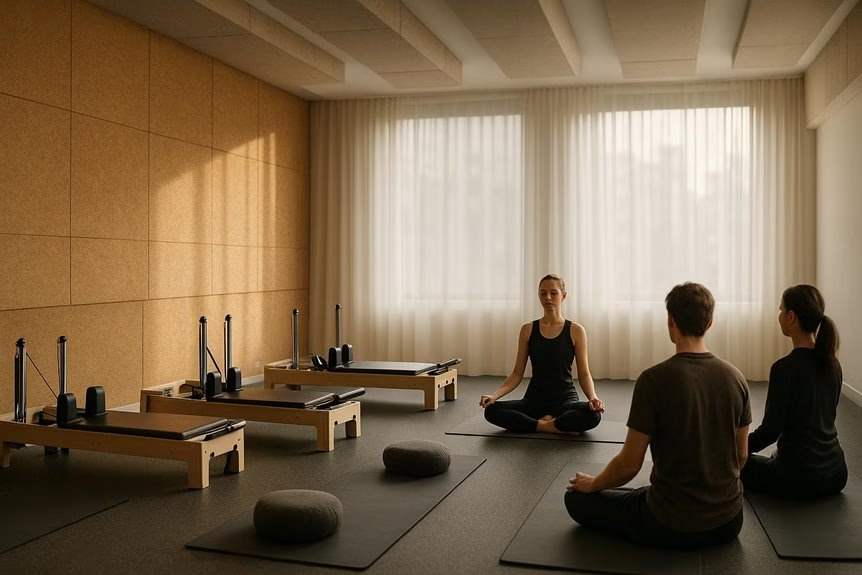
Inside the studio, professionally selected acoustic panels, flooring, and window treatments can significantly reduce harsh reflections and create a quieter, more controlled environment. At Total Home Interiors, we take an acoustics-first approach, placing high-performance absorption panels at key first-reflection points to improve reverberation control and overall sound quality.
Premium fabric-wrapped acoustic panels with strong absorption ratings help deliver a cleaner, more comfortable listening experience while preserving the look of the space. Strategic placement at side walls, the front wall, and the ceiling at first reflection points helps maximize absorption and improve clarity.
Windows also play a major role, since glass reflects sound and limits privacy. Heavy drapery or motorized window treatments can help soften reflections while adding light control and a more finished aesthetic.
For flooring, materials like high-density rubber, cork, or carpet with quality underlay can reduce impact noise and improve comfort underfoot.
While these interior acoustic treatments greatly improve perceived quietness and sound quality, true soundproofing between shared walls, ceilings, or floors typically requires construction-based solutions.
That’s where expert guidance makes the difference.
Use Sound Masking and Set a Budget
After improving reflections with acoustic panels, flooring, and window treatments, sound masking can make outside noise less noticeable while you plan a more complete soundproofing solution.
For best results, place masking sources near doorways or along the side of the room facing the noise, and set levels around 40–48 dB using balanced white noise, nature-inspired masking, or soft instrumental sound.
Unlike basic noise machines, sound masking systems are professionally designed and tuned to the space to better cover distracting speech and other noise.
It’s also important to set a realistic budget.
Professional sound masking systems often range from about $1,000 to $5,000, with higher costs when low-frequency bass transmission requires additional soundproofing measures.
Professional sound masking typically costs $1,000–$5,000, with expenses rising when bass transmission calls for added soundproofing.
Acoustic measurement should guide your decisions, with a typical ambient target of roughly 30–35 dBA for a quieter interior.
If bass from a gym, commercial space, or neighboring unit is the main concern, reducing energy at the source is often the first step.
Sound masking works best as part of a broader acoustic strategy—it can help improve comfort, but it doesn’t replace proper isolation when walls, ceilings, or floors are still transmitting bass.
Frequently Asked Questions
How to Soundproof a Pilates Studio?
For a Pilates studio, effective soundproofing starts with upgrading shared walls to STC 50+ using acoustic drywall, decoupling methods like resilient channels or isolation clips, and mineral wool insulation, then sealing all perimeter gaps with acoustic sealant.
To reduce structure-borne vibration from movement and equipment, install high-density rubber flooring or an isolated floor system.
Acoustic panels and ceiling clouds help control echo and improve sound quality inside the studio, but they won’t fully block low-frequency bass transfer on their own.
A solid-core door with professional-grade seals is also essential, and in some cases, reducing bass at the source may be part of the solution.
For the best results, a professionally designed soundproofing plan ensures the studio stays quiet, private, and comfortable for both clients and neighboring spaces.
How to Fully Soundproof a Studio?
To fully soundproof a studio, every weak point in the construction must be addressed as part of a complete noise-control system.
At Total Home Interiors, we focus on professional-grade soundproofing solutions such as decoupled wall assemblies, high-mass materials, mineral wool insulation, acoustic drywall, and floor underlayments designed to reduce both airborne and impact noise.
Effective studio soundproofing also means controlling flanking paths through ceilings, HVAC, and structural connections, while ensuring assemblies run continuously slab-to-slab where required.
Details matter just as much as major construction elements, so solid-core doors, proper door seal installation, and acoustic caulk are essential to prevent sound leakage, especially at lower frequencies.
Conclusion
When you control noise in a yoga, Pilates, or fitness studio, you protect more than quiet—you protect the entire client experience. The most effective results come from addressing sound transfer at its source: reinforcing shared walls, improving ceilings and floors, and sealing weak points around doors and other openings. From there, professionally selected acoustic panels, fabric treatments, and sound masking can refine the space, reducing distraction while improving focus and comfort. With a clear plan and expert installation, Total Home Interiors helps studios across West Orange, NJ and the Tri-State area create calmer, more private environments designed for movement, concentration, and flow.