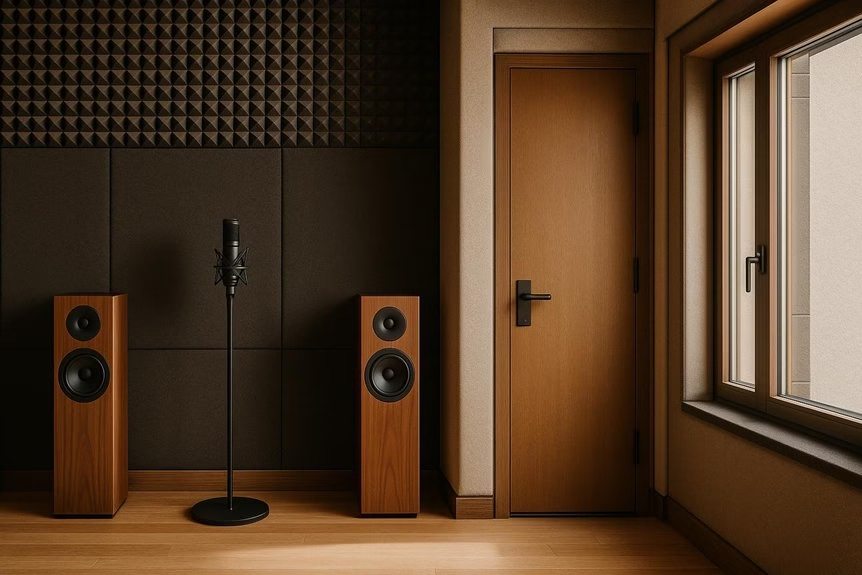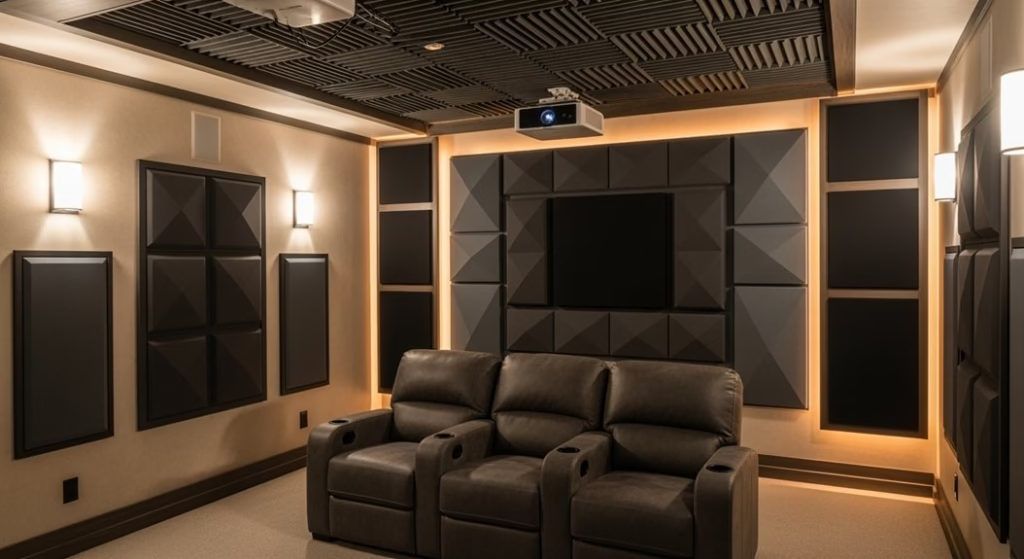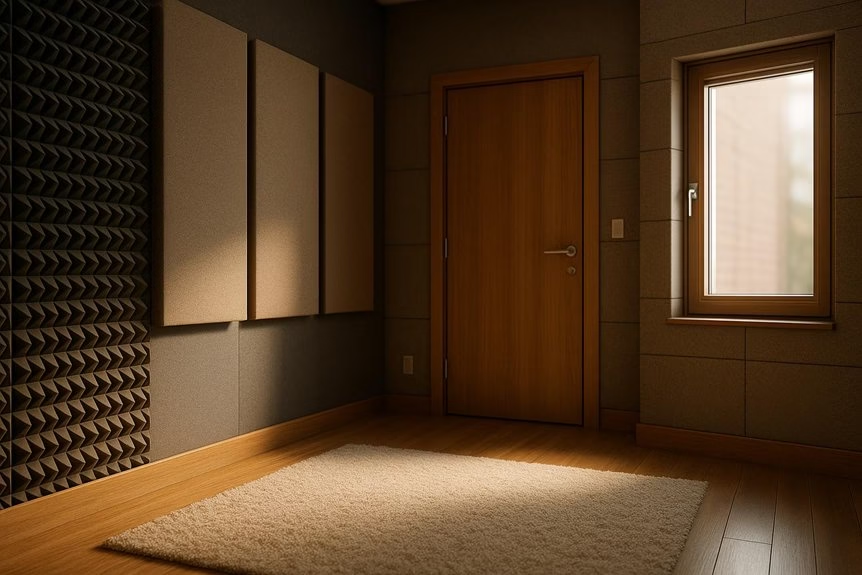
If you hear echo inside your room, you need acoustic treatment, not soundproofing. Acoustic panels, ceiling treatments, and other professionally designed absorptive solutions reduce reflections from hard surfaces and improve speech clarity, comfort, and focus. If traffic, neighbor, or hallway noise is coming through walls, doors, ceilings, or windows, you need true soundproofing—typically involving added mass, damping, insulation, or decoupled construction. For impact noise like footsteps from above, soundproofing strategies for floors and ceilings are often required. At Total Home Interiors, we help homeowners and businesses across West Orange, NJ, Jersey City, Hoboken, and the NYC area identify the right solution for their space, so you can achieve real noise control instead of wasting money on the wrong fix.
Key Takeaways
- Echo inside a room is an acoustics issue caused by sound reflecting off hard surfaces, while outside noise is a soundproofing issue caused by sound passing through walls, ceilings, doors, and windows.
- Acoustic treatment improves speech clarity, comfort, and focus by absorbing reflections—especially when acoustic panels are professionally placed at first reflection points.
- Acoustic panels, ceiling treatments, and fabric wall systems help reduce reverberation and improve room performance, but they will not stop traffic noise, hallway noise, or sound from neighboring units.
- True soundproofing requires construction-based solutions designed to block noise transfer, such as added drywall, insulation, damping compounds, acoustic drywall, mass-loaded vinyl, and decoupled wall or ceiling assemblies.
- In many homes and apartments across West Orange, Hoboken, Jersey City, and NYC, the best results come from combining acoustic treatments for echo control with professionally designed soundproofing strategies for better privacy, quieter interiors, and improved everyday comfort.
Echo vs. Outside Noise: What’s the Difference?
Two sound issues are often mistaken for the same problem: echo inside a room and noise entering from outside. They require different solutions.
If your voice sounds like it’s bouncing around the room, the issue is indoor reverberation. Sound reflects off hard surfaces like drywall, glass, tile, and wood, which reduces speech clarity and makes a space feel louder and less comfortable.
This is where professional acoustic treatment helps. Acoustic panels, ceiling treatments, and fabric wall systems are designed to absorb excess sound energy and improve the way a room sounds. Proper placement at first reflection points is essential for reducing echoes and improving dialogue clarity.
Outside noise is a soundproofing problem. If you hear traffic, neighbors, hallway activity, or noise from adjacent units, sound is passing through walls, ceilings, doors, or windows.
In these cases, foam or decorative acoustic products won’t block incoming noise. Effective soundproofing requires construction-based solutions such as added mass, decoupled wall or ceiling assemblies, acoustic drywall, insulation, and other professionally specified materials.
At Total Home Interiors, we help homeowners and businesses across West Orange, NJ, Jersey City, Hoboken, NYC, and the Tri-State area identify whether they need acoustics, soundproofing, or a combination of both—so the solution matches the problem and delivers meaningful results.
Acoustic Treatment vs. Soundproofing
A conference room can suffer from poor sound for two very different reasons, and identifying the right problem is the first step toward the right solution. If speech sounds muddy, harsh, or difficult to understand during meetings, the issue is usually excessive reverberation inside the room.
Clear conference room audio starts with diagnosis: poor speech intelligibility usually points to excessive reverberation, not sound leakage.
In that case, acoustic treatment is the answer. Professionally selected acoustic panels, ceiling treatments, or fabric wall systems help absorb reflections, improve speech clarity, and create a more comfortable environment for collaboration.
If the problem is sound leaking in from adjacent spaces or escaping into nearby offices, acoustic treatment alone won’t solve it. That requires true soundproofing—construction methods designed to reduce sound transmission through walls, ceilings, and floors.
Solutions may include added drywall, insulation, decoupled assemblies, and high-performance materials such as mass-loaded vinyl barriers installed within the wall system. Properly installed resilient channels can also help decouple wall or ceiling layers to reduce airborne and impact noise transmission. For retrofit applications, specialized track systems can also support more advanced noise-control construction.
In short, acoustic treatments improve how a room sounds inside, while soundproofing reduces how much sound passes through it. For conference rooms in offices across West Orange, NJ and the Tri-State area, Total Home Interiors designs professional solutions that address both clarity and privacy—far beyond what basic DIY panels can achieve.
How Soundproofing Stops Noise Transfer
At its core, soundproofing reduces noise transfer by making walls, ceilings, and floors much less likely to vibrate when sound hits them. This is typically achieved by adding mass with professional-grade materials such as extra drywall, acoustic drywall, or mass-loaded vinyl, so less sound energy passes through the structure.
Heavier, denser assemblies resist vibration more effectively, helping block unwanted noise from neighbors, nearby rooms, or street activity. Damping is also important, because it helps control resonance within the assembly and improves overall sound isolation. Systems that use resilient channels and isolation clips can further improve sound isolation by decoupling drywall from framing and interrupting vibration paths.
Professional soundproofing can further reduce transmission by using engineered multi-layer construction. For example, a loaded barrier such as PrimaBlock Loaded Vinyl Barrier may be installed between drywall layers or integrated within wall and ceiling cavities as part of a custom sound-control system.
In many cases, decoupled wall construction, upgraded insulation, and specialized acoustic materials are combined to improve performance. Because these solutions often involve opening up walls or ceilings, they typically require expert design and retrofit construction—but they also deliver far more meaningful results than surface-level room treatments alone.
When Sound Absorption Works Best
When echo and reverberation are the main problem inside a room, sound absorption is often the most effective solution. Rather than trying to stop noise from passing through walls, acoustic treatment improves how the room sounds by reducing reflected sound waves.
If a space feels harsh, overly live, or makes conversations sound muddy, the right acoustics can dramatically improve comfort and clarity through proper room reflection control.
The best results come from professionally selected and installed acoustic panels on the surfaces that matter most, including walls and ceilings. Using panels with a high NRC rating helps improve sound absorption and reduce reflections more effectively. High-performance options such as fabric-wrapped glass wool panels or custom PET acoustic panels help reduce perceived loudness and improve speech clarity in offices, conference rooms, classrooms, studios, and open living spaces.
Absorption is especially effective at controlling mid and high frequencies, making it ideal for creating a cleaner, more intelligible environment.
If the issue is outside noise from neighbors, traffic, or shared walls, that calls for true soundproofing construction rather than absorption alone.
Where Sound Deadening Fits In
While sound absorption improves how a room sounds, sound deadening solves a different issue: vibration traveling through the structure itself. It’s most important when noise comes from footsteps, dropped items, chair movement, or low-frequency rumble that causes floors, studs, and ceilings to vibrate.
Rather than targeting airborne noise like conversation or traffic, sound deadening focuses on structure-borne noise by using damping materials that help dissipate vibration before it spreads through the assembly.
This is why adding mass alone, such as another layer of drywall, often isn’t enough to resolve impact noise. In many cases, better performance requires impact damping combined with professionally designed decoupling methods that reduce vibration bridging. Methods such as isolation clips and hat channels can help separate drywall from the structure to further reduce structure-borne sound transmission.
At Total Home Interiors, we evaluate the full assembly to recommend the right soundproofing approach for the space. Depending on the construction, that may include underfloor treatments, acoustic underlayment, carpet systems, mass-loaded vinyl, or other layered solutions designed to work together for more effective noise control.
How Primacoustic Solves Each Problem
Primacoustic helps solve noise and echo problems with purpose-built acoustic products that can be matched to the issue at hand. For echo control, Broadway and EcoScapes panels absorb reflections, improve speech intelligibility, and reduce reverberation through strategic panel placement. These Class-A fire-rated acoustic panels are ideal for homes, offices, restaurants, and other public-facing spaces where better sound quality matters.
When the problem is sound traveling through walls, ceilings, or floors, acoustic treatment alone isn’t enough. In these cases, PrimaBlock mass-loaded vinyl adds the density needed to reduce sound transfer. It can be installed between drywall layers or suspended within an airspace as part of a professional soundproofing system. Using materials that improve STC rating can significantly reduce noise transfer and create a more immersive listening environment.
For existing walls, TelaScapes can also be combined with PrimaBlock to improve both acoustics and privacy.
- Hear conversations more clearly with less listening fatigue
- Create calmer, more comfortable rooms with reduced noise distractions
- Choose fire-rated, professional-grade solutions for busy residential and commercial spaces
Frequently Asked Questions
How Much Acoustic Treatment Does a Room Typically Need?
Most rooms benefit from acoustic treatment on roughly 15% to 30% of the total surface area, depending on how the space is used and how reflective it is.
For media rooms, home theaters, offices, and open-concept living spaces, treatment is typically focused on first reflection points, corners, and other echo-prone areas rather than applied randomly.
The right amount depends on room size, speaker placement, listening distance, ceiling height, and the balance between clarity and natural liveliness.
Too little treatment leaves speech and audio muddy, while too much can make a room feel flat and uncomfortable.
At Total Home Interiors, we design custom acoustic solutions that are tailored to the room, the architecture, and how you actually live or work in the space.
Can Renters Reduce Echo Without Making Permanent Changes?
If you’re renting and dealing with echo, there are a few non-permanent ways to soften reflections, like adding rugs, heavier window treatments, and more upholstered furnishings. These steps can help somewhat, but they typically offer only limited improvement compared to a professionally designed acoustic treatment plan.
For renters and apartment residents in West Orange, Hoboken, Jersey City, and NYC, Total Home Interiors provides expert acoustic solutions that improve speech clarity, comfort, and overall sound quality without compromising the look of your space.
From custom acoustic panels and fabric wall systems to ceiling treatments and integrated window treatments, we create tailored solutions that address echo with far better results than temporary DIY fixes.
Do Acoustic Panels Affect Room Temperature or Ventilation?
Acoustic panels typically have little to no noticeable effect on room temperature or ventilation. Because they’re thin, porous, and designed to improve sound quality rather than thermal performance, their insulation value is minimal.
The main airflow concern is placement—if panels are installed over supply vents, return vents, or too close to HVAC pathways, they can slightly restrict circulation. In professionally designed acoustic treatments, this is easy to avoid by planning panel layout around the room’s ventilation system so comfort and airflow remain unchanged.
How Often Should Soundproofing Materials Be Replaced or Maintained?
Inspect soundproofing materials about once a year, clean visible acoustic surfaces every few months, and replace components when you see damage or notice reduced performance.
In professionally designed soundproofing systems, routine care helps preserve noise control, protect your investment, and avoid larger repairs later.
Pay close attention to cracked seals, sagging panels, compressed insulation, or any material affected by moisture or humidity, as these issues can quickly reduce effectiveness.
Following manufacturer warranty guidelines and maintaining a consistent inspection schedule will help extend the life of your system.
For homes and commercial spaces in West Orange, Hoboken, Jersey City, and NYC, Total Home Interiors can evaluate existing soundproofing and recommend targeted repairs or upgrades when needed.
What Mistakes Should Beginners Avoid When Treating a Room?
One of the biggest beginner mistakes in room treatment is guessing instead of planning. Many homeowners install foam or panels without identifying first reflection points, ceiling reflections, or the real source of the problem. That often leads to disappointing results—especially when acoustic foam is expected to solve soundproofing issues like neighbor or street noise, which it cannot.
Effective acoustic treatment requires the right balance of absorption, diffusion, and placement based on the room’s layout and goals. At Total Home Interiors, we help clients in West Orange, Hoboken, Jersey City, and across the Tri-State area avoid costly trial and error with professionally designed acoustic solutions that improve clarity, comfort, and everyday livability.
Conclusion
When you understand the difference between echo control and noise blocking, it becomes much easier to choose the right solution for your space. Acoustic treatment improves sound quality within a room by reducing echo and sharpening speech clarity—ideal for home offices, media rooms, restaurants, and conference spaces. Soundproofing addresses a different problem by helping reduce noise transfer through walls, ceilings, floors, and windows, which is often the real issue in apartments, condos, and busy commercial environments. Sound deadening can also play an important role where vibration and resonance need to be controlled.
At Total Home Interiors, we design professional acoustic and soundproofing solutions tailored to how you live and work. From custom acoustic panels and ceiling treatments to advanced soundproofing assemblies using premium materials, our team helps clients throughout West Orange, Hoboken, Jersey City, NYC, and the surrounding Tri-State area create quieter, clearer, more comfortable interiors. The right result starts with expert guidance—not guesswork.