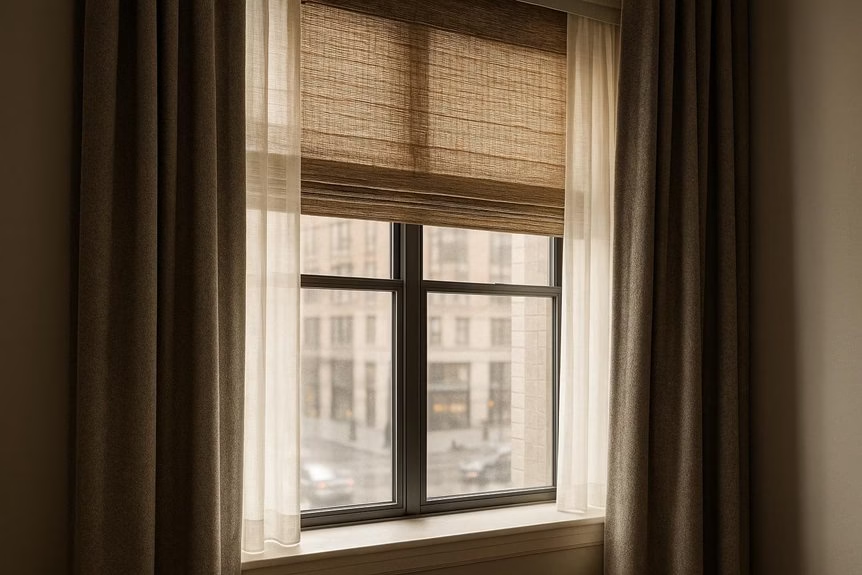
For the best balance of street-noise reduction, glare control, and privacy, most urban homes benefit from layered window treatments professionally selected and installed for the space. A common high-performance solution is double-cell blackout shades paired with lined drapery, which helps improve comfort, reduce visible light, and create stronger privacy at night. While window treatments can help soften some exterior sound, meaningful street-noise control often requires a broader soundproofing strategy—especially in apartments and homes near busy roads. If glare is the main issue, solar shades can preserve daylight and views while cutting harsh sun. For homeowners in West Orange, Hoboken, Jersey City, and NYC, Total Home Interiors designs custom motorized window treatments and integrated privacy solutions that match your priorities and your home.
Key Takeaways
- For street-facing homes and apartments, double-cell blackout cellular shades are often one of the best window-treatment options for reducing outside noise, softening glare, and improving privacy. Their honeycomb construction helps absorb some sound while dense blackout fabrics block intrusive light.
- For stronger results, Total Home Interiors often recommends layering motorized cellular shades with heavy, lined, floor-length drapery. This creates better nighttime privacy, improved glare control, and enhanced acoustic performance—especially in urban spaces affected by traffic and nearby buildings.
- Solar shades are ideal when you want to reduce harsh glare and UV exposure without losing daylight or exterior views. Lower openness fabrics provide greater daytime privacy, though they also reduce visibility more significantly.
- In condos, apartments, and homes close to neighboring windows or busy streets, blackout or room-darkening fabrics are typically a more reliable choice for nighttime privacy than light-filtering materials.
- For the best overall performance, professional custom fitting is essential. Minimizing edge gaps and pairing shades with solutions like acrylic window inserts can further improve privacy and help reduce street-noise intrusion.
What Solves Noise, Glare, and Privacy?
A few window treatment options can improve noise, glare, and privacy, but the right solution depends on your room, window conditions, and priorities. For street-facing homes and apartments in West Orange, Hoboken, Jersey City, and NYC, blackout double-cell cellular shades are often the strongest window-treatment option for reducing outside noise, thanks to their honeycomb construction and denser fabric.
For better performance, Total Home Interiors often recommends layering an inside-mounted shade with floor-length lined drapery to add another barrier for light, privacy, and sound control. In tougher cases, acrylic window inserts can complement shades and drapery by helping block outside sounds that travel through the glass.
For glare, solar shades help soften harsh sunlight while preserving daylight and outward views, with openness levels selected based on how much visibility you want. At night, room-darkening or blackout shades are essential for privacy, especially on windows exposed to nearby buildings or busy streets.
Because performance depends heavily on installation, professional fit matters. Custom sizing, tighter edge gaps, proper mount depth, and integration with motorized shading systems all make a noticeable difference. Total Home Interiors designs and installs premium automated window treatments that not only improve comfort and privacy, but also work seamlessly with smart home control for effortless daily use.
How to Choose Window Treatments by Priority
Priorities should guide your window treatment choice. In many Tri-State homes and apartments, the best solution for street noise may not be the best fit for glare control, privacy, or daylight—so it helps to define your main goal first.
Start with your top priority—noise, glare, privacy, or daylight—to choose the window treatment that fits best.
- If noise reduction is your top priority, double-cell blackout cellular shades are often one of the most effective window treatment options for softening outside sound.
- For stronger acoustic performance, pair them with heavy, lined, floor-length drapery to add another layer of sound absorption and privacy.
- For even better traffic-noise control, professionally installed acoustic inserts can create an airtight seal at existing window frames and significantly reduce outside sound.
- If glare control matters most, choose solar shade openness carefully: higher openness preserves views, while lower openness improves privacy and reduces harsh light.
- If privacy is your main concern, focus on night privacy with blackout fabrics or top-down/bottom-up shades that give you more control throughout the day.
- If you want natural light without sacrificing comfort, light-filtering cellular or roller shades can help; for better efficiency, consider professionally specified AERC-certified options.
The best results come from matching the treatment to your primary problem first, then supporting secondary goals like brightness, comfort, energy efficiency, and everyday convenience.
For homeowners in West Orange, Hoboken, Jersey City, and NYC, professionally selected and motorized window treatments can make a noticeable difference in privacy, comfort, and control.
Why Custom Cellular Shades Reduce Noise Best
When street noise is your biggest concern, custom cellular shades are typically the most effective window treatment option because their honeycomb-shaped cells trap air and help soften sound before it enters the room. For stronger noise reduction, double-cell blackout shades usually outperform single-cell styles thanks to their added chambers and denser construction.
Just as important as the shade itself is the fit. A precise custom inside mount helps minimize edge gaps where both light and sound can pass through.
If you want a balance of daytime flexibility and nighttime privacy, custom light-filtering or dual-shade cellular systems let you adjust for comfort while still improving the room’s acoustics.
That said, shades alone are rarely a complete soundproofing solution. For the best result short of replacing windows, Total Home Interiors often recommends layering automated cellular shades with heavy, lined drapery for added absorption and privacy. Sealing small gaps around the window frame with acoustic caulk can also help reduce sound leakage and improve overall performance.
For homes in West Orange, Hoboken, Jersey City, and NYC dealing with persistent street or neighbor noise, our team can also evaluate whether a broader soundproofing approach—such as upgraded window assemblies or integrated acoustic treatments—would deliver a more meaningful reduction.
When Solar Shades Preserve Light and Views
If you want to keep your rooms bright without harsh glare, solar shades offer one of the best solutions for daylight control, privacy, and clean modern styling. At Total Home Interiors, we often recommend professionally measured and installed solar shades for homeowners across West Orange, Jersey City, Hoboken, and NYC who want a more comfortable space without giving up natural light or outdoor views.
- Reduce glare without making the room feel dark
- Preserve views with the right fabric openness
- Improve thermal comfort on sunny window exposures
- Help protect flooring, furniture, and artwork from UV damage
- Use custom sizing and professional installation to minimize edge light gaps
- Add motorization for effortless privacy and light control
You’ll notice the biggest improvement on south- and west-facing windows, where afternoon sun can create eye strain, heat buildup, and an uncomfortable work-from-home or living environment. Higher openness fabrics maintain more of your view, while lower openness options provide stronger glare reduction and increased daytime privacy. The key is selecting the right openness level for the room, the sun exposure, and how you use the space.
Because solar shades aren’t blackout treatments, they’re ideal when your goal is softened sunlight, visual comfort, and a refined daytime look. Motorized options can also help reduce solar heat gain during peak afternoon hours, supporting energy efficiency without sacrificing daylight. For the best result, professional guidance matters—especially when integrating motorized shades from trusted brands like Lutron, Somfy, or Hunter Douglas PowerView into a larger smart home system.
Do Solar and Roller Shades Give Night Privacy?
Understand this first: solar shades and many light-filtering roller shades can improve daytime privacy and reduce glare, but they typically don’t provide true night privacy once interior lights are on.
For homeowners in West Orange, Hoboken, Jersey City, and NYC, this is a common privacy concern—especially in condos, apartments, and closely spaced homes.
Solar shade fabrics are designed to preserve daylight and outward views, but that same openness can allow silhouettes to show after dark.
Roller shades offer more variation: light-filtering fabrics may still reveal shapes and movement, while blackout or dense room-darkening materials provide significantly better evening privacy.
Installation details matter just as much as fabric selection.
Even high-performance shades can lose effectiveness if there are gaps at the sides, top, or bottom.
Professional measuring, precise fabrication, and tighter edge management help minimize light gaps and improve privacy.
Sealing those perimeter gaps with discreet weatherstripping tape can also help reduce minor noise leaks while improving overall window coverage.
If your goal is to enjoy daytime natural light without sacrificing nighttime coverage, the best solution is usually a layered window treatment system.
Pairing a solar or light-filtering roller shade with blackout drapery or another secondary privacy layer delivers far more dependable results than relying on a single shade to do both.
At Total Home Interiors, we design and install motorized window treatment solutions that balance privacy, light control, and smart home convenience for Tri-State homes.
Why Top-Down Bottom-Up Shades Feel More Open
Top-down/bottom-up shades feel more open because they give you privacy where you need it most without closing off the entire window. By covering the lower portion of the glass and leaving the upper section open, you can control visibility, reduce glare, and still bring in natural light.
- Keep sightlines more open
- Improve daylight control
- Manage glare more precisely
- Reduce the “fish-bowl” feeling in exposed rooms
- Adjust privacy throughout the day
Instead of lowering a shade all the way down, you can fine-tune the opening to match how the room is being used. During the day, the lower glass can stay covered for privacy while the top remains open for daylight and sky views.
In rooms affected by exterior noise, pairing these shades with heavy acoustic curtains can also help block outside sound while preserving flexible light control.
In the evening, adjustments can be made to help limit silhouettes and unwanted visibility from outside.
For homeowners in West Orange, Hoboken, Jersey City, and across the Tri-State area, this style is especially useful in apartments, street-facing rooms, and homes where privacy and natural light are equally important.
When paired with premium light-filtering or blackout fabrics—and integrated with motorized control from brands like Hunter Douglas PowerView, Lutron, or Somfy—top-down/bottom/up shades become an elegant, everyday privacy solution that feels both practical and refined.
Are Roman Shades Better for Soft Full Coverage?
Roman shades are often a smart choice when you want soft-looking, full-window coverage without making a room feel hard or bulky. For homeowners dealing with street-facing privacy concerns in places like Hoboken, Jersey City, or NYC, custom-sized Roman shades with a tight, professional mount can significantly reduce the light gaps that contribute to glare and nighttime visibility.
Performance improves even more with premium liners, especially blackout or thermal options. These thicker liners add density behind the folded fabric, creating more complete coverage at the window and a softer visual finish. Some premium lining materials also support sustainable materials choices, offering design flexibility and environmental benefits.
Lined Roman shades also provide stronger after-dark privacy than light-filtering fabrics alone, helping reduce the “fishbowl” effect many urban homeowners experience.
For the best results, professionally specified Roman shades can also be paired with side detailing, layered treatments, or motorization for added privacy, convenience, and energy efficiency. At Total Home Interiors, we help clients choose custom window treatment solutions that balance softness, coverage, and smart functionality.
Blinds or Shutters for Privacy and Noise?
For a street-facing window, shutters usually provide stronger visual privacy than standard blinds because their adjustable louvers create a tighter fit and reduce open sightlines, especially at night when interior lights are on.
- Blinds can help block views, but illuminated rooms may still show silhouettes.
- Shutters generally deliver better nighttime privacy because they fit more precisely within the window opening.
- For noise reduction, neither standard blinds nor shutters is a true soundproofing solution.
- Cellular shades can help more with street noise than either option because their insulated air pockets soften outside sound.
- Better results come from professionally fitted window treatments with careful edge coverage and custom sizing.
- Layering drapery or acoustic curtains can further improve privacy and reduce sound leakage around the sides.
- For stronger isolation, pairing window treatments with acoustic curtains or other absorptive materials can help reduce echo and soften airborne street noise.
Blinds and shutters mainly manage light, privacy, and a limited amount of sound softening, but they don’t replace dedicated soundproofing methods for serious street or neighbor noise.
If noise is a major concern, Total Home Interiors can recommend integrated solutions that combine motorized window treatments with proven acoustic strategies for a quieter, more private home in West Orange, Hoboken, Jersey City, NYC, and across the Tri-State area.
Which Treatments Work Best in Living Rooms?
When your living room faces the street, inside-mounted cellular shades often provide the best balance of privacy, glare control, and a modest reduction in outside noise.
For clients in Jersey City, Hoboken, and NYC dealing with traffic exposure, double-cell blackout fabrics are typically the strongest option when privacy and light control are the priority.
They help reduce glare, limit nighttime visibility, and slightly soften street noise without making the window feel overly heavy.
If you want a brighter, more open look, single-cell light-filtering cellular shades can keep daylight comfortable while still improving privacy.
When preserving the view is important, solar shades with the right openness factor can reduce glare while maintaining outdoor brightness, though they offer less nighttime privacy.
For the best overall result, we often recommend layering motorized shades with floor-length lined drapery.
This combination improves privacy, helps minimize light gaps, and adds another soft layer that can contribute to a quieter, more comfortable room.
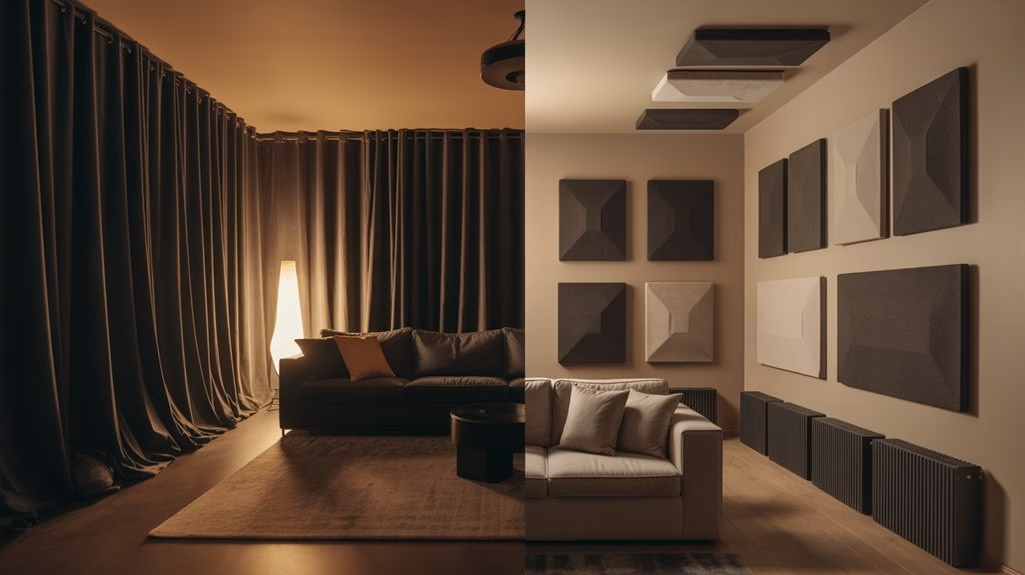
Like acoustic panels, soft layered materials can help reduce echoes and improve overall comfort in a room.
In more modern interiors, roller shades can also work well, especially when professionally specified for window placement, fit, and smart home integration.
At Total Home Interiors, we help homeowners choose automated window treatments that match both the design of the room and the privacy needs of street-facing spaces.
Frequently Asked Questions
What Are the Best Window Treatments for Curb Appeal?
For the best curb appeal, choose custom-fit window treatments that look clean from the outside and perform beautifully inside.
Motorized cellular shades and tailored Roman shades create a refined, consistent appearance, while solar shades help manage glare without making your home look dark.
For a more polished finish, pair light-filtering shades with lined drapery.
If privacy, energy efficiency, and convenience matter, professionally installed automated shades or motorized shutters offer a crisp, sophisticated look with seamless smart home control.
Conclusion
Choose your window treatments based on the result you need most: less street distraction, better glare control, enhanced privacy, or a smart balance of all three. For homes in West Orange, Jersey City, Hoboken, and NYC where outside noise is a daily frustration, professionally specified cellular shades can help soften sound at the window while improving comfort and energy efficiency. If preserving daylight and views is the priority, solar shades offer effective glare reduction without making the room feel closed in. For privacy that adapts throughout the day, top-down bottom-up options give you more precise control over sightlines and natural light. The best solution is not one-size-fits-all—it is a custom window treatment system designed around how you live, your exposure, and your comfort goals, with the added benefit of motorization and smart home integration for effortless control.