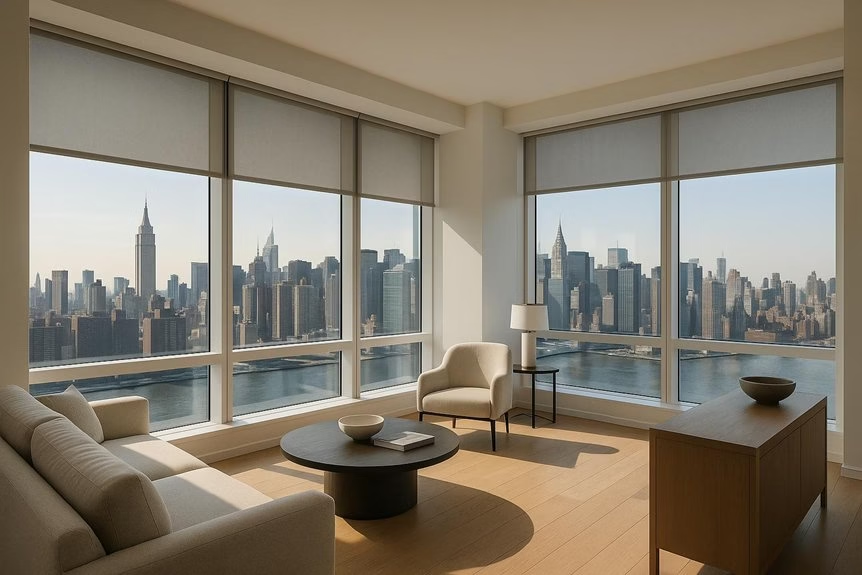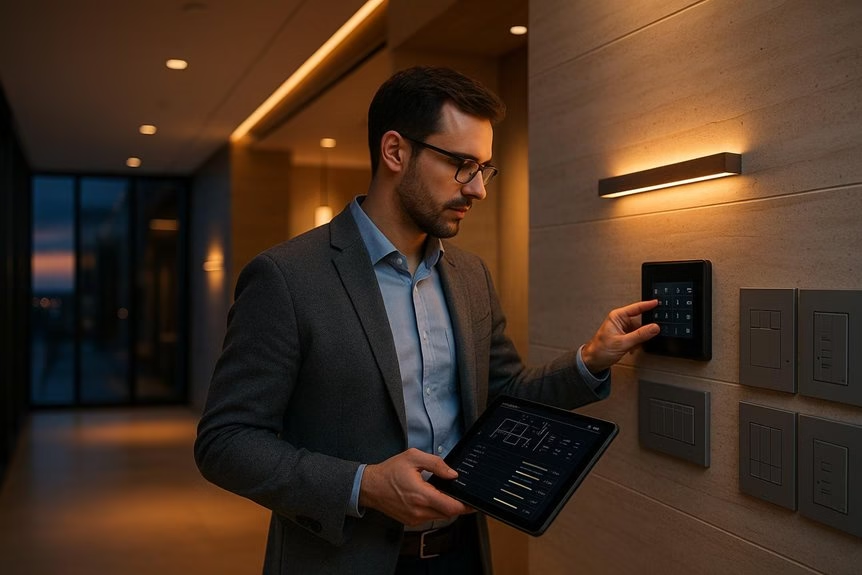
What sets a professional lighting control integrator apart is the ability to turn smart home technology into effortless everyday living. At Total Home Interiors, that means more than installing keypads and dimmers—it means creating lighting scenes that work seamlessly with automated shades, privacy needs, and the way you actually use your home. A true professional tests system compatibility, fine-tunes dimming levels, eliminates flicker and buzzing, and ensures your lighting control integrates smoothly with platforms like Lutron, voice control, and whole-home automation. The result is a reliable, polished system that feels intuitive today and is built to grow with your home tomorrow.
Key Takeaways
- A professional home automation integrator turns your lighting design into simple, centralized control through elegant keypads, mobile apps, touchpanels, and voice assistants—making everyday comfort feel effortless.
- They ensure your lighting control system works seamlessly with dimmers, drivers, motorized shades, and platforms like Lutron, Control4, Alexa, and Google to avoid flicker, buzzing, and inconsistent performance.
- They program lifestyle-based scenes such as entertaining, evening, movie time, and away mode for intuitive one-touch control of lighting and window treatments throughout the home.
- They properly commission and test the system in every room, confirming reliable communication, correct dimming levels, smooth shade movement, and accurate scene performance.
- They also plan for future smart home expansion with upgrade-ready hardware, clean infrastructure, ongoing maintenance, firmware support, and trusted local service across West Orange, NJ and the Tri-State area.
What Does a Lighting Control Integrator Do?
A lighting control integrator takes your lighting designer’s plan and turns it into a centralized, easy-to-use system that supports comfort, convenience, and a more refined living experience. At Total Home Interiors, that means creating intuitive control of lighting, motorized shades, and smart home scenes from a keypad, touchpanel, mobile app, or voice assistant.
They configure the system so fixtures, dimmers, keypads, shade controls, and automation platforms all work together reliably. That includes selecting the right control protocols, assigning device addresses, coordinating drivers and processors, and programming scenes that match how you actually live, whether you want better daytime privacy, softer evening lighting, or one-touch control for entertaining. They can also program presets like a Leaving Home scene that shuts off lights, adjusts shades, and simplifies daily routines with a single command.
Behind the scenes, they manage programming, wiring coordination, and performance settings to deliver smooth dimming, consistent scene behavior, and dependable operation.
During commissioning, they test communication, verify trim levels, fine-tune dimming response, and confirm that scenes activate exactly as intended. The result is lighting and shade control that feels seamless, reduces frustration, and adds the kind of smart home convenience homeowners in West Orange, Hoboken, Jersey City, and across the NYC metro area expect from a professionally integrated system.
Why Hire a Lighting Control Integrator?
When you want lighting to feel effortless instead of technical, hiring a professional lighting control integrator makes all the difference. At Total Home Interiors, we design and program lighting control systems that give you intuitive scenes, automated schedules, and simple daily operation—so your lighting supports comfort, privacy, and convenience without constant manual adjustments.
Just as important, professional integration protects system compatibility between fixtures, dimmers, drivers, controls, and automated window treatments. That helps prevent common problems like flickering, buzzing, uneven dimming, and unreliable performance that often happen when systems are pieced together without expert planning.
You also benefit from lighting that works seamlessly with motorized shades and smart home automation, allowing your spaces to transition naturally throughout the day—from brighter, productive mornings to softer, more relaxing evenings. Much like professional soundproofing, expert lighting integration prioritizes long-term reliability through precise installation, reduced errors, and more predictable performance than trial-and-error approaches. A professional integrator fine-tunes every zone for consistent performance and a polished user experience, while also planning for long-term reliability through updates, troubleshooting, maintenance, and future expansion.
How to Choose the Right Lighting Control Integrator
Choosing the right lighting control integrator is about more than knowing the products—it’s about choosing a professional who can design a complete home automation experience around how you live.
For homeowners in West Orange, NJ, and across the Tri-State area, that means working with a team that understands lighting control, motorized window treatments, and unified smart home integration as one coordinated system.
Ask how the integrator handles lighting scenes, automated shades, and consistent control across keypads, mobile apps, and voice assistants. The best results come from thoughtful programming that supports comfort, privacy, convenience, and energy efficiency throughout the home.
You should also confirm experience with digital LED dimming, including smooth low-end performance, accurate tunable white control, and prevention of flicker, buzzing, uneven strip lighting, and premature fixture failure.
- Verify compatibility between lighting fixtures, control systems, and motorized shade solutions through tested programming and real-world system validation.
- Ask about keypad placement, scene design, wall clutter reduction, and interface consistency before installation begins.
- Confirm certifications, local support capacity, and experience with commissioning, troubleshooting, and future smart home upgrades.
A strong integrator plans early, explains technical tradeoffs clearly, and delivers reliable performance that enhances daily living long after move-in. In homes where privacy and comfort matter, coordination with sound isolation strategies during the design phase can also help reduce noise transmission and improve the overall living environment.
Total Home Interiors brings that expertise to smart home projects throughout New Jersey, NYC, Hoboken, and Jersey City, helping clients create homes that feel more intuitive, comfortable, and refined.
What Makes Lighting Scenes and Automation Better?
What makes lighting scenes and automation better? It’s not just preset dimming. At Total Home Interiors, we program brightness and color temperature together so lighting feels natural throughout the day—cooler, brighter light for productive mornings and warmer, softer light for relaxing evenings. That level of human-centric lighting creates a more comfortable, believable experience than basic on/off or dim-only control.
Better lighting automation also fits your lifestyle. Scenes can coordinate with motorized shades, evening routines, entertaining modes, or late-night pathways, giving you comfort, convenience, and privacy with a single command or scheduled event.
Just as important, professional integration ensures fixture compatibility and system-wide consistency, helping prevent flicker, uneven dimming, or color mismatch. Like thoughtful sound isolation in home theater construction, soundproofing works best when it’s planned into the system from the start rather than added later as a costly fix.
The difference is in the commissioning. We test and fine-tune every scene in the actual space to verify smooth transitions, reliable automation, and consistent performance across every fixture and control point.
For homeowners in West Orange, NJ and across the Tri-State area, that means lighting that looks better, feels better, and works the way it should every day.
How a Lighting Control Integrator Future-Proofs Your Home
A skilled lighting control integrator helps future-proof your home by designing a system that can expand as your needs change, not hold them back. At Total Home Interiors, that means planning lighting control as part of a larger home automation strategy—so your system supports comfort, convenience, and long-term performance.
You benefit from compatibility planning, refined dimming performance, and tunable LED control that supports natural daily lighting rhythms without flicker, color inconsistency, or uneven dimming. Like quality acoustic design that improves audio clarity in a home theater, careful lighting integration enhances how every environment in your home performs over time. With scalable zone design, properly matched fixtures, and approved driver profiles, future upgrades or added spaces integrate cleanly.
- You get expandable controllers, wiring pathways, and interface locations for future rooms, sensors, automated window treatments, and custom scenes.
- You gain consistent programming for daily lighting changes, entertaining modes, and whole-home automation routines that work reliably over time.
- You protect your investment with ongoing maintenance, firmware updates, and software optimization as technology and manufacturer platforms evolve.
The result is a lighting control system that stays flexible, reliable, and ready for whatever your home needs next—whether that includes smarter privacy, better comfort, or a more fully integrated living experience.
Frequently Asked Questions
What Are the Two Major Protocols in a Lighting Control System?
The two major lighting-control protocols you’ll encounter in smart home and architectural lighting are DMX512 and DALI/DALI-2. DMX512 is typically used for channel-based control in dynamic lighting environments, while DALI/DALI-2 is preferred when you want individually addressable fixtures, dependable dimming, tunable white performance, and fixture feedback.
For homeowners and commercial clients in West Orange, Hoboken, Jersey City, and NYC, choosing the right protocol is only part of the solution. Proper system design, network infrastructure, and professional commissioning all play a critical role in long-term reliability, seamless scene control, and overall performance.
At Total Home Interiors, we integrate lighting control as part of a larger smart home strategy designed for comfort, convenience, and everyday ease.
How Much Does a Lighting Consultant Cost?
You’ll typically pay a lighting control or home automation consultant about $150 to $300 per hour, or a fixed fee based on the scope of your project.
At Total Home Interiors, pricing depends on whether you need lighting design guidance, smart scene programming, window treatment integration, or a full-home automation plan.
You should also budget for related items like control hardware, keypad placement, wiring coordination, shade integration, and final system setup.
If you want advanced features like customized lighting scenes, voice control, or whole-home smart home integration, you’ll usually pay more for the added design, programming, and commissioning expertise.
What Are the Four Parts of a Lighting Control System?
A lighting control system has four core parts: the light fixtures and LED drivers, the low-voltage control wiring or wireless communication path, the control processor or dimming interface, and the user controls such as keypads, touchscreens, apps, or voice control.
Just as important is the programming that connects everything into intuitive scenes for comfort, convenience, and energy efficiency.
At Total Home Interiors, we design lighting control systems that work seamlessly with motorized shades, home automation, and home theater environments, delivering reliable performance for homeowners across West Orange, NJ, and the Tri-State area.
Which Protocol Is Most Commonly Used for Lighting Control Integration?
Lutron is the lighting control protocol and platform you’ll see most often in high-end residential integration, especially for projects that prioritize reliable performance, elegant scene control, and seamless smart home operation. At Total Home Interiors, we often recommend Lutron for homeowners in West Orange, Hoboken, Jersey City, and NYC who want lighting that feels effortless while integrating cleanly with motorized shades, home automation, and whole-home environments.
That said, the right solution still depends on the space and the goal. DALI is often a strong fit for addressed commercial fixtures, while DMX is better suited for color-changing and architectural lighting effects.
Wiring and system design matter just as much as protocol choice, since device count, topology, and long-term integration needs all affect reliability, performance, and ease of use.
Conclusion
When you hire the right lighting control integrator, you get more than upgraded switches—you get a professionally designed home automation system tailored to how you live. At Total Home Interiors, lighting control is approached as part of a bigger smart home strategy, integrating scene programming, motorized window treatments, and intuitive control for greater comfort, privacy, and convenience. For homeowners in West Orange, Hoboken, Jersey City, and NYC, a skilled professional can create a system that responds seamlessly to daily routines and evolves with your needs over time. Instead of settling for piecemeal DIY solutions, choose an expert who understands the full picture and delivers lasting performance, elegance, and control.