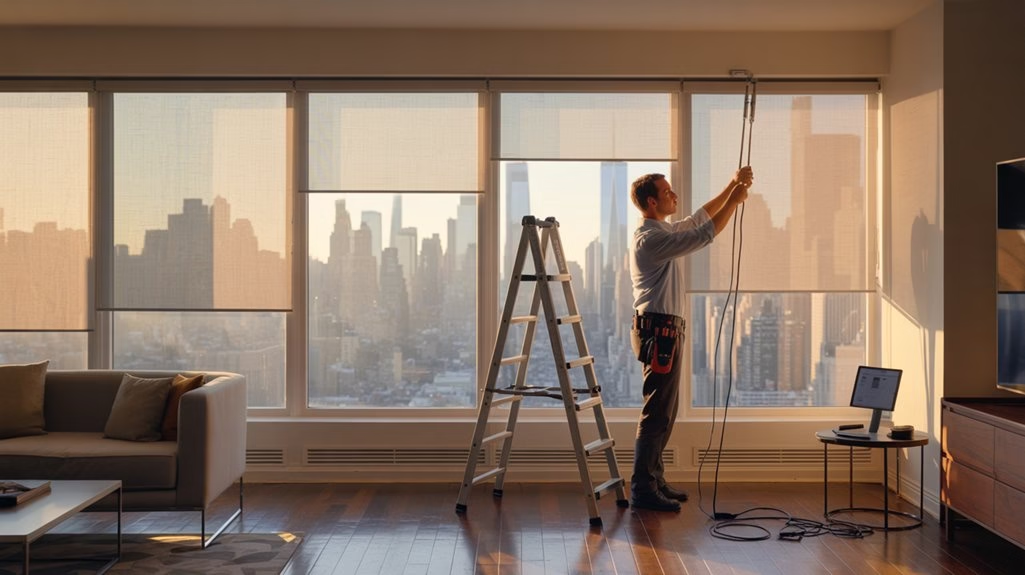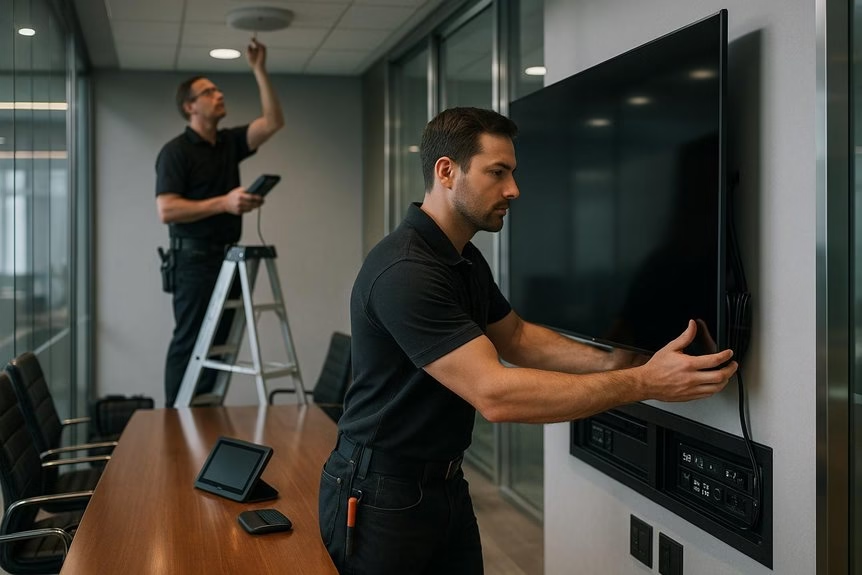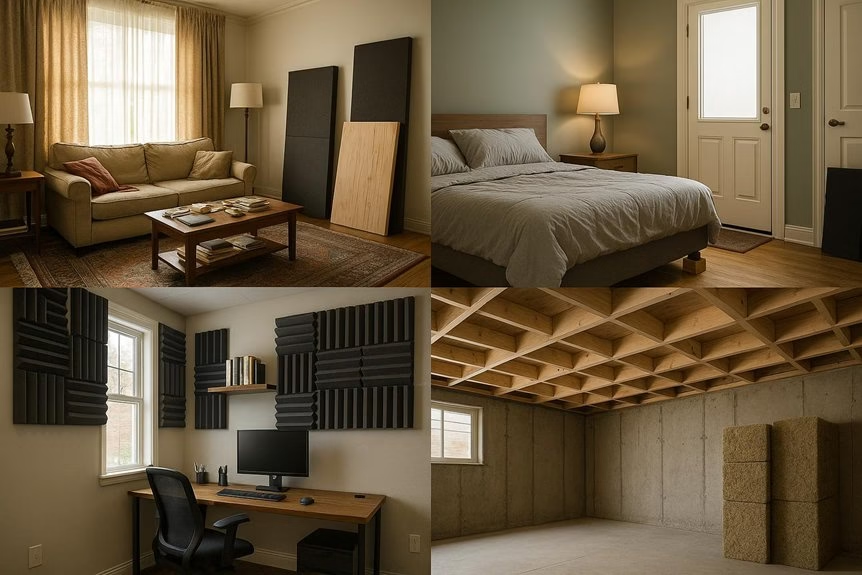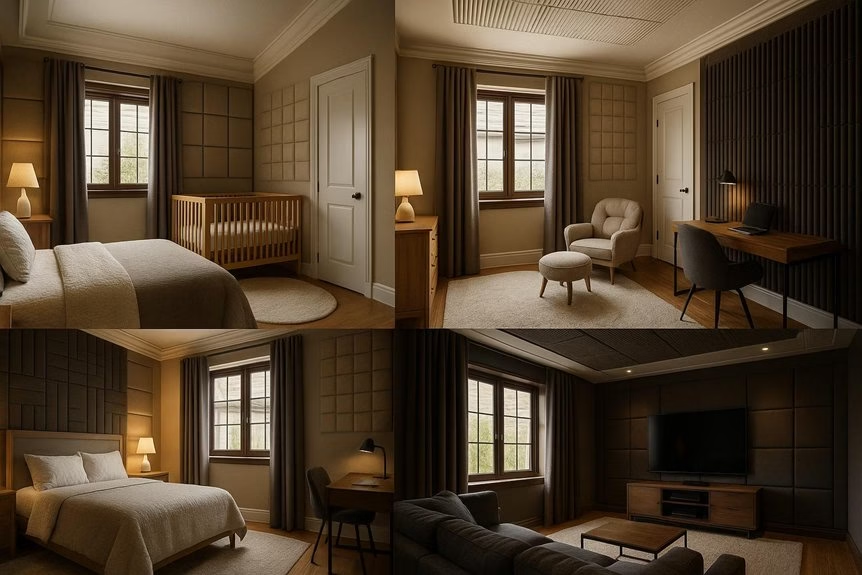
Professional soundproofing typically ranges from about $1,000 to $12,000+ per room, with many professionally designed projects falling between $2,500 and $10,500 depending on the level of isolation required. Mid-level soundproofing often costs around $10 to $30 per treated square foot, while higher-performance assemblies using solutions like mass-loaded vinyl, decoupled wall systems, and acoustic drywall can range from $30 to $65 per square foot. Bedrooms and home offices commonly fall between $1,000 and $5,400, home theaters between $2,000 and $9,000, basements between $1,800 and $9,000, and home gyms between $1,500 and $7,500. Final pricing depends on room size, whether the space is being retrofitted or built out during renovation, and which surfaces—walls, ceilings, floors, doors, or windows—need professional treatment to reduce noise transfer effectively.
Key Takeaways
- In New Jersey, professional soundproofing typically ranges from about $1,000 to $12,000+ per room, depending on room size, construction conditions, and the level of noise control required.
- Bedrooms and home offices often fall between $1,000 and $5,400, while dedicated home theaters commonly range from about $2,000 to $9,000 due to added acoustic and isolation requirements.
- Basements, garages, and home gyms generally cost about $1,800 to $9,000, especially when ceilings, insulation, flooring isolation, or structural modifications are part of the scope.
- Installed pricing often lands around $10 to $30 per treated square foot for mid-level systems, and roughly $30 to $65 per square foot for advanced sound isolation assemblies.
- Costs increase when projects involve ceilings, floors, windows, or doors, or when addressing more challenging noise issues such as footfall, street traffic, or shared-wall neighbor noise—areas where professional design and installation make a measurable difference.
How Much Does Professional Soundproofing Cost?
Although pricing varies by room size and construction details, professional soundproofing in New Jersey and the Tri-State area typically ranges from about $1,000 to $12,000+ per room.
Professional soundproofing in New Jersey typically costs about $1,000 to $12,000+ per room, depending on the space and construction details.
The biggest cost factors are square footage, retrofit complexity, and which assemblies need treatment, such as walls, ceilings, floors, windows, or doors.
In general, smaller rooms may fall around $1,000 to $2,500, medium rooms around $2,500 to $5,500, and larger spaces from $6,000 to $12,000 or more.
Labor is often a major portion of the investment, commonly ranging from $50 to $100 per hour, especially when retrofitting existing homes, condos, or apartments where demolition, sealing, and refinishing are required.
Compared to new construction, retrofit soundproofing can significantly increase the total cost.
Your final quote will also depend on the soundproofing methods recommended, including solutions like mass-loaded vinyl, decoupled wall assemblies, acoustic drywall, upgraded doors, or window soundproofing.
High-performance systems may also use resilient channels and cavity insulation to improve sound isolation between shared walls and ceilings.
For homeowners in West Orange, Hoboken, Jersey City, and NYC dealing with street noise, neighbor noise, or limited privacy, working with a professional ensures the system is designed around your space, noise issues, and performance goals.
Total Home Interiors helps clients match the right level of sound control to their budget while avoiding the guesswork of DIY approaches.
Soundproofing Cost Per Square Foot
For budgeting, professional soundproofing is typically priced by treated square footage rather than only the room’s floor area. That’s because effective noise control usually involves walls, ceilings, doors, windows, and other sound leak points—not just the space underfoot.
As a general planning range, homeowners can expect about $10–$30 per square foot for mid-level soundproofing systems and roughly $30–$65 per square foot for advanced isolation assemblies designed to significantly reduce noise transfer.
In the Tri-State area, installed costs can vary widely based on construction type, access, and the level of isolation required.
Retrofit projects in apartments, condos, brownstones, and existing homes often cost substantially more than new construction because they may involve demolition, surface preparation, sealing, and rebuilding finished areas.
Material pricing helps explain those ranges: mass-loaded vinyl typically runs about $2–$5 per square foot, ceiling absorption products often fall near $2–$5 per square foot, and specialty acoustic drywall systems can cost $40–$70 per 4×8 sheet. Budget-friendly upgrades like mass-loaded vinyl can also be combined with batt insulation, acoustic caulk, and panels to improve overall sound control without requiring a full structural rebuild.
To keep a project focused and cost-effective, professionals often begin by treating the primary problem area first, whether that’s a shared wall, a ceiling under footfall noise, or windows facing traffic.
At Total Home Interiors, we help homeowners and commercial clients in West Orange, NJ, Jersey City, Hoboken, NYC, and across the Tri-State area identify the most effective soundproofing strategy for their space—prioritizing long-term performance, cleaner installation, and better results than trial-and-error DIY fixes.
What Changes Soundproofing Costs Most?
The square-foot ranges above give you a helpful starting point, but several factors can change soundproofing costs quickly. Room size is usually the biggest driver.
A 100–200-square-foot project may fall around $1,000–$2,500, while larger spaces over 400 square feet can reach $6,000–$12,000 or more depending on the assembly required.
Smaller 100–200-square-foot soundproofing projects may start around $1,000, while 400-plus-square-foot spaces can exceed $12,000 depending on construction needs.
Project scope matters just as much. Sealing gaps and improving one problem wall will cost far less than a full-room soundproofing approach that includes ceilings, floors, and upgraded doors or windows.
The type of noise also affects pricing. Street noise, neighbor noise, footfall from above, and sound leaking through glass often require different construction methods and more advanced materials.
Material selection has a major impact as well. Premium solutions like mass-loaded vinyl, acoustic drywall, and decoupled wall systems cost more than basic sound-absorbing products, but they’re often necessary when the goal is true noise isolation rather than simple echo reduction.
Assemblies designed to reach an STC rating of 55–60 often require added mass, dense insulation, and damping layers, which can increase total project cost.
Retrofit work can also raise the investment significantly compared with new construction, because installers must work around existing finishes, open surfaces carefully, and rebuild everything with precision.
For homeowners and businesses in West Orange, Hoboken, Jersey City, and the NYC area, professional evaluation is often the best way to understand what level of soundproofing will actually solve the problem.
Bedroom and Office Soundproofing Costs
Whether you’re trying to sleep better or create a quieter, more productive workspace, bedroom and office soundproofing typically ranges from about $1,000 to $5,400 per room.
Final pricing depends on room size, the level of construction involved, and how many walls, ceilings, doors, or windows need treatment.
In retrofit situations, costs can approach nearly twice that of building sound control into the space from the start.
For homeowners and professionals in West Orange, Hoboken, Jersey City, and the greater NYC area, the most effective results usually come from addressing noise transfer strategically:
- Start by sealing weak points with professional air sealing and a high-quality door gasket to reduce sound leakage around openings.
- Prioritize the noisiest wall first, especially in condos, apartments, and home offices where neighbor noise or shared-wall speech privacy is the main concern.
- For mid-level soundproofing, adding insulation, resilient channels, or acoustic drywall often brings projects into the $2,500 to $5,500 range.
- For higher-performance assemblies, work with a professional on mass-loaded vinyl, multi-layer drywall systems, and vibration isolation details to ensure the system performs as intended.
Professional installation can also add value through warranty coverage, faster completion, and fewer performance issues caused by installation errors.
In many cases, a targeted single-surface upgrade costs less than a full-room soundproofing package while still delivering meaningful improvements in privacy, sleep quality, and day-to-day comfort.
Living Room and Home Theater Costs
Because living rooms typically have more glass, wider openings, and more shared surfaces than smaller rooms, professional soundproofing often ranges from about $2,500 to $10,500.
A dedicated home theater usually falls around $2,000 to $9,000, especially when acoustic control and isolation are designed into the space from the start.
Final pricing depends on room size, construction complexity, and where sound is leaking most.
For homeowners in West Orange, NJ and across the Tri-State area, the most effective approach is identifying the weakest sound paths first.
In many living rooms, that means windows, the primary shared wall, ceiling cavities, and attic penetrations.
From there, a professional soundproofing plan can be built using proven assemblies and premium materials.
Mid-level systems using insulation, resilient channels, and standard drywall typically cost about $10 to $30 per square foot.
Higher-performance home theater and soundproofing assemblies with double 5/8-inch drywall, mass-loaded vinyl, acoustic clips, acoustic sealant, and upgraded doors or windows can range from $30 to $65 per square foot installed.
A well-designed system also aims for an STC rating of 55–60 to deliver stronger isolation and a more immersive viewing experience.
At Total Home Interiors, we focus on professionally designed soundproofing and acoustic solutions that improve comfort, privacy, and overall performance—far beyond what most DIY fixes can achieve.
Basement, Garage, and Gym Costs
Basements, garages, and home gyms present unique soundproofing challenges, and pricing typically reflects the more intensive construction work required to control noise effectively. In many Tri-State homes, these spaces involve exposed framing, shared mechanical systems, concrete surfaces, overhead doors, and multiple penetrations that make professional sound isolation more complex than a standard interior room. In some retrofit projects, homeowners also pair soundproofed spaces with centralized control systems to simplify lighting, audio, and electronics management within these multifunctional areas.
- Basements: Most basement soundproofing projects range from $1,800–$9,000, particularly when the scope includes opening wall or ceiling cavities, adding insulation, installing mass-loaded vinyl or acoustic drywall, and then closing and refinishing the space. Basements often also require attention to ductwork, pipes, and low-ceiling conditions that allow sound to travel between floors.
- Garages and sheds: Expect costs around $5,000–$15,000, since these spaces usually have large uninterrupted wall areas, lightweight garage doors, utility penetrations, and windows that contribute to significant sound leakage. For homeowners near busy streets or in dense North Jersey neighborhoods, garage soundproofing may also involve upgrading doors and reinforcing surrounding construction assemblies.
- Home gyms: Professional soundproofing for a home gym generally falls between $1,500–$7,500, with higher-end projects increasing when impact and structure-borne noise from weights, treadmills, or training equipment must be isolated. These installations often require more than surface treatments, especially when the goal is to reduce vibration transfer to adjacent rooms or living spaces above.
- Budget planning tips: In premium retrofit projects, advanced sound isolation can exceed $30 per square foot, depending on the room assembly and performance goals. Sealing HVAC and electrical penetrations, adding double drywall, incorporating mass-loaded vinyl, and upgrading to solid-core or acoustically rated doors can all increase investment quickly. For homeowners in West Orange, Hoboken, Jersey City, and nearby NYC-area properties, professional assessment is often the best way to identify where construction upgrades will deliver meaningful noise reduction rather than temporary DIY improvement.
Wall, Ceiling, and Floor Soundproofing Costs
When budgeting for wall, ceiling, and floor soundproofing, costs are usually driven by the amount of surface area being treated and the level of isolation required—not just the room’s square footage. In the Tri-State area, professionally installed soundproofing assemblies often range from about $10–$30 per square foot, while higher-performance systems using advanced isolation methods can reach $30–$65 per square foot.
For walls, costs often range from roughly $100–$2,000 depending on scope and construction conditions. Mass-loaded vinyl (MLV) installation may run about $3–$5 per square foot, while acoustic drywall is typically priced around $40–$70 per 4×8 sheet before full assembly costs are considered. Layering mass-loaded vinyl with double 5/8-inch type X drywall is a common strategy for improving sound isolation and reducing vibration transfer.
Ceiling soundproofing usually falls between $150–$1,200, with simpler treatments like insulation or acoustic tiles starting around $1–$3 per square foot, and more effective assemblies using MLV and double drywall costing more.
Floor soundproofing generally ranges from $100–$1,500, with carpet and acoustic underlayment often priced at $2–$8 per square foot and resilient underlayments around $0.20–$0.50 per square foot.
Because retrofit work in condos, apartments, brownstones, and existing homes is often more complex than new construction, costs can increase significantly—sometimes approaching double.
Retrofit soundproofing in condos, brownstones, and existing homes often costs more than new construction due to added complexity.
At Total Home Interiors, we design custom soundproofing solutions for homeowners and commercial spaces across West Orange, Hoboken, Jersey City, and NYC, helping clients choose the right wall, ceiling, and floor assemblies for meaningful noise reduction, privacy, and long-term performance.
Professional vs DIY Soundproofing Costs
While DIY soundproofing can reduce upfront costs, professional installation typically delivers more consistent, measurable results—especially when assemblies involve mass-loaded vinyl, soundproof drywall, decoupling, or detailed sealing work. Homeowners may spend roughly $500–$1,000 on basic materials, while professional soundproofing often ranges from $1,000–$2,800 per room depending on the scope, construction type, and performance goals. True soundproofing also depends on structural design and isolation, since absorption materials alone do not stop sound transmission between rooms.
- DIY can lower initial costs by 30–50%, but products like MLV and acoustic drywall are labor-sensitive and easy to install incorrectly.
- Retrofit projects usually cost more than new construction because walls, ceilings, or floors often need to be opened, treated, and carefully rebuilt.
- Professionally designed soundproofing commonly falls around $10–$30 per square foot for mid-level isolation, with advanced assemblies ranging from $30–$65 per square foot.
- Total investment often scales with room size, with medium rooms landing around $2,500–$5,500 and larger spaces reaching $6,000–$12,000 or more.
For homeowners in West Orange, Jersey City, Hoboken, and the greater NYC area, professional soundproofing offers more than installation—it provides a system designed for long-term acoustic performance, privacy, and comfort.
Frequently Asked Questions
How Long Does Professional Soundproofing Installation Usually Take?
Professional soundproofing installation typically takes one to five days, depending on the size of the space, the construction method, and the level of noise control required.
Simpler upgrades like acoustic panels, door seals, or targeted treatments can often be completed more quickly, while comprehensive soundproofing solutions involving insulation, mass-loaded vinyl, acoustic drywall, or decoupled wall systems require more time.
Timelines should also account for site preparation, material curing, and final performance testing.
For larger homes, apartments, offices, or multi-room projects in West Orange, Hoboken, Jersey City, and NYC, the schedule may extend slightly to ensure a properly executed, professional result.
Will Soundproofing Reduce Natural Light or Ventilation?
In most cases, professional soundproofing won’t significantly reduce natural light, and any ventilation changes can be addressed in the design phase.
Window upgrades such as acoustic glass, interior inserts, and improved sealing may slightly affect visible glass area or how freely air moves through operable openings, but a properly engineered solution is designed to preserve comfort as well as quiet.
At Total Home Interiors, we recommend soundproofing strategies that balance noise reduction, daylight, and airflow—especially for homeowners in West Orange, Hoboken, Jersey City, and NYC dealing with street noise or neighbor noise.
Ask about acoustic window options, vent baffles, and integrated treatment designs that maintain a bright, breathable space while reducing unwanted sound.
Do I Need Permits for Residential Soundproofing Projects?
Yes, residential soundproofing projects may require permits—especially when the work involves modifying walls, ceilings, floors, electrical systems, or other structural elements. Permit requirements vary by municipality, so homeowners in West Orange, NJ and throughout the Tri-State area should review local building codes before starting any project.
For apartments, condos, and managed communities in places like Jersey City, Hoboken, and NYC, HOA or building association rules may also affect what soundproofing materials and construction methods are allowed.
This is especially important for projects targeting neighbor noise, street noise, or privacy improvements in shared-wall homes.
If your project includes a room addition, detached studio, or garage conversion, zoning and use regulations may apply as well.
Because effective soundproofing often involves more than surface-level changes, professional planning can help ensure the project meets code, performs properly, and avoids costly mistakes.
Can Soundproofing Help With Noisy Plumbing or HVAC Systems?
Yes—professional soundproofing can help reduce noisy plumbing and HVAC systems when the right materials and installation methods are used.
The most effective approach depends on how the noise is traveling, whether through the air or through the structure itself.
Solutions may include pipe insulation, acoustic wraps, duct liners, vibration isolation, and targeted upgrades inside walls or ceilings.
In many homes and condos, securing loose components and identifying the exact source of the noise is just as important as the treatment itself.
For homeowners in West Orange, NJ and across the Tri-State area, Total Home Interiors designs custom soundproofing solutions that address the root cause—not just the symptom.
Does Soundproofing Increase Home Resale Value?
Yes, soundproofing can increase home resale value—especially in urban markets like NJ, NYC, Hoboken, and Jersey City, where noise and privacy are major buyer concerns.
Professionally installed soundproofing for walls, ceilings, floors, and windows can improve daily comfort, support better sleep, and create a quieter, more private interior.
These benefits often strengthen buyer appeal and help a home stand out from comparable listings.
While the exact return depends on the property and location, quality acoustic upgrades can contribute to stronger offers and faster sales.
Conclusion
Ultimately, professional soundproofing costs depend on the scope of work, the construction of the space, and the level of noise control you want to achieve. Some homeowners in West Orange, Hoboken, Jersey City, and NYC need targeted solutions to reduce everyday street or neighbor noise, while others invest in more comprehensive wall, ceiling, floor, or window soundproofing for true room-by-room isolation. The right approach is never one-size-fits-all—it requires expert evaluation, premium materials, and proper installation to deliver meaningful results. When done correctly, professional soundproofing doesn’t just make a space quieter; it improves sleep, restores privacy, supports focus, and adds lasting comfort to the way you live.