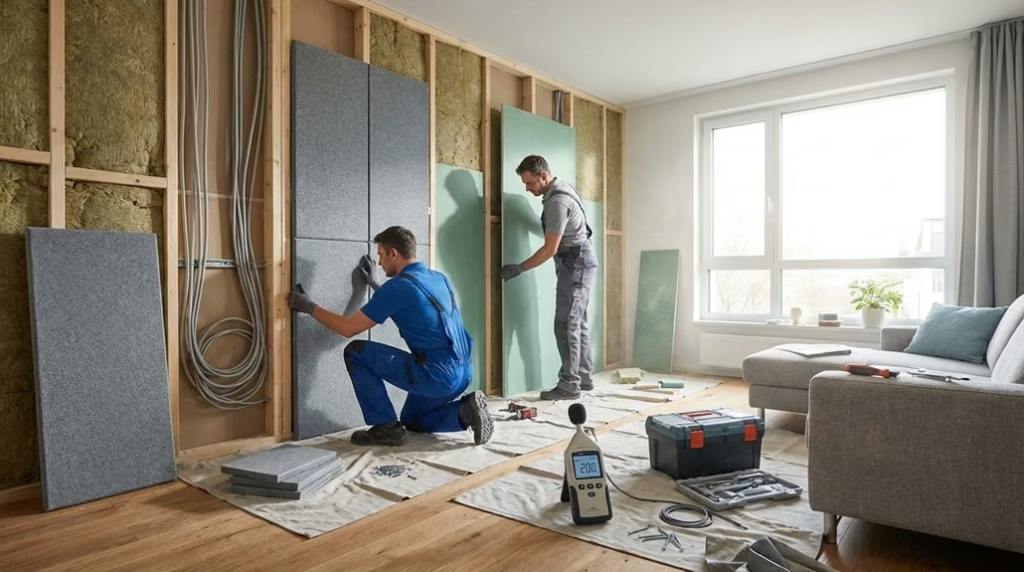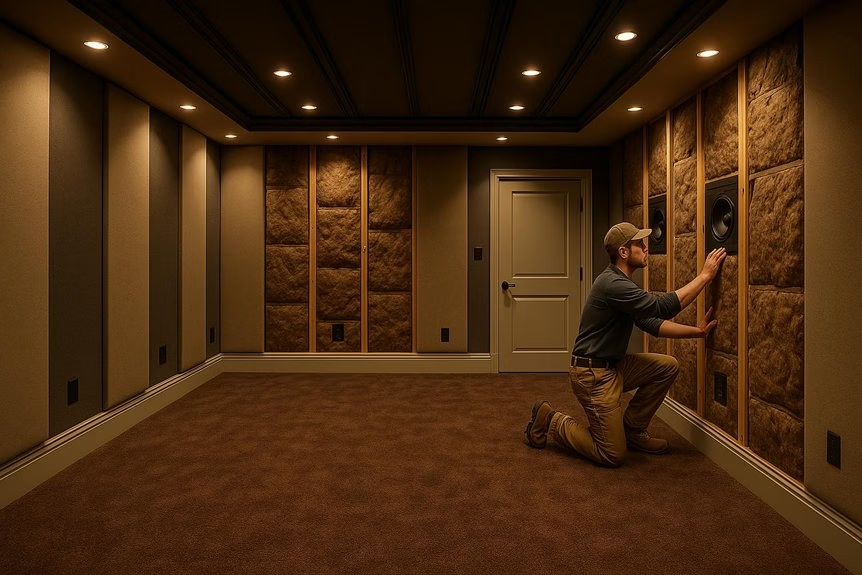
For effective home theater soundproofing in NJ, professional installation is essential for any work inside walls, ceilings, or floors, especially decoupled assemblies, acoustic insulation, resilient clip systems, floating floors, and room-within-a-room construction. Critical isolation details around doors, windows, HVAC penetrations, vents, and wiring paths also require expert sealing, since even small gaps can compromise performance. A professional soundproofing team helps deliver the level of isolation serious theater spaces require while avoiding common DIY issues like flanking noise, uneven results, and costly construction mistakes.
Key Takeaways
- Professional installation is critical for NJ home theater soundproofing when the scope includes room-within-a-room construction, floating floors, or decoupled wall and ceiling assemblies. These systems are designed to reduce structural sound transfer and require precise planning, materials, and installation to perform properly.
- In-wall and in-ceiling soundproofing should be designed before drywall goes up. Total Home Interiors plans the full assembly—from insulation and acoustic drywall to resilient clips, hat channel, and carefully sealed penetrations—so the theater performs as a complete system, not a patchwork DIY upgrade.
- Doors, windows, and small perimeter gaps are common failure points in home theater isolation. Professional installation helps ensure solid-core doors, acoustic seals, door sweeps, and laminated glass are selected and fitted correctly to block outside noise and keep movie sound from traveling through the rest of the home.
- HVAC ducts, vents, recessed lighting, and wiring pathways can all leak sound if they are not treated properly. Expert installation is essential to acoustically isolate these areas, seal openings, and reduce both sound leakage and equipment noise without compromising comfort or system performance.
- In New Jersey homes, effective theater design goes beyond adding speakers and soft finishes. Bass behavior, speaker placement, ceiling height, and room geometry all affect sound isolation and in-room acoustics, which is why professional home theater design is key to achieving both cinematic impact and everyday livability.
What Does Home Theater Soundproofing Do?
Home theater soundproofing controls how much movie and speaker noise leaves the room or enters it, so deep bass, action scenes, and dialogue stay contained without disturbing the rest of your home. It helps reduce sound leakage, block outside noise, and preserve the immersive experience that makes a dedicated theater worth the investment.
At Total Home Interiors, professional home theater soundproofing starts with identifying how sound travels through doors, ceilings, floors, walls, and small perimeter gaps. Our team recommends the right isolation strategy using premium construction methods and materials such as decoupled assemblies, acoustic drywall, and other room-specific sound control solutions to strengthen the theater envelope. In many cases, that includes resilient channels or similar decoupling methods that help reduce vibration transfer through the framing.
Professional home theater soundproofing begins by tracing sound paths and applying the right isolation methods to reinforce the theater envelope.
We also address structure-borne vibration to help limit the transfer of low-frequency energy into nearby rooms. For basements and other enclosed spaces, we carefully plan bass management and room resonance control so powerful surround sound systems deliver impact inside the theater without overwhelming the rest of the house.
When designed correctly, a home theater sounds bold and cinematic where it should—and far quieter everywhere else.
Is Soundproofing the Same as Acoustic Treatment?
No—soundproofing and acoustic treatment solve two different problems, and understanding that difference is essential when planning a high-performance home theater.
Soundproofing is about stopping noise from traveling in or out of the room, while acoustic treatment improves the sound quality inside the space by reducing reflections, echo, and bass issues.
If your goal is to block street noise, neighbor noise, or sound bleeding into other rooms, true soundproofing requires construction-based solutions such as added mass, decoupled wall assemblies, acoustic drywall, vibration isolation, and other professionally designed methods.
Effective isolation often targets an STC rating of 55–60 and may also rely on decoupling and mass-loaded barriers to reduce bass transfer.
Acoustic treatment, by contrast, uses solutions like fabric-wrapped acoustic panels, ceiling treatments, diffusers, and bass control to make dialogue clearer and surround sound more precise once the sound is already in the room.
This is where many homeowners get frustrated: foam panels may slightly reduce flutter echo, but they don’t soundproof a theater.
STC ratings also apply to sound isolation, not to fixing echo or improving clarity.
In most premium theater projects, both soundproofing and acoustic treatment work together—one to control noise transfer, the other to deliver the immersive performance your theater was designed for.
Where Does Theater Sound Leak Most?
Once you understand the difference between soundproofing and acoustic treatment, the next step is identifying where sound actually escapes. In most home theater and media room projects, noise rarely leaks through the main wall surface alone. More often, it slips through weak points, penetrations, and connected structural paths.
- Start with the door assembly: The door is often the biggest sound leak in a theater. Even small gaps around the perimeter can undermine an otherwise well-built room, which is why proper sealing at the jamb, threshold, and frame is essential for effective soundproofing.
- Check HVAC pathways: Sound frequently travels through ductwork, supply boots, and return air openings. If these areas aren’t properly addressed, noise can bypass insulated walls and ceilings and move into nearby bedrooms, living spaces, or adjoining units.
- Don’t overlook smaller penetrations: Outlets, recessed lighting, cable openings, windows, and trim details can all contribute to sound leakage. Low-frequency bass is especially difficult to contain and can also transfer through ceilings, floors, and framing connections, particularly in condos, apartments, and rooms above garages. Using acoustical caulk around these openings helps seal tiny gaps that can significantly increase sound leakage.
For homeowners in West Orange, Jersey City, Hoboken, and across the Tri-State area, finding these hidden leak points is where professional theater soundproofing makes the biggest difference. Total Home Interiors designs complete solutions that address the full room assembly—not just the obvious surfaces—so your theater performs the way it should without disturbing the rest of the home.
Why Does DIY Soundproofing Fail?
In many DIY theater projects, soundproofing fails because it treats the obvious surface instead of the actual sound path. Homeowners may add foam or extra drywall to large wall areas, but noise often slips through ceilings, wall cavities, doors, vents, electrical boxes, and other hidden weak points.
In basements especially, flanking paths like duct penetrations, cable runs, and poor door seals still allow bass, footsteps, and airborne noise to travel from one space to another.
DIY efforts also fall short when proper isolation is missing. If new materials are fastened directly to studs or joists, vibration continues moving through the structure.
Effective soundproofing depends on decoupling, continuous coverage, strategic material selection, and precise installation, not surface-level fixes or patchwork sealants. Professional assemblies often use sound isolation clips and damping compounds to reduce structure-borne vibration that DIY installs commonly leave intact.
Many projects also overlook acoustics, which means the room may still sound echoey, boomy, or harsh even after construction.
At Total Home Interiors, we design professional home theater soundproofing and acoustic solutions for homeowners across West Orange, NJ and the Tri-State area, helping create spaces that feel quieter, more private, and far more enjoyable than typical DIY results.
Which Soundproofing Jobs Need a Pro?
While some minor upgrades may seem DIY-friendly, the soundproofing work that truly calls for a professional is anything involving structure, acoustics, and pre-drywall coordination.
In a home theater, missing the right framing stage or overlooking key isolation details can lead to sound leaks, vibration transfer, and disappointing performance that’s difficult—and costly—to correct later.
- Floating floors or room-within-a-room construction require expert sound isolation methods to prevent noise from traveling into nearby rooms, ceilings, or lower levels.
- Inside-the-wall and inside-the-ceiling soundproofing treatments must be installed before drywall, with careful coordination during framing to maintain the integrity of the acoustic assembly. Using resilient channels or sound isolation clips at this stage helps decouple drywall from framing and reduce structural sound transmission.
- Speaker placement and room layout design should be handled by a specialist, especially when in-wall speakers, risers, ceiling heights, and room proportions all influence sound imaging, bass response, and overall acoustic control.
When your theater depends on concealed materials, structural decoupling, and precise room geometry, professional installation helps protect your investment and ensures every element performs the way it should for years to come.
How Do Pros Soundproof Walls and Ceilings?
Professionals soundproof walls and ceilings by building layered systems that reduce vibration before it travels through the structure. At Total Home Interiors, that often means a mass-air-mass assembly using dense materials, strategic air space, and decoupling components such as resilient clips or hat channel. This approach performs far better than a basic drywall upgrade when you need real relief from neighbor noise, street noise, or sound between floors.
Inside the wall or ceiling cavity, mineral wool or fiberglass insulation helps absorb sound energy and reduce resonance. Acoustic sealant is also applied at perimeter joints, penetrations, and electrical boxes to limit sound leakage and flanking paths through adjacent construction. Professionals may also use double layers of 5/8″ drywall with Green Glue between layers to improve isolation by converting sound energy into heat. For ceilings, professional soundproofing may include decoupled drywall assemblies or suspended systems designed to reduce both airborne noise and impact noise.
Because every property is different, effective soundproofing depends on proper design, material selection, and installation, not guesswork. Total Home Interiors delivers custom soundproofing solutions for homes and commercial spaces across West Orange, NJ, and the Tri-State area, helping clients achieve quieter, more comfortable interiors with professional-grade results.
How Are Doors, Windows, and Gaps Sealed?
Even the best soundproof wall assembly can underperform if noise escapes through doors, windows, or small perimeter gaps. In homes and apartments throughout West Orange, Hoboken, Jersey City, and NYC, these weak points are often the reason street noise, voices, and bass still get through. Effective soundproofing depends on airtight detailing, because even minor leaks can significantly reduce overall isolation. Reinforced doors and windows can also improve thermal resistance and support energy efficiency by reducing drafts.
- Install solid-core doors with professional acoustic hardware, including perimeter seals, compression weatherstripping, and acoustic door sweeps. A properly fitted threshold or automatic door bottom is essential to close the gap beneath the door and prevent sound leakage.
- Upgrade windows with laminated glass and ensure a tight, continuous seal where the window frame meets the surrounding wall or drywall. Perimeter cracks and poorly sealed frames are common paths for airborne noise transmission.
- Seal all frame-to-stud and frame-to-drywall joints with acoustic caulk rather than standard rigid sealants. Acoustic caulk remains flexible over time, helping maintain the integrity of the soundproofing system as materials expand, contract, or settle.
For clients dealing with neighbor noise, traffic noise, or privacy concerns, Total Home Interiors designs complete soundproofing solutions that address these overlooked details as part of a professionally integrated assembly.
What About Vents, Wiring, and HVAC Noise?
Sealing doors, windows, and perimeter gaps is only part of effective home theater soundproofing. Vents, wiring paths, recessed openings, and HVAC equipment can also transmit unwanted noise if they aren’t addressed during construction. At Total Home Interiors, we plan acoustic ducting, sealed penetrations, and isolation methods as part of a complete system, helping reduce sound leakage while maintaining code-compliant installation standards in New Jersey. In many cases, adding Mass Loaded Vinyl within walls or ceilings can further improve airborne sound isolation around mechanical pathways.
Cable routing matters too. Speaker, projector, control, and low-voltage wiring should be laid out carefully to minimize interference from electrical lines and support clean, reliable performance.
For comfort, quiet ventilation is essential, allowing air to circulate without adding hiss or mechanical noise to the room. We also account for vibration transfer through framing and equipment connections, using isolation and damping techniques to help preserve both sound quality inside the theater and privacy outside it.
When Is a Room-Within-a-Room Worth It?
When a theater needs a meaningful jump in sound isolation, a room-within-a-room is often the right solution. It’s typically recommended for dedicated home theaters where both incoming and outgoing noise need to be controlled, especially in basement cinemas and suspended-floor builds common in NJ homes.
- For high-output theater use, deeper bass and immersive surround formats can create serious noise transfer that standard acoustic treatments alone won’t solve.
- In multi-row theaters with six to ten seats, higher playback levels increase the chance of sound leaking through shared walls, ceilings, and floors.
- When the theater shares structure with nearby living spaces, isolation pros must address structural coupling by decoupling the inner shell from the home. That helps preserve clarity inside the room while keeping noise from disturbing the rest of the house.
- These builds often combine added mass, damping, and decoupling to target STC 55–60 performance for more effective sound isolation.
For homeowners in West Orange, NJ and across the Tri-State area, this level of construction is often worth considering when performance, privacy, and comfort all matter.
What Does Home Theater Soundproofing Cost in NJ?
Once you start considering true home theater soundproofing, cost becomes one of the biggest planning factors. In New Jersey, professional soundproofing for a theater space costs significantly more than basic acoustic foam or decorative panels because real isolation requires construction expertise, not just surface treatment.
That typically includes design planning, decoupled wall and ceiling assemblies, insulation, acoustic drywall, sealing details, and coordination before finishes are installed. Systems that use resilient channels and added mass can significantly improve isolation by reducing structural sound transfer and boosting overall STC performance.
Pricing comes down to your performance goals and the conditions in the room. If you only want to reduce echo and improve sound quality inside the theater, acoustic treatments can be a more cost-effective option.
If your goal is to limit sound transfer to nearby bedrooms, upper floors, or neighboring properties, you’ll need a more advanced soundproofing strategy with higher labor and material costs.
In NJ homes, basement theater conversions, door upgrades, window treatment integration, and HVAC noise control often affect the final investment.
Many homeowners in West Orange, Hoboken, Jersey City, and the greater Tri-State area choose professionally designed mid-range or luxury theater packages that combine soundproofing, acoustics, lighting control, and smart home integration into one seamless build.
Frequently Asked Questions
How Can I Soundproof My Home Theater?
You can soundproof your home theater most effectively by combining professional acoustic treatment with true sound isolation.
Start by improving the room’s sound quality with acoustic panels, ceiling treatments, and bass traps to reduce echo and control low frequencies.
To keep movie sound from disturbing the rest of the home, a proper soundproofing plan may include decoupled walls, acoustic drywall, mass-loaded vinyl, and upgraded door or ceiling assemblies—especially during new construction or renovation.
Room selection also matters, with enclosed spaces often performing better than open layouts.
For the best result, Total Home Interiors designs and integrates custom home theater environments that balance isolation, acoustics, lighting control, and immersive AV performance for homeowners across West Orange, NJ and the Tri-State area.
Conclusion
If you want your New Jersey home theater to deliver truly immersive sound without sending every explosion and bass note into the rest of the house, professional soundproofing is essential. Effective isolation requires far more than guesswork—it takes expert design, precise sealing, and proven construction methods like decoupled assemblies, acoustic drywall, and specialized sound-control materials installed in the right locations. By working with a professional team like Total Home Interiors in West Orange, NJ, you protect your investment, reduce noise transfer, and create a theater experience that feels powerful inside the room while keeping the rest of your home quieter, more comfortable, and free from costly installation mistakes.