You can improve a wall’s sound isolation without tearing it down, but the right solution depends on the type of noise and how much improvement you actually need. For voices, TV sound, and general neighbor noise, the most effective approach is a full-coverage upgrade that adds mass and limits sound transfer—typically another layer of 5/8-inch acoustic drywall, often paired with Green Glue damping compound or mass-loaded vinyl, plus careful sealing around outlets, trim, and perimeter gaps. Foam panels are not soundproofing; they only help reduce echo within the room. If the problem is impact noise like footsteps from above, wall upgrades alone usually won’t solve it. That type of noise typically requires professional ceiling isolation with clips, channels, and insulation for meaningful results. At Total Home Interiors, we design and install soundproofing solutions for homeowners and commercial spaces across West Orange, NJ, Jersey City, Hoboken, and NYC—delivering cleaner, quieter results than piecemeal DIY fixes.
Key Takeaways
- The first step is identifying the type of noise you’re dealing with, because the right solution depends on how sound is traveling. Voices, TV, and street noise are airborne, while footsteps and vibration are structure-borne and typically require a different construction approach.
- In many cases, airborne wall noise can be reduced without tearing the wall down, provided the existing assembly can support a professionally designed, non-destructive soundproofing upgrade.
- Effective wall soundproofing comes from proven construction methods that add mass and improve isolation, such as a second layer of 5/8-inch acoustic drywall—rather than relying on acoustic foam or decorative panels that do not block noise transfer.
- For stronger results, a full-wall system may include added mass, damping compounds like Green Glue, mass-loaded vinyl, and careful airtight sealing around edges, outlets, and penetrations to prevent sound leaks.
- When the problem is footsteps or other impact noise from above, wall upgrades alone offer limited benefit; meaningful improvement usually requires ceiling soundproofing with isolation clips, hat channel, and insulation between joists.
- For homeowners and businesses in West Orange, Hoboken, Jersey City, NYC, and across the Tri-State area, Total Home Interiors designs tailored soundproofing solutions that prioritize real performance, clean integration, and long-term comfort over one-size-fits-all DIY fixes.
What Noise Are You Soundproofing?
Before adding anything to a wall, the first step is identifying the type of noise you want to reduce. This matters because voices, TVs, and music travel very differently than footsteps, vibrations, or structure-borne impact noise.
If you’re dealing with airborne noise—like conversation, barking, or television sound—the goal is soundproofing with added mass and proper wall construction, not just reducing echo inside the room. This is where professional solutions such as acoustic drywall, mass-loaded vinyl, and decoupled wall assemblies** make a real difference. In many cases, decoupling** is considered one of the most effective ways to reduce sound transfer through shared walls.
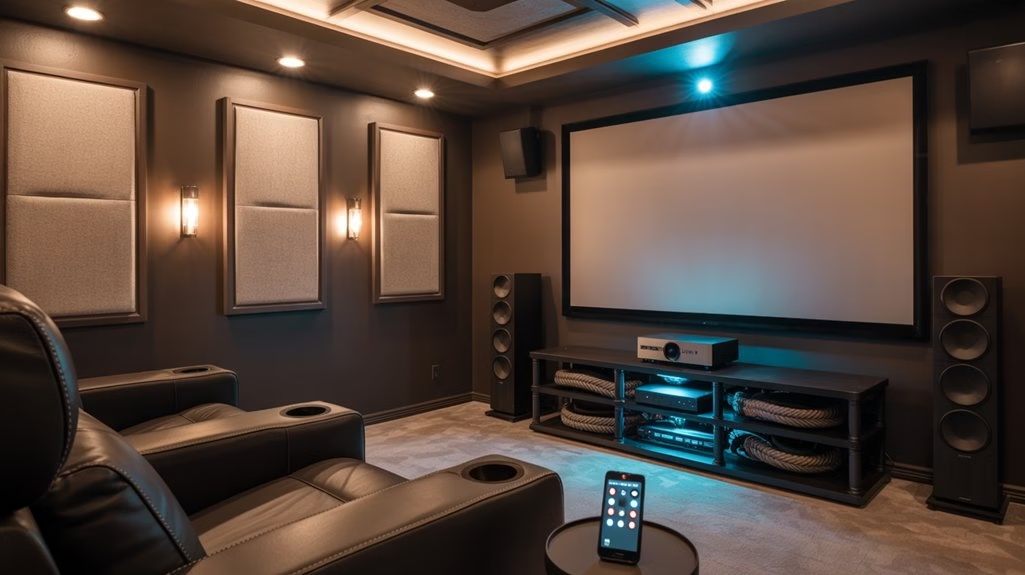
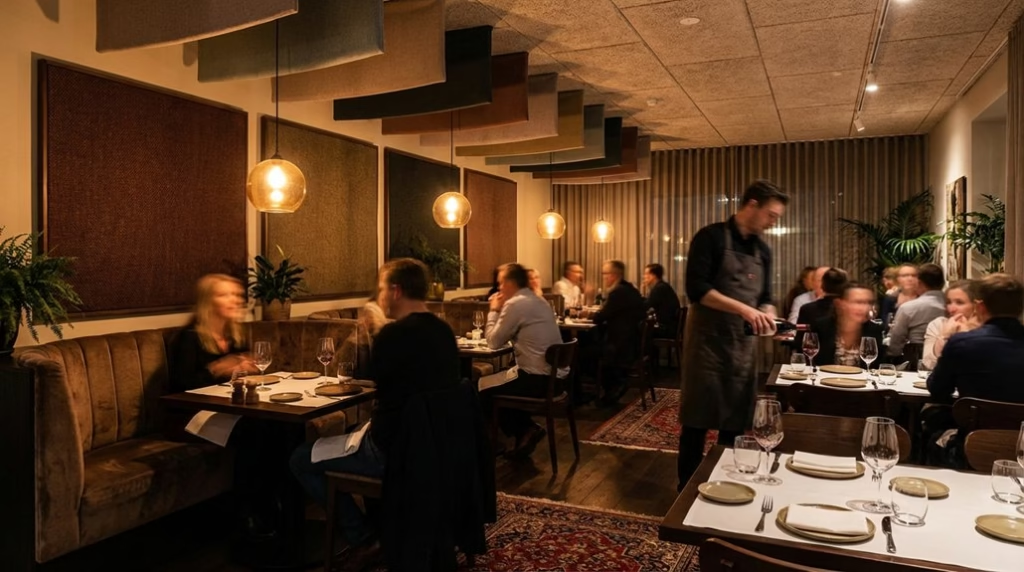
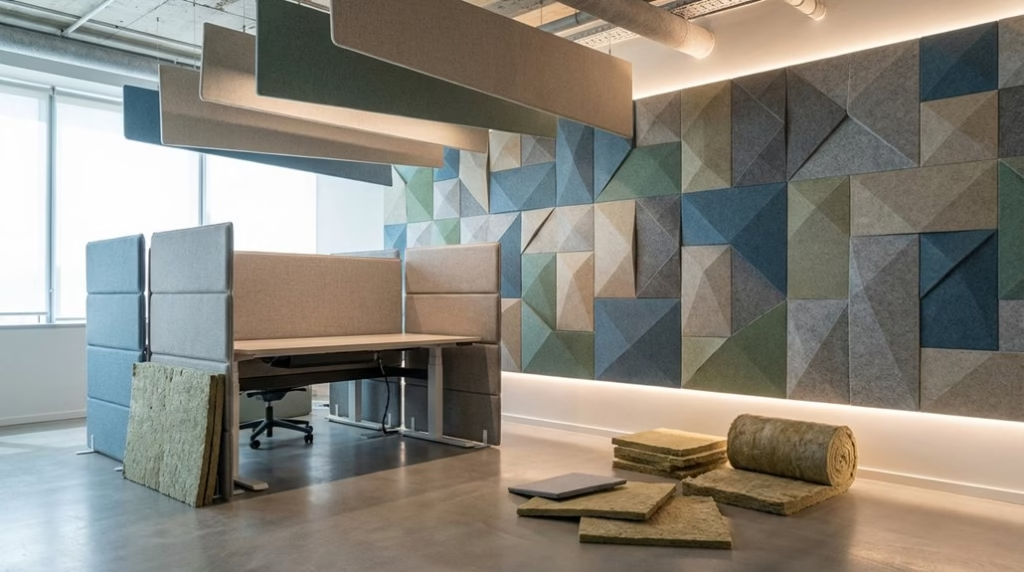
By contrast, acoustic foam and decorative panels are designed for acoustic treatment**, meaning they absorb reverberation** within a space but do little to stop sound from passing through a wall.
It’s also important to understand where the noise is entering and how it travels through the structure. For example, footsteps from an upstairs neighbor typically move through the floor and joist system before transferring into the ceiling below, so the most effective solution often involves ceiling soundproofing rather than just treating a wall.
Another common mistake is only treating part of the surface. In most cases, partial wall coverage delivers minimal sound reduction. To meaningfully reduce transmission, mass-based soundproofing systems usually need full-wall coverage and a professionally planned assembly.
At Total Home Interiors, we help homeowners and businesses throughout West Orange, Hoboken, Jersey City, and the greater NYC area determine whether the issue calls for true soundproofing, acoustic treatment, or a combination of both—so the solution matches the problem from the start.
Do You Need to Remove Drywall?
Once you’ve identified the problem as mostly airborne noise—such as voices, TV sound, or general neighbor noise—the next step is determining whether the wall actually needs to be opened.
In many cases, it does not. A professional existing wall inspection can confirm whether the current assembly is intact and suitable for a non-destructive soundproofing upgrade.
A professional wall inspection can often confirm whether effective soundproofing is possible without opening the wall.
This is where many DIY approaches fall short. Acoustic foam, blankets, and decorative panels may help reduce echo within a room, but they do very little to stop sound from traveling through a wall.
For true soundproofing, the focus needs to be on adding mass, improving coverage, and addressing weak points across the entire surface.
One common solution is adding a second layer of drywall as part of a properly designed wall soundproofing system.
Adding Green Glue between drywall layers can further improve sound isolation by damping vibration and converting sound energy into heat.
If mass-loaded vinyl is used, it must be installed with continuous coverage and sealed seams using MLV tape.
Small patches or partial sections typically won’t deliver meaningful results.
If the noise includes vibration, impact, or structure-borne transfer, the strategy changes.
In those cases, vibration source mapping is important because the issue may involve framing, floor or ceiling connections, or mechanical transmission paths.
When that happens, drywall removal may be necessary to allow for decoupling methods or other advanced sound isolation techniques.
At Total Home Interiors, we help homeowners across West Orange, Hoboken, Jersey City, and the greater NYC area determine the right solution before unnecessary demolition begins—so the result is quieter, more private, and built to perform.
Add Mass to Soundproof a Wall
If your goal is to reduce airborne noise like voices or TV through a shared wall, adding mass is one of the most effective strategies. Rather than relying on acoustic foam or decorative panels—which are designed to improve sound quality inside a room, not stop sound transfer—a proper soundproofing upgrade focuses on building a heavier, more airtight wall assembly.
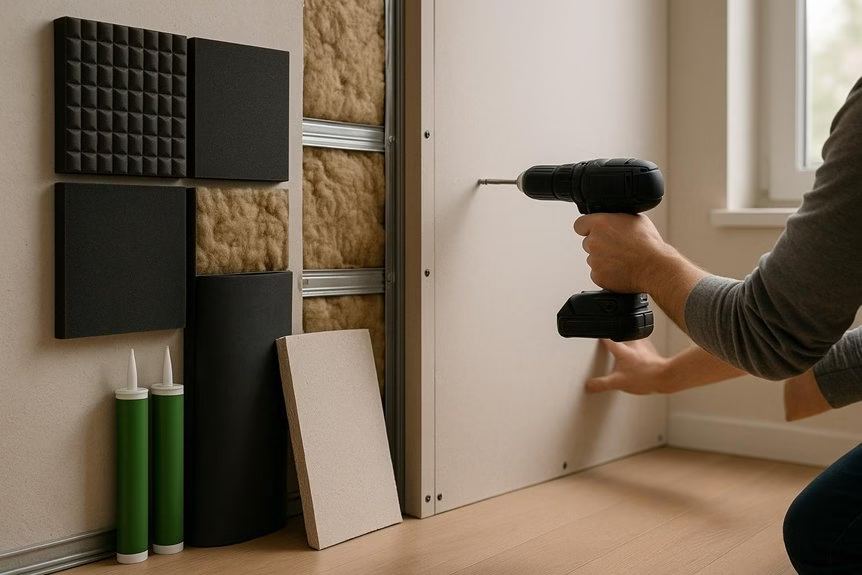
A common approach is adding a second layer of drywall over the existing wall to increase mass and improve isolation. For better performance, 5/8-inch drywall typically outperforms 1/2-inch drywall because of its added density.
In more demanding applications, mass-loaded vinyl can also be incorporated as part of the wall system to further improve sound blocking. Using Mass Loaded Vinyl behind added drywall can be especially helpful for reducing harder-to-control low-frequency sound.
For best results, mass-loaded vinyl should be installed continuously across the wall surface, with all seams properly sealed. Any weak point can allow noise to pass through, which is why airtight detailing around edges, outlets, baseboards, and trim is essential.
In many cases, the highest-performing solutions combine multiple elements—such as added drywall, soundproofing membranes, and precision sealing—rather than a single material alone.
Because real soundproofing performance depends on the full wall assembly, professional evaluation and installation often make the difference between a minor improvement and a meaningful reduction in noise. Total Home Interiors designs and installs custom soundproofing solutions throughout West Orange, NJ and the Tri-State area for homeowners and commercial spaces looking for lasting relief from unwanted noise.
Why Foam Won’t Soundproof a Wall
That same focus on mass is why acoustic foam won’t soundproof a wall. Foam panels are designed to improve acoustics inside a room by absorbing echo and reverberation, but they don’t meaningfully block voices, TV noise, or street sound from passing through a wall. For true soundproofing, you need assemblies that add mass and reduce vibration transfer.
Applying foam to existing drywall adds very little weight, so the sound-blocking benefit is minimal. While foam panels can reduce echo and improve clarity inside a room, they are not a substitute for real wall soundproofing. Blankets, soft panels, and similar DIY materials work the same way—they may slightly reduce reflections, but they won’t solve real noise transfer.
Sound also escapes through flanking paths and air gaps around the wall, which surface treatments alone can’t address.
For homeowners and businesses in West Orange, Hoboken, Jersey City, and across the Tri-State area, effective soundproofing typically means full-coverage upgrades such as additional acoustic drywall, mass-loaded vinyl, or professionally designed wall assemblies. Total Home Interiors helps clients choose solutions that are built to control noise at the source, not just mask the symptoms.
Decouple a Ceiling for Footsteps
When footstep noise is the problem, the issue usually isn’t airborne sound alone. It’s structural vibration traveling through the floor assembly, into the joists, and through the ceiling below.
In these cases, simple add-ons rarely deliver meaningful results. Adding a thin layer of drywall or relying on absorptive materials may help only marginally, because the structure is still carrying the impact energy.
To significantly reduce footstep noise, the ceiling typically needs mechanical isolation.
A professionally installed sound isolation clip and hat channel system helps separate the finished ceiling from the framing above, reducing the direct path for vibration transfer. That break in the structure improves damping and gives the assembly a far better chance of limiting impact noise in the room below.
Adding insulation such as rockwool or fiberglass between ceiling joists can further improve absorption within the assembly.
While resilient channel can offer some improvement, clip-and-channel systems generally perform better for footfall issues when designed and installed correctly.
If full decoupling isn’t part of the plan, expectations should remain modest. Partial measures and surface-level fixes rarely address the root cause of impact noise.
In many cases, the best results come from a comprehensive soundproofing strategy that may also include floor underlayment above, added mass, and assembly-specific detailing.
For homeowners in West Orange, Hoboken, Jersey City, and across the Tri-State area, Total Home Interiors designs professionally integrated ceiling soundproofing solutions that prioritize real performance over temporary DIY fixes.
Frequently Asked Questions
Can Soundproofing Reduce Noise From Shared Wall Electrical Outlets?
Yes, soundproofing can reduce noise coming through shared wall electrical outlets because sound often travels through gaps around the electrical box and inside the wall cavity.
The most effective approach is professional outlet and wall sealing using acoustic putty pads, acoustical caulk, and other code-appropriate sound-blocking materials.
In many homes and apartments, outlet noise is also a sign of broader sound leakage in the wall, so better results often come from a more complete soundproofing strategy that may include upgraded wall construction, added mass, or decoupling techniques.
These improvements may not eliminate sound entirely, but they can make a noticeable difference in privacy and everyday comfort.
How Much Does Wall Soundproofing Typically Cost per Square Foot?
Wall soundproofing typically costs about $10 to $30 per square foot, with premium systems and more complex construction often exceeding that range.
Pricing depends on the assembly being built, including material choice, wall size, access, and the existing structure.
While basic DIY approaches may start around $5 per square foot, professionally designed soundproofing solutions can reach $40 or more when higher-performance materials like mass-loaded vinyl, acoustic drywall, and decoupled wall systems are involved.
For homeowners and businesses dealing with persistent noise in West Orange, NJ, Hoboken, Jersey City, or NYC, professional soundproofing usually delivers more reliable results than surface-level fixes.
Will Soundproofing Materials Affect Room Temperature or Insulation Performance?
Yes—some soundproofing materials can have a minor effect on room temperature, but thermal improvement is usually a secondary benefit, not the main goal.
Acoustic panels generally offer minimal insulation value, while assemblies such as added drywall, decoupled walls, or mass-loaded vinyl may slightly improve thermal performance when professionally installed.
The bigger issue is making sure the full wall, ceiling, or window system is designed correctly, since gaps, poor sealing, and moisture buildup can reduce both sound control and energy efficiency.
For homeowners in West Orange, Hoboken, Jersey City, and NYC dealing with noise and privacy concerns, a professionally planned solution delivers far better long-term results than piecemeal DIY upgrades.
Can I Soundproof a Wall Without Making It Look Different?
Yes—it’s possible to soundproof a wall without noticeably changing its appearance, but the best results come from professionally designed solutions rather than surface-level DIY fixes.
At Total Home Interiors, we use discreet soundproofing methods such as acoustic panel systems concealed behind fabric, wallpaper, or paintable finishes, along with strategic insulation, gap sealing, and low-profile construction techniques.
Depending on the space, solutions may include premium materials like mass-loaded vinyl, acoustic drywall, or decoupled wall assemblies to reduce noise transfer while preserving the room’s design.
The result is a quieter, more comfortable space that still looks exactly the way you want it to.
How Long Does a Typical Wall Soundproofing Project Take?
A typical wall soundproofing project takes about one to three days for a standard room, although larger spaces or more advanced assemblies can extend the timeline.
At Total Home Interiors, we evaluate wall size, surface preparation, material layers, drying or curing time, and final cleanup before providing a realistic schedule.
Start dates can also depend on crew availability and project coordination.
Simpler acoustic panel installations move faster, while true soundproofing solutions—such as insulation, decoupling methods, mass-loaded vinyl, or additional acoustic drywall—require more time but deliver far better noise control for homes and businesses across West Orange, NJ and the Tri-State area.
Conclusion
Soundproofing a wall doesn’t have to mean gutting your space, but lasting results do depend on using the right strategy and the right materials. The most effective approach starts with identifying how sound is entering the room, then applying proven solutions like added mass, acoustic drywall, mass-loaded vinyl, and professional wall assembly upgrades rather than relying on foam products that don’t stop noise transfer. For structure-borne or impact noise, ceiling decoupling and related construction methods can significantly improve performance. At Total Home Interiors, we help homeowners and businesses across West Orange, NJ, Jersey City, Hoboken, and NYC create quieter, more comfortable interiors with custom soundproofing solutions designed for real-world noise problems and long-term peace of mind.