Demand a written acoustic treatment plan from your contractor that shows exactly how panels will be placed around doors, windows, vents, lighting, exit signs, and sprinkler heads. For office acoustic panel installation, that plan should include clear performance goals—often treating roughly 15 to 20 percent of the most reflective wall area in echo-prone spaces—and explain how the layout addresses speech clarity, reverberation, and day-to-day workplace comfort. A qualified contractor should identify key reflection points, avoid over-concentrating panels in one zone, use balanced spacing, and confirm proper mounting methods, surface preparation, ceiling clearances, and fire-code compliance. Just as importantly, they should clearly explain that acoustic panels improve sound quality and reduce echo, but they do not stop sound transfer the way true soundproofing construction does. At Total Home Interiors, we believe professional acoustic planning should always connect panel placement to measurable, real-world results for offices throughout West Orange, NJ and the Tri-State area.
Key Takeaways
- Ask for a detailed room-treatment plan that shows balanced acoustic panel placement around doors, windows, HVAC vents, lighting, exit signage, and other architectural features, so the finished office looks professional and performs as intended.
- Require clear acoustic performance goals for the noisiest areas, including treatment of roughly 15–20% of reflective wall surface where echo and speech distraction are most noticeable.
- Insist your contractor identify key wall and ceiling reflection points, address parallel surfaces, and evenly distribute panels to reduce flutter echo and improve day-to-day speech clarity.
- Request documented installation details covering mounting methods, panel spacing, mounting height, surface preparation, and coordination with sprinklers, piping, recessed fixtures, and ceiling systems.
- Expect post-install verification that confirms lower reverberation and better intelligibility, while making sure the contractor clearly explains that acoustic panels improve sound quality inside the room—they do not replace true soundproofing for blocking noise transfer.
What Should a Good Acoustic Panel Installation Plan Include?
A good acoustic panel installation plan should include a written room-treatment map that shows balanced panel placement around doors, windows, vents, lighting, and exit signage.
A written room-treatment map ensures balanced acoustic panel placement around doors, windows, vents, lighting, and required exit signage.
For the best results, the plan should also define clear performance targets, such as treating 15–20% of wall area in the noisiest zones and tying that coverage to echo-reduction goals for the space.
Your checklist should outline mounting methods, surface preparation, fire-safety clearances, and ceiling restrictions near sprinklers and fixtures.
It should also note recommended panel height and spacing so treatments are positioned effectively rather than clustered too tightly.
In many offices, conference rooms, restaurants, and media spaces, prioritizing parallel wall surfaces first helps reduce standing-wave issues and improve overall clarity.
The plan should also identify primary reflection points on walls and ceilings so panels are placed where they will most effectively reduce echoes and improve speech clarity.
For occupied homes or businesses, the plan should address finish protection, installation scheduling, and post-install verification.
A professional follow-up ensures the acoustic treatment performs as intended and confirms measurable improvements in reverberation control, speech intelligibility, and comfort.
For homeowners and businesses in West Orange, NJ, Jersey City, Hoboken, and NYC, working with an expert like Total Home Interiors helps ensure the installation is both visually refined and acoustically effective.
What Won’t Acoustic Panels Fix?
Acoustic panels improve how a room sounds, but they don’t soundproof a space. They reduce echo, ringing, and harsh reflections from surfaces like drywall, glass, and concrete, which makes speech clearer and rooms more comfortable.
What they don’t do is stop noise from entering or leaving through walls, ceilings, doors, windows, or construction gaps.
What acoustic panels won’t fix:
- They won’t block outside noise like traffic, HVAC rumble, or loud neighbors coming through the building structure.
- They won’t replace true soundproofing systems such as added drywall, decoupled construction, mass-loaded vinyl, or other isolation methods.
- They won’t add the mass needed to prevent sound transfer between adjacent rooms.
- They won’t change the difference between absorption and isolation—high NRC ratings mean better echo control, not true sound blocking.
- Effective noise isolation usually requires a combination of added mass, decoupling, and absorption rather than just acoustic panels.
For homeowners and businesses in West Orange, Hoboken, Jersey City, and the greater NYC area, this distinction matters. If your goal is better speech clarity and less echo, acoustic panels are an excellent solution.
If your goal is peace and quiet from street noise, neighbor noise, or lack of privacy, you need a professionally designed soundproofing approach. Total Home Interiors helps clients identify the right solution for both room acoustics and real noise control.
How Much Acoustic Panel Coverage Do You Need?
For most offices, a noticeable reduction in echo typically begins when acoustic panels cover about 15–20% of the wall area being treated.
As a starting point, measure the total surface area you want to address and use that number to estimate the amount of acoustic treatment needed.
This approach helps you plan more accurately and avoid under-treating the space or investing in more material than necessary.
Panel placement matters just as much as panel quantity.
Strategic panel placement is just as important as overall coverage when improving a room’s acoustic performance.
In many cases, distributing acoustic panels across the room delivers better results than clustering them in one area, because broader coverage helps control reflections more effectively.
Using the mirror technique can also help identify primary reflection points so panels are placed where they will have the greatest acoustic impact.
It’s also important to avoid leaving opposing parallel walls untreated, since that can contribute to flutter echo and other acoustic issues.
If budget is a concern, treatment can often be phased in over time as part of a larger acoustic improvement plan.
Just as important, acoustic panels improve sound quality within a room—they don’t block outside noise or prevent sound from passing through walls.
If your goal is soundproofing for speech privacy, neighbor noise, or street noise, that typically requires a different construction-based solution.
At Total Home Interiors, we help homeowners and businesses across West Orange, Hoboken, Jersey City, and the greater NYC area determine whether they need acoustic treatment, soundproofing, or a combination of both.
Which Areas Should Get Acoustic Panels First?
A smart way to prioritize acoustic panels is to start where poor sound quality most disrupts daily use—typically open-plan offices, conference rooms, reception areas, and other spaces where speech clarity matters most. These are often the first places where professional acoustic treatment delivers a noticeable improvement in comfort, focus, and communication.
- Begin with the noisiest, most conversation-heavy areas first.
- In hard-surfaced rooms, prioritize walls facing desks, seating groups, and main speech paths.
- Use a professional site survey to identify ceiling treatment priorities, parallel-wall echo risks, and any low-frequency control needs.
- Start with roughly 15–20% wall coverage, then expand treatment evenly throughout the room as needed.
Avoid common soundproofing misconceptions: effective acoustic treatment doesn’t mean covering every surface, and panels should never be grouped on just one wall or corner. If parallel walls are left untreated, flutter echo and lingering reverberation can remain, reducing speech intelligibility and overall comfort.
For the best results, Total Home Interiors designs acoustic panel layouts based on the specific room, finishes, and performance goals—delivering cleaner sound without guesswork or over-treatment. In spaces where outside noise is also a concern, contractors should distinguish acoustic panels from isolation measures that improve STC ratings in walls, floors, and ceilings.
Will Panels Clear Lights and Sprinklers?
Panel placement has to do more than improve acoustics—it also has to respect lights, sprinklers, and the rest of the ceiling layout. Before ordering acoustic ceiling panels, confirm clearance requirements so nothing interferes with sprinkler heads, piping, lighting, or fire safety coverage. In many residential and commercial projects across New Jersey and NYC, flush-mount ceiling treatments can help reduce conflicts early in the design process.
Lighting coordination matters too. Panel locations should be mapped against recessed lights, troffers, exit signs, soffits, and ceiling drops to avoid blocked light output, difficult rework, or code concerns later. For suspended acoustic clouds or other ceiling treatments, review suspension height, grid alignment, manufacturer cutout requirements, and sprinkler clearance so spray patterns and service access remain protected. Acoustic panels can also improve sound quality by absorbing mid- and high-frequency reflections as part of a broader acoustic treatment strategy.
At Total Home Interiors, we plan acoustic solutions with the full ceiling environment in mind, helping homeowners, offices, and commercial spaces throughout West Orange, Hoboken, Jersey City, and the Tri-State area achieve better sound control without compromising safety, function, or finish quality.
How Should Acoustic Panels Be Installed and Spaced?
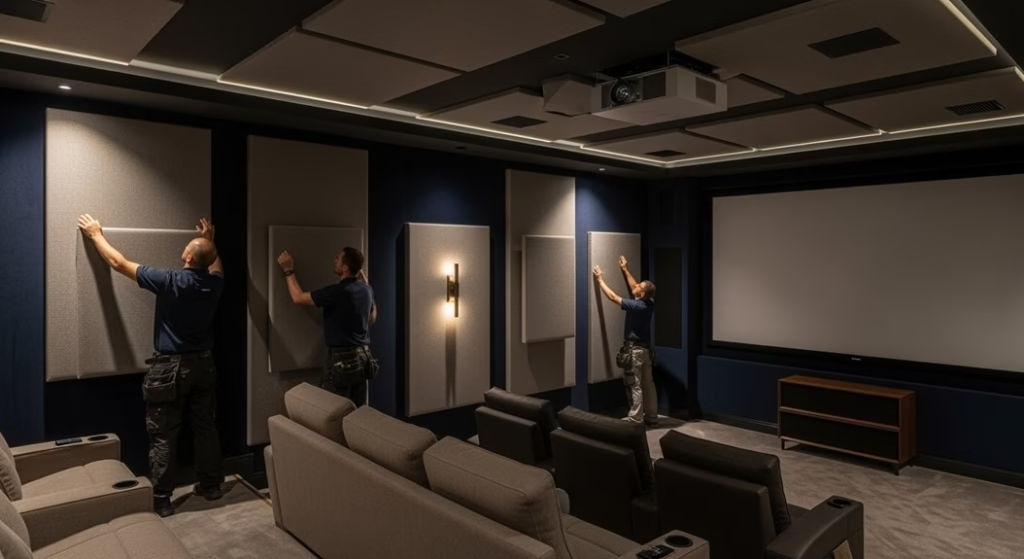
When acoustic panels are installed, they should be laid out symmetrically and aligned with real architectural features like windows, doors, vents, lighting, and exit signs so the room feels intentional and the acoustic treatment performs evenly. At Total Home Interiors, we focus on even coverage, balanced panel spacing, and a professional design plan rather than clustering panels in one area and hoping for the best.
Acoustic panels should be placed symmetrically and aligned with architectural features to create a balanced, intentional look and more even sound control.
- Panels should be distributed across the wall surface instead of packed tightly together. Leaving space between panels increases exposed edge area, which can improve acoustic performance while creating a cleaner, more architectural look.
- Consistent spacing matters. In many rooms, gaps of roughly 6 inches work well, though final spacing should always be based on the room’s dimensions, use, and design goals.
- Placement height should be coordinated with the room layout and furnishings. A common guideline is to start around 12–14 inches above finished floor while maintaining at least 6 inches of clearance from the floor.
- Opposing parallel walls should both be addressed when needed to reduce flutter echo and improve overall sound balance, especially in smaller rooms, offices, media spaces, and conference areas.
A well-designed acoustic panel layout should also look visually uniform. Random spacing, inconsistent heights, or leaving key reflective surfaces untreated often leads to uneven acoustic results and a space that feels unfinished. Proper placement at first reflection points can further improve sound control and speech clarity in offices and shared spaces.
That’s why professional acoustic planning is so important—especially in homes and commercial spaces throughout West Orange, NJ, Hoboken, Jersey City, and NYC, where both performance and appearance matter.
Frequently Asked Questions
How Much to Charge to Fit Acoustic Panels?
Professional acoustic panel installation is typically priced per panel or per square foot, with labor costs increasing for ceiling applications, complex layouts, precise cutouts, surface preparation, or seamless designer finishes.
For smaller projects, a per-panel quote often makes the most sense, while larger rooms are usually estimated with a clear line-item proposal and installation timeline.
At Total Home Interiors, we recommend evaluating the room as a whole, since noticeable echo reduction often begins when roughly 15–20% of the wall or ceiling area is properly treated.
For homeowners and businesses in West Orange, NJ, Jersey City, Hoboken, and NYC, professional acoustic treatment delivers a more refined and effective result than a DIY approach—especially when appearance, performance, and long-term durability matter.
What Do I Need to Install Acoustic Wall Panels?
Installing acoustic wall panels typically requires the right mounting method—such as adhesive, screws, impaling clips, or other manufacturer-approved hardware—along with basic tools like a tape measure, level, stud finder, drill, and a clear layout plan.
Before installation, measure the wall carefully, identify outlets, vents, and obstructions, and clean the surface so panels can be positioned properly.
Panel placement, mounting height, spacing, and the amount of wall coverage all affect the final acoustic result, so material selection and NRC ratings should be reviewed in advance.
For the best performance in a home office, media room, restaurant, or commercial space, professional design and installation can help ensure your acoustic panels not only look refined, but also solve echo and sound-quality issues effectively.
How to Calculate Where to Put Acoustic Panels?
Calculate acoustic panel placement by evaluating room size and identifying the primary reflection points where echo is most noticeable.
In most spaces, effective acoustic treatment starts with strategic coverage rather than simply filling empty wall space.
Panels should be distributed thoughtfully across the room, with attention to balance around windows, doors, and architectural features, while addressing at least one surface in each parallel wall pair to help reduce flutter echo.
Ceiling-mounted treatment may also be recommended when wall space is limited or when additional echo control is needed.
For the best results, Total Home Interiors recommends a professional acoustic assessment to determine the right panel quantity, placement, and design for your specific space.
Conclusion
When you insist on a clear installation plan, realistic performance expectations, the right panel coverage, strategic placement, and proper spacing, your acoustic panel project delivers results you can actually hear. Conference rooms become easier to meet in, open offices feel less distracting, and noisy corridors stop spilling sound into nearby work areas. That’s the difference professional acoustic treatment makes. At Total Home Interiors, we approach acoustic panels as part of a larger sound-control strategy for offices and commercial spaces throughout West Orange, NJ and the Tri-State area, helping clients achieve cleaner sound, better focus, and a more comfortable environment than DIY fixes can provide.