To cut upstairs voices and footfall, target both airborne and impact noise. Use decoupling with resilient channels, then add double 5/8″ drywall with Green Glue between layers for damping. Pack the ceiling cavity with mineral wool for absorption. Make certain installers avoid short-circuiting channels with screws into joists. For quick relief, ask neighbors for rugs and pads, and log issues for building management. DIY fixes start under $100; pro installs run $9k–$12k. Next, you’ll see how to choose and sequence these steps.
Key Takeaways
- Use resilient channels with double 5/8″ drywall to decouple the ceiling and add mass, significantly reducing airborne and impact noise.
- Apply Green Glue between drywall layers to damp vibrations, boosting STC by roughly 10–15 points when combined with added mass.
- Install acoustic insulation (mineral wool or fiberglass) in the joist cavity to absorb airborne noise before closing with drywall.
- Treat impact noise at the source when possible: recommend upstairs underlayment, carpets, and pads to curb footfall transmission.
- Hire experienced contractors; ensure proper channel installation, no screw short-circuits, sealed perimeters, and request multiple quotes and timelines.
Understanding Airborne vs. Impact Noise
Before you choose any soundproofing, know the difference between airborne and impact noise. Airborne noise rides through the air—voices, music, TV—while impact noise starts with physical contact: footsteps, dragging chairs, dropped items.
You’ll hear impact noise as thuds because sound vibrations travel through joists and slabs. To start reducing sound from above, match solutions to the source. Use sound absorption—like acoustic panels or insulation—to tame airborne noise in the room below and improve noise reduction.
Hear thuds from above? Target impact noise at the source, absorb airborne in the room below.
For impact noise, prioritize treatments at the source when possible, such as underlayments that cushion floor impacts. It’s harder to block because it moves through structure.
In multi-story homes, combine strategies that address both airborne noise and impact noise for thorough soundproofing results. For the most effective isolation, consider wall decoupling techniques used in professional soundproofing, since separating structures reduces vibration transfer.
Core Principles: Decoupling, Absorption, Mass, and Damping
Now that you can spot airborne vs. impact noise, anchor your plan on four core principles that control how sound moves: decoupling, absorption, mass, and damping.
Decoupling breaks the direct path for vibrations by separating framing layers, so strikes from upstairs don’t pass straight through.
Absorption uses fiberglass or acoustic panels to trap energy in cavities and reduce noise that bounces around the room.
Mass adds heft—extra drywall or dense barriers—so fewer sound waves penetrate your soundproof ceiling.
Damping with compounds like Green Glue turns vibration into heat, shrinking the signal before it escapes.
Combine these methods. Decouple to fight impact noise, absorb to tame airborne sound, add mass to block transmission, and apply damping to kill resonance.
Integrated correctly, they reduce noise dramatically.
To quantify results, aim for an STC 55–60 ceiling assembly by combining decoupling, dense insulation, added mass, and Green Glue damping.
Resilient Channels With Double Drywall
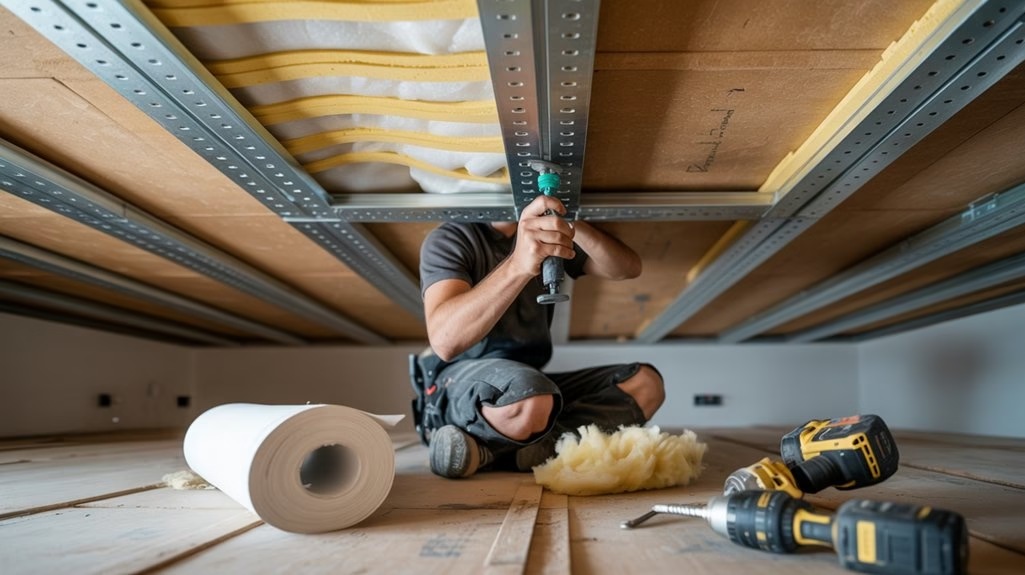
Although no single upgrade solves every noise problem, resilient channels paired with double drywall come close by combining decoupling and mass in one system. You install resilient channels—flexible metal strips—across ceiling joists, then mount double drywall to those channels. This breaks the direct path of vibration, cutting sound transmission from upstairs neighbors while the added mass blocks airborne and impact noise. Expect a meaningful noise reduction: when properly designed, this assembly can boost STC by about 10–15 points. Success hinges on precise layout. Keep channels straight, spaced per manufacturer specs, and fasten drywall only to the channels—never into joists—or you’ll short-circuit isolation. Because details matter, professional installation is often worth it to maximize soundproofing performance and avoid costly rework. For even better results, apply a damping compound like Green Glue between the drywall layers, which can reduce sound transmission by more than 20 decibels and further raise the assembly’s STC.
Green Glue Noiseproofing Applications
Even without a full remodel, Green Glue Noiseproofing Compound lets you make a big dent in sound transfer by damping vibration between two drywall layers.
You’ll spread Green Glue over a new sheet, screw it to the existing ceiling, and let the viscoelastic layer convert sound energy into heat. That damping helps absorb sound from both airborne sources and impact noise, so you reduce the noise your upstairs neighbors send into the sound within your space.
A single tube covers roughly 16 square feet and costs about $20, keeping your soundproofing budget in check. For best performance, add mass with another drywall layer and pair it with previous methods. Using Green Glue between drywall layers can significantly boost STC ratings, and pairing it with resilient channels further reduces structural sound transmission.
1) Hear your room exhale.
2) Feel nightly peace return.
3) Reclaim control over quiet.
Drop Ceilings With Acoustic Tiles
For many apartments, a drop ceiling with acoustic tiles offers a practical way to hush upstairs noise without tearing into the structure. You’ll suspend a metal grid below the original ceiling and set acoustic tiles into it, creating a secondary barrier that helps reduce noise from neighbors.
These tiles act like soundproofing panels, absorbing sound waves and trimming both airborne chatter and impact noise from footsteps.
Acoustic tiles absorb sound, softening airborne chatter and dulling the thump of upstairs footsteps.
A drop ceiling works best when the grid is level, sealed at the perimeter, and decoupled from joists where possible. Professional installation guarantees proper spacing, tile density, and alignment for maximum results, though skilled DIYers can tackle smaller rooms.
Keep in mind: this system lowers ceiling height, so measure carefully to confirm you can reduce noise without cramping the space.
For added isolation, consider pairing a drop ceiling with resilient channels or sound isolation clips to further decouple surfaces and reduce structure-borne sound.
Acoustic Insulation and Mineral Wool Strategies
Pair that suspended grid with what’s inside the cavity: acoustic insulation, especially mineral wool. You’ll tame sound waves before they hit your ceiling panels and travel into the room.
Mineral wool absorbs airborne chatter and dulls impact noise from footsteps, reducing the noise that leaks through. Increase density and thickness to target low-frequency rumbles, then seal every penetration with acoustic caulk to lock in performance. Adding resilient channels decouples the ceiling from framing, significantly improving sound isolation and boosting STC ratings.
Here’s how you’ll feel when the ceiling works for you:
1) Relief: conversations fade, thuds soften, and evenings calm down.
2) Control: a measurable drop—up to 50% with complementary soundproofing—restores quiet.
3) Comfort: thermal insulation boosts efficiency while hush returns.
Fit mineral wool snugly between joists, avoid gaps, and couple it with resilient channels or upgraded ceiling panels for a reliable, balanced system.
Working With Building Management and Neighbor Collaboration
While materials tame noise, your first allies are people: management and neighbors.
Start by documenting the noise problem—note dates, times, type, and how noise from upstairs affects sleep or work. Submit a formal report when working with building management; include logs, recordings if allowed, and steps you’ve already taken in collaboration with neighbors.
Document dates, times, and impacts. File a formal report with logs, recordings, and neighbor-collaboration steps.
Approach neighbors calmly. Explain the impact noise you’re hearing and ask if they’ll try area rugs, carpet pads, or felt feet under furniture. Small changes often reduce thumps and dragging sounds.
When you meet management, frame solutions around building-wide benefits. Emphasize that quieter homes raise tenant satisfaction and can boost property value.
If you plan to soundproof your apartment, discuss approved options and highlight how high-quality soundproofing can reduce complaints for the entire property.
In shared urban buildings, referencing data on 85 dBA traffic noise and intermittent construction spikes can help management understand external factors that exacerbate indoor disturbances and justify proactive soundproofing.
Budget, Timeline, and Professional Installation Considerations
Even a solid plan can derail without clear expectations for cost, time, and who does the work. Set a budget early: DIY stopgaps can run under $100, while professional installation for a fully soundproof ceiling often reaches $9,000–$12,000, especially with systems like MuteClip Ceiling Gold.
Align your timeline too—contractors may need a few days to several weeks, depending on scope and access. Expect disruption; plan furniture moves and work hours. Professionals also provide warranties that protect workmanship and materials, which DIY lacks, and help ensure compliance with New Jersey noise ordinances.
1) Relief: Imagine calmer evenings when impact noise fades after a precise decoupling job.
2) Control: Multiple quotes from contractors give cost clarity and protect your budget.
3) Confidence: Choose pros experienced with your building type for reliable results.
Ask about decoupling, added mass, and scheduling. Prioritize professional installation when impact noise is severe.
Frequently Asked Questions
How Do I Soundproof My Ceiling so That I Don’t Hear My Upstairs Neighbors?
Start by adding ceiling insulation like rock wool to create a sound barrier and boost noise reduction.
Use construction techniques: mount resilient channels, apply Green Glue between double drywall, and decouple to reduce vibrating floors’ impact.
Install acoustic panels or acoustic-rated tiles to absorb echoes.
Choose dense soundproof materials for mass.
Seal gaps around fixtures.
If possible, ask neighbors to add rugs.
Together, these steps considerably cut airborne and impact noise from above.
How to Block Out Upstairs Neighbor Stomping?
Like rain on a tin roof, you’ll tame stomping by combining noise isolation and vibration reduction.
Add floor cushioning upstairs if possible; ask for rugs.
For your side, use soundproofing materials: rock wool, resilient channels, and double drywall.
Install acoustic panels or ceiling tiles for sound dampening.
Seal gaps with acoustic caulk.
Target fixtures and vents.
If access allows, add underlayment like MuteMat 2 above.
Layer solutions for the best results.
What Is the Most Effective Ceiling Soundproofing?
The most effective ceiling soundproofing combines mass, decoupling, and damping.
You add extra drywall or mass loaded vinyl for mass, use resilient channels to decouple, and apply vibration damping like Green Glue.
You’ll pack cavities with soundproof insulation and seal gaps.
For finished spaces, a drop ceiling with sound absorbing acoustic panels helps, but performs best when paired with insulation and damping.
Mix these layers for maximum reduction of impact and airborne noise.
How Do I Soundproof My House so That I Can’t Hear My Neighbour’s Footstep Upstairs?
You soundproof your home by combining soundproofing materials and layered soundproofing techniques.
Add ceiling insulation between joists, then decouple using resilient channels. Apply a vibration dampening compound between double drywall layers for stronger noise reduction.
Finish with dense acoustic panels or tiles. Seal gaps around fixtures and perimeter with acoustical caulk.
As practical home improvements, ask neighbors to use rugs or carpet. Together, these steps cut footfall noise dramatically.
Conclusion
You’ve mapped the noise like cartographers of sound—airborne whispers, impact thuds, and the four pillars: decoupling, absorption, mass, damping. With resilient channels, double drywall, Green Glue, tiles, and mineral wool, you’re building your own quiet Troy. Talk to management, enlist neighbors, plan the budget and timeline, and hire pros when it counts. Do this, and your ceiling won’t just block footsteps—it’ll lift the floor of your peace. Close the door; let the upstairs storms pass.