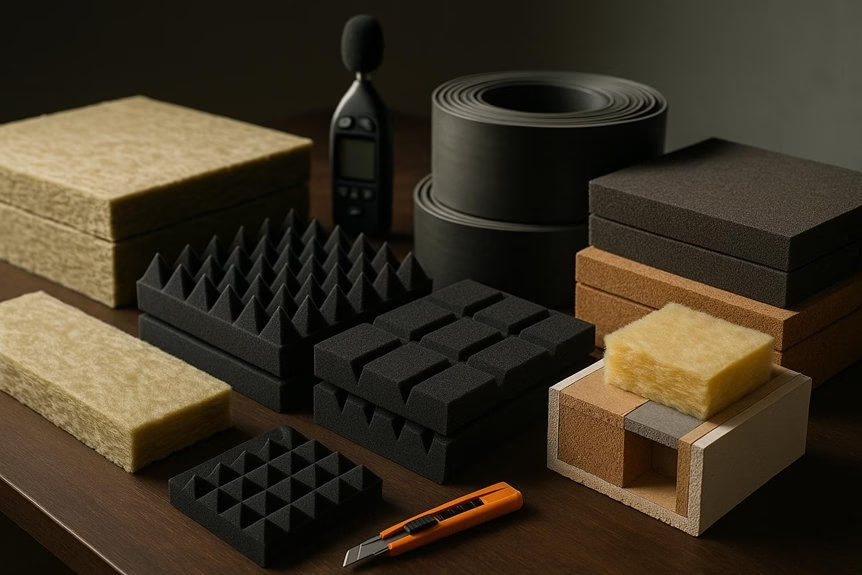
The best soundproofing results rarely come from a single product. In most homes and apartments, the best cost-to-performance upgrades are added mass with 5/8-inch acoustic or Type X drywall, professional acoustic sealant, mineral wool in wall or ceiling cavities, solid-core doors, and full perimeter sealing to stop air leaks. For more serious noise issues, higher-performance assemblies such as decoupled walls and ceilings or mass-loaded vinyl can make a major difference—especially in condos, brownstones, and urban homes dealing with neighbor or street noise.
It’s also important to know what won’t solve the problem: acoustic foam may reduce echo inside a room, but it does very little to stop sound transfer between rooms. For ceilings, professionally selected barriers above tile systems can help in some spaces; for windows, laminated glass and well-designed window treatments can improve comfort, privacy, and noise control depending on the room and the source of the sound.
The best value usually comes from identifying weak points first—gaps, doors, windows, and underbuilt walls—then designing the right layered solution. That’s where professional guidance matters. Total Home Interiors helps homeowners and commercial clients across West Orange, NJ, Jersey City, Hoboken, and the NYC area choose soundproofing solutions that are built for real performance, not trial-and-error DIY fixes.
Key Takeaways
- Layered 5/8-inch Type X acoustic drywall with professional acoustic sealant is one of the most effective cost-to-performance upgrades for reducing airborne noise through walls and ceilings, especially in apartments, condos, and townhomes where neighbor noise is a daily issue. At Total Home Interiors, we often pair added mass with decoupling strategies for stronger real-world results than basic DIY wall upgrades.
- Mineral wool insulation helps improve wall and ceiling assemblies by absorbing sound within cavities, but it performs best as part of a professionally designed soundproofing system that also includes added mass, damping, and structural isolation. This is a key consideration for homeowners in West Orange, Hoboken, Jersey City, and NYC dealing with thin shared walls or overhead noise.
- Acoustic caulk, firestop putty pads, and sealing gaps around outlets, baseboards, door frames, and window perimeters are low-cost improvements that can deliver meaningful soundproofing value. These details are often overlooked, yet even small air leaks can allow significant noise transfer, making expert installation especially important for high-performance results.
- Sound curtains and laminated glass can help reduce window noise from traffic, city activity, and nearby neighbors, but performance depends heavily on full coverage, proper sealing, and frame quality. For clients seeking better privacy, comfort, and convenience, Total Home Interiors can also integrate automated window treatments that complement acoustic improvements while enhancing light control and everyday living.
- Acoustic foam panels may help reduce echo and improve in-room acoustics, but they are not true soundproofing solutions and should not be confused with construction-based noise control. For meaningful noise reduction, premium assemblies such as acoustic drywall, mass-loaded vinyl, decoupled framing, and custom acoustic treatments offer far better performance for residential and commercial spaces.
Soundproofing vs. Sound Absorption
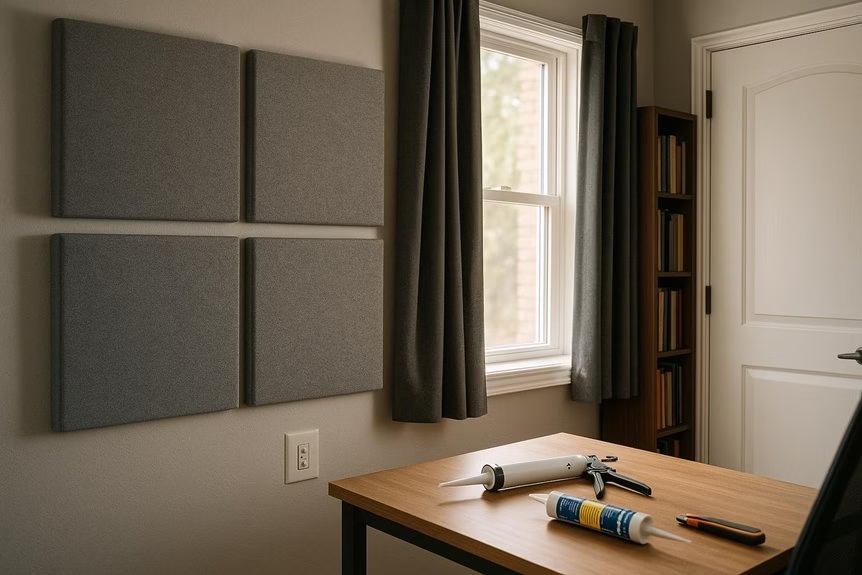
Confusion often starts here: soundproofing and sound absorption aren’t the same. Soundproofing is about stopping noise from traveling between rooms or from outside to inside. Absorption is about improving how a room sounds by reducing echo, harsh reflections, and ringing. That’s why foam panels may make a room feel calmer, but they’ll not stop traffic noise, neighbor voices, or TV sound coming through walls, doors, or ceilings.
Soundproofing blocks noise transfer; absorption improves room acoustics, but foam alone won’t stop sound coming through walls, doors, or ceilings.
You may also hear terms like airborne sound, impact sound, STC, and NRC. Airborne sound includes voices, music, and street noise traveling through the air. Impact sound comes from footsteps, dropped items, or movement through the structure. STC, or Sound Transmission Class, refers to how well a wall, ceiling, door, or floor assembly reduces airborne noise transfer. NRC, or Noise Reduction Coefficient, measures how much sound a material absorbs within a space. Materials like mineral wool insulation can help absorb sound waves while also improving low-frequency control within wall and ceiling assemblies.
For homeowners and businesses in West Orange, Jersey City, Hoboken, and across the Tri-State area, this distinction matters. If your goal is true privacy and quieter living, absorption products alone aren’t enough. Real soundproofing usually requires professionally designed solutions such as sealing gaps, upgrading wall or ceiling assemblies, adding mass-loaded vinyl, using acoustic drywall, or building decoupled structures to reduce sound leakage at seams, baseboards, and penetrations.
In many projects, the best outcome comes from combining soundproofing with acoustic treatment so the space is both quieter and more comfortable.
How to Choose Soundproofing Materials
When choosing soundproofing materials, focus first on the upgrades that deliver the greatest real-world improvement: added mass, airtight sealing, and reducing weak points where noise can leak through. In most residential and apartment soundproofing projects, layered 5/8-inch Type X drywall, professional acoustic sealant, and properly designed wall or ceiling assemblies will outperform piecemeal fixes.
Understanding STC ratings is important, but performance depends just as much on expert installation—because even small gaps can compromise the entire system. Effective sound isolation usually depends on combining mass, decoupling, and sound absorption rather than relying on a single product.
For walls, the best results come from a professionally built assembly using materials such as mass-loaded vinyl, RSIC-1 clips, damping compounds like Green Glue, and multiple drywall layers.
Poor design can create issues like triple-leaf resonance, which is one reason soundproofing is rarely as simple as adding one product.
Ceilings, doors, and windows should also be addressed as part of a complete strategy, since flanking noise often travels through these overlooked paths.
In apartments, condos, and homes throughout West Orange, Hoboken, Jersey City, and NYC, professionally installed door seal systems, window sealing solutions, and ceiling barrier upgrades can make a meaningful difference in privacy, sleep quality, and day-to-day comfort.
Cheap Soundproofing Materials That Work
If you want affordable soundproofing that actually makes a noticeable difference, focus first on professional air-sealing and added mass—not foam panels.
In many homes and apartments across West Orange, Hoboken, Jersey City, and NYC, sound leaks through small gaps at baseboards, window frames, seams, and electrical outlets.
Acoustic caulk and firestop putty pads can help reduce these weak points, and sealing gaps around the room is often one of the most cost-effective first steps.
Doors are another common failure point.
Doors are another common weak point, often allowing more sound transfer than homeowners expect.
Adding a door bottom and perimeter seals at the jamb or threshold is usually far more practical than replacing the entire door, and it can significantly reduce sound transfer through these openings.
For stronger results, added mass is key.
Assemblies using multiple layers of 5/8-inch Type X drywall or mass-loaded vinyl can improve isolation when specified and installed correctly.
For a budget-friendly upgrade, soundproof curtains can also help block outside noise when they extend beyond the window frame and reach the floor.
However, performance depends on the full wall, ceiling, or floor system—not just one product.
Improper layering can limit results, especially at lower frequencies.
That’s where Total Home Interiors adds value.
We design and install soundproofing solutions that address the real cause of noise transfer, whether it’s neighbor noise, street noise, shared walls, or privacy concerns in residential and commercial spaces.
Instead of trial-and-error DIY fixes, our team delivers customized acoustic solutions built for lasting performance.
Best Soundproofing Wall Materials
Just as important as material choice is proper sealing. Even small gaps at seams, perimeters, outlets, and baseboards can allow sound to pass through and weaken the performance of the entire wall.
That’s why professional soundproofing installations use permanently flexible acoustical caulk and fire-rated acoustical putty pads at electrical boxes and other penetrations to maintain both acoustic performance and code-conscious detailing.
Adding dense cavity insulation such as fiberglass or mineral wool can further improve wall performance by absorbing sound energy and helping the assembly move closer to STC 55–60 targets.
In real-world homes and commercial spaces across West Orange, Hoboken, Jersey City, and NYC, the best wall soundproofing approach depends on the type of noise you’re dealing with—voices, TV sound, street noise, or impact transfer.
In many cases, a professionally designed system starts with double drywall, then adds decoupling, damping, or MLV as needed for the space and performance goals.
For homeowners and businesses looking for lasting quiet, the best results come from a custom soundproofing solution rather than a one-size-fits-all DIY fix.
Best Ceiling Soundproofing Materials
Because ceiling assemblies often leak more sound than most people expect, the best ceiling soundproofing materials are the ones that reduce sound transfer through the full assembly, including the ceiling grid, tiles, light openings, and other penetrations, not foam products that only soften echo within the room.
In many homes, condos, apartments, and commercial spaces across West Orange, Hoboken, Jersey City, and NYC, suspended ceilings become a major privacy weak point if they aren’t properly treated.
For drop ceilings, the smartest first step is usually addressing the hidden leak paths above and around the tile system before moving into larger construction upgrades.
Using isolation clips above the ceiling plane can further reduce structure-borne vibration transfer and improve overall sound isolation performance.
- PrivacyShield® Ceiling Tile Barriers (2×2) install over existing ceiling tiles to help reduce sound leakage through the ceiling plane, approximately $269.99.
- Signature Sound Barrier Ceiling Tiles replace standard tiles with higher-performing sound-control options, with listings starting around $46.99 per tile.
- PrivacyShield® Light Hood helps limit sound leakage around recessed lighting and similar ceiling penetrations.
- Ceiling sealants and barrier-based strategies are essential for sound isolation, while acoustic foam is generally intended for echo control, not true soundproofing or privacy.
If your goal is strong cost-to-performance, improving the ceiling assembly above the tiles is often one of the most effective places to start.
A professionally planned ceiling soundproofing approach can reduce noise transfer with less disruption than a full wall rebuild, while delivering better privacy, comfort, and day-to-day livability.
Best Floor and Window Soundproofing
While ceilings often get the most attention, floors and windows are often major paths for unwanted noise—especially in apartments, condos, and urban homes throughout New Jersey and NYC. Impact vibration from footsteps above and small perimeter gaps around window frames can significantly reduce comfort, privacy, and sleep quality if left unaddressed.
For floors, professional soundproofing typically begins with a properly specified acoustic underlayment installed above the subfloor and below the finished flooring. Just as important, floor perimeters must be carefully detailed and sealed so impact isolation isn’t compromised by flanking noise at the edges. In multifamily homes, this type of system can make a meaningful difference in reducing footstep and structure-borne noise between levels.
For windows, the process should begin with identifying the true source of leakage—whether it’s air gaps, poor seals, frame issues, or glass limitations. From there, targeted sealing and acoustic upgrades can help reduce street noise, neighboring activity, and other exterior disturbances. In many cases, laminated glass can significantly dampen sound vibrations and improve traffic noise reduction when used in the right window assembly. For homes needing a higher level of performance, laminated acoustic glass or interior secondary window systems can provide added mass and damping, though the right solution depends on the existing frame, building conditions, and noise profile.
Because floor and window soundproofing performance depends heavily on installation quality, assembly design, and surrounding construction, professional evaluation is essential. Total Home Interiors designs and installs customized soundproofing solutions for homeowners across West Orange, Jersey City, Hoboken, and the greater Tri-State area—helping create quieter, more private interiors without relying on one-size-fits-all DIY fixes.
Best Doors for Soundproofing
Doors are often one of the biggest weak points in a soundproofing system. Lightweight hollow-core doors and unsealed perimeter gaps allow noise to pass easily between rooms, reducing privacy and making it harder to create a quieter home or workspace.
For stronger sound isolation, a solid-core door is a far better choice. Its added mass helps block airborne noise more effectively than standard interior doors. Because solid-core doors are heavier, professional installation may also require upgraded hinges and longer screws anchored securely into the frame.
- Replace hollow-core doors with solid-core models for better sound isolation
- Add acoustic door hardware to improve alignment and closure pressure
- Install perimeter seals and door bottoms to reduce sound leaks at the edges
- Consider advanced sealing strategies when both noise control and draft reduction are priorities
If a full door replacement isn’t practical, a professional-grade soundproof door seal kit can still make a meaningful difference. Components such as automatic door bottoms, jamb seals, and acoustic thresholds help close the air gaps that let sound bypass even heavy door materials. Adding a door sweep or draft stopper can further reduce sound transmission through the gap at the bottom of the door.
For the best results, Total Home Interiors recommends professionally selected and installed door soundproofing solutions as part of a broader acoustic plan for the home or office.
Which Soundproofing Material Is the Best Value?
For most soundproofing projects, the best value comes from addressing the biggest weak points first: air leaks and lightweight wall or ceiling assemblies. Even small gaps around outlets, baseboards, door jambs, and penetrations can undermine an otherwise solid noise-control plan, which is why professional air sealing is often the most cost-effective first step. A permanently flexible acoustical sealant can make a meaningful difference before more advanced materials are added.
For wall soundproofing, one of the strongest value-driven upgrades is adding multiple layers of 5/8-inch drywall with fully sealed seams as part of a properly designed assembly. This approach can significantly improve performance, especially when paired with proven decoupling methods and the right material sequence.
In higher-performance applications, solutions such as mass-loaded vinyl, isolation clips, and damping compounds can deliver stronger results—but only when specified and installed correctly. DIY installations can reduce upfront costs, but professional installation often delivers more consistent long-term performance and fewer errors.
That’s where professional design matters. At Total Home Interiors, we help homeowners and commercial clients across West Orange, NJ, Hoboken, Jersey City, and the greater NYC area choose the right soundproofing strategy for their space, whether the goal is blocking neighbor noise, reducing street sound, or improving privacy in offices, studios, and multi-use rooms.
Frequently Asked Questions
Can Soundproofing Materials Reduce Echoes and Improve Room Acoustics Too?
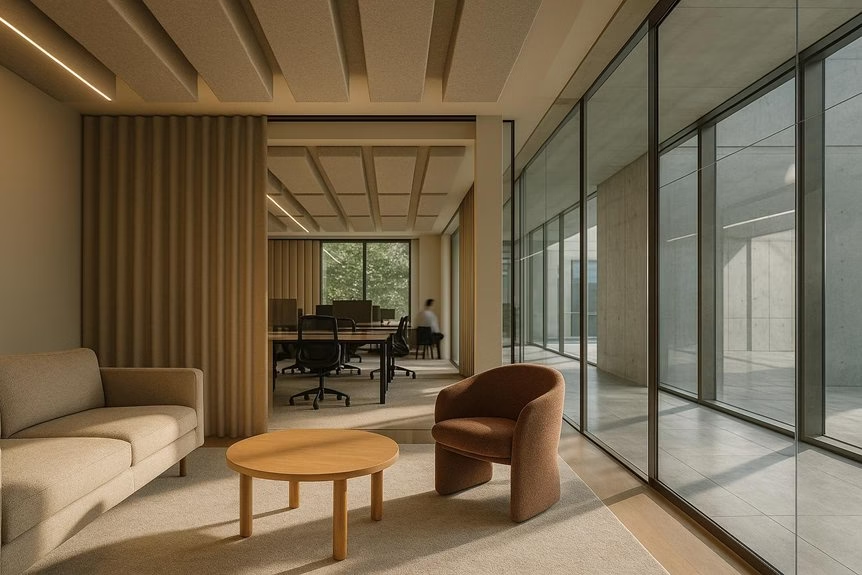
Yes—acoustic treatment materials can absolutely reduce echoes and improve room acoustics. Products such as fabric-wrapped acoustic panels, ceiling treatments, carpets, curtains, and other sound-absorbing finishes help reduce reflected sound and control reverberation, making a space feel clearer and more comfortable.
The best results come from using the right balance of absorption and reflection. Too many hard surfaces can create harsh echo, while too much absorption can make a room sound flat. A professionally designed acoustic plan creates the right mix for better speech clarity, improved music playback, and a more enjoyable everyday environment.
For homeowners and businesses in West Orange, Jersey City, Hoboken, and the greater NYC area, Total Home Interiors designs custom acoustic solutions that address both performance and aesthetics—delivering spaces that sound as good as they look.
How Much Noise Reduction Should I Realistically Expect From One Upgrade?
You should realistically expect a single soundproofing upgrade to reduce noise by about 3 to 10 decibels—not transform your space into total silence overnight.
The actual improvement depends on the construction method, the materials used, installation quality, and the type of noise you’re trying to control.
In most homes and apartments, heavier soundproofing assemblies such as decoupled walls, acoustic drywall, or mass-loaded vinyl typically outperform soft surface treatments alone.
The key is setting the right expectation: one professional upgrade can make a noticeable difference in comfort, sleep, and focus, but meaningful noise control usually comes from combining multiple solutions as part of a custom plan.
Are Soundproofing Materials Safe to Install Around Electrical Outlets?
Yes, soundproofing materials can be installed around electrical outlets, but they must be fire-rated, code-compliant, and professionally selected for the wall assembly. The safest approach is to use approved acoustic putty pads or outlet gaskets that help reduce sound leakage without interfering with the electrical box, wiring, or required access.
Materials should never compress wires, overfill the box, or block necessary heat dissipation.
Because outlets are one of the most common weak points in a soundproof wall, proper detailing matters. In many homes and apartments across West Orange, Hoboken, Jersey City, and NYC, reducing outlet sound leaks requires more than a basic DIY fix—it calls for careful integration of acoustic materials with existing electrical conditions and building code requirements.
If you’re unsure about clearances, box capacity, or safe installation methods, it’s best to have the work evaluated by a qualified professional or licensed electrician.
Do Soundproofing Materials Affect Home Resale Value or Insurance?
Yes—soundproofing upgrades can influence both resale value and home insurance, and in most cases the impact is positive when the work is professionally designed and installed.
Buyers and appraisers often view quality sound control as a comfort, privacy, and construction upgrade, especially in urban homes dealing with street noise, neighbor noise, or work-from-home distractions.
On the insurance side, carriers may review the materials used, fire ratings, moisture exposure, and whether the installation altered walls, ceilings, or electrical systems.
Problems usually arise only when soundproofing is done poorly, without permits, or with undocumented materials.
To protect both resale value and coverage, keep product specifications, fire-safety information, permits, and contractor documentation for any soundproofing project.
Can I Combine DIY and Professional Soundproofing Methods Effectively?
Yes—DIY measures can help, but they work best as a first step, not a complete solution.
Simple fixes like weatherstripping, door sweeps, rugs, and acoustic caulk may reduce minor sound leaks, but they typically won’t solve persistent street noise, neighbor noise, or sound transfer through walls and ceilings.
For meaningful, lasting results, a professional layered soundproofing plan is usually the most effective approach.
At Total Home Interiors, we recommend starting with the most obvious weak points, then upgrading with proven construction methods such as insulation, acoustic drywall, decoupled wall assemblies, or mass-loaded vinyl where needed most.
This approach helps avoid wasted spending while delivering stronger performance, better comfort, and long-term value—especially in apartments, condos, and homes throughout West Orange, NJ, Hoboken, Jersey City, and NYC.
Conclusion
When comparing soundproofing materials by cost and performance, there is no one-size-fits-all solution. The best results come from identifying the weakest points in the room—whether that is the walls, doors, windows, or floors—and applying the right combination of professional treatments. In many cases, strategic upgrades can deliver meaningful improvement, while high-performance assemblies such as mass-loaded vinyl, acoustic drywall, and decoupled wall construction provide the most effective long-term noise reduction. The right solution depends on your budget, the type of noise you are experiencing, and the level of quiet you want to achieve. For homeowners and businesses in West Orange, Hoboken, Jersey City, and the greater NYC area, Total Home Interiors designs custom soundproofing systems that prioritize lasting performance over temporary DIY fixes.