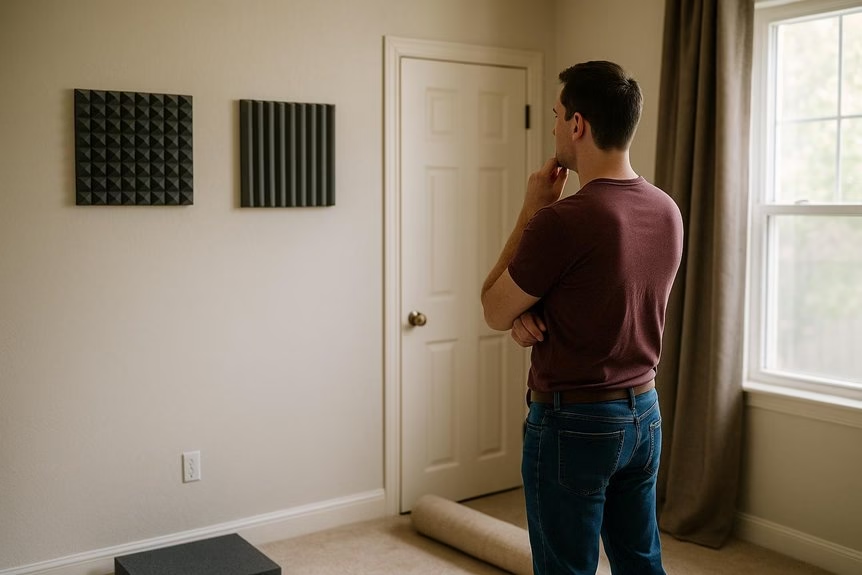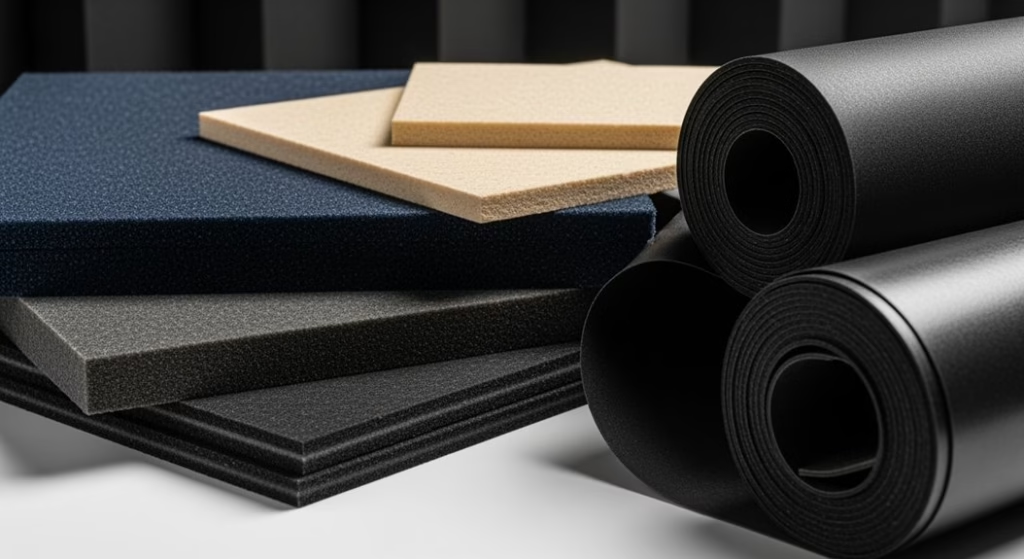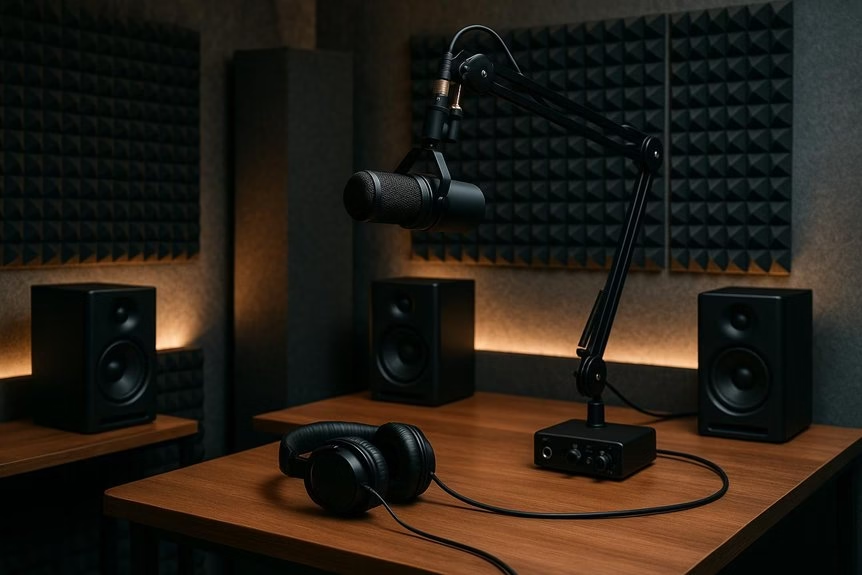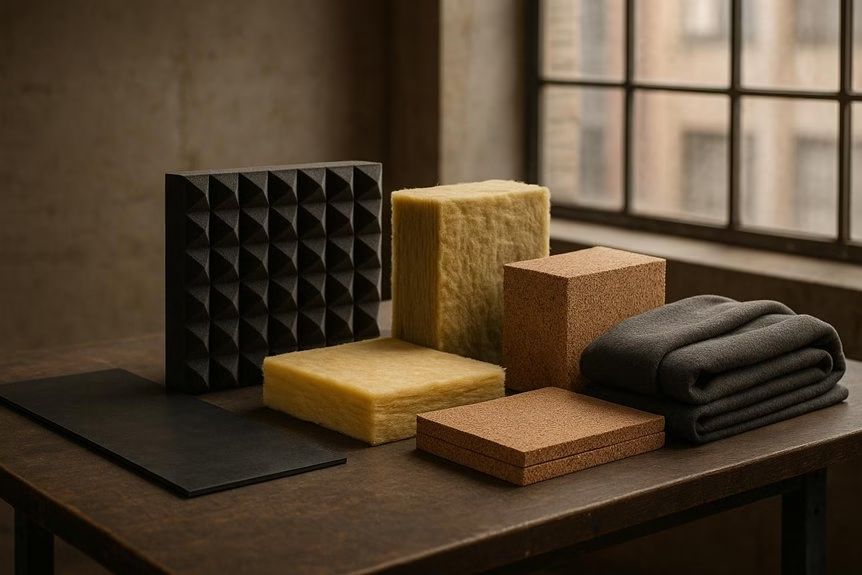
For the best soundproofing value, start by identifying how noise is getting in or traveling through the space. In many apartments, condos, and homes across West Orange, Hoboken, Jersey City, and NYC, the first priority is sealing weak points around doors, windows, outlets, and baseboards before investing in larger construction upgrades. For walls and ceilings, the best performance typically comes from professionally designed layered assemblies using 5/8-inch drywall, mass-loaded vinyl, resilient clips, damping compounds, mineral wool, and acoustical caulk. For floors, underlayment is usually more effective for reducing impact noise like footsteps than airborne noise such as voices or TV sound. Keep reading to compare which soundproofing materials deliver the strongest performance for your budget—and when it makes sense to bring in an expert for a lasting result.
Key Takeaways
- The best soundproofing materials are selected for real isolation performance, not appearance. At Total Home Interiors, we focus on the principles that matter most: added mass, decoupling, damping, and airtight sealing to reduce noise transfer in walls, ceilings, and floors.
- For the most cost-effective improvement, sealing major air leaks often delivers the fastest results. Professional-grade acoustical caulk, weatherstripping, and door sweeps can significantly reduce sound intrusion from hallways, neighboring units, and street-facing openings.
- For walls, high-performance soundproofing systems typically combine 5/8-inch Type X drywall, mass-loaded vinyl, resilient clip assemblies, mineral wool insulation, and damping compounds. These layered assemblies are especially effective for apartments, condos, offices, and other spaces where privacy and quiet are essential.
- For ceilings, foam products may help reduce echo within a room, but they do not stop sound transmission effectively. True ceiling soundproofing requires added mass, decoupled barrier systems, and careful sealing around recessed lights, vents, and other penetrations.
- For floors, acoustic underlayments such as Iso-Step can help reduce impact noise from footsteps, but airborne noise like voices or music usually requires a more comprehensive assembly strategy with proper perimeter isolation and construction detailing.
How to Choose Soundproofing Materials
When choosing soundproofing materials, start with the type of noise you need to control and build around true isolation principles—not just appearance.
Start with the noise source and choose soundproofing materials based on real isolation performance, not surface-level appearance.
For airborne noise from neighbors, traffic, shared walls, or overhead activity, effective soundproofing depends on mass, decoupling, damping, and precise sealing.
High-performance assemblies may include acoustic drywall, mass-loaded vinyl, resilient clips, and professionally designed wall or ceiling systems, because even quality materials can underperform if the assembly is wrong.
For stronger low-frequency control, adding Mass Loaded Vinyl within wall or ceiling assemblies can help block bass more effectively.
Sealing is just as important as the materials themselves.
Sound travels through the smallest gaps, so outlets, baseboards, window frames, recessed lighting, and other penetrations all need careful treatment with acoustical sealant and the right detailing.
Doors and windows are also common weak points; solid-core doors, perimeter seals, and upgraded window solutions can make a substantial difference in privacy and comfort.
And while acoustic foam can help reduce echo inside a room, it doesn’t stop sound transfer between spaces.
For lasting results in West Orange, NJ and across the Tri-State area, Total Home Interiors delivers professionally designed soundproofing solutions that address both noise reduction and overall interior performance.
Best Cheap Soundproofing Materials First
If you’re trying to solve noise on a budget, the smartest first step is sealing the places sound leaks most: door gaps, wall penetrations, and window perimeters. Small openings around outlets, baseboards, and frames can let in far more noise than most homeowners expect, which is why a professional soundproofing assessment often starts there. Using weatherstripping tape and door sweeps is one of the most cost-effective ways to reduce noise infiltration before investing in larger soundproofing upgrades.
- Door perimeter sealing is typically one of the highest-impact upgrades, especially in apartments, condos, and townhomes dealing with hallway or neighboring-unit noise.
- For ceilings, effective soundproofing usually requires added mass and proper assembly design rather than lightweight foam products, which are better for echo control than blocking sound transfer.
- When a space needs stronger results, premium soundproofing materials like mass-loaded vinyl, acoustic drywall, and decoupled wall or ceiling systems deliver far better performance than piecemeal DIY fixes.
At Total Home Interiors, we help homeowners and commercial clients across West Orange, NJ, Jersey City, Hoboken, and the NYC area identify the most effective soundproofing strategy for their space—so you invest in solutions that actually reduce noise, improve privacy, and support long-term comfort.
Best Wall Soundproofing Materials
For effective wall soundproofing, the best results come from a professionally designed layered assembly that combines mass, decoupling, damping, and airtight sealing, rather than relying on acoustic panels alone. At Total Home Interiors, we recommend proven solutions such as mass-loaded vinyl, multiple layers of 5/8-inch Type X drywall, resilient clip systems, and specialized damping compounds to significantly reduce noise transfer through shared walls.
Performance also depends on correct installation and avoiding design issues like the triple leaf effect, which can reduce low-frequency sound isolation. Using high-density insulation such as mineral wool within wall cavities can further absorb sound waves and improve low-frequency blocking as part of the overall assembly. Just as important, every seam, perimeter gap, outlet, and wall penetration must be carefully sealed with acoustical caulk and sound-rated putty pads, since even small openings can compromise the entire system.
For homeowners and businesses in West Orange, Hoboken, Jersey City, and across the Tri-State area, professional soundproofing delivers far better privacy, comfort, and long-term performance than piecemeal DIY approaches.
Best Drop-Ceiling Soundproofing Materials
For drop ceilings, the best soundproofing materials are the ones that reduce sound transfer through the ceiling plane and around fixture openings—not products that only soften echo within the room.
For drop ceilings, true soundproofing comes from blocking sound transfer through tiles and fixture openings—not just reducing echo.
For homeowners and commercial clients seeking real privacy, the priority should be professionally selected barrier systems with tight air sealing and proper treatment at lights, diffusers, and other penetrations.
- PrivacyShield® Ceiling Tile Barrier (2×2) installs above existing ceiling tiles to help limit sound leakage through the grid, priced at $269.99, with a shown total of $601.99.
- Signature Sound Barrier Ceiling Tile replaces standard ceiling tiles directly and starts at $46.99, with a shown total of $106.99 for per-tile budgeting.
- PrivacyShield® Light Hood addresses one of the most common weak points in drop ceilings: sound leakage through overhead light fixtures.
When comparing cost and performance, tile barrier systems and fixture sealing solutions typically deliver better privacy results than acoustic panels alone.
Acoustic treatments can improve sound quality and reduce echo, but in most privacy-focused drop-ceiling applications, soundproofing performance depends on controlling transmission paths—not just making the room sound softer.
In many ceiling assemblies, adding insulation above the tiles can improve absorption of mid- and high-frequency noise, while resilient channels help reduce vibration transfer in decoupled ceiling designs.
At Total Home Interiors, we help clients across West Orange, NJ, Jersey City, Hoboken, and NYC choose the right soundproofing approach for ceilings, walls, and shared building assemblies—especially when privacy, sleep, and work-from-home comfort are on the line.
Best Floor Soundproofing Materials
At $95.99, Iso-Step® may look like a strong floor underlayment value, but effective floor soundproofing depends on more than a single product. For homeowners dealing with impact noise, footfall, and structure-borne sound, professional installation details—like sealing floor perimeters and baseboard junctions with a permanently flexible acoustic sealant such as OSI® SC-175 at $10.99—can make a meaningful difference. Even small gaps at the edges can compromise performance.
If you’re also hearing voices, TV sound, or music through the floor assembly, underlayment alone is rarely enough. In those cases, a more complete soundproofing strategy may include added mass, isolation methods, and properly sealed transitions throughout the system. Adding a dense underlayment beneath carpet can also improve absorption of mid and high frequencies by reducing reflections and impact noise.
At Total Home Interiors, we help homeowners across West Orange, NJ, Hoboken, Jersey City, and the greater NYC area identify the real source of noise and recommend professionally designed floor, wall, and ceiling soundproofing solutions that deliver lasting results.
Best Window and Door Soundproofing Materials
Windows and doors are often the weakest points in a soundproofing plan, especially in apartments, condos, and homes exposed to street or neighbor noise. After addressing floors and surrounding construction, the next priority is improving these openings with solutions that reduce sound leakage at the source.
For doors, a solid-core door is typically far more effective than a hollow-core slab because the added mass helps block airborne noise. In many cases, professional installation is important to ensure the frame, hinges, and jambs can properly support the added weight and maintain a tight acoustic seal. If replacing the door isn’t practical, upgrading the perimeter sealing can still make a meaningful difference.
- Install a professional-grade acoustic door seal kit with an automatic door bottom, perimeter seals, and acoustic threshold.
- Reinforce weak points around the door jamb and frame to reduce air gaps and sound leakage.
- For windows, consider double laminated acoustic glass where the existing framing or a new assembly can support the added weight.
- When full window replacement isn’t the right fit, an interior acoustic window insert can significantly improve performance.
Acoustic inserts that create an airtight seal can block up to 70% of outside noise, making them a strong renter-friendly solution when replacement windows are not practical.
The most important first step is sealing every perimeter gap, frame crack, and air leak. Even small openings can dramatically reduce the effectiveness of an otherwise well-designed soundproofing system.
For the best results, window and door upgrades should be evaluated as part of a broader professional soundproofing strategy.
Best Soundproofing Materials by Budget
When choosing soundproofing materials by budget, start with the upgrades that address the biggest sound leaks first. For many homes and apartments in Jersey City, Hoboken, NYC, and northern New Jersey, the best early Soundproofing ROI often comes from sealing gaps and weak transition points before investing in larger wall or ceiling assemblies.
A product like OSI® SC-175 Acoustical Caulk at $10.99 is a cost-effective first step because it remains flexible and helps seal sound leaks around seams, outlets, baseboards, and perimeter edges. For floors, Iso-Step® Soundproofing Underlayment at $95.99 can be a practical entry-level option for reducing impact noise. Adding thick rugs or carpet tiles with padding can further reduce floor reflections and impact transmission as a budget-friendly solution.
A professional material effectiveness mapping approach helps identify where sound is actually escaping, especially in condos, apartments, and mixed-use buildings where hidden flanking paths are common.
For example, in rooms with drop ceilings, PrivacyShield® Ceiling Tile Barrier at $269.99 may deliver better results than more expensive upgrades if noise is leaking through the ceiling grid.
At the door, full door replacement isn’t always the most budget-conscious solution, so the $368.93 PrivacyShield® Door Seal Kit can be an effective alternative for improving privacy at a key weak point.
For walls, better results typically come from a complete system rather than a single material. A stronger assembly may include two layers of 5/8-inch Type X drywall, acoustical caulk, and selectively applied mass-loaded vinyl or decoupling components where needed.
Because soundproofing performance depends on construction details, Total Home Interiors helps homeowners and commercial clients choose the right combination of materials and methods for their space, budget, and noise problem—delivering professional solutions that outperform guesswork and patchwork DIY upgrades.
Frequently Asked Questions
Does Soundproofing Increase Home Resale Value?
Yes, soundproofing can increase your home’s resale value—especially in noise-prone areas like West Orange, Hoboken, Jersey City, and NYC, where buyers often prioritize privacy, better sleep, and quieter work-from-home spaces.
Professionally installed solutions for walls, ceilings, floors, and windows can make a home feel more comfortable, more private, and more premium.
Features like reduced street noise, less sound transfer from neighbors, and dedicated quiet spaces for offices or media rooms can help your property stand out and appeal to more serious buyers.
While the exact return varies, high-quality soundproofing often improves buyer perception, supports a stronger asking price, and can help a home sell faster.
Can Soundproofing Materials Be Installed in Rental Apartments?
Yes—soundproofing solutions can be installed in rental apartments, but approval from your landlord or building management is often required before any permanent work begins.
Review your lease carefully, confirm what modifications are allowed, and check local noise and building regulations.
While removable products like rugs, door sweeps, and temporary acoustic panels may be acceptable, they typically provide only limited results compared to professionally designed soundproofing.
For meaningful noise reduction in apartments, especially in places like Jersey City, Hoboken, and NYC where neighbor and street noise are common, it’s best to get written approval and work with an experienced acoustic professional to avoid lease issues and ensure the right solution is used.
Are There Soundproofing Materials Safe for People With Chemical Sensitivities?
Yes—if you have chemical sensitivities, it’s important to choose low-VOC, formaldehyde-free acoustic materials and avoid solvent-based adhesives or products with undisclosed ingredients.
Safer options may include select fabric-wrapped acoustic panels, untreated wool, cotton insulation, and cork, depending on the application and manufacturer specifications.
For the best results, ask for full product documentation and third-party certifications before installation.
At Total Home Interiors, we help homeowners in West Orange, NJ and across the Tri-State area select professionally installed acoustic solutions that improve comfort without compromising indoor air quality.
How Much Does Professional Soundproofing Installation Typically Cost?
Professional soundproofing installation typically ranges from $1,000 to $10,000+, depending on the size of the space, the type of noise issue, and the construction methods required.
In homes and apartments throughout West Orange, Hoboken, Jersey City, and NYC, costs often vary based on whether the solution involves walls, ceilings, floors, windows, or a more comprehensive noise-control strategy.
Professional labor is a significant part of the investment, especially when projects require demolition, decoupled wall construction, acoustic drywall, or mass-loaded vinyl.
After evaluating your space, noise source, and privacy goals, an experienced installer can provide a detailed estimate and recommend the most effective solution.
Simpler projects may take as little as a day, while larger soundproofing upgrades can take a week or more.
Do Soundproofing Materials Affect Wi-Fi or Cellular Signals?
Yes—some soundproofing materials can affect Wi‑Fi and cellular performance, especially when dense or metal-backed products are used.
Materials such as mass-loaded barriers, specialized insulation assemblies, and certain construction methods may reduce signal strength indoors, which can impact calls, streaming, and connected devices.
In many cases, softer acoustic treatments like fabric panels, acoustic foam, or fiberglass have less effect on wireless performance.
At Total Home Interiors, we evaluate both acoustic goals and network needs so your space is quieter without compromising Wi‑Fi reliability, smart home functionality, or indoor cellular coverage.
Conclusion
Does the highest-priced soundproofing material always deliver the best result? Not necessarily. Effective soundproofing depends on how noise is entering the space, how it is traveling through walls, ceilings, floors, or windows, and what level of reduction you actually need. Some lower-cost materials can help in limited situations, but meaningful, lasting results usually come from the right system design—not just the product itself. At Total Home Interiors, we help homeowners and businesses across West Orange, NJ, Jersey City, Hoboken, and the greater NYC area identify the true source of noise and recommend professional solutions that balance performance, aesthetics, and budget. When the material and installation method are matched correctly to the space, you get quieter, more comfortable rooms without spending more than necessary.