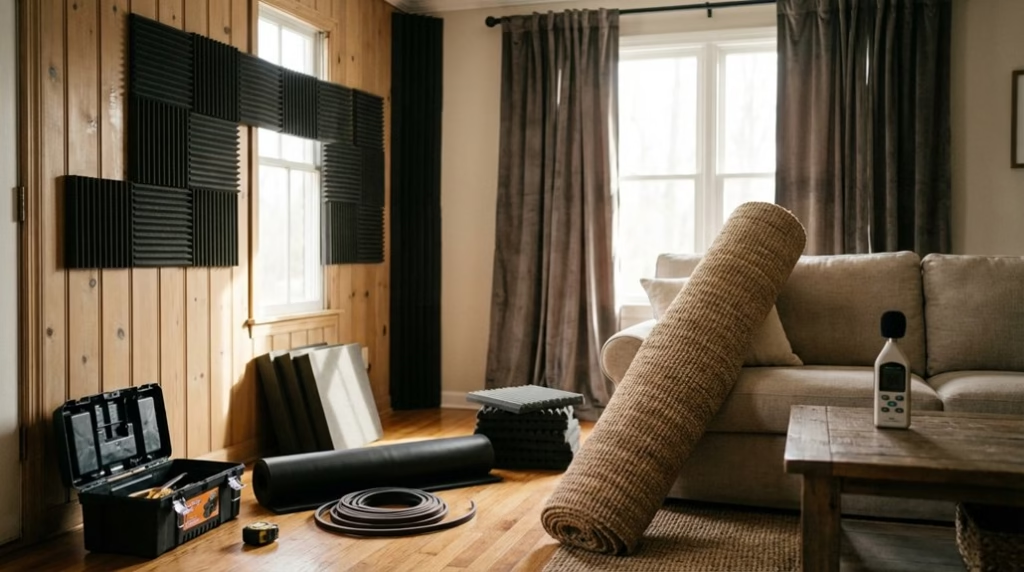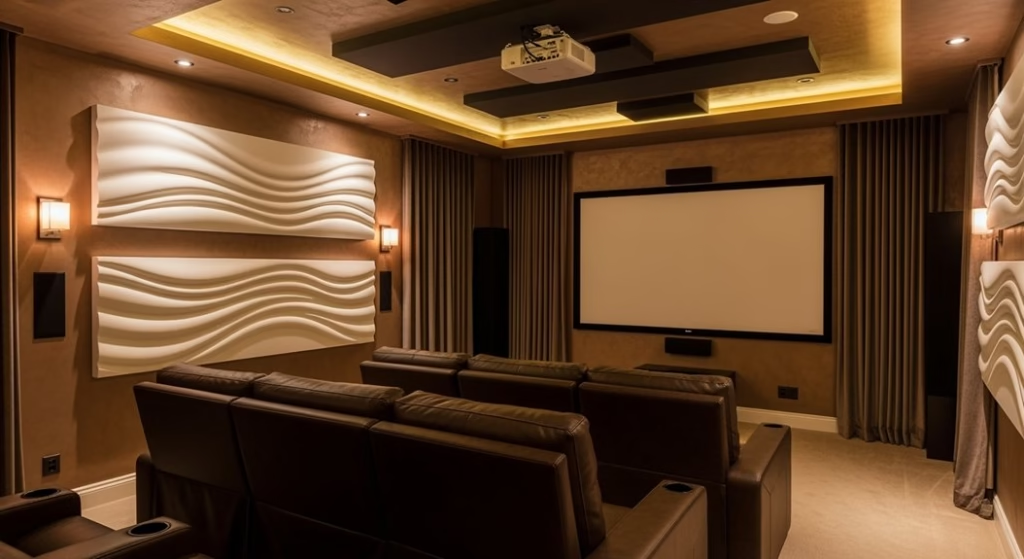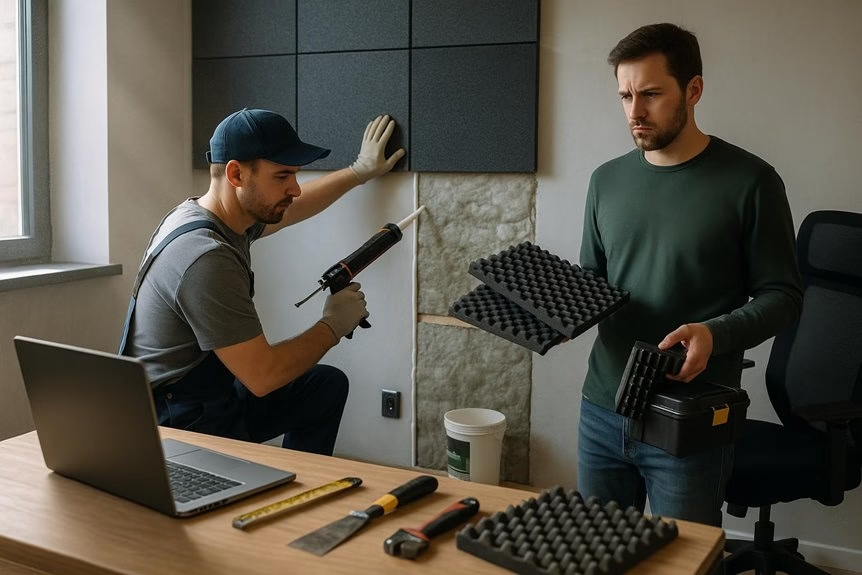
You should hire a professional soundproofing contractor when the goal is reliable noise isolation, not guesswork. For homes and apartments in West Orange, Jersey City, Hoboken, and NYC, issues like neighbor noise, street noise, privacy concerns, and home studios usually involve more than adding one product to a wall. Sound can travel through walls, ceilings, floors, doors, windows, HVAC runs, and small penetrations, so one missed air gap or rigid connection can undermine the entire system. Total Home Interiors designs soundproofing solutions with coordinated construction details, premium materials, and expert oversight to reduce flanking paths, avoid costly rework, and deliver a quieter, more predictable result. The sections below explain what matters most.
Key Takeaways
- Hire a professional soundproofing contractor when you need predictable, measurable noise reduction—not trial-and-error upgrades that may not solve the problem.
- Bring in an expert if the project affects multiple assemblies, including walls, ceilings, floors, doors, windows, HVAC, or electrical penetrations, where missed details can undermine the entire system.
- Professional planning is especially important when you need build-ready drawings that address flanking paths before construction starts and help avoid expensive rework.
- For studios, home offices, bedrooms, conference rooms, or other privacy-sensitive spaces, a contractor can coordinate airtight construction, decoupling, and duct noise control so the room performs as intended.
- DIY may appear to save $12,000–$15,000 upfront, but professional installation is the better choice if you want expert coordination, premium materials, and a reliable result without months of hands-on troubleshooting.
Should You Hire a Soundproofing Contractor?
You should hire a soundproofing contractor when the project needs a fully documented isolation plan, especially for walls, ceilings, floors, doors, windows, HVAC, and electrical details. In homes and apartments across West Orange, Hoboken, Jersey City, and NYC, missing construction details often lead to costly field decisions that reduce performance and create long-term maintenance issues.
Hire a soundproofing contractor when your project requires a fully documented isolation plan and precise construction details.
A professional soundproofing contractor brings the coordination needed to protect results. That includes managing duct openings and other penetrations so noise control measures aren’t compromised.
For projects involving neighbor noise, street noise, or privacy concerns, this level of planning is often what separates true soundproofing from expensive guesswork.
Hiring an expert also makes sense when scheduling, permits, material sourcing, and installation oversight are too complex to manage on your own.
A qualified team can streamline the process, use acoustic testing and noise mapping tools, and keep the project aligned with performance goals. They can also verify whether assemblies meet minimum STC ratings and identify where extra attenuation is needed.
Ask about product warranties, material durability, and how warranty issues are handled.
When HVAC integration is a major part of the job, professional coordination is often essential to protect both timelines and sound isolation results.
When DIY Soundproofing Is Not Enough
While DIY soundproofing may help with small noise issues, it often falls short when you need dependable, measurable results.
Effective soundproofing is only as strong as its weakest point, so missed details in walls, ceilings, floors, doors, windows, or penetrations can undermine the entire system.
That’s when it makes sense to work with a professional soundproofing contractor.
At Total Home Interiors, we design and install custom noise-control solutions for homes and commercial spaces throughout West Orange, NJ, Jersey City, Hoboken, NYC, and the Tri-State area.
When HVAC coordination, duct sealing, and mechanical penetrations are involved, proper execution becomes critical.
Air leaks, rigid connections, and poor threshold detailing can dramatically reduce isolation performance.
More advanced assemblies, including decoupled wall systems and room-within-a-room construction, require precise attention to floor continuity, electrical isolation, and wiring paths at every junction.
A contractor can also specify proven assemblies such as double 5/8″ drywall with Green Glue damping compound to improve isolation by converting sound energy into heat.
Code requirements, fire stopping, permitting, and safe egress can add even more complexity, especially when electrical or HVAC systems need to be modified.
If your goal is meaningful airborne and impact noise reduction—not trial and error—professional planning can help you avoid disappointing results and costly rework.
Why a Soundproofing Contractor Needs Full Plans
Planning matters because a soundproofing contractor can’t deliver reliable results from rough sketches or verbal directions alone. For any residential or commercial noise-control project, full construction plans are essential.
They define each isolation layer, protect assembly continuity, and help prevent inspection issues or avoidable acoustic leaks. Complete plans should also account for isolation clips and other decoupling methods that reduce structure-borne sound through walls and ceilings.
Clear documentation also helps confirm any permits required before installation begins.
Full plans should clearly show:
- Decoupled wall, ceiling, and floor assemblies, including resilient mounts and continuity of air and vapor barriers.
- HVAC boots, returns, diffusers, electrical penetrations, and wire pass-throughs that can compromise sound isolation if left untreated.
- Exact window and door specifications, including frame types, seals, perimeter gaps, and threshold details.
- Critical junctions at wall-to-floor and wall-to-ceiling transitions, along with staggered framing and floating-edge conditions.
When these details are missing, installers are often forced to improvise in the field. That can weaken the mass-spring-mass system, introduce flanking paths, and turn a targeted STC rating into an unpredictable outcome.
At Total Home Interiors, we believe successful soundproofing starts with complete planning—because premium acoustic performance is achieved by design, not guesswork.
What a Soundproofing Contractor Should Deliver
A qualified soundproofing contractor should deliver a complete written isolation plan—often supported by drawings—that maps every room boundary and explains how each wall, floor, ceiling, and junction performs as part of one continuous soundproofing system.
You should also expect build-ready contractor deliverables that remove guesswork during construction. That includes labeled assembly details, material callouts, thicknesses, air gaps, and fastening requirements for decoupled or floating structures.
A professional soundproofing scope should coordinate critical integration points for HVAC, electrical, doors, and windows, with clear notes covering sealed penetrations, duct treatment, vent detailing, and perimeter conditions.
Reliable project-wide details should also show how outlets, low-voltage wiring, piping, and lighting are installed without compromising isolation performance.
Contractors should also specify proven components such as 5/8-inch type X drywall, insulation, and sealing methods when those assemblies are needed to improve overall sound isolation.
When every trade works from one coordinated package, you reduce jobsite conflicts, avoid costly improvisation, and protect the soundproofing results your home or commercial space depends on.
Which Parts of a Studio Need Expert Design
Because studio soundproofing works as one complete enclosure, the design needs to be handled as a full system—not as a simple upgrade to one wall or one material. True performance depends on how the walls, ceiling, floor, doors, windows, and penetrations work together. Airtightness, decoupling, mass, and flanking control all have to be coordinated to achieve reliable results. Sealing every gap with acoustic caulk is also essential, because even small leaks can allow sound to bypass otherwise well-designed assemblies.
Studio soundproofing succeeds only when the entire enclosure is designed as one coordinated system.
- Room shell assemblies: Floating floors, isolated ceilings, and decoupled wall systems require expert design to control structure-borne and airborne noise.
- Doors and windows: High-performance assemblies need proper seals, thresholds, frames, and installation details to maintain isolation in real-world use.
- Electrical and plumbing penetrations: Outlets, conduit, pipes, and other crossings need backer boxes, isolation methods, and airtight sealing so they don’t weaken the enclosure.
- Any opening in the room shell: Even one poorly detailed penetration can reduce the effectiveness of the entire studio soundproofing system.
This system-level approach is where professional design makes the difference—protecting your investment and delivering the quiet, controlled environment a studio demands.
How HVAC Can Ruin Soundproofing
HVAC is one of the most common reasons a soundproofing project underperforms.
In studios, home theaters, apartments, and commercial spaces, ductwork can undermine an otherwise solid isolation plan if every sleeve, boot, and penetration isn’t detailed correctly.
When ducts are rigidly connected to floating walls or ceilings, they create leakage paths and structural bridges that allow vibration and low-frequency noise to pass through.
This is why duct flanking has to be addressed early in the design process, not after the isolated shell is finished.
Routing HVAC as an afterthought often forces rigid connections that compromise the soundproofing envelope.
A properly designed system may include isolated equipment, vibration control pads, flexible connectors, lined ductwork, and independent runs that preserve both airflow and acoustic isolation.
Using acoustic sealant around HVAC penetrations and seams also helps maintain the airtight barrier and prevent sound leaks that can weaken isolation.
At Total Home Interiors, we look at these details as part of the full soundproofing strategy, because real-world performance depends on construction execution as much as material selection.
If your contractor or HVAC installer can’t clearly explain the decoupling and penetration plan, the final result may fall short where it matters most: keeping your space quiet, private, and comfortable.
DIY vs Contractor: Cost, Time, and Risk
DIY soundproofing can reduce upfront costs—sometimes by $12,000 to $15,000 if you handle part of the work yourself—but it usually demands much more time and carries a higher risk of mistakes. For homeowners in West Orange, Hoboken, Jersey City, and across the Tri-State area, the bigger issue is often whether the final result actually solves the noise problem.
- DIY projects often require at least one full day each week and can stretch on for months.
- Professional installation costs more because it includes skilled labor, project coordination, and proven construction methods—but it saves you significant time.
- DIY work often leads to guesswork in critical areas. A professional soundproofing contractor can address the full isolation system, including walls, ceilings, floors, windows, and doors.
- HVAC is one of the most common failure points, and poor integration can compromise an otherwise solid soundproofing plan.
Complex assemblies such as mass-loaded vinyl and resilient channels often require professional handling to perform correctly and avoid costly installation errors.
It’s also important to plan for budget creep, scheduling delays, material lead times, permit requirements, and the possibility of rework.
Professional execution can move faster and deliver more predictable results—but only when the work follows a clear isolation strategy from start to finish.
Red Flags When Hiring a Soundproofing Contractor
Before you hire a soundproofing contractor, watch for signs they’re selling isolated products instead of a complete noise-control system. A qualified professional should provide a written plan showing how walls, ceilings, floors, windows, doors, and every electrical or HVAC penetration will work together to reduce sound transfer. Without that level of detail, you’re not getting a true soundproofing strategy—you’re getting guesswork.
It’s also a red flag when a contractor dismisses HVAC coordination or says soundproofing details can be figured out later during framing or installation. In homes and commercial spaces across West Orange, Hoboken, Jersey City, and NYC, those shortcuts often lead to flanking noise, weak points around penetrations, and disappointing results. For window and door openings, proven upgrades like laminated glass and full perimeter sealing should be specified upfront, not added as an afterthought.
Be cautious of proposals that focus on a single high-STC door or one wall assembly without explaining seals, decoupling, vibration isolation, floating floor options, or shop drawings that installers can actually build from. Gaps like these often create change orders, delays, and performance that falls far short of what was promised.
Frequently Asked Questions
Do Soundproofing Contractors Offer Post-Construction Acoustic Testing?
Yes—professional soundproofing contractors often provide post-construction acoustic testing to verify that the completed assembly is performing as intended.
At Total Home Interiors, this type of post-installation measurement helps confirm noise reduction results, identify any remaining weak points, and show how individual rooms or areas are performing.
Clients may also receive clear performance reporting for documentation, future improvements, warranty support, or project compliance.
For homeowners and businesses in West Orange, NJ, Hoboken, Jersey City, and NYC, this testing adds confidence that a soundproofing investment is delivering real-world results.
Can a Contractor Improve Soundproofing in a Rented Space?
Yes—you can work with a professional contractor to improve soundproofing in a rented space, but landlord approval is essential before any permanent modifications are made.
In many apartments and condos, meaningful noise reduction requires more than DIY fixes, and an experienced soundproofing specialist can recommend lease-friendly solutions such as removable acoustic panels, door seals, area rugs, or freestanding treatments.
For stronger results, they can also advise on construction-grade options like upgraded wall assemblies, acoustic drywall, or other professional noise-control methods if permitted.
Before moving forward, review your lease, confirm local requirements, and understand your tenant rights to avoid disputes or unexpected costs.
How Long Does a Typical Soundproofing Project Take?
A typical professional soundproofing project can take anywhere from a day or two to about two weeks, depending on the size of the space, the type of noise issue, and the construction methods involved.
Simpler solutions for a wall or ceiling are usually completed faster, while more advanced systems—such as acoustic insulation, mass-loaded vinyl, acoustic drywall, or decoupled wall assemblies—require more time.
Scheduling also plays a role, especially for homeowners and businesses in West Orange, NJ, Jersey City, Hoboken, and NYC, where contractor availability can affect the overall timeline.
At Total Home Interiors, every project is planned around the specific noise problem to deliver a lasting, professional result rather than a temporary DIY fix.
Are Permits Required for Professional Soundproofing Work?
Yes, permits may be required for professional soundproofing work, depending on the scope of the project and your local building code.
If your soundproofing plan involves opening walls or ceilings, adding new construction, modifying electrical systems, or making structural changes, your municipality may require permits and inspections before work begins.
In homes, condos, apartments, offices, restaurants, and other commercial spaces throughout West Orange, NJ and the Tri-State area, requirements can vary significantly by town and building type.
Working with an experienced soundproofing contractor like Total Home Interiors helps ensure your project is designed correctly, submitted properly when needed, and completed to code using proven acoustic construction methods—not guesswork.
Can Soundproofing Be Installed Without Changing Room Aesthetics?
Yes—soundproofing can often be installed without compromising your room’s design.
At Total Home Interiors, we specialize in discreet acoustic solutions that preserve aesthetics while reducing unwanted noise in homes and commercial spaces across West Orange, NJ, and the Tri-State area.
Options may include acoustic insulation behind drywall, sound-dampening underlayment beneath flooring, low-profile door seals, and custom fabric-wrapped acoustic panels designed to complement your décor.
With professional planning, the right materials, and seamless integration, you can achieve a quieter, more comfortable space without sacrificing style.
Conclusion
DIY can lower costs upfront, but when noise control needs to perform long term, hiring a professional soundproofing contractor is often the smarter investment. Simple fixes may help in limited situations, yet true soundproofing for walls, ceilings, floors, windows, and HVAC pathways requires expert design, premium materials, and precise installation. In homes, apartments, studios, and commercial spaces, even small gaps can lead to major sound leakage and costly rework. When the project is straightforward, a DIY approach may be enough. When privacy, comfort, sleep, or focus are on the line, professional expertise matters. Total Home Interiors helps homeowners and businesses across West Orange, Hoboken, Jersey City, NYC, and the Tri-State area build quieter spaces that last.