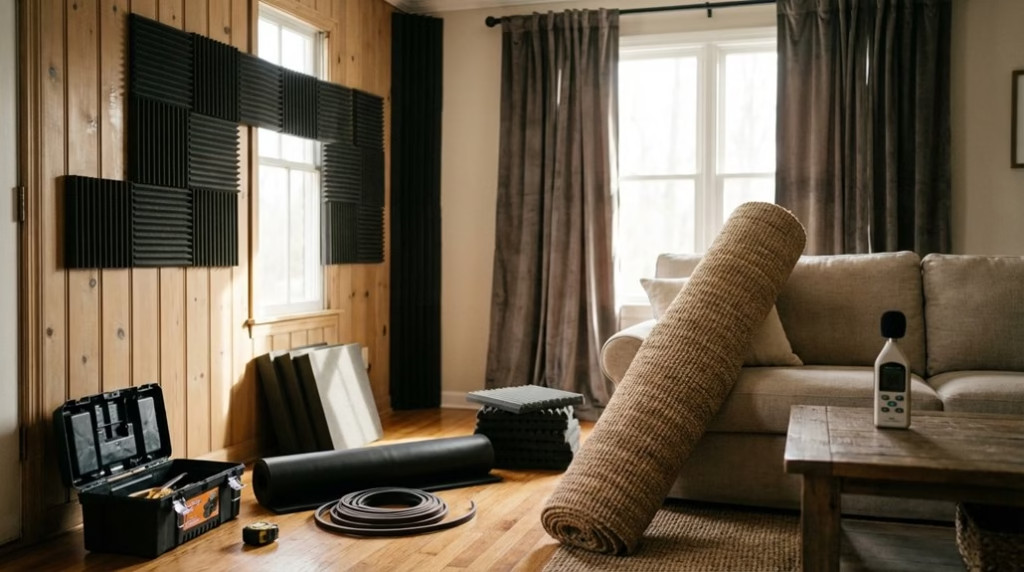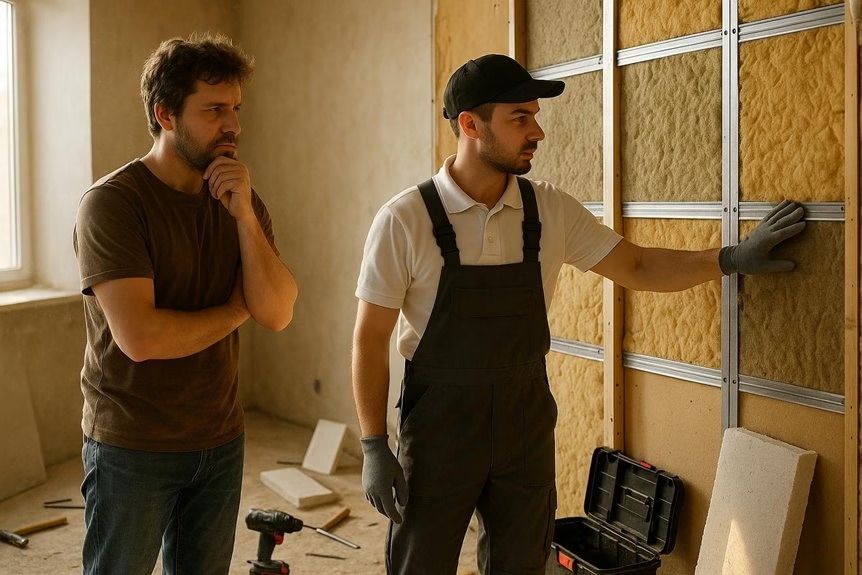
You should hire a professional soundproofing contractor when your project requires true noise isolation, not just extra layers of material. For homes and apartments in West Orange, Hoboken, Jersey City, and NYC, that often means conditions involving floating floors, decoupled walls or ceilings, doors, windows, HVAC pathways, and multiple penetrations where sound can leak through unnoticed. In these situations, DIY errors can create flanking paths, compromise performance, and lead to costly rework. An experienced contractor should provide written assembly details, penetration plans, and clear performance expectations before installation begins. When you compare cost, complexity, and long-term results, the difference between a DIY attempt and a professionally designed soundproofing system becomes much easier to see.
Key Takeaways
- Hire a professional soundproofing contractor when your project involves floors, walls, ceilings, doors, windows, and penetrations that all need to perform as one integrated isolation system. Total Home Interiors designs whole-room soundproofing solutions for homes and commercial spaces across West Orange, NJ, Jersey City, Hoboken, and NYC.
- Choose an expert if HVAC, electrical, plumbing, recessed lighting, or other fixtures pass through the assembly, because flanking paths and poorly treated penetrations can undermine otherwise solid soundproofing work.
- Bring in a specialist when your noise-control goals are high—such as reducing neighbor noise, street noise, or room-to-room sound transfer—since even small mistakes in sealing, decoupling, or junction detailing can lead to major sound leaks.
- Hire a contractor if you do not have the time, sequencing discipline, or project management capacity to coordinate a multi-step build, because delays, missed details, and rework often eliminate the perceived savings of a DIY approach.
- Use a professional when you need written assembly recommendations, clearly documented material specifications, and performance-driven designs before construction starts, especially for premium residential, office, studio, or privacy-focused applications.
Is DIY or a Contractor Right for You?
If you can consistently devote significant build time—often at least one day a week, and sometimes more—a DIY approach may seem appealing.
But when a project involves soundproofing, acoustics, motorized window treatments, or smart home integration, the real challenge usually isn’t just installation.
It’s proper design, product selection, code compliance, and coordination across multiple systems.
Successful projects depend on proper design, smart product selection, code compliance, and seamless coordination across every system.
The decision often comes down to more than budget.
It’s also about time, project management, and whether the scope truly fits a do-it-yourself approach.
While DIY can appear to save money upfront, those savings often disappear when delays, incorrect materials, poor acoustic performance, or integration issues require rework.
For projects involving noise control, privacy, automated shades, home automation, or home theater performance, professional guidance typically delivers better long-term value.
Professional installations also often include warranty coverage, which DIY projects typically lack if problems arise later.
Total Home Interiors helps homeowners and businesses across West Orange, NJ, and the Tri-State area avoid costly missteps with expertly designed, professionally installed solutions that are built to perform.
If your time is limited—or your project needs to work right the first time—working with an experienced contractor is often the smarter investment.
When to Hire a Soundproofing Contractor
When your project calls for a true end-to-end soundproofing system, hiring a professional soundproofing contractor is usually the smartest move. Effective noise control is never just one product—it’s a coordinated assembly of floating floors, isolated walls and ceilings, sealed doors and windows, and carefully treated HVAC and electrical penetrations. Without a complete plan, on-site decisions can lead to shortcuts that weaken the entire system and reduce the performance you were counting on.
Professional installation becomes even more important when ductwork, vents, or other mechanical systems have to pass through isolated assemblies. These details are where many DIY or general construction approaches fail. Professionals also know how to use isolation clips to decouple drywall from framing and reduce structure-borne sound transfer.
If your budget and timeline leave little room for mistakes, experienced execution helps prevent common problems like acoustic bridging, poorly sealed perimeters, and threshold gaps that allow sound to leak back in.
For homeowners and businesses in West Orange, Hoboken, Jersey City, NYC, and across the Tri-State area, this is where Total Home Interiors provides value beyond basic construction. We design and implement soundproofing solutions with the full system in mind, helping protect your investment, maintain project momentum, and deliver the privacy, quiet, and comfort you actually need.
Where DIY Studio Soundproofing Goes Wrong
Although DIY studio soundproofing may seem simple online, it often fails because true sound isolation only works as a complete, sealed system.
Gaps around outlets, baseboards, ceiling penetrations, and wall transitions allow noise to escape, reducing the effectiveness of even thicker wall assemblies.
HVAC is another common weak point.
When ducts or vents pass through a floated wall or isolated ceiling without the right detailing, they create flanking paths that bypass the soundproofing altogether.
The same issue happens when mass and decoupling are guessed at instead of properly engineered—walls stay mechanically connected, and performance drops quickly.
Effective isolation also depends on sealing every penetration with acoustical caulk so small openings do not undermine the entire assembly.
Doors are also a frequent source of disappointment.
A heavier door alone won’t solve noise problems if the frame, threshold, and surrounding openings are still leaking sound.
In many cases, small installation mistakes around channels, studs, and isolation breaks have a bigger impact than adding more drywall.
At Total Home Interiors, we design soundproofing systems for studios, residences, and commercial spaces across West Orange, NJ, and the Tri-State area with every detail in mind—because lasting acoustic performance comes from expert planning, precision installation, and a fully integrated approach, not trial-and-error DIY methods.
What Plans a Soundproofing Contractor Should Provide
Because soundproofing only performs as designed when every connection is planned before construction begins, a professional soundproofing contractor should provide a complete written plan set defining the entire isolation system from the start.
For homeowners and commercial clients alike, that means clear isolation plans covering walls, ceilings, floors, doors, windows, and every transition point, so critical details aren’t left to improvisation in the field.
These plans should include assembly drawings for the full soundproofing build, showing layer sequencing, framing methods, decoupling strategies, clips and hat channel where applicable, floating elements, perimeter gaps, and airtight sealing at each joint.
They should also identify target STC ratings and any required added attenuation so the assemblies align with code expectations and written performance goals.
Penetration details are equally important.
HVAC, electrical, plumbing, recessed fixtures, and duct openings are common weak points that can undermine otherwise solid construction if they aren’t properly addressed in the plans.
A quality documentation package should also include material schedules, installation checklists, and project verification notes so everyone involved understands exactly what’s being built.
Most importantly, your contractor should define measurable performance goals and acceptance criteria in writing.
That gives you a clear standard for success and helps ensure the finished space delivers the privacy, quiet, and acoustic control you’re investing in.
Red Flags When Hiring a Soundproofing Contractor
Before hiring a contractor, watch for signs they don’t approach soundproofing as a true engineered isolation system. If they can’t provide written drawings and clear assembly details for walls, ceilings, floors, doors, windows, and all penetrations, that’s a major red flag. “We’ll figure it out on site” usually means higher risk, budget overruns, and delays that can compromise the final result.
Soundproofing should start with engineered plans, not on-site guesswork that invites delays, added cost, and compromised results.
You should also ask direct questions about credentials, material specifications, and warranty coverage. A qualified soundproofing professional should be able to explain how HVAC routing, fan placement, and acoustically isolated openings will be handled before construction begins. They should also be able to specify proven materials like mass-loaded vinyl and explain where those assemblies will be used for walls, ceilings, or floors.
Be cautious of vague STC claims without documented wall or ceiling assemblies, perimeter seal details, and named components such as mass-loaded vinyl, decoupling systems, or acoustic drywall. Penetrations are never minor in a soundproofing project, and unclear plans for door bottoms, window seals, or flanking paths often lead to disappointing performance.
For homeowners and businesses in West Orange, NJ and across the Tri-State area, the difference between a quiet space and a costly mistake often comes down to planning and expertise. If a contractor’s answers are vague at the proposal stage, the results will likely be just as inconsistent once the project is complete.
Why Studio Soundproofing Must Be One System
Studio soundproofing only works when the floor, walls, ceiling, doors, windows, and every penetration are designed as one complete isolation system—not as separate upgrades.
- Room junctions determine whether assemblies remain properly isolated.
- Isolation continuity helps eliminate weak links across the studio envelope.
- Flanking paths can let noise bypass mass and decoupling quickly.
- Airtight sealing is essential to prevent sound leaks that reduce performance.
- Door integration and penetration detailing protect the integrity of every barrier.
If you improve only one assembly and overlook how it connects to the rest of the room, real-world sound isolation suffers.
A floating floor, upgraded wall, or heavier ceiling won’t deliver the expected results if junctions are rigid, gaps are left unsealed, or frames and penetrations leak sound.
Using acoustic sealant at gaps and penetrations also helps preserve isolation continuity by preventing small leaks from undermining the entire assembly.
That’s why professional studio soundproofing requires coordinated detailing at every perimeter, opening, and transition.
At Total Home Interiors, we approach studio soundproofing as a fully integrated system, helping clients across West Orange, NJ and the Tri-State area create spaces that perform reliably for recording, mixing, content creation, and critical listening.
Without expert planning and clear construction drawings, even well-intended DIY efforts can turn into guesswork, leading to inconsistent details that compromise the entire studio.
How HVAC Can Ruin Soundproofing
HVAC mistakes can undermine soundproofing much faster than most homeowners expect. Every duct penetration, ceiling connection, and fan mounting point can become a rigid path for noise, allowing sound to bypass an otherwise well-designed isolation system.
A single rigid HVAC connection can short-circuit an otherwise effective soundproofing system.
If those details aren’t addressed during construction, even a properly built floating wall or ceiling can lose a significant amount of performance.
Poor duct decoupling, unsealed boots, and shared hangers commonly allow mid- and high-frequency sound to leak between rooms.
Low-frequency vibration is another major concern, especially when air handlers or ductwork are fastened directly to framing.
Without isolation mounts, flexible connections, and coordinated HVAC routing, the structure itself can begin carrying mechanical noise throughout the home or commercial space.
Using resilient channels and isolation clips in adjacent assemblies can further reduce vibration transfer by decoupling drywall from framing.
At Total Home Interiors, we know that effective soundproofing depends on more than adding mass to walls or ceilings.
HVAC sealing, isolation, and proper integration are essential to preserving the performance of rated assemblies and delivering the quiet, private environment clients expect.
Soundproofing Contractor vs DIY Costs
While a DIY soundproofing project may appear to save $12,000 to $15,000 by avoiding contractor labor and overhead, those savings only materialize if the assembly is designed and installed correctly from the start.
- DIY may reduce upfront material-only costs.
- Professional pricing reflects labor, planning, and coordination.
- Incorrect isolation detailing often leads to costly rework.
- HVAC and penetration mistakes can undermine the entire system.
- True ROI depends on project complexity and performance goals.
When planning a soundproofing budget, it’s important to compare more than initial price.
Effective noise control depends on system-level execution—wall and ceiling assemblies, door and window detailing, air sealing, decoupling, and HVAC integration all have to work together.
Using optimal materials can also improve a theater’s STC rating significantly, which directly affects how well noise is contained.
If even one element is missed, sound can continue to transfer and finished surfaces may need to be reopened.
For homeowners and commercial clients in West Orange, NJ and across the Tri-State area, professional soundproofing often delivers better long-term value because it reduces the risk of failed assemblies, rebuild costs, and disappointing results.
Total Home Interiors designs and installs custom soundproofing solutions that address real-world noise problems with the right materials, construction methods, and coordination required for lasting performance.
When Building It Yourself Makes Sense
Building it yourself may seem cost-effective, but soundproofing is a detail-sensitive construction process where small mistakes can lead to disappointing results.
DIY soundproofing may save money upfront, but even minor installation mistakes can seriously compromise the final result.
DIY projects often require a flexible timeline, significant patience, and careful coordination of materials, sequencing, permits, and code requirements—sometimes stretching over many months.
For homeowners dealing with neighbor noise, street noise, or privacy concerns in apartments, condos, or single-family homes, the biggest challenge isn’t installing materials—it’s getting every isolation detail right.
Airtight perimeter sealing, resilient mounting, and properly isolated electrical or HVAC penetrations all need to work together for the system to perform as intended.
Using solid core doors with proper seals can also make a major difference by reducing sound leakage through one of the most common weak points in a room.
If even one element is missed, noise transfer can remain a problem.
While taking the DIY route may reduce upfront labor costs, it also means taking full responsibility for mistakes, delays, and any failed sound isolation details that surface later.
That’s why many homeowners in West Orange, NJ and across the Tri-State area turn to Total Home Interiors for professional soundproofing solutions designed to deliver reliable, high-performance results.
How to Choose the Right Soundproofing Contractor
How do you choose the right soundproofing contractor? Start with a contractor checklist that focuses on complete system design, not vague recommendations or one-product promises.
At Total Home Interiors, we know effective soundproofing depends on how every part of the room works together. You need written isolation plans for walls, ceilings, doors, windows, floors, and penetrations, because one weak point can undermine the entire acoustic envelope. A qualified contractor should also specify acoustic sealant at seams and penetrations to maintain an airtight barrier and prevent sound leaks.
- Request full-room drawings, not general soundproofing advice.
- Verify experience with HVAC isolation, including decoupled ducts and sealed boots.
- Ask for assembly-level STC and impact-performance data, not single-material claims.
- Check how flanking paths will be addressed at thresholds, junctions, and structural connections.
- Require clear coordination rules for electricians and plumbers before any penetrations are made.
You should also confirm the contractor follows sign-off procedures and a strict no-penetrations-without-details process. That level of planning helps protect isolation layers during construction and reduces the risk of noise leaks, shortcuts, and expensive rework later.
For homeowners and commercial clients in West Orange, NJ, Jersey City, Hoboken, and NYC, choosing a qualified soundproofing expert is the difference between a real noise-control solution and disappointing results.
Frequently Asked Questions
Can Soundproofing Increase My Property’s Resale Value?
Yes, soundproofing can increase your property’s resale value, especially in noise-sensitive markets like NYC, Hoboken, Jersey City, and northern New Jersey.
A quieter home feels more private, comfortable, and higher quality to potential buyers—particularly in condos, townhomes, and homes near busy streets.
Professional soundproofing in key areas such as bedrooms, home offices, media rooms, walls, ceilings, floors, and windows can make your property stand out by improving sleep, focus, and everyday livability.
The impact on resale value depends on your local market, the quality of the installation, and how well the solution is integrated into the home.
Thoughtfully designed, professionally installed soundproofing is often seen as a premium upgrade that enhances buyer appeal.
How Long Does Professional Soundproofing Installation Usually Take?
Professional soundproofing installation usually takes anywhere from 1 day to 2 weeks, depending on the size of the space, the construction method, and the level of noise control needed.
Smaller projects—such as soundproofing a single wall or ceiling—can often be completed in a day or two.
Larger jobs involving multiple rooms, decoupled wall assemblies, acoustic drywall, insulation, or mass-loaded vinyl typically require more time.
In homes and apartments throughout West Orange, NJ, Hoboken, Jersey City, and NYC, some disruption is normal during installation, especially when drywall is removed, gaps are sealed, or structural soundproofing upgrades are added.
Working with an experienced professional helps ensure the project is completed efficiently and delivers meaningful noise reduction.
Will Soundproofing Materials Affect Indoor Air Quality?
Yes—some soundproofing materials can affect indoor air quality if they off-gas chemicals, retain moisture, or collect dust over time. At Total Home Interiors, we recommend professionally selected low-VOC, mold-resistant acoustic materials and proper ventilation planning to help ensure your space stays both quieter and healthier.
This is especially important in apartments, condos, offices, and other tightly enclosed environments throughout West Orange, NJ, Hoboken, Jersey City, and NYC. With expert design and installation, you can improve noise control without compromising the air quality in your home or workplace.
Do Soundproofing Upgrades Require Building Permits or Inspections?
Some soundproofing upgrades do require permits or inspections, particularly when the work involves opening walls or ceilings, modifying electrical systems, or making structural changes.
In many homes and apartments across West Orange, Hoboken, Jersey City, and NYC, decorative acoustic panels or soft furnishings typically don’t require approval, but true soundproofing construction often does.
Because permit requirements vary by town, building type, and scope of work, it’s important to check with your local building department and, if applicable, your condo or co-op board before starting.
This is especially true for projects involving assemblies such as decoupled walls, acoustic drywall, or other professional sound-isolation methods.
Acoustic testing and noise source identification usually don’t require permits on their own, but any construction recommendations that follow may.
Residential and commercial standards can also differ significantly, so it’s best not to assume the same rules apply to both.
Total Home Interiors helps clients plan soundproofing solutions the right way—balancing performance, code compliance, and the realities of your space.
Can a Contractor Soundproof a Rented Space Without Permanent Changes?
Yes—contractors can improve sound control in a rented space without making permanent changes. At Total Home Interiors, we recommend lease-friendly acoustic solutions such as freestanding acoustic panels, decorative sound-absorbing treatments, acoustic curtains, and door seals that help reduce echo, outside noise, and everyday distractions.
For renters in West Orange, Hoboken, Jersey City, and NYC, professional guidance matters: the right non-invasive approach can improve comfort, privacy, and focus while helping protect your security deposit and comply with lease terms.
Conclusion
Choosing between DIY and hiring a soundproofing contractor depends on the severity of the noise issue, the construction of your space, and the results you expect. Minor acoustic upgrades may be manageable on your own, but persistent noise transfer, mechanical noise, and complex wall, ceiling, or floor assemblies typically require professional expertise. For homeowners and businesses in West Orange, Hoboken, Jersey City, NYC, and across the Tri-State area, Total Home Interiors delivers custom soundproofing solutions designed to reduce unwanted noise with the right materials, construction methods, and attention to detail. When lasting performance matters, working with an experienced specialist is often the most effective investment in comfort, privacy, and peace of mind.