
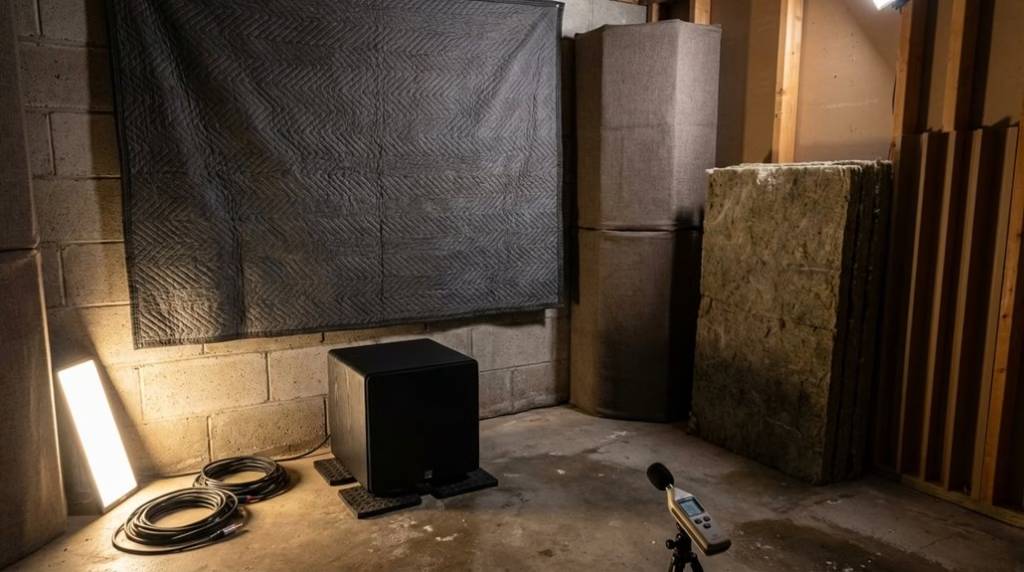
Stop the low-frequency rumble at the source with true isolation—not foam. Total Home Interiors designs and installs decoupled ceiling systems that break mechanical contact and block bass transfer. For basements, we specify:
- Decoupled assemblies using premium clips and hat channel (or RC2 where appropriate) to control structure-borne vibration
- High-mass layers: dual 5/8-inch specialty acoustic drywall with viscoelastic damping (Green Glue) for significant low-frequency attenuation
- Mineral wool in joist cavities for broadband absorption and improved STC
- Meticulous sealing of flanking paths: acoustically gasketed doors, sealed cans/outlets, lined and boxed ducts, pipe wraps, backer boxes, and mechanical isolation
This is the professional-grade path to quiet: more mass, less vibration, and no leaks. For urban homeowners in Hoboken, Jersey City, and NYC, we pair isolation with tailored acoustic treatments—fabric-wrapped panels, acoustic ceilings, and sound masking—to refine the room’s sound and reduce fatigue. Prefer blackout and privacy? Add motorized shades from Lutron, Somfy, or Hunter Douglas PowerView for light control, daytime privacy, and energy savings—fully integrated with your smart home.
Why Total Home Interiors:
- Custom soundproofing assemblies for basements, bedrooms, and shared walls
- Premium materials (mass-loaded solutions, specialty drywall, decoupled systems), professionally engineered and installed
- Smart integration: lighting scenes, voice control, and whole-home audio that complements your quieter space
- Local expertise across the Tri-State area, with clean workmanship and predictable results
Ready to silence the rumble and reclaim your home? We’ll evaluate structure, flanking paths, and mechanicals, then deliver a turnkey plan—from isolation to final finishes. Book a consultation today.
Key Takeaways
Soundproofing a Basement: Stopping Low-Frequency Rumble (Done Right)
- Decouple to stop structure-borne bass: We engineer isolated ceiling and floor assemblies using professional isolation clips and hat channel to break mechanical bridges. This is the cornerstone for keeping subwoofer thump, footfall, and street rumble from traveling through your home.
- Add mass and damping with premium assemblies: Our builds combine specialty acoustic drywall in double layers with viscoelastic damping compounds and professional-grade mass-loaded vinyl where warranted. This boosts STC and, more importantly, improves low-frequency performance that DIY products rarely touch.
- Densely insulate and seal against flanking: We pack cavities with mineral wool and create a continuous air seal at perimeters, outlets, penetrations, and doors using acoustic sealants and gaskets. Proper sealing is essential to keep bass from finding “leak paths” into adjacent rooms.
- Isolate mechanical noise at the source: We box and line noisy ducts, pipes, and equipment with dense acoustic assemblies, then seal seams with mastic and UL-rated foil tape. Quiet HVAC equals a quieter basement—and a calmer home.
- Finish with professional acoustic treatment: After isolation, we tune the room with broadband panels and high-performance bass traps in corners and ceiling junctions. This smooths low-frequency response for home theaters, gyms, and studios—ideal for Dolby Atmos rooms and whole-home audio.
Why Total Home Interiors
- Local expertise in the Tri-State area (NJ, NYC, Hoboken, Jersey City)
- Premium materials and construction detail beyond budget or DIY solutions
- Seamless integration with:
- Acoustics: Custom fabric-wrapped panels, fabric wall systems, acoustic ceilings, and sound masking for refined sound quality
- Window Treatments: Motorized shades and drapery from Lutron, Somfy, and Hunter Douglas PowerView for privacy and energy efficiency—perfect for urban living
- Home Automation: Lighting scenes, whole-house AV, robust networking, and voice control (Alexa, Google, Control4)
- Home Theater: Theater design, projector/screen selection, Dolby Atmos, luxury seating, and lighting control
Perfect for
- Urban homeowners battling street and neighbor noise who want real peace and privacy
- Luxury residential clients building high-performance theaters and entertainment spaces
- Commercial spaces needing quiet and control—offices, restaurants, medical, and creative studios
Ready to reclaim your basement from low-frequency rumble? Schedule a consult with Total Home Interiors in West Orange, NJ, and get a tailored plan that delivers quiet, comfort, and performance.
Stop Bass Upstairs: Your Basement Drum Isolation Plan
Stop Bass Upstairs: Your Basement Drum Isolation Plan
Serious kick drum energy travels through structure, not just the air. Total Home Interiors designs and installs premium, construction‑grade soundproofing and acoustic solutions that keep the beat in your basement—not in your living room.
Start with true soundproofing (blocking transmission), then tune the room with acoustics (better sound inside).
Soundproofing: Keep low-frequency impact from entering the structure
- Decoupled floor system: We install vibration-isolating platforms and percussion-specific pedal bases to prevent kick and hi-hat energy from coupling into the slab or framing.
- Add mass + damping: Premium mass-loaded vinyl (MLV) and specialty acoustic drywall layered with viscoelastic damping (e.g., Green Glue-type compounds) deliver the density and shear damping bass control requires.
- Dead-air wall assembly: We frame a new, decoupled stud wall off the concrete, seal perimeters, and use acoustical sealants to stop flanking paths. Mineral wool in the cavity improves low-frequency performance.
- Ceiling isolation: For upstairs protection, we decouple the basement ceiling with professional-grade resilient channels or isolation clips/hat channel, infill joists with mineral wool, then add double layers of specialty acoustic drywall with damping. This combination breaks mechanical bridges and adds the mass bass demands.
Acoustics: Make the drum room sound tight and controlled
- Broadband absorption: Fabric-wrapped panels and bass traps placed at pressure zones (corners, wall-ceiling junctions) reduce boom and shorten decay time.
- Custom ceiling treatment: Acoustic clouds over the kit manage cymbal wash and flutter without deadening the room.
- Fabric wall systems: Elegant, serviceable finishes that hide high-performance absorption—ideal for multi-use spaces.
Why Total Home Interiors
- Engineered for urban realities: We solve structure-borne bass in tight Jersey City, Hoboken, and NYC buildings where neighbor relations and building codes matter.
- Premium materials, proven assemblies: Decoupled systems, MLV, mineral wool, specialty acoustic drywall, and professional damping compounds—installed correctly for predictable results.
- One team, end-to-end: Design, build, measurement, and final tuning. We can also integrate sound masking for adjacent spaces if needed.
Optional upgrades and integrations
- Smart home convenience: Add lighting scenes and voice control so rehearsal mode, recording mode, and quiet mode are one tap away.
- Motorized window treatments: Lutron, Somfy, and Hunter Douglas PowerView shades for privacy, glare control, and additional airborne noise reduction in above-grade rooms.
- Whole-home harmony: If the kit shares space with a home theater, we’ll align acoustic treatments and Dolby Atmos requirements without compromise.
Serving West Orange, NJ and the Tri-State area
From brownstone basements to condo build-outs, we deliver quiet, privacy, and professional results that DIY can’t match.
Ready to stop upstairs rumble? Schedule a site assessment and acoustic plan with Total Home Interiors.
For added value, we also seal doors and penetrations with acoustic caulk and door seals, and pair ceiling isolation with resilient channels and mineral wool to raise STC and curb structure‑borne bass.
Soundproof Your Basement Ceiling: What Matters Most
Soundproof Your Basement Ceiling: What Matters Most
In multi-story homes and brownstones across NJ and NYC, the basement ceiling is the primary pathway for both structure-borne and airborne noise. Treating it correctly delivers the biggest reduction in footsteps, voices, and appliance rumble from above. Incorporating resilient channels with double-layer drywall and damping compounds can boost STC significantly, cutting noise transmission by more than 20 decibels.
What we recommend:
- Decouple the ceiling. We install resilient channels or floating drywall assemblies to break vibration paths and tame low-frequency impact noise—far more effective than basic insulation alone.
- Add targeted mass. Premium mass-loaded vinyl and specialty acoustic drywall increase sound transmission loss without adding bulky depth, preserving clean ceiling lines.
- Densely pack cavities. Mineral wool or high-density fiberglass in joist bays absorbs airborne noise and reduces cavity resonance.
- Seal every penetration. Fire-rated acoustic sealant around pipes, ducts, and electrical boxes, plus gasketed access panels, prevents leaks that undermine isolation.
- Detail for impact noise. We combine decoupling, added mass, and staggered seams to eliminate weak spots that let footsteps and thuds travel through.
Beyond isolation: better acoustics and smart integration
- Acoustic ceiling treatments. If your basement doubles as a gym, office, studio, or theater, we add fabric-wrapped panels or a discreet fabric wall/ceiling system to control echo and improve clarity.
- Sound masking (for offices and studios). Optional wideband masking helps maintain speech privacy in work zones or creative spaces.
- Automated window treatments. For basements with street-facing windows or light wells, Lutron, Somfy, or Hunter Douglas PowerView shades deliver privacy, light control, and energy efficiency—fully integrated with your smart home.
- Home theater-ready. Planning a theater downstairs? We handle room isolation, Dolby Atmos layout, projector/screen selection, and lighting control, so the space looks as impressive as it sounds.
- Smart home integration. We tie it all together with lighting scenes, voice control, and robust networking—so your quiet basement is also your most convenient space.
Why Total Home Interiors
- Local expertise in urban noise. We design to the realities of Jersey City, Hoboken, and NYC construction—thin subfloors, shared structures, utility runs—and deliver predictable results.
- Premium materials, professional installation. From mass-loaded vinyl to specialty acoustic drywall and fabric systems, we specify and install to manufacturer specs for maximum performance.
- Aesthetic-first detailing. We preserve ceiling height and architectural lines with low-profile solutions and clean finishing.
Get started
Book a site assessment in West Orange, NJ and the Tri-State area. We’ll measure your current noise levels, map flanking paths, and present a tailored plan for your ceiling—complete with options for acoustic treatments, motorized shades, and smart home control. Peace, privacy, and a better-sounding basement start here.
Add Mass and Damping: 2× 5/8-In. Drywall + Green Glue
Add Mass and Damping: 2× 5/8-In. Drywall + Green Glue
Once we’ve decoupled your ceiling to break the vibration path, we increase performance with premium mass and damping: two layers of 5/8-inch specialty acoustic drywall bonded with Green Glue. The added mass resists low-frequency transfer, while Green Glue’s viscoelastic damping converts vibration to heat, reducing bass bleed without requiring a structural rebuild. This is a proven, code-compliant method we specify for urban condos and brownstones across Jersey City, Hoboken, and NYC where neighbor and street noise are constant. For even better isolation, add resilient channels or sound isolation clips to decouple surfaces and further reduce structure-borne sound.
Professional installation matters. Our team staggers seams between layers, seals all perimeters and penetrationsswith acoustical sealant, and uses precise fastener patterns to prevent flanking paths—details that separate a true soundproofing build from DIY attempts. We integrate this assembly with other premium materials as needed (mass-loaded vinyl backers, resilient channels, or isolated hat track) to meet your target STC and low-frequency goals.
What you can expect with a Total Home Interiors build:
- Correct Green Glue application and coverage for consistent damping across the entire surface.
- Staggered seams and offset board joints to maintain isolation integrity.
- Continuous acoustic sealing around the room envelope for airtight performance.
- Coordination with lighting, HVAC, and smart home devices so penetrations don’t compromise isolation.
Looking for a quieter bedroom or a focused home office? We design and install complete soundproofing solutions—walls, ceilings, floors, even acoustic window upgrades—so you can sleep, work, and relax in peace. Schedule a consultation in West Orange, NJ, or anywhere in the Tri-State area to get a tailored plan for your space.
Choose Your Decoupling: RC2 vs. Clips + Channel
Choose Your Decoupling: RC2 vs. Clips + Channel
Battling neighbor noise, street rumble, or footfall from above? Decoupling is a core soundproofing strategy we deploy across condos, brownstones, and commercial spaces throughout NJ and NYC. Two proven options dominate: RC2 and clips + channel. Here’s how we help you choose the right system for your space, budget, and bass.
RC2: Efficient, budget-conscious decoupling
- What it is: A resilient channel (RC2) installed perpendicular to joists or studs to create a controlled air gap and interrupt vibration transfer.
- When it excels: Fast timelines, moderate budgets, and typical urban noise (voices, TV, light footfall).
- Key advantages:
- Lighter stock and quicker layout compared to clips
- Lower cost per linear foot
- Strong performance when paired with premium mass (specialty acoustic drywall, MLV) and damping compounds
- Professional note: Proper fastening pattern and continuous breaks around perimeters are critical to avoid short-circuits that kill performance.
Clips + channel: Maximum isolation, better bass control
- What it is: Isolation clips that decouple the metal channel from the structure, yielding deeper mechanical separation than RC2.
- When it excels: Low-frequency challenges (subwoofers, heavy footfall, street rumble), luxury theaters, mixed-use buildings, and sensitive commercial environments.
- Key advantages:
- Superior low-frequency isolation
- More forgiving under multi-layer mass assemblies
- Considerations:
- More components and careful clip spacing
- Longer install time and higher material cost
- Precision matters—misalignment or uneven framing can undermine results
Our approach
- We assess structure, noise frequency, and adjacency to determine the right decoupler, then integrate premium mass-loaded vinyl, specialty acoustic drywall, damping, and airtight detailing for best-in-class STC/IIC performance.
- We stagger seams, maintain uninterrupted decoupling across connected walls and ceilings, and treat penetrations (lighting, sprinklers, outlets) so the assembly performs as designed.
- For condos and co-ops, we coordinate with building management and follow fire, code, and HOA requirements.
- For added value, we often combine decoupling with 5/8-inch type X drywall and mineral wool insulation to boost STC and improve mid/high absorption on a budget.
Where this fits in our broader services
- Soundproofing: Custom assemblies for walls, ceilings, floors, and windows in residential and commercial projects.
- Acoustics: Post-build echo control with fabric-wrapped panels, fabric wall systems, acoustic ceilings, and sound masking for offices and restaurants.
- Window Treatments: Motorized shades and drapery (Lutron, Somfy, Hunter Douglas PowerView) for privacy and energy efficiency—perfect for street-facing units.
- Home Automation: Lighting scenes, whole-home AV, robust WiFi, and voice control that integrate seamlessly with your lifestyle.
- Home Theater: Decoupled rooms, acoustic tuning, projector/screen selection, Dolby Atmos, and luxury seating—quiet, immersive, and beautifully executed.
Serving West Orange, NJ and the Tri-State area
If street noise, neighbor sound, or bass bleed is disrupting your home or business, our team designs and installs the right decoupling system—RC2 or clips + channel—backed by premium materials and meticulous craftsmanship.
Request a consultation, and we’ll provide a clear plan, timeline, and budget tailored to your space.
Seal Flanking Paths: Ducts, Doors, Penetrations, Gaps
Seal Flanking Paths: Ducts, Doors, Penetrations, Gaps
Even with added mass and decoupling, low-frequency rumbles can bypass your upgrades by traveling through flanking paths—ductwork, doors, penetrations, and tiny gaps. Total Home Interiors seals these routes with precision air-tight detailing and isolation strategies used in premium residential and commercial builds across NJ and NYC.
What we do
1) Doors and seams
- Install high-performance perimeter weatherstripping and commercial-grade automatic door bottoms for a true airtight close.
- Seal drywall-to-framing and trim interfaces with acoustic or fire-rated sealant to eliminate hairline air leaks.
- Square and shim thresholds and jambs to ensure even compression and dependable sound isolation.
2) Ducts and penetrations
- Seal metal duct joints with mastic and UL-listed foil tape; wrap transitions to reduce vibration and leakage.
- Fit gaskets and putty pads around pipes, conduits, outlets, and backboxes that penetrate walls or ceilings.
- Fabricate compact backer boxes and boots to preserve the sound-rated envelope in apartments, offices, and studios.
3) Decouple flanking routes
- Integrate resilient channels or isolated framing around pass-throughs to break mechanical bridges.
- Install dead-air sleeves for conduits and services to prevent direct sound transmission.
- Avoid rigid contacts between assemblies that carry low-frequency energy, especially around structure, HVAC, and cabinetry.
Why it matters for our clients
- Urban homes and condos: Quieter bedrooms and home offices despite thin partitions and shared utility chases.
- Commercial spaces: Better speech privacy and comfort in offices, restaurants, medical suites, and studios.
- Superior results vs. DIY: We combine premium materials—mass-loaded vinyl, specialty acoustic drywall, isolated framing—with meticulous sealing so your investment performs as specified.
Integrations that elevate the experience
- Acoustics: Add fabric-wrapped panels, fabric wall systems, and acoustic ceilings to tame echo after the envelope is sealed.
- Window treatments: Motorized Lutron, Somfy, and Hunter Douglas solutions enhance privacy and reduce street noise infiltration at the glazing.
- Home automation: Scene-based control for shades, lighting, and whole-home audio/video; clean wiring, robust networking, and voice control.
- Home theater: Isolation-first construction, Dolby Atmos design, and luxury finishes for immersive, neighbor-friendly entertainment.
Serving West Orange, NJ and the Tri-State area
From brownstones in Hoboken to high-rises in Jersey City and Manhattan, our team handles design, materials, permitting, and white-glove installation. If you’re hearing the rumble, we’ll find the path—and seal it.
Sealing these paths also improves thermal regulation and lowers drafts, so pairing airtight detailing with weather stripping and acoustic caulking can reduce energy loss and cut utility bills.
Treat Noisy Utilities: Duct Boxes, Pipe Wraps, Chase Lining
Even after sealing flanking paths, mechanicals can still carry noise between rooms. Our soundproofing team targets the two biggest culprits—ductwork and plumbing—using premium materials and airtight construction to stop both airborne noise and vibration at the source. For better long-term performance, prioritize solutions with higher STC ratings to ensure effective isolation while staying cost-conscious.
- Rigid duct enclosures that don’t resonate: We frame around supply and return trunks (often within joist bays), densely pack fiberglass, and skin the enclosure with specialty acoustic drywall or added mass-loaded vinyl for superior attenuation. Every seam is professionally sealed so the enclosure acts as a true air and sound barrier, not a drum.
- Acoustic chase lining with continuous air seals: Chases are lined with high-density insulation and detailed to maintain a continuous air seal so sound can’t “leapfrog” between rooms. For commercial applications, we coordinate with building MEPs to maintain airflow and code compliance while improving speech privacy.
- Quiet plumbing, fewer vibrations: Supply and drain lines are wrapped with professional-grade pipe wraps, then isolated with insulation so vibrations don’t couple into studs or joists. Penetrations are sealed with fire-rated acoustic sealants and gaskets for a tight, code-compliant finish.
Why Total Home Interiors
- Premium materials only: mass-loaded vinyl, specialty acoustic drywall, high-density insulation, and UL-rated sealants.
- Expertise that respects your building: Ideal for condos and brownstones in Hoboken, Jersey City, and NYC—our methods control noise without compromising airflow or access panels.
- Smart-home ready: If you’re integrating whole-home audio or creating a dedicated home theater, we coordinate duct and pipe treatments with acoustic panels, fabric wall systems, and Atmos speaker layouts for a cohesive result.
Next steps
If rumbling ducts or chattering pipes are disrupting sleep or work, we can help. Schedule a site visit in the Tri-State area and get a tailored soundproofing plan that restores quiet—and pairs seamlessly with our acoustic treatments, motorized window coverings, and home automation solutions.
Retrofit in Tight Spaces: 6-In. Corridors, Doors, and Joist Bays
Retrofit Solutions for Tight Spaces: 6-Inch Corridors, Narrow Doorways, and Shallow Joist Bays
Fighting street or neighbor noise through a 6-inch gap? Total Home Interiors designs compact, high-performance assemblies that outperform DIY quick fixes—perfect for narrow condo corridors, shared walls, and tight ceiling cavities common in Jersey City, Hoboken, and NYC.
Our approach:
- Precision framing and decoupling: We treat a 6-inch corridor like a controlled sound barrier. When structure allows, we build an offset 2×6 stud wall as a double-stud alternative, alternating stud faces to maximize dead-air space and reduce vibration transfer. We pair this with specialty acoustic drywall and premium mass-loaded vinyl (MLV) for true transmission loss.
- High-density absorption and airtight detailing: We install fiberglass or mineral wool batts within the cavity, then fully seal seams, perimeter joints, and electrical boxes with acoustical sealants and fire-rated materials to stop flanking paths that keep noise alive.
- Ceiling isolation in shallow bays: In constrained joist bays, we “float” the ceiling using resilient channels or isolation clips with hat channel to decouple the drywall from the structure—taming low-frequency rumble and footfall. Continuous perimeter gaskets maintain airtight integrity.
- Door and penetration control: We add commercial-grade weatherstripping, automatic door bottoms, and fire-rated acoustic sealants around all penetrations to lock in performance in narrow doorways and transitions.
What we install
- Soundproofing: Decoupled wall systems, MLV barriers, specialty acoustic drywall for residential and commercial retrofits.
- Acoustics: Custom fabric-wrapped panels, fabric wall systems, and acoustic ceiling treatments to tame echo in hallways, lobbies, and open rooms.
- Window Treatments: Motorized shades and drapery from Lutron, Somfy, and Hunter Douglas PowerView—integrated for privacy and urban noise relief, with energy benefits.
- Home Automation: Discreet lighting scenes, whole-home AV, robust networking, and voice control (Alexa, Google, Control4) that work seamlessly with your acoustic upgrades.
- Home Theater: Compact media rooms and full theaters with Dolby Atmos, projector/screen packages, and luxury seating—engineered for isolation and stunning sound.
Why Total Home Interiors
- Local expertise: We know the constraints of pre-war buildings, concrete slabs, and party walls across West Orange, Jersey City, Hoboken, and NYC.
- Premium materials, professional results: We specify the right combination—MLV, isolation hardware, acoustic drywall, and precision sealing—to deliver measurable reductions, not just “quieter.”
- Design-forward integration: Our acoustic solutions, window treatments, and automation are coordinated for aesthetics, performance, and everyday convenience.
Quick spec snapshot for 6-inch retrofits
- Frame smart: Offset 2×6 studs where feasible, alternate faces, stagger drywall seams, and add MLV behind specialty acoustic drywall.
- Absorb and seal: Dense fiberglass/mineral wool in cavities, acoustical sealant at all perimeters, airtight outlet/switch boxes.
- Decouple overhead: Isolation clips or resilient channel with continuous perimeter gaskets in shallow joist bays.
- Finish details: Premium door seals and automatic door bottoms; caulk and firestop all penetrations.
Ready to reclaim quiet in a tight space? Schedule a site assessment. We’ll model your wall/ceiling assembly, specify the right materials, and deliver a clean, code-compliant installation that brings real peace to urban living.
For added value in tight retrofits, we often combine MLV and acoustic drywall with sealed perimeters to boost STC ratings while keeping assemblies thin and cost-effective.
Frequently Asked Questions
How Can I Estimate Low-Frequency Transmission Loss Before Construction?
Estimate low-frequency transmission loss the right way—before you build—so your project delivers real-world quiet, not guesswork. At Total Home Interiors in West Orange, we model assemblies the same way top acoustical engineers do, then tailor the design to Tri‑State construction types (brownstones, concrete high-rises, wood-frame condos).
How we predict low-frequency performance (and why it matters):
- Start with mass law for a quick baseline. This tells us what added mass (e.g., specialty acoustic drywall, mass-loaded vinyl) can achieve above the resonance region.
- Model the low-frequency region with a double‑leaf spring–mass system. We calculate panel masses, cavity depth, and insulation density to push the resonance down and flatten the dip that most DIY builds miss.
- Account for real-world flanking. We map structural paths—joists, slabs, party walls, ducts, and electrical chases—so we can specify decoupled wall systems, resilient channels/clips, and perimeter sealing that stop energy from bypassing your primary wall.
- Input the actual noise source and rooms. We use source spectra (traffic rumble, bass from a neighbor, restaurant subwoofers) and room volumes to run room–wall–structure models that predict what you’ll hear in your space—not just lab numbers.
- Validate against manufacturer TL curves. We cross-check premium materials (mass-loaded vinyl, specialty drywall) and adjust for installation details, sealing quality, and resilient connections to ensure the field result matches the model.
Where this translates into better outcomes:
- Soundproofing (Residential + Commercial): Proper modeling avoids the “low-frequency surprise” after construction. We design decoupled walls/ceilings, floating floors, and upgraded window systems that specifically target bass-heavy street and neighbor noise.
- Acoustics: Once transmission loss is handled, we tune the room’s sound with custom fabric walls, ceiling treatments, and sound masking where speech privacy matters (offices, medical, dining).
- Window Treatments: Motorized shades (Lutron, Somfy, Hunter Douglas PowerView) integrate with the envelope—dual shades, side channels, and dense fabrics add measurable mid/high-frequency attenuation while delivering privacy and energy benefits.
- Home Theater: Accurate low-frequency modeling informs isolation shells and bass management, so Dolby Atmos systems thrill inside while staying quiet next door.
- Home Automation: We integrate control (Control4, Alexa, Google) with acoustic upgrades—scene presets for quiet work hours, movie nights, and privacy.
Why choose Total Home Interiors:
- Engineering-led proposals with predicted TL and flanking mitigation
- Premium materials, decoupled assemblies, and meticulous installation
- Local expertise with NYC, Hoboken, Jersey City construction types and co‑op/condo constraints
If you’re planning a renovation or build-out, we’ll model your wall, floor, or ceiling before you spend a dollar on construction—and show you the expected low-frequency performance. Book a site assessment in the Tri‑State area, and get a design that delivers true peace and privacy.
Will a Floating Floor Help With Footfall and Subwoofer Coupling?
Absolutely—when it’s engineered correctly, a floating floor can significantly reduce footfall thuds and limit how a subwoofer couples into the structure. In condos and brownstones across Jersey City, Hoboken, and NYC, we design floating assemblies that decouple the finished floor from the building with calibrated rubber or spring isolators, add strategic mass (plywood, specialty underlayment, acoustic drywall where appropriate), and seal the perimeter to stop flanking paths. The result: far less impact noise to neighbors below and a tighter, cleaner bass experience in the room.
A few realities:
- It won’t eliminate extreme ultra-low-frequency energy, but it will meaningfully cut impact transmission and reduce those “bass through the joists” effects.
- Performance improves when paired with isolated walls/ceilings, door seals, and proper subwoofer placement/decoupling.
- Every building is different—joist spans, slab type, and existing finishes dictate the right isolator durometer and layering.
How Total Home Interiors helps:
- Soundproofing: We build true decoupled floor systems with premium mass-loaded vinyl, specialty acoustic drywall, and resilient mounts—customized for apartments and luxury homes in the Tri-State area.
- Acoustics: We finish the room with fabric-wrapped panels, ceiling treatments, and bass management to control reflections and tighten low-end response.
- Home Theater: We integrate subwoofer arrays, Dolby Atmos, and calibrated DSP so performance matches the isolation work.
- Home Automation + Window Treatments: Quiet your space further with motorized Lutron/Somfy shades for privacy and energy savings, plus whole-home control for a seamless experience.
Considering a floating floor for your space? We’ll assess your structure, model expected STC/IIC improvements, and provide a clean, code-compliant install that outperforms DIY. Schedule a consultation in West Orange, Jersey City, Hoboken, or NYC to get a tailored plan and pricing.
Do HVAC Return Grilles Sabotage Bass Isolation Even When Boxed?
Short answer: yes.
In our field work across NYC, Hoboken, Jersey City, and suburban NJ, we routinely see HVAC returns compromise low-frequency isolation—even when boxed. Bass doesn’t “respect” a grille. It pressurizes the return path, rides the airflow, and excites duct walls, effectively bypassing your sound-isolated shell.
How Total Home Interiors solves it:
- Soundproofing-first design: We decouple the return box from framing, use specialty acoustic drywall and premium damping compounds, and seal every penetration to eliminate flanking.
- Treated duct paths: We line metal returns with 1–2 inches of premium duct liner and create long, offset, lined bends (a labyrinth) to absorb low-to-mid frequencies while maintaining airflow.
- Right-sized, quiet returns: Larger, slower-flow returns reduce turbulence and pressure differential, improving both isolation and comfort.
- Isolated terminations: We float the grille assembly from studs, use acoustically rated backer boxes, and detail all fasteners and seams to prevent vibration transfer.
- Remote plenums: Where space allows, we relocate the return into a remote acoustic plenum to keep the opening out of the theater/studio envelope.
- Commissioning and verification: We pressure-test, measure NC levels, and fine-tune for both quiet operation and proper HVAC performance.
If you’re planning a home theater, studio, or a quiet bedroom suite, we integrate these soundproofing measures with room acoustics, lighting control, and smart climate management so you don’t have to choose between comfort and silence.
Serving the Tri-State area, Total Home Interiors delivers engineered, construction-grade soundproofing and acoustic treatments—not DIY fixes—using premium materials like mass-loaded vinyl, decoupled wall systems, and specialty acoustic drywall. Schedule a consultation, and our team will evaluate your return path, propose an isolation strategy, and coordinate with your HVAC contractor to get you the peace and performance you’re paying for.
How Much Additional Load Can Typical Joists Safely Support?
Joist capacity isn’t one-size-fits-all—and it matters when you’re planning soundproofing upgrades. The safe load on a floor system depends on species, grade, depth, span, spacing, and the existing dead/live loads. As a reference point, typical 2×10 SPF joists at 16″ on center spanning 12′ are designed for about 40 psf live load plus 10 psf dead load. Adding mass for noise control (MLV, specialty acoustic drywall, floated floors) increases dead load and can reduce your safety margin if not properly engineered.
At Total Home Interiors, we design quiet, code-compliant spaces without compromising structure:
- Soundproofing: We use premium mass-loaded vinyl, decoupled wall/ceiling assemblies, and specialty acoustic drywall to block neighbor and street noise—always calculating added dead load and verifying deflection (L/360 or better), vibration, and fastener schedules.
- Acoustics: If you need better sound quality without adding significant weight, our fabric-wrapped panels, fabric wall systems, sound masking, and acoustic ceilings tune the room with minimal structural impact.
- Window Treatments: Motorized shades from Lutron, Somfy, and Hunter Douglas PowerView add privacy and reduce street noise reflections, seamlessly integrated with your smart home.
- Home Automation: Lighting scenes, whole-home AV, robust networking, and voice control elevate comfort while keeping systems efficient and reliable.
- Home Theater: We combine isolation, room tuning, Dolby Atmos layouts, and controlled lighting for cinematic performance—engineered for both acoustics and structure.
Considering added mass? Don’t guess. We review span tables, use pro-grade calculators, total all loads, and coordinate with our structural engineer when spans, spans/spacing, or building conditions warrant it—especially in NYC, Hoboken, and Jersey City multifamily buildings where assemblies and codes vary.
Get a quieter home without risking your structure. Book a consultation in the Tri-State area, and our team will assess your joists, recommend the right soundproofing or acoustic strategy, and deliver a turnkey, permit-ready solution.
What Objective Tests Confirm Improvement After Soundproofing?
How we verify results after soundproofing
We don’t guess—we measure. Total Home Interiors documents improvement with professional, repeatable tests so you know your investment is working.
What we measure
- Baseline vs. post-project sound levels using a calibrated Class 1 sound level meter
- Octave and third‑octave frequency data, with special focus on problem low-frequency bands (footfall, HVAC rumble, traffic)
- Reverberation time (RT60) to confirm speech clarity and reduced echo in living spaces, offices, and restaurants
How we test
- Controlled pink-noise and frequency sweep playback to quantify transmission loss between rooms, apartments, or suites
- Structural vibration capture with accelerometers to identify and confirm mitigation of flanking paths
- A‑ and C‑weighted measurements to represent both perceived loudness and low-frequency energy
- Peak and Leq (average) values documented across multiple mic positions and time windows for repeatability
Why it matters for you
- Residential soundproofing: Validate reductions in neighbor and street noise through walls, ceilings, floors, and windows using premium assemblies (decoupled wall systems, specialty acoustic drywall, mass-loaded vinyl)
- Commercial and hospitality: Demonstrate improved speech privacy and dining comfort with clear, before/after RT60 and octave-band reports
- Home theaters and studios: Confirm isolation and room response align with Dolby Atmos and recording standards for an immersive, accurate experience
Deliverables you receive
- A concise before/after report with graphs, frequency analysis, and photo-documented mic/ speaker locations
- Summary of achieved dB reduction and RT60 improvements, plus recommendations for any fine-tuning (acoustic panels, fabric wall systems, ceiling treatments, or sound masking)
Integrated solutions
For urban privacy and comfort, we can pair verified noise reduction with:
- Motorized window treatments (Lutron, Somfy, Hunter Douglas PowerView) to add privacy, light control, and energy efficiency
- Smart home integration (lighting scenes, whole‑home audio, Control4/Alexa/Google) for seamless daily use
Ready for quieter, more private living? We’ll test, prove, and stand behind the results—professionally, and locally, in NJ and the NYC metro.
Conclusion
You’re not chasing silence—you’re engineering control. Low-frequency bass behaves like water: it finds every gap, travels through framing, and rides your ductwork. Our soundproofing approach builds a proper barrier and stops the flanking paths.
For basements and lower levels, we specify premium mass and damping, then decouple the structure:
- Add mass and damping: Two layers of 5/8-inch specialty acoustic drywall with Green Glue damping compound can reduce low-end transfer by 10+ dB.
- Decouple: Use isolation clips and hat channel to break vibration paths through joists and studs.
- Seal flanking leaks: Box and line ductwork, wrap pipes, and seal penetrations so noise can’t bypass your walls.
- Upgrade materials: Integrate mass-loaded vinyl and resilient assemblies where appropriate for maximum attenuation.
The result isn’t just quieter—it’s calmer. Clients in Hoboken, Jersey City, and Manhattan consistently report that once we isolate the structure and treat the mechanicals, the upstairs living areas feel protected from bass rumble, conversation, and footfall.
Total Home Interiors delivers:
- Soundproofing: Custom residential and commercial assemblies using premium MLV, decoupled wall/ceiling systems, and acoustic drywall to block street and neighbor noise.
- Acoustics: Fabric-wrapped panels, fabric wall systems, acoustic ceilings, and sound masking to control echo and improve clarity in living rooms, offices, restaurants, and studios.
- Window Treatments: Motorized shades, blinds, and drapery from Lutron, Somfy, and Hunter Douglas PowerView—privacy, light control, and energy savings with seamless smart home integration.
- Home Automation: Professional lighting scenes, whole-home audio/video, robust networks, and voice control (Alexa, Google, Control4) that elevate everyday living.
- Home Theater: Turnkey theater design, Dolby Atmos audio, projector/screen selection, luxury seating, and lighting control for cinematic performance.
Serving the Tri-State area from West Orange, NJ, we combine premium materials with precision installation—far beyond DIY. If you’re dealing with street noise, neighbor bass, or privacy concerns, we’ll design a tailored solution that protects your space and your peace.
Request a consultation to assess your structure, identify flanking paths, and receive a detailed plan with performance targets and finishes that match your interior.