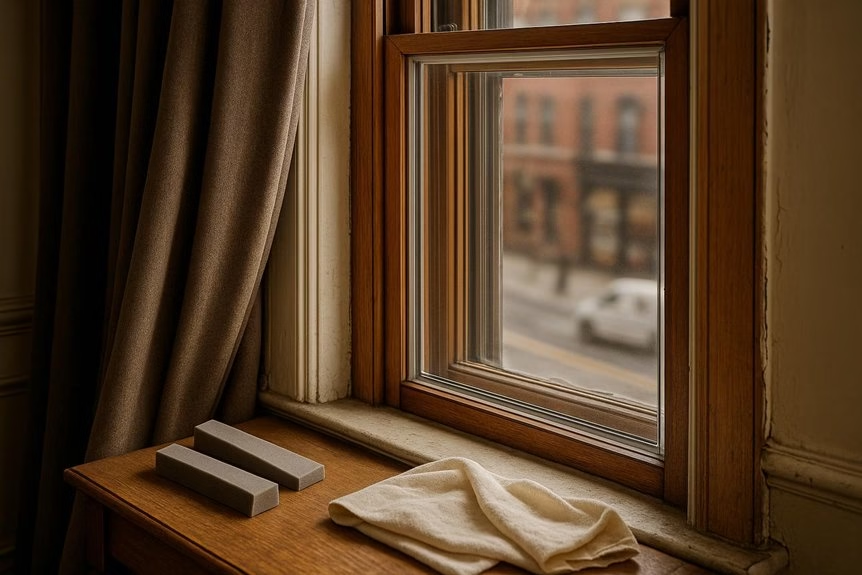
Older homes often let in outside noise because small air leaks around the sash and casing combine with lightweight glass that does little to stop vibration. In many cases, the best first step is professional weather sealing to close those leakage paths, but it’s important to know that window film, foam, caulk-only fixes, curtains, and blankets rarely deliver meaningful sound reduction on their own. For more noticeable results, a properly fitted interior window insert or an upgrade to laminated acoustic glass is typically far more effective. At Total Home Interiors, we help homeowners across West Orange, NJ and the Tri-State area identify the right window soundproofing solution based on the home, the noise source, and the level of performance you actually need.
Key Takeaways
- In older homes, window noise problems usually come from a combination of air leakage around the sash, frame, and casing, along with low-mass single-pane glass and lightweight window construction. These weak points allow street noise, neighborhood noise, and general exterior sound to pass indoors far more easily.
- Weather stripping can help reduce drafts and limit some sound intrusion from minor gaps, but it should be viewed as a basic improvement rather than a true soundproofing solution.
- Common DIY attempts such as plastic film kits, foam liners, caulk-only fixes, moving blankets, and standard curtains rarely make a meaningful difference. They do not add enough mass or create the type of continuous seal needed for serious noise control.
- For better performance, professionally fitted interior window inserts or custom window plugs are far more effective because they improve the seal across the full opening and add another barrier to sound transfer.
- When outside noise is persistent or severe, the most reliable results typically come from advanced solutions such as laminated acoustic glass or full window replacement. For homeowners in West Orange, NJ and the Tri-State area dealing with traffic, city, or neighborhood noise, professional evaluation is the best way to identify the right window soundproofing strategy.
Why Old Windows Let In So Much Noise
Older windows let in so much noise for two main reasons: air leakage and low mass. In many older homes, small gaps around the sash, frame, and casing create direct paths for outside sound to enter.
Older windows let noise in through two main weaknesses: air leaks around the frame and too little mass to block sound.
As the home settles over time, seals can fail, caulk can crack, and the bond between the window frame and surrounding wall can weaken—making street noise, neighbor noise, and general outdoor activity much more noticeable indoors.
Older window assemblies also do very little to resist vibration. Single-pane glass and lightweight frames simply don’t provide the mass or separation needed for meaningful sound control.
Acrylic window inserts can help reduce noise because acrylic inserts flex and absorb sound energy better than standard glass-based add-ons.
That’s why basic DIY fixes like plastic films or incomplete coverings rarely make a major difference. Real improvement usually requires a professionally designed solution, such as upgraded multi-layer window systems, better perimeter sealing, and integrated acoustic strategies that address both the window and the surrounding wall assembly.
At Total Home Interiors, we help homeowners across West Orange, Hoboken, Jersey City, and the greater NYC area solve noise problems with expert soundproofing and tailored window treatment solutions designed for quieter, more comfortable living.
Seal Window Gaps With Weather Stripping
Older windows often leak sound through small perimeter gaps, but weather stripping is only a modest first step—not a complete soundproofing solution.
Applying wider, self-adhesive rubber weather stripping around the full window casing can help reduce drafts and limit some airborne noise where side, top, and bottom gaps allow air movement.
Using weatherstripping tape to seal perimeter leaks is one of the most cost-effective ways to reduce noise infiltration at windows.
For the best basic performance:
- Apply the strip continuously to reduce air leak paths.
- Press it firmly and evenly so there are no thin or loose sections.
- Inspect it again after installation and seasonal temperature changes.
Because sound often follows airflow, sealing these openings can improve comfort and slightly reduce outside noise.
However, if you’re dealing with persistent street noise, neighbor noise, or sleep-disrupting sound, professional window soundproofing is usually needed for meaningful results.
Total Home Interiors designs integrated solutions for homeowners across West Orange, Hoboken, Jersey City, and NYC, combining expert soundproofing strategies with custom acoustic and privacy enhancements for a quieter home.
Use a Window Insert to Soundproof Windows
A window insert can reduce noise more effectively than basic weatherstripping because it addresses the full window opening, not just the perimeter. By adding a properly fitted interior barrier, you increase mass, improve the air seal, and help limit sound entering through the glass and frame assembly.
For meaningful results, the insert must be built to the exact window casing and sealed correctly. Small gaps can significantly reduce performance, which is why accurate measurement and professional installation matter. Acoustic inserts can block up to 70% of external noise when they fit existing frames snugly and create an airtight seal.
While off-the-shelf or DIY options may offer minor improvement, custom-fit window soundproofing solutions are typically the better choice for homeowners dealing with street noise, neighbor noise, or sleep-disrupting sound.
At Total Home Interiors, we design and install tailored soundproofing solutions for homes and apartments throughout West Orange, NJ, Hoboken, Jersey City, and NYC—helping clients achieve quieter, more comfortable interiors with results that go beyond temporary fixes.
Why Curtains and Blankets Fall Short
Many homeowners try curtains or moving blankets first, but these DIY options usually fall short because they don’t create a true seal at the window. Gaps at the sides, top, and especially the bottom still allow air—and sound—to pass through, which is why street noise and outside disturbances continue to come in.
Even so-called “acoustic” curtains rely mainly on layered fabric. While thicker materials can soften some reflected sound inside the room, they do little to block the primary leak paths when the installation leaves open air gaps. For any window covering to make a meaningful difference, it must extend beyond the window opening or fit tightly to the frame. Heavy curtains can help dampen some outside noise, but without proper installation and acoustic drapes that extend beyond the frame and reach the floor, sound leakage still remains a major issue.
- Thick fabric may absorb a small amount of sound, but it won’t address the main points where noise enters.
- Loosely hung moving blankets in front of glass provide minimal edge sealing and limited real-world noise reduction.
- “Soundproof” product claims can be misleading unless the material is properly mounted and paired with a more complete soundproofing strategy.
Without sealed contact and the right construction approach, you’re mostly reducing a bit of echo inside the room—not solving the outside noise problem. For homeowners in West Orange, Hoboken, Jersey City, and the greater Tri-State area, professional window soundproofing and integrated acoustic solutions deliver far more effective, lasting results than temporary fabric-based fixes.
Skip Film, Foam, and Caulk-Only Fixes
Although film kits, foam liners, and caulk may seem like simple upgrades, they rarely solve the real issue with older windows: noise travels anywhere air can still pass.
Simple window fixes rarely stop noise when older windows still allow air to leak around the frame.
Insulation film can reduce drafts, but it does very little to block meaningful sound transmission, especially around the frame.
Foam liners may absorb a small amount of sound, yet they don’t address the full window assembly where most noise problems begin.
Caulk-only approaches also tend to fall short over time.
As a home settles and seasonal movement occurs, sealants can dry out, crack, and reopen the same small gaps that let noise and outside air back in.
Even heavier curtains or temporary add-ons underperform when the perimeter is still leaking.
For homeowners dealing with persistent street noise, neighbor noise, or poor sleep, the more effective path is a professionally designed window soundproofing solution that combines airtight sealing with the right sound-blocking materials.
Effective systems work best when they combine proper sealing with added mass and sound-blocking barriers to reduce airborne noise transmission.
At Total Home Interiors, we focus on complete systems—not patchwork fixes—using proven strategies such as acoustic window inserts, secondary glazing, and other custom soundproofing methods designed for lasting performance.
Without both proper sealing and added mass, most DIY efforts deliver only limited improvement.
Replace Old Windows With Thicker Glass
If traffic, neighbor, or city noise is still getting through older windows, upgrading to thicker, acoustically rated glass can make a meaningful difference—but only when the full window assembly is evaluated correctly. Higher-mass glass helps reduce sound transmission, and in many homes, laminated or multi-pane acoustic glazing performs better than basic single- or double-pane units.
When considering window replacement, focus on:
- Asking about acoustic glass options, including laminated and higher-mass glazing, along with the window’s sound control rating.
- Scheduling professional noise leak testing to determine whether the biggest issue is the glass, frame, perimeter gaps, or surrounding wall construction.
- Confirming exact measurements and working with a qualified acoustic specialist or installer before ordering.
This type of glazing strategy is commonly used in hotels, multifamily buildings, and properties near busy roads because multi-layer window systems can significantly reduce outside noise. Because sound travels in waves and includes both airborne and structure-borne noise, professional testing helps identify whether the window itself is the main weak point. However, performance depends on proper product selection and installation—not just thicker glass alone.
In many cases, professionally specified window upgrades deliver far better results than temporary DIY measures like blankets, films, or basic curtains.
For homeowners in West Orange, NJ and across the Tri-State area, Total Home Interiors helps identify whether window soundproofing is the right solution—or whether noise is actually entering through walls, ceilings, or other structural paths.
Compare Window Soundproofing Options by Cost
When comparing window soundproofing by cost, start with the lowest-investment improvements and move toward professional window upgrades only when the noise problem requires it. The first step is identifying the noise source—street traffic, neighbors, mechanical equipment, or general city activity—because the right solution depends on what sound is entering the space and how it’s traveling.
Basic air-sealing is often the most cost-effective place to begin. Adding quality rubber self-adhesive weather stripping around the window casing can help reduce drafts and limit minor sound leakage through small gaps. It’s an affordable improvement, but it should be viewed as a first step, not a complete soundproofing solution. Using acoustic sealant on surrounding cracks can further improve airtightness and reduce sound leakage.
Lower-cost options like curtains, acoustic blankets, and clear insulation film are commonly tried, but they rarely deliver meaningful noise reduction on their own. For coverings to make any difference, they must extend well beyond the window frame and fit tightly at the edges. Even then, performance is limited. Insulation film may improve energy efficiency, but it’s too thin to significantly block sound.
A better mid-range option is an interior window insert or custom-built window plug, which can provide more noticeable results by adding an additional barrier between the room and the outside noise. However, for persistent street noise or serious sleep and privacy concerns, professionally specified solutions typically outperform DIY methods.
When noise remains a major issue, thick laminated glass, specialty glazing, or full window replacement offers the strongest performance. This is where expert guidance matters. At Total Home Interiors, we help homeowners in West Orange, Hoboken, Jersey City, NYC, and across the Tri-State area evaluate whether sealing, inserts, or full soundproofing upgrades will provide the best return—so you avoid wasting money on temporary fixes that don’t solve the problem.
Frequently Asked Questions
Can Soundproofing Windows Also Improve Energy Efficiency in Older Homes?
Yes—window soundproofing can also improve energy efficiency in older homes when it’s designed correctly. Upgrades like high-quality interior window inserts, improved glazing, and tight air sealing help reduce drafts, limit heat transfer, and make rooms more comfortable in every season.
In many older homes across New Jersey and the NYC area, these improvements can also reduce HVAC workload while adding privacy and cutting outside noise. The key is professional installation: older frames and sashes often have moisture and insulation challenges, so the wrong materials or a poor fit can lead to condensation and long-term damage.
Total Home Interiors helps homeowners choose soundproofing window solutions that balance noise reduction, comfort, and energy performance without compromising the character of the home.
How Do I Measure Windows Accurately for a Custom Interior Insert?
For a custom interior window insert, accurate measuring is critical to achieving the right fit, seal, and acoustic performance. Measure the window opening at three points for both width and height—top, middle, and bottom—and use the smallest measurement in each direction.
Also check the available depth inside the frame to ensure the insert can sit properly, especially if locks, cranks, or trim may interfere.
Review the perimeter carefully for uneven gaps and allow appropriate space for weather sealing so the insert fits securely without compromising performance.
Finally, confirm the insert thickness based on the material specification and the clearances of your existing window frame.
For the best results—particularly when noise reduction and clean interior integration matter—professional measuring helps avoid fit issues that can reduce effectiveness.
Will Window Soundproofing Solutions Affect Natural Ventilation or Emergency Egress?
Yes—window soundproofing can affect both natural ventilation and emergency egress, which is why acoustic window upgrades should be selected carefully.
Fixed inserts, laminated glass panels, and tightly sealed soundproofing systems often reduce airflow, while operable solutions can preserve some ventilation.
For bedrooms and any code-required escape windows, safety comes first: a soundproofing solution should never block or slow emergency exit.
The best approach is a professionally designed system that improves noise control while maintaining required opening sizes, accessibility, and code compliance.
Total Home Interiors helps homeowners across West Orange, NJ and the Tri-State area choose premium window soundproofing solutions that balance comfort, safety, and everyday functionality.
Are There Soundproofing Options That Preserve Historic Window Appearance?
Yes—there are soundproofing options that preserve the look of historic windows. The most effective solutions are typically low-visibility, such as interior storm windows, acoustic caulking, and slim secondary glazing that keeps the original sash, muntins, trim, and proportions intact.
When designed correctly, these upgrades can significantly reduce street and neighborhood noise without compromising architectural character.
For historic homes in NJ and the Tri-State area, reversible methods are often the preferred approach—especially when landmark or preservation requirements apply.
A professional soundproofing plan helps balance noise reduction, appearance, and compliance, so you can improve comfort while protecting the original details that make the home unique.
How Long Do Weather Stripping and Window Inserts Typically Last?
You can expect weather stripping to last about 5 to 10 years, while most window inserts last 10 to 20 years or longer with proper care.
In urban homes throughout West Orange, Jersey City, Hoboken, and NYC, lifespan often depends on sun exposure, moisture, window use, and overall installation quality.
Yearly inspection is important, because worn seals or shifting inserts can reduce comfort, privacy, and noise control performance.
For homeowners dealing with street noise or drafty windows, professional evaluation can help catch issues early and determine whether upgraded window solutions may be a better long-term fit.
Conclusion
Older windows in charming homes often let in more street noise than most homeowners expect—but not every “soundproofing” fix is worth the investment. The solutions that make a meaningful difference typically involve professionally sealing air gaps, installing high-performance interior window inserts, or upgrading to thicker, better-engineered glass systems. By contrast, most off-the-shelf DIY products offer minimal real-world improvement. For families in West Orange, Hoboken, Jersey City, and across the Tri-State area, the right window soundproofing approach can help protect nap time, improve sleep, and restore the comfort of home—without sacrificing the character of an older property.