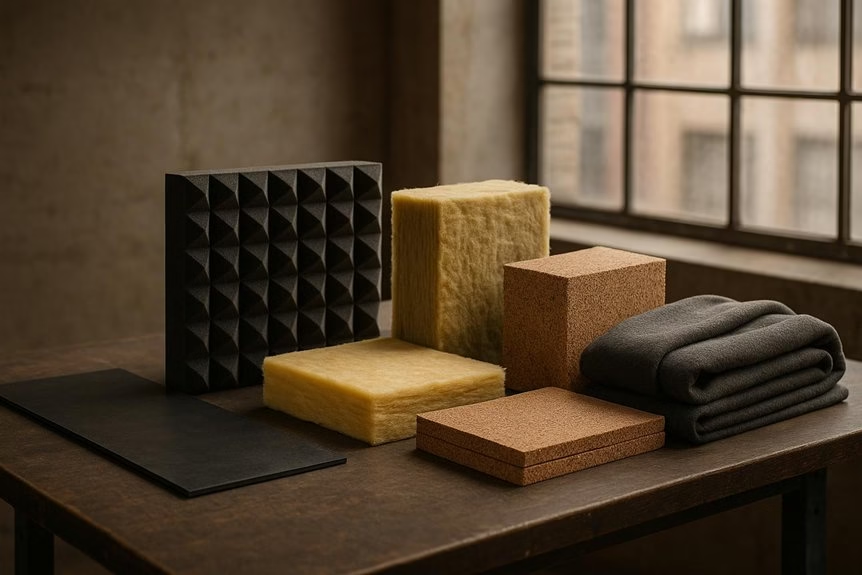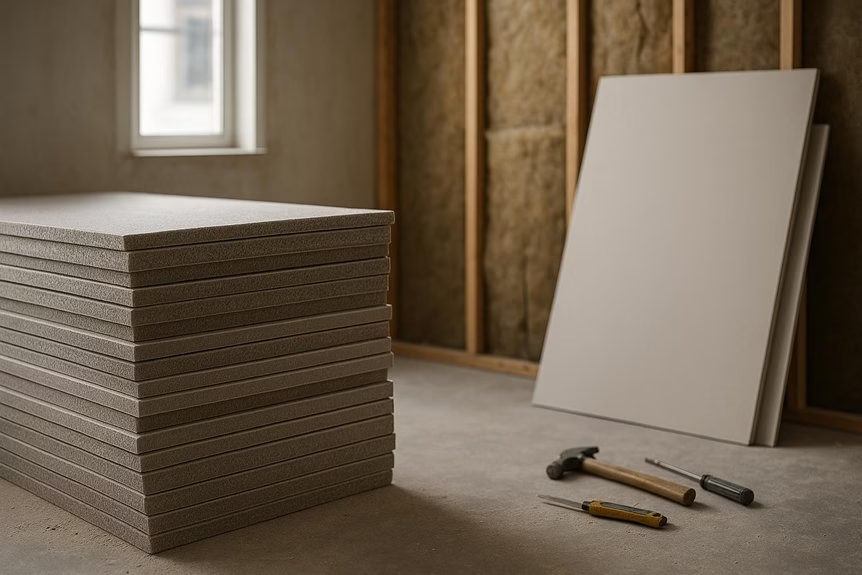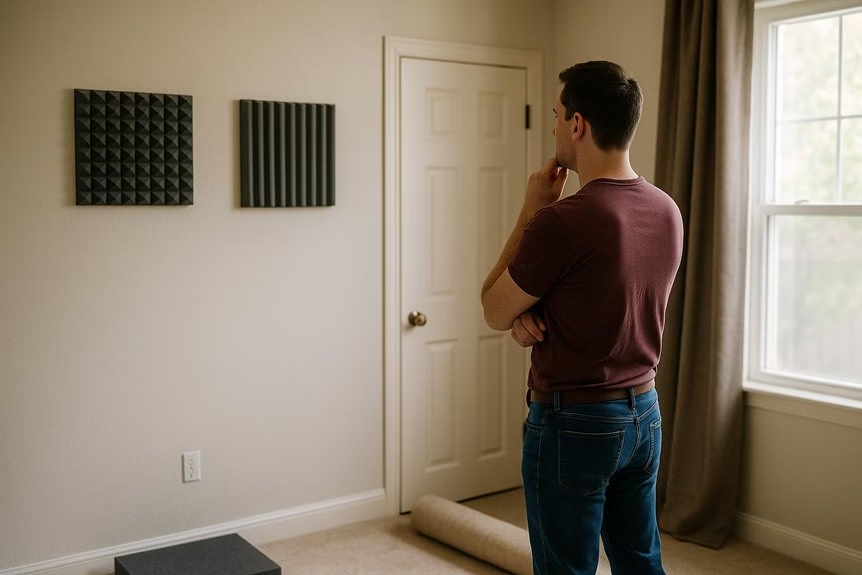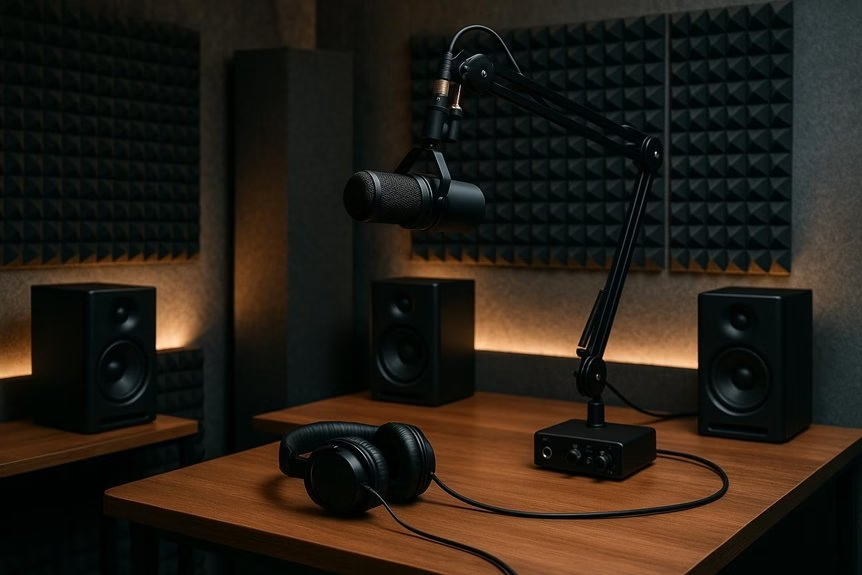
For podcast and recording studio soundproofing, the best results start with a professional assessment of your room’s baseline noise and the specific goals for recording, mixing, and privacy. In many homes and small commercial spaces, the right solution involves a combination of acoustic treatment to improve sound quality and true soundproofing to reduce noise transfer through walls, ceilings, floors, and windows. Separating recording and mixing zones, treating first reflections and rear walls, and using flexible acoustic panels can improve clarity, while severe street noise or shared-wall disturbance may call for advanced isolation methods such as decoupled construction, acoustic drywall, or a room-within-a-room design. Total Home Interiors helps clients across West Orange, NJ, NYC, Hoboken, and Jersey City choose the right approach with professionally designed acoustic and soundproofing solutions that outperform typical DIY fixes.
Key Takeaways
- Professional soundproofing helps keep street and neighbor noise out, reduces sound leakage, lowers the noise floor, and creates a more private, reliable recording environment for homes, podcast spaces, and small business studios.
- A proper starting point is a noise audit that measures decibel levels, tracks peak noise periods, and identifies sound leaks around doors, windows, walls, and ceilings before recommending the right solution.
- Acoustic panels improve echo and speech clarity, but true sound isolation requires construction-based upgrades such as sealed assemblies, solid-core doors, decoupling, acoustic drywall, and other professionally selected soundproofing materials.
- Ventilation should be planned as part of the overall design, since tightly sealed recording rooms and podcast booths still need quiet, comfortable airflow without compromising isolation.
- Better recording and monitoring performance comes from separating recording and mixing areas when possible and applying acoustic treatment to first reflection points, rear walls, corners, and ceilings for balanced sound control.
- For clients in West Orange, NJ and across the Tri-State area, Total Home Interiors delivers custom acoustic and soundproofing solutions designed for urban homes, creative spaces, and commercial environments where privacy and performance matter.
What Soundproofing Solves in a Podcast Studio
Soundproofing in a podcast studio solves two essential problems: it helps keep outside noise out of your recordings, and it reduces the amount of voice, playback, and monitoring sound that escapes into nearby rooms.
For homeowners and small businesses in the Tri-State area, that means better noise floor control, more privacy, and fewer interruptions during recording sessions.
In urban homes, apartments, and mixed-use spaces, professional soundproofing can make a meaningful difference when traffic, neighbors, footsteps, or building noise would otherwise interfere with spoken-word clarity.
A properly designed studio assembly may significantly reduce sound transfer, helping create cleaner takes and a more dependable recording environment.
It also supports better acoustic performance by creating a more controlled space around the microphone position, which helps limit distractions and improve consistency from session to session.
Most importantly, professional soundproofing gives you the flexibility to record voice-overs, podcasts, and other spoken content on your schedule, without having to wait for the building or neighborhood to quiet down.
For New Jersey property owners, this can also help support compliance with quiet hours and local residential noise limits when recording or monitoring content in homes or mixed-use spaces.
Check Outside Noise Before Soundproofing
Before investing in soundproofing, start by identifying the real outside noise problem. At Total Home Interiors, we recommend measuring your baseline street or neighborhood noise with windows and doors positioned exactly as they’d be during everyday use or while recording, working, or sleeping.
Create a clear traffic baseline by separating constant low-frequency rumble from intermittent peak noise like buses, trucks, sirens, or delivery vehicles. These short bursts often reveal where sound is leaking through weak points such as gaps around doors, older windows, or under-insulated wall assemblies.
Time-of-day logging is also essential. Morning rush hour, evening traffic, and nighttime conditions can all produce very different results, and a single reading rarely tells the full story. In many urban settings, noise levels can vary by floor height and shift by several decibels between daytime and nighttime conditions.
Record decibel levels, save short audio samples, and note the exact conditions for each test.
If you make any early changes, re-test using the same setup and measurement positions so you can compare accurately. Measuring both inside and outside under matching conditions helps confirm whether improvements are meaningful.
For homeowners and businesses across West Orange, Hoboken, Jersey City, and the greater NYC area, this step is critical to designing a professional soundproofing solution that targets the right problem the first time.
Choose Treatment or True Sound Isolation
True soundproofing is a construction-based solution designed to reduce noise transfer in and out of a space. That typically involves a sealed enclosure, solid-core doors, perimeter sealing, upgraded wall or ceiling assemblies, and in many cases decoupling and high-performance materials. In many projects, decoupling method is considered one of the most effective ways to limit vibration transfer through walls and ceilings.
For homeowners in West Orange, Hoboken, Jersey City, and NYC dealing with traffic noise, thin walls, or shared-building noise, this is often the difference between a room that sounds better and a room that’s actually quieter.
- Add acoustic panels or drapery, and the room may sound tighter, cleaner, and less echoey.
- Hear trucks, sirens, or neighbors through the structure, and treatment alone won’t solve it.
- Build or retrofit the space with professional soundproofing methods, and outside intrusion and internal bleed can be reduced significantly.
- Seal the room properly, and ventilation must also be addressed carefully so airflow doesn’t introduce new noise.
The right path depends on your goals, your building conditions, and how far you’re willing to go beyond surface-level improvements.
At Total Home Interiors, we help clients across the Tri-State area determine whether they need acoustic treatment, construction-grade soundproofing, or a combination of both for the best long-term result.
Separate Mixing and Recording Zones
Once you’ve defined your sound isolation goals, the next step is planning separate recording and mixing zones so each area performs properly without compromising the other. Position the recording area—or, ideally, a professionally designed internal booth—at one end of the room, with the mixing station and seating opposite. This creates better workflow, reduces sound bleed, and supports more accurate monitoring.
A comfortable client layout should also preserve proper speaker spacing and listening position, which is critical for reliable mix decisions. To create flexible separation without a major renovation, acoustic curtains can help divide the space while adding a layer of sound control. Around the mixing position, focus acoustic treatment where it matters most: corner bass traps, wall-mounted acoustic panels, and ceiling clouds to manage reflections and improve clarity. Use the mirror technique to identify first reflection points so wall and ceiling treatments are placed where they will have the greatest impact.
On the recording side, keep the setup simple and controlled, using headphone monitoring when needed to minimize interference. Many homeowners and creators in NJ, NYC, Hoboken, and Jersey City start with strategic acoustic treatment and movable separation, then upgrade to a fully enclosed booth with quiet, leak-resistant ventilation when higher isolation becomes necessary.
For the best results, Total Home Interiors designs integrated acoustic solutions that balance sound quality, privacy, and aesthetics—without relying on one-size-fits-all DIY fixes.
Treat First Reflections and Rear Walls
To improve speech clarity and make a room perform the way it should, first reflections and rear walls should be treated as priority surfaces, not left as an afterthought. In listening rooms, media spaces, home theaters, and voice-recording environments, these areas often create the echo, smear, and harshness that make conversations less intelligible and audio less precise.
At Total Home Interiors, we address these issues with professionally selected acoustic treatments, including thick broadband acoustic panels placed at key reflection points along the side walls and rear wall. When properly positioned, these treatments help tighten imaging, reduce flutter echo, and control the delayed energy that builds up behind the listener or speaker position. Proper placement at first reflection points is essential for reducing echoes and improving dialogue intelligibility.
- Acoustic panels at first-reflection points improve clarity and reduce smeared speech.
- Rear-wall treatment helps control echo buildup and makes the room sound more balanced.
- Additional wall or ceiling treatment near hard surfaces can reduce flutter and ringing.
- Professionally planned acoustic treatment creates a drier, more focused environment for voice work, media rooms, and home theaters.
For clients using a room for podcasting, calls, content creation, or private listening, thicker rear-wall treatments can make the space feel noticeably more controlled and comfortable. Rather than relying on trial-and-error DIY placement, a professionally designed acoustic plan ensures the treatments work with the room’s layout, finishes, and intended use.
Whether you’re dealing with echo in a Jersey City condo, a noisy media room in Hoboken, or a home office that needs better speech clarity in West Orange or NYC, Total Home Interiors delivers custom acoustic solutions designed for both performance and appearance.
Add Bass Traps and Ceiling Clouds
Even when wall panels help with mid and high frequencies, a room can still suffer from bass buildup and strong ceiling reflections that reduce clarity.
In professional acoustic treatment, Corner Placement is a key next step. Installing bass traps in vertical corners and ceiling junctions helps control low-frequency energy that thinner panels can’t absorb effectively.
Because bass requires more mass and depth, these treatments should be substantially thicker than standard wall panels.
Cloud Positioning is equally important for improving focus and imaging.
Ceiling clouds placed above the main listening position, conference seating area, or vocal mic zone capture early reflections that can smear detail and reduce speech intelligibility.
Rather than relying on scattered absorption alone, a properly planned ceiling treatment strategy targets the areas that make the greatest acoustic impact. Treating primary reflection points on the ceiling and nearby surfaces can further improve dialogue clarity and overall sound balance.
For homeowners, studios, offices, and media spaces throughout West Orange, NJ and the Tri-State area, combining bass traps with ceiling clouds often delivers one of the most noticeable improvements in tightness, balance, and overall acoustic accuracy.
Total Home Interiors designs and installs custom acoustic solutions tailored to the room, ensuring a more polished result than one-size-fits-all DIY approaches.
Use Curtains and Mobile Panels Flexibly
While permanent acoustic treatment does most of the work, curtains and mobile panels add flexibility that can make a room more functional day to day. For homeowners and creative professionals in NYC, Hoboken, Jersey City, and across North Jersey, this approach can help define a recording or listening zone without committing to a full rebuild right away.
Curtain zoning is especially useful when you want to separate a mixing area from a small voice-over corner, improve privacy, or reduce the sense of echo in a multi-use room. Professionally specified drapery and movable acoustic treatments can help control reflections while keeping the space adaptable.
- Heavy curtains can soften reflections between seating areas and the microphone position.
- Mobile acoustic panels can be repositioned as needs change, helping refine sound where it matters most.
- Portable absorption is often most effective near the mic position and around reflective work surfaces like a mixing desk.
- Flexible layouts can be helpful in rooms with windows, doors, or exterior walls exposed to street noise.
If your room faces a busy street or urban façade, curtains can help define the recording zone, while more robust acoustic treatment and bass control address the larger performance issues elsewhere in the space. Curtains that extend beyond the window frame and reach the floor can improve the seal and reduce sound leakage around street-facing openings.
For phased projects, many clients start with flexible solutions such as drapery and movable panels, then add custom-installed acoustic treatments as the room evolves.
At Total Home Interiors, we design integrated acoustic and window treatment solutions that balance performance, appearance, and everyday usability—so your space works better now and can scale with your future needs.
When a Voice Booth Makes Sense
When outside traffic, hallway activity, or household noise keeps intruding on your recordings, a dedicated voice booth can seem like the logical next step. It often helps most in apartments, condos, or shared-wall homes where street noise and neighboring activity interfere with otherwise usable takes.
A dedicated voice booth can be a smart next step when outside noise keeps disrupting otherwise usable recordings.
If curtains and basic acoustic treatment are no longer enough, a booth can create a more controlled environment for voice-over or podcast sessions.
That said, a booth is only one part of the larger noise-control picture. If you also need to reduce sound transfer through walls, ceilings, floors, or windows, a professionally designed soundproofing solution will usually deliver more meaningful whole-room results than a booth alone. In many homes, acrylic window inserts can complement broader soundproofing efforts by helping reduce noise that enters through the windows.
At Total Home Interiors, we help homeowners across West Orange, Hoboken, Jersey City, and the greater NYC area evaluate whether a modular booth, architectural soundproofing, or a combination of both makes the most sense for the space.
A booth can also be useful when you need to project your voice without disturbing the rest of the home or nearby neighbors. Prebuilt modular models assemble relatively quickly and can provide solid mid- and high-frequency isolation, with some rated around 30 dB.
Still, isolation, ventilation noise, room size, and long-term comfort all matter. If your goal is quieter recordings and a quieter home overall, expert guidance can help you choose the right solution the first time.
Booth vs Room-in-Room: Which Costs Less?
Which costs less in practice: a prefabricated booth or a full room-in-room build?
In most cases, a booth costs less upfront because you’re isolating a smaller footprint instead of reconstructing and decoupling an entire section of the room. That’s the basic cost advantage.
- A WhisperRoom can approach A$78,000 once shipping, import fees, and installation are included.
- A StudioBricks booth has been quoted at about A$60,000 including shipping and assembly.
- A Demvox import priced near €20,000 shipped can still end up around A$37,000–A$38,000 after duties and assembly.
- A true room-in-room build often costs more because it involves more construction, more isolation materials, and more labor across walls, ceiling, and sometimes flooring.
For homeowners, the real takeaway is that booth pricing can rise quickly once freight, assembly, and site constraints are factored in.
A full room-in-room build also typically relies on resilient channels and dense layered assemblies to improve isolation by decoupling drywall from framing.
While temporary measures like curtains or defined zones may reduce distractions, they don’t deliver true soundproofing.
And by the time you move into a properly isolated solution, the investment can begin to approach custom construction costs.
At Total Home Interiors, we help clients in West Orange, NJ and across the Tri-State area evaluate whether a compact isolated enclosure or a more comprehensive soundproofing strategy makes better sense for the space, performance goals, and long-term value.
Plan Ventilation, Power, and Phased Budget
Before committing to a booth or room-within-a-room solution, plan ventilation, power, and phased upgrades early, because these details directly affect acoustic performance, comfort, and overall project cost.
Plan ventilation, power, and phased upgrades early to protect comfort, acoustic performance, and overall project cost.
At Total Home Interiors, we see this often in soundproofing and studio-style spaces throughout West Orange, NJ, Jersey City, Hoboken, and NYC: even well-built enclosed rooms need properly designed forced airflow to remain usable.
Ventilation components are typically routed through sidewall or ceiling paths, with fan placement and isolation carefully considered to reduce noise transfer while maintaining comfort.
Using flexible ducts can further help disrupt noise transfer paths within the ventilation system while supporting quieter operation.
Electrical planning should happen before walls are closed.
A well-designed layout may include separate power for lighting and ventilation controls, dedicated outlets for audio or workspace equipment, and accessible pathways for low-voltage or maintenance cabling.
These choices support cleaner performance, safer service access, and better long-term flexibility.
Fan noise is always a design consideration, but with the right acoustic strategy, it can be minimized and managed as part of the overall system.
If budget is a concern, a phased approach can make sense.
Many clients begin with acoustic treatments or privacy-focused improvements, then move into more advanced structural soundproofing as needs and budget evolve.
This approach helps prioritize immediate comfort while creating a clear path toward a higher-performance finished space.
Frequently Asked Questions
How Long Does Podcast Studio Soundproofing Usually Take to Install?
Podcast studio soundproofing typically takes 1 to 3 days for a basic installation, while more advanced projects can take 1 to 2 weeks.
The timeline depends on the room size, the level of noise control needed, and whether the project involves construction elements like insulation, acoustic drywall, decoupled walls, or upgraded door seals.
For studios in West Orange, Hoboken, Jersey City, or NYC, scheduling can also affect the start date, especially when coordinating custom materials and professional installation.
If you want a higher-performance studio with both sound isolation and acoustic treatment, you should expect additional time for finishing and system integration.
Can Soundproofing Increase Property Value for Home-Based Businesses?
Yes—professional soundproofing can increase property value for a home-based business by making the space quieter, more functional, and more appealing to future buyers or tenants.
A well-designed noise-control solution can create a more productive remote work environment, improve privacy for calls and meetings, and make a home office feel like a true professional workspace rather than a temporary setup.
For properties in busy areas like NYC, Hoboken, Jersey City, and Northern New Jersey, reducing street noise, neighbor noise, and sound transfer between rooms can be a meaningful selling point.
It can also support stronger tenant retention in mixed-use or rental situations, since quieter interiors are more comfortable for daily living and working.
For business owners who welcome clients on-site, a controlled acoustic environment can also improve first impressions and reinforce a polished, professional image.
At Total Home Interiors, we focus on custom soundproofing solutions that address real-world noise problems with proven materials and construction methods—not temporary DIY fixes.
Do I Need Permits for Building a Soundproof Recording Room?
In most cases, yes—building a soundproof recording room does require permits, especially if the project involves new walls, electrical work, HVAC changes, ceiling modifications, or converting the space to a different use.
Requirements vary by town, so homeowners in West Orange, NJ and across the Tri-State area should check local building, zoning, and occupancy codes before construction begins.
In many cases, soundproofing work is reviewed as part of standard construction permits rather than under a separate “soundproofing permit.”
Skipping permits can lead to fines, failed inspections, project delays, and problems when selling or insuring the property.
For a recording room that performs properly and meets code, professional planning is essential.
How Do Pets and Household Appliances Affect Studio Sound Isolation?
Pets and household appliances can undermine studio sound isolation when they aren’t addressed as part of the overall construction and acoustic plan.
Barking, claw noise, and movement can transfer through floors, walls, and doors, while washers, dryers, HVAC equipment, and refrigerators often introduce low-frequency vibration that easily contaminates recordings.
In dedicated studios and media spaces, effective soundproofing depends on professional strategies such as structural isolation, damping materials, acoustic sealing, and vibration control.
At Total Home Interiors, we help clients throughout West Orange, NJ and the Tri-State area design quieter, more reliable environments with custom soundproofing and acoustic solutions that support cleaner, more consistent audio.
What Maintenance Does a Soundproof Booth or Studio Require?
A soundproof booth or studio performs best with routine professional maintenance.
Regular inspections should check for worn seals, gaps, loose hardware, aging caulk, and any weakness in floor or wall isolation that could allow noise transfer.
Doors, locks, and ventilation components also need attention, since even minor failures can reduce privacy, comfort, and acoustic performance.
Filters should be cleaned and fans should remain quiet and efficient.
If acoustic panels begin to sag, stain, or lose effectiveness, replacement may be necessary to maintain the booth’s sound control and appearance over time.
Conclusion
You don’t need a commercial facility to achieve professional-sounding results, but you do need the right acoustic strategy. For home podcast studios and small business recording spaces in West Orange, Hoboken, Jersey City, and NYC, poor audio quality can quickly undermine listener trust and engagement. At Total Home Interiors, we help clients address the issues that matter most: identifying outside noise intrusion, controlling reflections and echo, and implementing targeted soundproofing where it delivers the greatest impact. With professionally designed acoustic treatment and sound isolation solutions, you can create a recording environment that sounds polished, performs reliably, and supports your content or business goals without wasting budget on ineffective DIY fixes.