
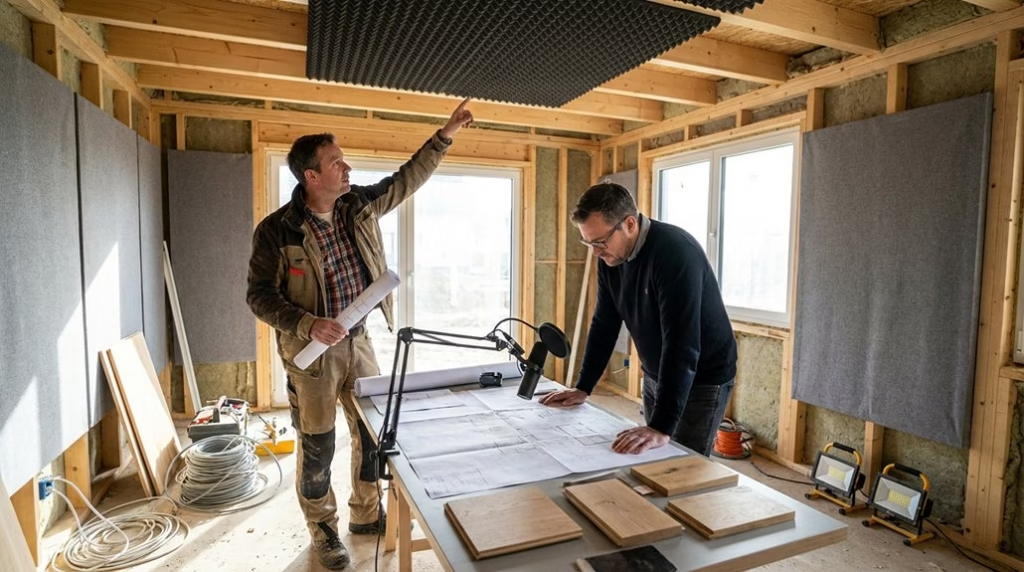
Before hiring a contractor to build your podcast studio, first define whether the space will be used for audio-only recording or full video production, since that affects everything from room layout to lighting and cable infrastructure. Choose a room with enough square footage, balanced proportions, and the best possible separation from outside noise, neighboring rooms, and mechanical systems. Your budget should clearly account for both soundproofing and acoustics, including wall and ceiling isolation, acoustic panels, ventilation, electrical upgrades, lighting, and organized wiring paths. Doors, windows, and HVAC are common weak points for noise control, so they should be addressed early in the design process. Most importantly, work from a detailed written scope, contractor bid, and project timeline to ensure the studio is built for performance, comfort, and long-term reliability.
Key Takeaways
- Define whether your podcast studio will be audio-only or video-first before bringing in a contractor, because that decision affects acoustics, lighting, camera placement, wiring, and finish details from day one.
- Choose a room with balanced dimensions, adequate ceiling height, and enough square footage to comfortably support recording equipment, acoustic treatment, and a professional layout.
- Plan separately for acoustics and soundproofing: acoustics improve how the room sounds inside, while soundproofing reduces noise from neighbors, traffic, mechanical systems, and surrounding spaces.
- Build an itemized budget that includes framing, insulation, acoustic drywall, decoupling methods, sealants, ventilation, and finish materials so pricing is accurate and comparable.
- Ask for a line-item proposal with written scope, material quantities, labor versus materials, low-voltage locations, door and window specifications, and all included finish work.
- For best results, work with a professional team experienced in studio soundproofing, acoustic treatment, and integrated technology planning to avoid costly mistakes and achieve a polished, high-performance space.
Define Your Studio Goals
Before you hire a contractor, define exactly what your podcast studio needs to do—especially if you want professional acoustics, privacy, and reliable performance from day one. Start with format planning: are you creating an audio-only show or a video podcast?
Before hiring a contractor, clarify your podcast studio goals to ensure strong acoustics, privacy, and dependable performance from the start.
Video production requires additional space for cameras, lighting, backdrops, and clean sightlines, while audio-focused studios prioritize acoustic treatment, noise control, and speech clarity.
For most podcast setups, aim for at least 32 square feet, though larger rooms are often better for comfort, equipment placement, and proper acoustic balance.
If your studio is inside a condo, apartment, or mixed-use property in areas like Jersey City, Hoboken, or NYC, room size is only part of the equation. You also need to consider outside noise, neighbor noise, and sound transfer through walls, ceilings, floors, and windows.
Because traffic and transit noise can be especially disruptive in dense areas, planning for double-pane laminated windows early can help improve both privacy and recording consistency.
Next, think through how you’ll actually use the space. Will you record solo with remote guests, or bring people in for in-person interviews?
In-person sessions typically require more microphones, more flexible lighting, and stronger acoustic treatment to keep every voice clear and controlled.
If you plan to film a wide shot plus close-up angles, your room must support tripods, lighting positions, and cable management without feeling cramped.
You should also decide whether you’ll livestream, record only, or eventually integrate the room into a broader smart home or media environment.
A professionally designed studio can go beyond basic recording needs by incorporating acoustic wall treatments, sound isolation strategies, automated shades for light control, and smart lighting scenes that simplify production.
Defining these goals early helps ensure your contractor—or a professional integration firm like Total Home Interiors—can design a space that looks polished, sounds exceptional, and performs reliably over time.
Set a Budget Your Contractor Can Bid
A defined, itemized budget gives your soundproofing contractor a realistic framework to price accurately instead of estimating around unknowns.
For projects involving residential or commercial noise control, break the budget into clear categories such as framing, insulation, acoustic drywall, decoupling methods, specialty sealants, and finish materials.
It also helps to confirm the intended room size and layout early—for example, a 12-by-10 office, studio, or media space—so labor, acoustic treatment needs, and material quantities can be quoted correctly.
Ventilation and sound isolation allowances should also be addressed upfront.
Quiet airflow design often requires boxed ductwork, acoustic insulation, weather-stripping, and other measures that reduce noise transfer without sacrificing comfort.
You can also ask contractors to price mass-loaded vinyl separately, since it is a cost-effective wall and ceiling barrier often priced at about $1–$3 per square foot.
If you already have a target investment range for construction materials, share it with bidders so they can recommend the most effective approach within budget.
Ask each contractor to separate core soundproofing construction from removable or modular components, delivery logistics, and reinstallation requirements if access is limited.
That level of clarity leads to more accurate proposals and fewer cost surprises as the project moves forward.
Choose the Best Room for Your Studio
When choosing a room for your podcast or content studio, start with the dimensions and layout, since both directly affect acoustics, lighting, and long-term usability. A room with enough square footage and balanced proportions will typically perform better than a tight, narrow space that limits microphone placement, camera angles, and acoustic treatment options.
- Check room dimensions before committing to the space.
- Confirm ceiling height for lighting, microphones, and acoustic treatments.
- Review wall placement for cleaner framing and better sound control.
- Note windows, doors, and other obstructions that can affect noise, privacy, and installation options.
Unused offices, spare rooms, and accessible attic spaces can all work, provided the room has adequate height and a practical layout. If you’re evaluating commercial space, it’s often worth comparing the added cost against the benefits of a room that can properly support professional acoustics, sound isolation, and production quality. Proper acoustic treatment at first reflection points can further reduce echoes and improve dialogue clarity in the finished studio.
For homeowners and businesses in West Orange, NJ, and across the Tri-State area, Total Home Interiors helps identify spaces that aren’t just convenient, but genuinely suited for studio performance. Our team designs integrated solutions for acoustics, soundproofing, and smart technology, helping create studios that feel polished, private, and built for consistent results.
Plan Studio Size and Layout
For a professional podcast studio, plan on roughly 32 square feet as a practical starting point for the recording zone, but the right size depends on how much equipment, acoustic treatment, and camera coverage you want to include. Rooms that are too tight can limit microphone placement, lighting, and sightlines, while a wider layout usually gives you more flexibility and can support better sound control.
If you’re converting an office or spare room, check ceiling height early, since taller ceilings can make it easier to accommodate lighting, ductwork, and acoustic solutions without crowding the space. Room dimensions and wall surfaces should also guide your acoustic plan, since identifying primary reflection points early can help determine where treatment will be most effective.
The layout should be built around how the studio will actually be used. A simple remote-recording setup may require only one microphone, one camera, and controlled lighting, while in-person interviews or multi-person shows need more open floor area and more careful planning.
Start by mapping the discussion area first, then build outward for camera angles, lighting positions, and acoustic treatment so the room supports clear sound and a polished presentation.
For homeowners and businesses in West Orange, Hoboken, Jersey City, NYC, and across the Tri-State area, Total Home Interiors designs podcast and media spaces with both acoustics and long-term usability in mind. Rather than relying on improvised DIY fixes, professional planning helps ensure the room not only fits the equipment, but also delivers the speech clarity, comfort, and visual flexibility that professional content creation demands.
Choose Audio-Only or Video First
Before you build a dedicated studio or media space, decide whether the room will support audio-only production or a video-first setup from the beginning. That decision affects construction scope, wiring paths, lighting needs, background planning, and overall finish requirements. For homeowners and professionals investing in a studio, podcast room, or content space, planning early helps avoid costly changes later. In busy New Jersey locations, sound isolation also matters because excessive noise can cut productivity by up to 66%.
Choose audio-only or video-first early to align construction, wiring, lighting, and finishes with your long-term production goals.
- Audio-only spaces typically require less visible finish work and a more focused infrastructure plan.
- Microphone performance and room acoustics should be prioritized from day one to improve clarity and reduce echo.
- Video-first rooms require more detailed coordination for cameras, lighting, cable routing, and background presentation.
- Remote guest capabilities should be considered early so the space supports your production goals long-term.
If your priority is audio-only, your budget can stay focused on the essentials: quality microphones, clean signal paths, proper acoustic treatment, and isolation from outside noise. This approach is often ideal for podcasting, voice recording, and private conferencing where sound quality matters more than on-camera presentation.
If you plan to produce video content from the start, the room should be designed for both sound and appearance. That usually means cleaner wall finishes, stronger infrastructure for multiple cameras, and a professional lighting layout.
A common starting point is a three-point lighting plan with a key light, fill light, and back light to create depth and clarity on camera.
Many clients begin with an audio-first space, then expand into video once their needs grow. At Total Home Interiors, we help clients in West Orange, Hoboken, Jersey City, NYC, and across the Tri-State area plan studio environments that balance acoustics, sound isolation, technology integration, and long-term flexibility.
Plan Soundproofing and Acoustic Panels
Start with airtightness, because even small gaps around doors, windows, electrical outlets, HVAC boxes, and duct penetrations can leak sound and undermine the performance of the entire room. In professional soundproofing projects, careful sealing is essential to reduce noise transfer, especially at the low frequencies that often travel through the smallest openings. Proper treatment of these weak points helps create the foundation for a quieter, more comfortable space.
Next, it’s important to separate two goals: soundproofing reduces noise coming in or out of a room through construction methods like added mass, decoupling, and specialized materials, while acoustic treatments improve how the room sounds inside by controlling echo and reflections. Acoustic foam alone won’t block street noise, neighbor noise, or mechanical system noise.
For better speech clarity and a more balanced listening environment, broadband acoustic panels made with fiberglass or mineral wool cores and wrapped in premium fabric are far more effective when placed at key reflection points. In more demanding builds, adding Mass Loaded Vinyl behind finished surfaces can significantly improve sound blocking by increasing wall and ceiling mass.
If you’re planning a media room, podcast space, office, or dedicated home theater, the wall and ceiling assembly should be designed to support both insulation and the right acoustic treatments from the start. Ventilation should also be addressed carefully, since ducts and vents are common paths for sound leakage.
A professionally designed system can reduce noise through duct runs while still maintaining proper airflow, comfort, and system performance.
Choose Doors, Windows, and Entry
When selecting doors, windows, and the studio entry, prioritize airtight sealing from the start. In any soundproofing project, small gaps around the frame, hinge side, latch line, trim, and fasteners can allow far more noise transfer than most homeowners expect. At Total Home Interiors, we recommend a sound-rated, properly sealed pre-hung 36-inch metal exterior door with professional attention to every hardware penetration and perimeter detail.
- Specify continuous perimeter seals at all frame edges.
- Use expanding acoustic foam to close missed cavities around the rough opening.
- Choose double-pane low-E windows instead of single-pane units for improved noise control and energy efficiency.
- Confirm proper gasket selection and precise placement at every window connection point.
If a window is part of the design, its size and placement should support visibility and workflow without creating a direct path for sound intrusion. Acrylic window inserts can complement these assemblies by using acrylic inserts to reduce window-conducted sound. Trim, fasteners, and frame junctions should always be treated as critical sound control points, not finish details.
Even when framing appears simple, continuous sealing is essential to preserving studio isolation and long-term acoustic performance.
For homeowners and creative professionals in West Orange, Hoboken, Jersey City, and NYC, professional installation makes the difference between a room that looks quiet and one that truly performs.
Plan Ventilation and Cooling
Because a sealed booth traps heat and stale air quickly, ventilation should be engineered to the room’s actual volume and use case—not left to a “quiet” duct and in-line fan chosen by guesswork. Even a compact studio can approach 1,000 cubic feet, which requires properly planned airflow to stay comfortable and functional.
At Total Home Interiors, we approach booth ventilation the same way we approach soundproofing: every opening must be intentional. Unplanned gaps can compromise noise isolation, so air supply and return paths should be designed to support both cooling and acoustic performance. In shared buildings, sound isolation strategies should be addressed during the design phase so ventilation details do not undermine acoustic privacy.
Duct routing, penetrations, and panel coordination should be planned early so the system integrates cleanly during installation. When flexible duct and booster fans don’t provide the airflow or noise control needed, a more professional solution may involve tying into the building HVAC with a sealed fiberglass register box, weather stripping, duct collars, and an extended duct run to help reduce vent noise while improving air circulation.
Map Power, Lighting, and Cable Runs
Before installation begins, map your studio’s power, lighting, and cable infrastructure around how each area will actually function. For a performance-focused space, that means dedicated power for core equipment, separate electrical capacity for lighting, and organized charging access for cameras and accessories.
- Give your PC, audio interface, and switcher dedicated power.
- Balance electrical loads so lighting doesn’t share high-demand circuits with sensitive equipment.
- Keep cable runs labeled, direct, and safely managed, with proper slack at moving cameras.
- Add ground-fault protection anywhere sinks, utility areas, or moisture may be present.
If your studio includes overhead lighting on a truss, plan a safe drop point or nearby junction box and secure lamp cabling with proper strain relief.
Use quality power distribution and heavy-gauge cabling to minimize voltage drop and reduce interference near audio paths.
In spaces where outside noise is a concern, adding acoustic insulation in wall cavities can improve sound isolation without straining the budget.
Just as important, make sure backup recording equipment remains easy to access without stepping over HDMI, XLR, or power lines during quick transitions.
At Total Home Interiors, we approach infrastructure planning as part of a larger integrated design strategy—helping clients across West Orange, NJ, and the Tri-State area create studios, media spaces, and smart home environments that are safer, cleaner, and more reliable than typical DIY setups.
Get a Written Scope, Bid, and Timeline
A strong acoustic or soundproofing plan only works when every detail is documented in writing. For projects in West Orange, NJ and across the Tri-State area, Total Home Interiors recommends requiring a clear scope of work that defines exact deliverables—acoustic panel quantities, wall and ceiling treatment areas, outlet and low-voltage locations, lighting runs, door and window specifications, rough-ins, and all included or excluded finish items.
Request a line-item proposal that separates labor from materials and identifies quantities, so you can accurately compare framing, insulation, acoustic assemblies, and hardware from one bid to another. A professional contractor should also provide a milestone timeline covering demolition or site prep, framing, insulation, air sealing, electrical, finish work, acoustic treatment installation, and final system commissioning where applicable. In New Jersey, this level of documentation also helps homeowners compare proposals using professional-grade materials such as soundproof drywall and mass-loaded vinyl, which often require expert installation for best results.
Just as important, your agreement should define change-order pricing, who’s approval authority for extra work, how delays affect completion dates, and who’s responsible for permits and inspections.
Define change-order pricing, approval authority, delay impacts, and permit responsibilities in writing before work begins.
For sound-sensitive spaces such as media rooms, offices, and home theaters, feasibility for duct routing and register box coordination should be addressed before construction closes up. That planning step is critical for controlling airflow noise and protecting the performance of the finished room.
When noise control, acoustics, and integrated technology matter, written clarity protects both budget and results.
Frequently Asked Questions
How Much Would It Cost to Build a Podcast Studio?
A podcast studio can cost anywhere from around $1,500 for a very basic DIY setup to $10,000+ for a more polished space, but the biggest cost driver is usually not the microphones or cameras—it’s the room itself.
If you want clear sound, reduced echo, and protection from outside noise, professional acoustic treatment and soundproofing are often what separate a usable studio from a frustrating one.
Construction details, acoustic materials, ventilation, and labor can add up quickly, especially in homes and apartments where noise transfer is already a problem.
For homeowners and creators in West Orange, NJ and across the Tri-State area, Total Home Interiors designs custom studio environments that prioritize sound quality, privacy, and long-term performance over temporary DIY fixes.
How Much Does a Podcast With 10,000 Listeners Make?
For homeowners and businesses in West Orange, NJ and the Tri-State area, the value of professional acoustic treatment or soundproofing depends on the space, the noise issue, and the solution required.
A simple acoustic panel installation may address echo and speech clarity, while true soundproofing for walls, ceilings, floors, or windows typically requires specialized construction methods and premium materials like mass-loaded vinyl, decoupling systems, and acoustic drywall.
There’s no fixed price, because room size, noise source, performance goals, and system design all affect the final investment.
Working with an experienced professional like Total Home Interiors ensures the solution is tailored for real-world results, not guesswork.
Are Podcasts Growing or Declining?
Podcasts are still growing overall, but the pattern is uneven—much like what we see with smart home and acoustic technology adoption across the Tri-State area.
Consumer interest remains strong as mobile access, voice platforms, and video continue expanding how people engage with content.
At the same time, some categories feel saturated while others are still gaining momentum, which means visibility and monetization can vary widely by niche and platform.
For brands focused on premium home experiences—such as soundproofing, acoustics, home automation, and motorized window treatments—podcasts can still be a strong channel for reaching homeowners and commercial clients looking for expert-driven solutions.
Conclusion
When you hire a contractor to build your podcast studio, you’re not just finishing a room—you’re investing in soundproofing, acoustics, and performance. A successful studio depends on more than finishes; it requires careful planning for noise isolation, echo control, HVAC noise, wiring, and lighting from the start. For homeowners and professionals in West Orange, Hoboken, Jersey City, and across the Tri-State area, working with an experienced contractor helps ensure your studio sounds as polished as it looks—without the compromises that often come with DIY solutions.