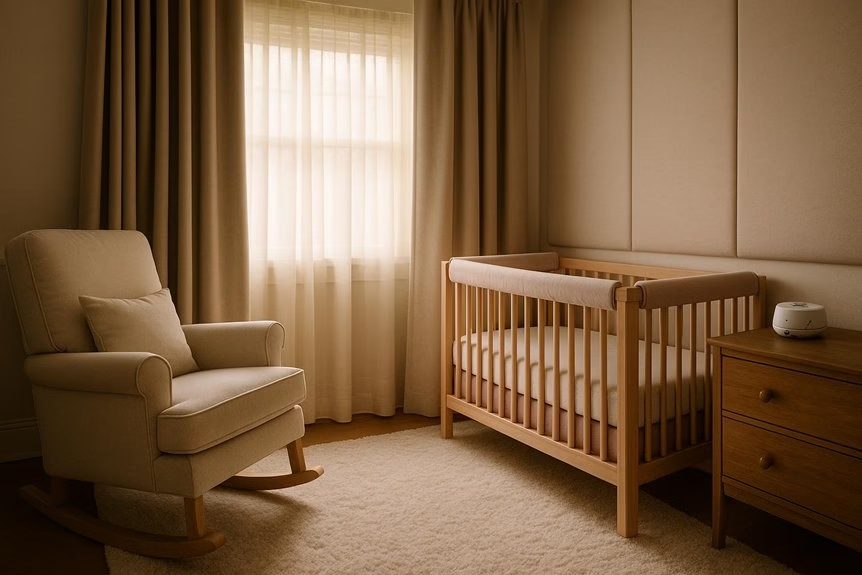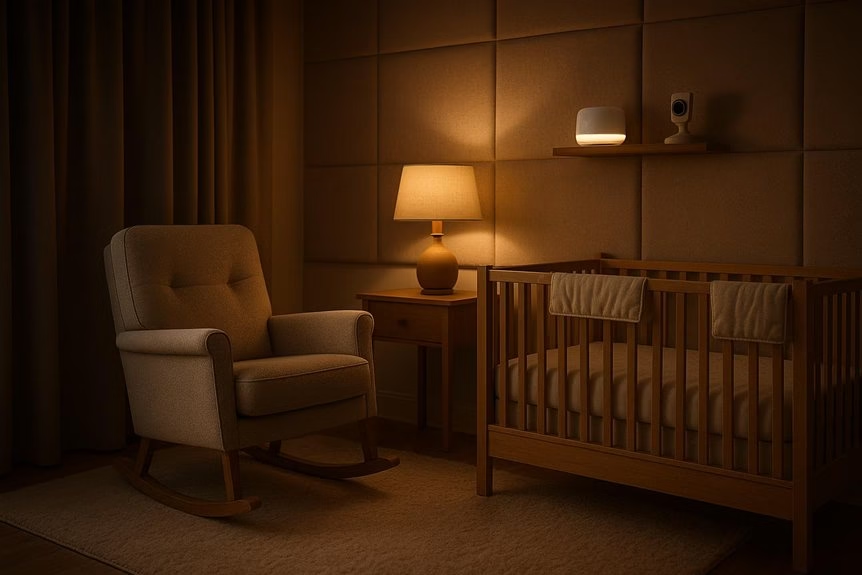
To improve sleep in a nursery, the first step is identifying where noise is entering the room. In many homes and apartments, the biggest culprits are door gaps, hollow-core doors, windows, shared walls, floors, and HVAC pathways. While simple changes like repositioning the crib, adding rugs, or using a white noise machine can help reduce distraction, they typically do not stop true noise transfer.
For families dealing with persistent street noise, neighbor noise, or sound traveling between rooms, professional soundproofing delivers more meaningful results. Solutions may include upgraded door and window sealing, acoustic wall treatments, added mass such as specialized drywall, or decoupled wall and ceiling assemblies designed to reduce sound transmission. In some cases, automated window treatments can also improve privacy, light control, and overall comfort in the nursery.
At Total Home Interiors, we design tailored soundproofing and acoustic solutions for homeowners across West Orange, NJ, and the Tri-State area, helping create quieter, more restful spaces where better sleep is possible.
Key Takeaways
- Start by identifying the biggest noise leaks in the nursery first—especially door gaps, hollow-core doors, windows, and flanking paths through walls or ceilings that often let sound travel farther than expected.
- A professionally installed solid-core door with perimeter seals and an automatic threshold can make a major difference in reducing hallway, living area, or shared-wall noise.
- For windows exposed to street or neighborhood noise, high-performance solutions such as laminated glass, upgraded double-pane assemblies, or custom interior acrylic inserts can significantly improve sleep conditions.
- Inside the room, thoughtful nursery layout matters: placing the crib away from windows, doors, and shared walls can help reduce direct noise exposure, while soft layered finishes can slightly calm reflections.
- When noise is more severe, effective soundproofing typically requires a complete system—not surface fixes—including decoupled wall or ceiling assemblies, acoustic drywall, damping compounds, and carefully sealed penetrations installed by an experienced specialist like Total Home Interiors.
Find and Rank Nursery Noise Leaks
Start with the door, because even small gaps can become major noise leaks in a nursery. Inspect the perimeter, threshold, and whether the door is hollow-core, since surprisingly minor openings can allow a significant amount of sound to pass through.
Even small door gaps can become major nursery noise leaks, making the door one of the first areas to inspect.
In many homes and apartments across West Orange, Hoboken, Jersey City, and NYC, doors are often a bigger weak point than the wall itself, so this should be ranked as a top priority before considering larger soundproofing upgrades.
Next, evaluate the windows, especially if the nursery faces street traffic or other outdoor noise sources. Single-pane glass and poorly sealed frames are common problem areas. Upgrading to laminated glass or double-pane window solutions can significantly reduce traffic noise while also improving thermal resistance.
While decorative treatments may help soften a room, true noise control depends on the right window and perimeter strategy, often paired with professionally integrated solutions such as acoustic enhancements and motorized window treatments for added privacy and comfort.
Then assess the floor, particularly if impact noise or vibration is traveling from the level below. Hard flooring surfaces can transmit footfall and structural noise more easily, making this an important area to rank early in the process.
From there, identify HVAC-related sound leaks by listening for noise traveling through shared returns, duct paths, or ceiling cavities, as these hidden routes can carry sound farther than expected.
Finally, confirm whether the shared wall is truly the source before moving into more advanced wall soundproofing methods like decoupling systems, specialized clips, or upgraded acoustic assemblies.
At Total Home Interiors, we help homeowners identify and prioritize the real sources of nursery noise so solutions are targeted, effective, and professionally designed for long-term quiet.
Rearrange Furniture for a Quieter Nursery
Once you’ve identified where nursery noise is entering, furniture placement can help reduce how much sound reaches the crib. Start by moving the crib to a non-adjoining wall, away from shared walls, doors, windows, and high-traffic areas.
This can improve the sleep environment, but layout changes alone won’t stop noise transfer through walls, ceilings, or floors.
Next, reduce sound reflection inside the room. If the nursery has hard flooring, place a large area rug near the crib and along walking paths to soften footsteps and minimize echo. Layering rugs of varying sizes and materials can improve sound trapping and further reduce echoes in the nursery.
Soft furnishings can also help absorb reflected sound and make the room feel calmer and quieter.
As a final step, test the room during typical household activity and adjust the layout if needed.
If outside noise, neighbor noise, or impact sound is still disrupting sleep, professional soundproofing and acoustic treatment may be the better long-term solution.
Total Home Interiors helps homeowners across West Orange, NJ and the Tri-State area create quieter, more comfortable spaces with custom soundproofing, acoustic treatments, and motorized window solutions tailored to each room.
Use Curtains to Soundproof Windows
If outside noise is what’s waking your baby, window coverings can help—but standard curtains alone rarely deliver the level of sound control most families hope for.
Heavy, layered drapery may slightly reduce incoming street noise at the glass, especially in rooms facing traffic, construction, or close neighbors, but meaningful soundproofing usually requires a more complete window solution.
Heavy, layered drapery can soften outside noise, but real sound control usually depends on a more complete window solution.
For stronger results, the treatment should extend fully around the window area with minimal gaps, since sound easily leaks through the perimeter.
acrylic window inserts can complement curtains by helping block outside sounds and absorbing sound energy more effectively than glass alone.
While dense curtains can improve comfort, they’re best viewed as one part of a broader strategy rather than a true standalone soundproofing fix.
At Total Home Interiors, we design professionally integrated solutions for homes across West Orange, NJ and the Tri-State area, combining window treatments, acoustic expertise, and advanced soundproofing methods to create quieter, more restful spaces.
Seal Gaps Around the Nursery Door
One of the first places sound escapes is around the nursery door, so it makes sense to address these openings before considering more advanced soundproofing options. Even small perimeter gaps can significantly reduce privacy and allow noise to travel between rooms.
In many homes, the issue isn’t the wall itself but the unsealed edges around the door assembly. A professional assessment can identify leakage at the top, sides, and bottom of the door, along with whether the door is hollow-core or solid-core. Hollow-core doors are especially common in residential construction and typically provide far less sound isolation than solid-core alternatives.
To improve performance, the door perimeter can be upgraded with properly fitted seals and acoustically appropriate gasketing where the door meets the frame. A threshold or door bottom solution may also be needed to tighten the seal below the door, particularly depending on flooring transitions and carpet height. Choosing solid core doors can further reduce sound leakage and improve overall noise control in the nursery.
These details matter because effective soundproofing depends on a complete system, not just a single product. For homeowners in West Orange, Hoboken, Jersey City, and across the Tri-State area dealing with noise near bedrooms or nurseries, Total Home Interiors provides professional soundproofing solutions that go beyond temporary DIY fixes to create a quieter, more comfortable home.
Soundproof Nursery Floors With Rugs
Hard flooring in a nursery can amplify footsteps, rocking-chair movement, and furniture shifts, allowing sound to travel more easily into adjacent rooms or below.
While area rugs can help soften surface impact and reduce some harsh reflection, they’re only a partial solution when you need meaningful floor soundproofing. Adding extra padding beneath rugs helps with impact noise and improves sound absorption on hard floors.
- Use thick area rugs and quality rug pads in key movement zones, such as around the crib, glider, and entry path.
- Add high-density underlayment beneath rugs to improve impact-noise reduction on hard floors.
- Choose plush, heavier materials that absorb more sound than thin, decorative rugs.
- For stronger results, consider professionally designed floor soundproofing that addresses structure-borne noise at the subfloor level.
At Total Home Interiors, we help homeowners in West Orange, Hoboken, Jersey City, and across the Tri-State area go beyond basic DIY fixes with custom soundproofing solutions for floors, walls, ceilings, and windows.
If nursery noise is affecting sleep, comfort, or privacy, our team can recommend a more effective, long-term acoustic strategy tailored to your home.
Soundproof Nursery Walls and Ceiling
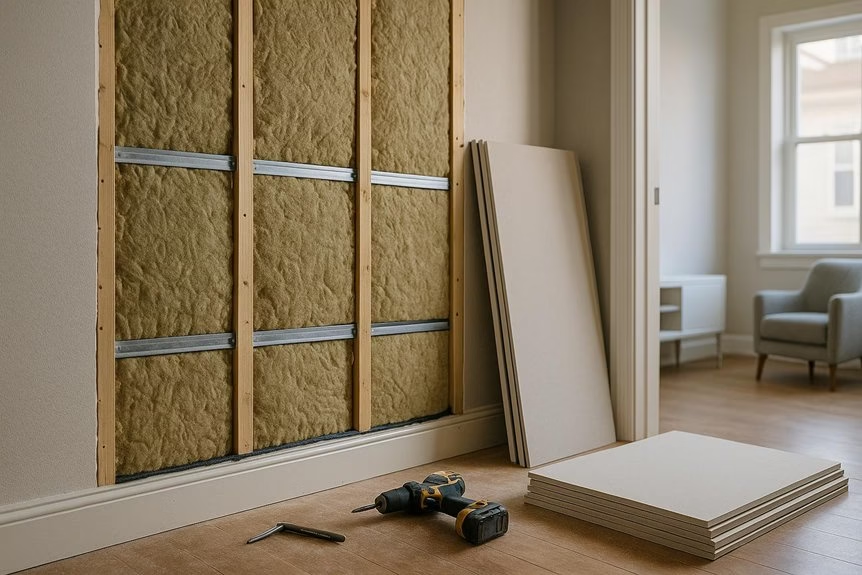
For nursery walls and ceilings, the right solution starts with a professional assessment of how sound is entering the room rather than applying the same treatment everywhere. In many homes, noise travels through wall penetrations, ceiling cavities, attic connections, and shared framing, so identifying the true weak points is the first step toward meaningful improvement.
For wall soundproofing, high-performance assemblies such as RSIC-1 clips, decoupled construction, additional acoustic drywall, and damping compounds like Green Glue can significantly reduce noise transfer when properly specified and installed. Adding materials that improve STC rating can also help create more effective isolation against airborne household noise. Outlet and penetration sealing is also important, since small openings can compromise an otherwise strong wall system.
For ceilings, controlling impact and airborne noise from above often requires more than insulation alone, especially in homes with shared framing or attic bypasses.
When the goal is a quieter nursery, professional soundproofing design ensures the wall and ceiling system work together for the best result. Total Home Interiors designs and installs custom soundproofing and acoustic solutions for homeowners across West Orange, NJ and the Tri-State area, helping create calmer, more comfortable spaces for sleep, privacy, and everyday peace.
Use White Noise to Mask Nursery Noise
While nursery soundproofing helps reduce what enters the room, sound masking adds another layer of protection by making the noise that remains less disruptive. A properly selected white or brown noise source can create a steadier sleep environment, especially when outside sounds like traffic, hallway activity, or voices are harder to control completely. Unlike basic noise machines, sound masking systems are designed and tuned for the specific space to make remaining noise less distracting.
Sound masking helps nursery soundproofing work better by softening the disruptive effects of traffic, voices, and other hard-to-control noise.
- Use consistent white or brown noise to soften sudden sounds such as footsteps, doors, conversation, or street noise.
- Keep the audio continuous through naps and nighttime sleep, since abrupt sound changes are more likely to cause disruptions.
- Maintain safe volume levels so the sound remains calming and supportive rather than overstimulating.
- Combine sound masking with professional nursery soundproofing for the best overall sleep environment.
The goal isn’t to overpower every sound. It’s to create a more even, calming background that reduces the impact of irregular noise and supports better rest. For families dealing with persistent sleep disruption from neighborhood or household noise, Total Home Interiors designs integrated nursery soundproofing and acoustic solutions that go beyond temporary fixes.
Pick Safer Eco-Friendly Materials
Because nursery acoustic materials are installed close to where your baby sleeps, prioritize low-emission, non-toxic products designed for safe indoor use. This helps reduce exposure to VOCs and microplastics that lower-quality sound treatment products may release into the air.
Look for premium acoustic panels made with recycled PET felt, cork finishes, or wool-based insulation, and verify recognized safety standards such as ASTM E84 Class A fire ratings. Many eco-conscious options also use recycled polyester felt and other sustainable materials that support both healthier indoor air and effective sound absorption.
For wall or ceiling applications near the crib, choose odor-free products with non-toxic dyes and nursery-appropriate installation methods, including low- or zero-VOC adhesives.
At Total Home Interiors, we focus on professionally selected acoustic materials that support healthier indoor environments while improving sound control, comfort, and peace of mind for families throughout West Orange, NJ and the Tri-State area.
Plan Nursery Soundproofing by Budget
If you’re planning nursery soundproofing on a budget, start with the improvements that reduce noise intrusion most effectively: sealing gaps around doors and windows. Even small openings can allow a surprising amount of sound into the room, which is why professional gap sealing is often the first step in a smart noise-control plan.
- Begin with door and window perimeter sealing. Weather-stripping, door bottom seals, and other targeted treatments can significantly reduce sound leakage at common weak points.
- Address window areas next. Layered window treatments, including properly selected acoustic curtains or shades, can help reduce outside noise while also improving privacy and light control. Choosing floor-length soundproof curtains that extend beyond the window frame can further reduce noise leakage.
- Add soft surface treatments like rugs or carpeting to reduce echo inside the nursery and soften footstep noise from within the space.
- As a next phase, consider more advanced wall or ceiling soundproofing solutions. Professionally designed systems using decoupling methods, acoustic drywall, or other construction-based treatments are often far more effective than relying on a single product alone.
This phased approach helps create a quieter, more restful nursery while prioritizing the upgrades that matter most.
For families in West Orange, NJ and the Tri-State area dealing with traffic, neighbor, or household noise, Total Home Interiors provides professionally designed soundproofing solutions tailored to the space, budget, and level of noise control needed.
Frequently Asked Questions
Can Soundproofing Affect Nursery Ventilation or Room Temperature?
Yes—soundproofing can affect a nursery’s ventilation and room temperature if gaps are sealed too aggressively or airflow paths are restricted.
Acoustic seals and other noise-control upgrades help reduce drafts and outside noise, but they can also limit natural air movement if not planned correctly.
That’s why professional soundproofing should always account for both acoustic performance and everyday comfort.
After installation, airflow testing can confirm that vents remain unobstructed and the room stays properly balanced.
If the nursery feels stuffy, warmer, or less comfortable, adjustments to vent clearance, insulation, or supplemental air circulation may be needed to maintain a quiet, healthy environment.
How Much Noise Reduction Is Realistic in an Average Nursery?
In an average nursery, a realistic noise reduction target is typically about 5 to 15 decibels, depending on the room’s construction, window performance, door sealing, and the treatments used.
Soft furnishings can help reduce echo and make the space feel calmer, but they don’t stop significant sound transfer through walls, ceilings, doors, or windows.
For families dealing with recurring street noise, hallway disturbance, or noise from adjacent units, meaningful improvement usually comes from professional soundproofing strategies such as upgraded seals, higher-mass assemblies, acoustic drywall, or decoupled construction.
The best approach is to address the basic noise entry points first, then evaluate whether a more complete acoustic solution is needed for better sleep and long-term comfort.
Will Soundproofing Materials Interfere With Baby Monitors or Wi-Fi?
Usually, no—professional soundproofing in a nursery won’t interfere with baby monitors or Wi-Fi in most cases. Standard acoustic treatments and soundproofing assemblies are designed to reduce noise transfer, not block everyday wireless signals.
The main exceptions are materials with metal content, such as foil-backed insulation, certain specialty panels, or dense construction details that can weaken signal strength if devices are placed behind them.
The best approach is to plan for both quiet and connectivity from the start.
At Total Home Interiors, we often recommend testing baby monitor and Wi-Fi performance before final installation and coordinating device placement so routers, access points, and monitors aren’t trapped behind heavy soundproofing layers.
When sound control and network design are considered together, you can create a calmer nursery without sacrificing reliable smart home performance.
When Is the Best Time to Soundproof During Pregnancy?
The best time to soundproof during pregnancy is typically the second trimester or early third trimester, when planning and installation can be handled with less last-minute stress.
For most homeowners, this is the ideal window to complete major soundproofing work before the nursery is furnished and fully in use.
If you’re addressing street noise, neighbor noise, or privacy concerns, early planning also allows for better coordination of materials, labor, and construction scheduling.
By the third trimester, it’s usually best to limit the project to final touches rather than major installation.
Setting your budget before nursery setup helps keep the process organized and manageable, especially if the work involves walls, ceilings, windows, or other construction-based soundproofing solutions.
Professional installation is often cleaner, more efficient, and less disruptive when completed before furniture, décor, and baby essentials are in place.
For homeowners in West Orange, NJ and across the Tri-State area, Total Home Interiors designs custom soundproofing solutions that prioritize comfort, privacy, and long-term performance.
Do Renters Need Landlord Permission for Nursery Soundproofing Changes?
Yes—before making any nursery soundproofing changes, verify your lease rules first. Temporary, non-damaging updates may not require approval, but permanent alterations usually do.
You should also review building policies, since apartments and condos often have additional restrictions on wall-mounted acoustic panels, weatherstripping, or other soundproofing materials.
To avoid disputes, fees, or removal later, ask your landlord in writing and get written approval before starting.
For more effective, property-appropriate solutions, Total Home Interiors can help guide you toward professional acoustic options that respect both your space and your lease.
Conclusion
With the right professional approach, a nursery can become a significantly quieter, more restful space for better sleep. The most effective results come from addressing major noise entry points first—such as walls, ceilings, floors, and windows—then pairing those improvements with privacy and light-control solutions like automated window treatments and sound masking where appropriate. Rather than relying on basic DIY fixes alone, homeowners in West Orange, NJ and across the Tri-State area often benefit from customized soundproofing strategies designed around the specific source of noise, whether it’s street traffic, neighboring units, or household activity. By using high-performance materials and expert installation, even challenging rooms can be transformed into calmer, more comfortable environments for both babies and parents.