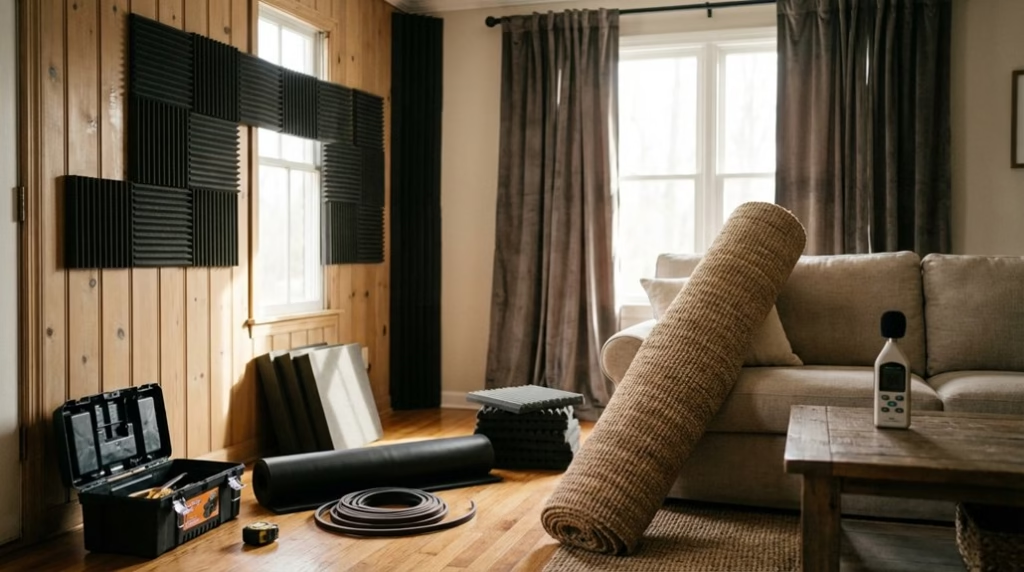
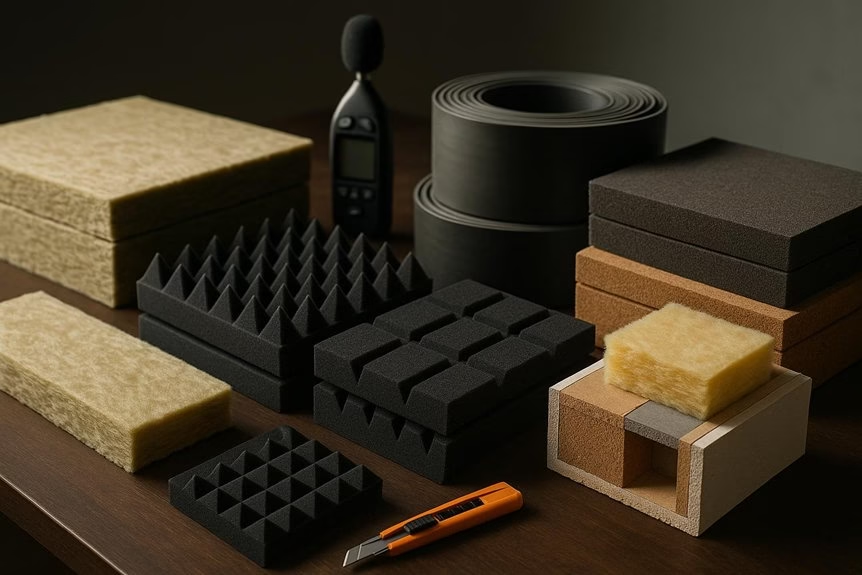
You can reduce office distractions in NJ and NYC without jumping straight into a full renovation by identifying where sound is leaking and addressing the most common weak points first. In many offices, noise travels through door gaps, window perimeters, outlets, baseboards, and cable penetrations, so professional sealing with acoustic-rated caulk, door sweeps, and weatherstripping can make a meaningful difference. If sound transfer remains an issue, more advanced soundproofing measures like added drywall mass, damping compounds, or upgraded wall assemblies may be recommended. Acoustic panels, ceiling treatments, and sound masking can also improve speech clarity and reduce everyday distractions in open or shared workspaces. The best results come from expert evaluation and follow-up testing to confirm what’s working and where deeper soundproofing may be needed. There’s more below on the most effective options for offices in NJ and NYC.
Key Takeaways
- Begin with a professional noise-path assessment to identify sound leakage around doors, windows, outlets, baseboards, ceiling perimeters, and HVAC penetrations before recommending the right office soundproofing strategy.
- Seal accessible gaps with acoustic caulk, putty pads, weatherstripping, and door sweeps to help reduce speech transfer, hallway noise, and day-to-day distractions in offices across NJ and NYC.
- Prioritize door upgrades first, since gaps at the jamb and threshold are often major weak points; in many commercial spaces, hollow-core doors should be replaced with solid-core or acoustic-rated doors for better privacy.
- Improve window performance without full replacement by sealing frame gaps and adding well-fitted acoustic window inserts to help control traffic noise, street noise, and nearby conversation.
- Measure results with baseline and follow-up dB readings or practical speech/privacy tests, since even modest reductions can noticeably improve focus, comfort, and workplace privacy.
Find Office Noise Leaks First
Before investing in acoustic panels or decorative treatments, identify where office noise is actually entering the space. In many workplaces, sound leaks through gaps in the building envelope, electrical penetrations, ceiling edges, baseboards, and duct pathways rather than directly through the wall itself.
A professional noise-path assessment can reveal common weak points like cable plates, low-voltage covers, outlets, switches, trim lines, and frame perimeters where light bleed and visible cracking often indicate both air leakage and unwanted sound transfer.
Start with baseline sound readings so improvements can be measured accurately over time; many offices fall in the 43–48 dB range before any corrective work begins.
From there, the most effective first step is typically sealing accessible gaps with the proper acoustic caulk and addressing leakage around electrical boxes and finish transitions.
In buildings where sound is also traveling through partitions, adding glass fiber insulation inside wall cavities can further improve acoustic privacy.
Because work around outlets and switches involves safety considerations, these upgrades are best handled carefully and, in many cases, professionally.
After each improvement, re-test the space.
Even a 3 dB reduction is meaningful—it represents a substantial drop in sound energy and helps confirm which noise leaks were contributing most to distraction and reduced privacy.
For offices in West Orange, NJ and across the Tri-State area, Total Home Interiors provides expert soundproofing strategies that go beyond surface-level fixes, helping businesses create quieter, more productive environments with solutions tailored to the way sound actually travels.
Soundproof Office Doors Fast
Once the obvious office sound leaks are identified, the door is often the next priority, because shared office doors commonly allow noise through visible gaps at the jamb and under the door. While basic sealing steps may reduce some leakage, lasting speech privacy and meaningful sound isolation usually require a more complete approach than off-the-shelf sweeps and weatherstripping alone.
Office doors often leak sound at the jamb and threshold, making complete sealing essential for real speech privacy.
At Total Home Interiors, we evaluate the full door assembly, including the slab, frame, perimeter gaps, and nearby wall conditions, since weak points around the opening can undermine overall performance.
In many offices, improving privacy starts with properly sealing the frame perimeter and addressing air gaps around adjacent trim, baseboards, switches, and outlets. If the existing door is hollow-core, upgrading to a solid-core or acoustic-rated door can make a substantial difference in blocking conversation and corridor noise. In New Jersey, better office door sound control can also help support compliance with quiet hours and local noise expectations where mixed-use or residential-adjacent properties are involved.
For clients in West Orange, Jersey City, Hoboken, and the greater NYC area, we design office soundproofing solutions that go beyond quick DIY fixes—delivering cleaner aesthetics, better performance, and a more professional result for private offices, conference rooms, medical spaces, and other commercial interiors.
Cut Window Noise Without Replacement
Many people assume full replacement is the only answer, but office window noise in NJ and NYC can often be reduced by addressing air leakage and weak points around the existing assembly first. Sealing small perimeter gaps with professional-grade acoustic caulking and window edge sealing can help limit the traffic noise and speech that commonly enter through the frame.
When more meaningful improvement is needed, the most effective next step is a professionally designed soundproofing solution tailored to the window, wall condition, and noise source. Acoustic inserts can create an airtight seal within existing window frames and may block up to 70% of external noise when properly fitted. Temporary inserts, added mass, and layered treatments may help in some cases, but performance depends on fit, materials, and the surrounding construction.
Total Home Interiors designs custom window and perimeter noise-control solutions for homes and offices throughout the Tri-State area, helping clients achieve better privacy, focus, and comfort without relying on trial-and-error DIY fixes.
Seal Outlets, Baseboards, and Cable Gaps
Even in a well-insulated room, small gaps around outlets, baseboards, and cable penetrations can become flanking paths for noise. Sealing these openings may help reduce sound leakage, but the results are often limited unless they’re addressed as part of a professionally designed soundproofing plan. At Total Home Interiors, we evaluate these weak points alongside wall construction, decoupling, and acoustic materials to create more effective noise-control solutions for homes and offices across West Orange, Hoboken, Jersey City, and NYC. Adding acoustic caulk at seams and edges can also help limit sound leakage through small openings.
- Gaps at baseboards, electrical boxes, and low-voltage plates can allow sound to pass between rooms.
- Acoustic sealants and putty pads are commonly used to reduce leakage at these vulnerable points.
- For meaningful sound isolation, sealing should be combined with higher-performance methods such as acoustic drywall, mass-loaded vinyl, or decoupled wall assemblies.
If you’re dealing with neighbor noise, speech transfer, or work-from-home privacy issues, Total Home Interiors can recommend a solution that goes beyond temporary DIY fixes.
Add Wall Mass for Office Soundproofing
When office privacy is a priority, adding mass to an existing wall can help reduce airborne noise such as speech, conversation, and TV sound without requiring a full demolition. A second layer of 5/8-inch drywall, installed with proper fastening patterns and staggered seams, can improve sound isolation and strengthen the wall assembly.
For stronger performance, a damping compound between drywall layers helps reduce resonance rather than simply making the wall thicker. Products like Green Glue can reduce sound transmission by more than 20 decibels when applied between drywall layers. Sealing is equally important: gaps around outlet boxes, switch boxes, and other wall penetrations can significantly weaken results if left untreated. Acoustic-grade caulk should also be applied at the wall perimeter where it meets the ceiling, floor, and adjoining walls.
That said, effective office soundproofing is rarely about one material alone. The best outcome depends on the full wall assembly, existing construction conditions, and identifying the biggest sound leaks before work begins. Total Home Interiors designs professional soundproofing solutions for offices and workspaces throughout West Orange, NJ and the Tri-State area, helping clients achieve better speech privacy, reduced distractions, and a more comfortable environment for focused work.
Reduce Floor and Ceiling Noise Cheaply
Walls and ceilings aren’t the only paths sound takes in a home or office—noise often travels through floor and ceiling assemblies as well. Noise often travels through floor and ceiling assemblies as well.
Sound doesn’t stop at walls and ceilings—it often moves through floor and ceiling assemblies too.
For a modest first step, sealing air gaps around ceiling perimeters, recessed lighting, electrical boxes, and duct penetrations can help reduce flanking noise and improve overall airtightness. Adding acoustic sealant at these weak points helps maintain airtightness and supports better overall noise reduction.
- Seal ceiling edges, cutouts, and penetrations with acoustic sealant or putty pads.
- Add professionally selected ceiling panels or baffles to help reduce echo and improve speech clarity.
- Compare conditions before and after treatment, since minor surface-level fixes typically deliver limited noise reduction on their own.
It’s important to keep expectations realistic: lower-cost ceiling treatments can help with voices, media sound, and room echo more than footfall or chair impact from above.
If impact noise is the primary problem, more advanced soundproofing—such as underlayment, decoupling, or full assembly upgrades—is usually required.
For homeowners and businesses in West Orange, Hoboken, Jersey City, and NYC, Total Home Interiors designs custom soundproofing and acoustic solutions that go beyond basic DIY measures to address the real source of noise.
Try Renter-Friendly Office Soundproofing Fixes
Need to quiet an office without opening walls or making major changes? Start with the easiest weak points: air gaps around the door and frame. A door sweep, weatherstripping, and sealing visible light leaks can noticeably reduce sound intrusion and improve speech privacy.
Next, address smaller openings that let noise pass through. Gaps around outlet and switch plates, unsealed window edges, and other minor penetrations can all undermine comfort in a workspace. Temporary window sealing solutions and heavier soft finishes can also help reduce reflections and make the room feel calmer. Adding heavy rugs or soundproof curtains can also provide affordable, temporary noise reduction while improving room acoustics.
That said, renter-friendly fixes have limits. If noise is coming through walls, ceilings, or floors—or if impact noise and ongoing speech transfer are the main issue—professional soundproofing is often the only reliable path to meaningful results. Total Home Interiors designs and installs custom acoustic and soundproofing solutions for offices, apartments, and commercial spaces across West Orange, Hoboken, Jersey City, NYC, and the greater Tri-State area.
Use Panels and Curtains for Clearer Calls
If muddy, echo-filled calls are the issue, start with professionally placed acoustic panels before considering larger upgrades. In home offices and conference rooms, panels reduce the echo and reverberation that make voices sound blurred on Zoom or Teams.
Panels should be installed at key first-reflection points on walls or ceilings. They improve speech clarity without making the room feel flat or uncomfortable. Fabric-wrapped acoustic panels are especially effective because they control reflections while complementing the space visually. Choosing panels with a strong NRC rating can further improve reverberation control and speech clarity in offices and meeting spaces.
- Install wall or ceiling acoustic panels at first-reflection points near desks and meeting areas.
- Add thick, properly fitted drapery or blackout curtains to cover windows and reduce glass-side reflections.
- Test the space on a live call to confirm clearer voice pickup and a calmer room tone.
After panel placement, window treatments can further reduce flutter echo and improve privacy along glass-heavy walls. The result is a room that sounds more direct, less distant, and easier for clients and coworkers to understand.
For homeowners and businesses in West Orange, Hoboken, Jersey City, and NYC, Total Home Interiors designs acoustic and window treatment solutions that deliver better everyday communication with a polished, professional finish.
Prioritize the Best Low-Cost Fixes
Before investing in major renovations, start by identifying where noise is entering most easily. Small gaps around door bottoms, frames, baseboards, and electrical penetrations often allow sound to travel far more than property owners expect. Establish a quiet baseline, assess each room, and prioritize the areas with the most noticeable leakage first.
Identify the biggest sound leaks first—small gaps around doors, trim, and outlets often let in more noise than expected.
Low-cost measures like a properly fitted door sweep, quality weather stripping, and careful perimeter sealing can provide modest improvements when installed correctly. Sealing gaps around outlets, switches, and electrical boxes with acoustic-rated materials may also help reduce sound transfer. Because excessive noise can cut productivity by up to 66%, even simple upgrades that target noise reduction can make a meaningful difference in a home office or small workspace.
For windows facing busy streets, temporary window plugs or heavier layered coverings can sometimes lessen intrusion, while rugs can soften footfall noise inside the space.
That said, these entry-level fixes have limits. If you’re dealing with persistent street noise, neighbor noise, or privacy concerns in a condo, apartment, office, or mixed-use property, the most effective results typically come from professionally designed soundproofing systems.
Total Home Interiors provides custom solutions throughout West Orange, NJ and the Tri-State area, including upgraded wall, ceiling, floor, door, and window assemblies built to meaningfully reduce noise transfer while complementing the design of your space.
Call a Pro When DIY Stops Working
DIY sealing can reduce some sound leakage, but it usually reaches its limit when noise travels through lightly built walls, ceiling edges, ductwork, or other hidden flanking paths.
After your DIY efforts, repeat a simple phone-call test and take another dB reading. If speech privacy still hasn’t improved, it’s time to involve a professional soundproofing specialist.
- Ask for duct leakage testing when voices or HVAC noise seem to travel through supply and return vents.
- Request a professional wall and insulation assessment if thin partitions, outlet boxes, or small penetrations continue to leak conversation.
- Escalate quickly for footsteps, chair movement, or other impact noise, since those issues typically require structural soundproofing strategies such as decoupling or floor/ceiling isolation.
Foam panels shouldn’t be expected to stop neighbor-to-neighbor noise—they are designed to improve acoustics by reducing echo within a room, not block transmission between spaces. Materials like Mass Loaded Vinyl and double drywall with damping are often needed to block airborne noise more effectively.
For meaningful privacy, you need professionally designed, layered, airtight assemblies that address the full system of weak points rather than surface-level sealing alone.
For homeowners and businesses in West Orange, NJ and across the Tri-State area, Total Home Interiors provides expert soundproofing and acoustic solutions built for real-world privacy, comfort, and long-term performance.
Frequently Asked Questions
How to Soundproof Without Construction?
You can reduce noise without major construction by addressing obvious gaps around doors and windows, but these quick fixes only provide modest results.
If you’re dealing with persistent street noise, neighbor noise, or poor privacy, the most effective solution is a professionally designed soundproofing system that treats the real paths of noise transfer through walls, ceilings, floors, and window assemblies.
Total Home Interiors helps homeowners and commercial clients across West Orange, NJ, Hoboken, Jersey City, and NYC create quieter, more comfortable spaces with custom acoustic and soundproofing solutions tailored to the room, building type, and noise issue.
How to Lessen Noise in Office?
You can lessen office noise most effectively by addressing the paths where sound actually enters and travels. In many offices, that starts with sealing door gaps, window frames, and wall penetrations, since even small openings can let in a surprising amount of noise.
Professional solutions such as under-door sweeps, perimeter weather stripping, and acoustic sealant around outlets and switch boxes can help reduce sound transfer and improve speech privacy.
For distracting conversations and poor concentration, sound masking systems are often a smart addition, especially in open-plan offices and conference areas. If the problem is echo or harsh sound inside the room, acoustic panels, ceiling treatments, or baffles can improve clarity and make the space feel quieter and more comfortable.
Impact noise like footsteps, however, usually points to a structural issue and may require more advanced ceiling isolation or decoupling methods rather than surface treatments alone.
If your office also faces street noise or mechanical noise from HVAC equipment, tighter window sealing and professionally designed soundproofing strategies can make a major difference. Total Home Interiors helps businesses across West Orange, NJ, and the Tri-State area create quieter, more productive spaces with custom soundproofing and acoustic treatment solutions designed for long-term results.
Do Cubicle Walls Reduce Noise?
Cubicle walls can reduce some office noise, but they don’t truly soundproof a workspace. In most offices, they help with light distraction and visual privacy more than they block speech.
Conversations, low-frequency sounds, and noise leaks still travel over partitions and through ceilings, doors, and gaps.
For businesses in NYC, Hoboken, Jersey City, and across Northern New Jersey, cubicles are best viewed as one part of a larger acoustic strategy.
For better speech privacy and fewer distractions, Total Home Interiors recommends combining partitions with professional acoustic treatments such as ceiling absorption, fabric wall systems, sound masking, and properly sealed penetrations.
That approach delivers far more effective noise control than cubicle walls alone.
Conclusion
Think of your office like a workspace under constant pressure from outside noise: every untreated gap, lightweight door, and thin wall gives distractions a way in. By improving door seals, addressing window weak points, and adding the right soundproofing materials where partitions fall short, you can reduce interruptions without committing to a full renovation. The most effective results come from identifying the biggest noise leaks first and applying professional acoustic solutions that support clearer calls, better focus, and a more productive office environment in NJ and NYC.