
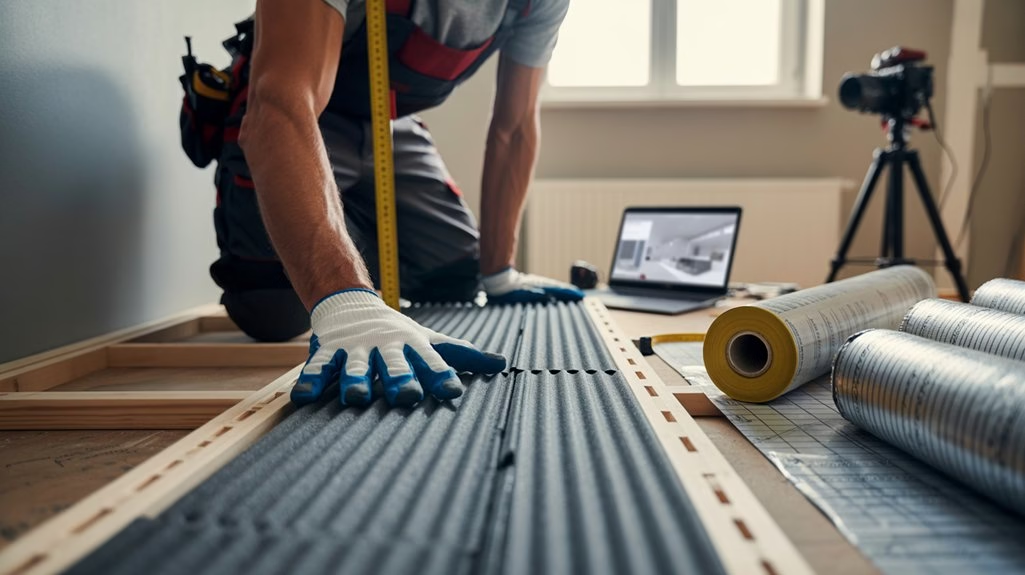
Choose a soundproofing company with 10+ years of experience, strong testimonials, and before-and-after measurements. Expect a customized assessment of walls, ceilings, floors, doors, and vents, with clear STC targets and code compliance. Insist on verified, sustainable materials and modern isolation methods like double drywall with Green Glue, resilient channels, and acoustic caulk. Compare proposals by scope, outcomes, and support—not price alone. Confirm professional installation, quality checks, and post-project care. You’ll find how to spot truly reliable providers next.
Key Takeaways
- Choose firms with 10+ years’ experience, proven case studies, and before-and-after noise measurements.
- Insist on a customized assessment mapping noise paths across walls, ceilings, floors, doors, and vents.
- Verify material specs, certifications, sustainability, and STC targets; avoid generic substitutes.
- Look for modern isolation methods: decoupling, resilient channels, double drywall with Green Glue, and airtight sealing.
- Evaluate proposals for scope, code compliance, clear timelines, quality installation, and strong post-project support.
What Soundproofing Is and Why It Matters
Even if you don’t notice it at first, soundproofing is the practice of blocking or reducing sound from entering or leaving a space so you can protect comfort and privacy.
You use it to create calm homes and productive offices, especially in busy areas like Brooklyn and Manhattan. By focusing on noise reduction, you minimize traffic, nightlife, and neighbor disturbances that raise stress and erode concentration.
Soundproofing combines targeted acoustic treatment with the right soundproofing materials—dense insulation, resilient channels, seals, and specialized drywall—to control transmission through walls, floors, and ceilings.
When applied correctly, it boosts comfort, safeguards conversations, and elevates property value for residential and commercial spaces.
Choose professional soundproofing when you need predictable performance and a tailored plan that treats weak points, not just surfaces, for lasting, measurable results. For cost-effective upgrades, consider adding mass loaded vinyl and combining it with batt insulation, sealing, and acoustic panels to raise STC and improve overall isolation.
Experience and Proven Track Record
When you’re choosing a soundproofing company, prioritize experience and a proven track record so you know the solutions will work the first time.
Look for teams with at least a decade of experience delivering soundproofing services across residential and commercial spaces. They’ll recognize common sound leak points and adapt strategies to different structures, including challenging prewar brownstones.
Verify a proven track record through client testimonials and case studies that quantify noise control improvements. Ask for before-and-after measurements and project photos.
Seasoned contractors propose customized soundproofing plans that fit your building’s layout and use, not one-size-fits-all fixes.
Choose firms that demonstrate long-lasting results, minimizing callbacks and touch-ups. Established providers also keep current with modern techniques, ensuring your solution remains effective as standards evolve.
In New Jersey, experienced pros also navigate noise ordinances and offer warranties, reducing risk and ensuring compliant, durable results.
Materials Quality and Sustainability
Strong experience only pays off if the company specifies the right materials. You should verify materials quality to guarantee long-term performance and avoid costly rework.
Ask providers to document the origin, lab certifications, and expected lifespan of their soundproofing products. Prioritize sustainable materials that improve indoor air quality and align with modern building standards. Demand proof that components, such as IB-1 Sound Isolation Clips, meet or exceed noise reduction benchmarks.
Favor high-performance insulation to reduce transmission through walls, ceilings, and floors and to elevate acoustic comfort.
- Request third-party lab reports for key assemblies
- Confirm recycled content and low-VOC, eco-friendly materials
- Compare warranties and durability metrics across brands
- Verify availability of high-performance insulation SKUs
- Guarantee products meet relevant building and acoustic standards
For robust results, ensure specified systems target an STC of 55–60 by combining Mass Loaded Vinyl with dense insulation and proper sealing.
Modern Techniques and Comprehensive Coverage
Today’s best soundproofing companies deliver extensive coverage by sealing every weak point—walls, ceilings, floors, vents, doors, and electrical penetrations—rather than relying on a single barrier.
Seal every weak point—walls, ceilings, floors, vents, doors, and penetrations—for truly comprehensive soundproofing.
You should expect modern techniques that trace flanking paths, treat structural junctions, and stop air gaps that carry noise. Look for thorough coverage using layered soundproofing solutions: resilient channels, damping compounds, isolation clips, and dense membranes paired with airtight sealing.
Professionals who stay current with installation methods and technologies deliver durable results across varied structures. They prioritize sustainable, high‑quality materials over quick fixes that fail early.
You also benefit when acoustic treatment complements isolation—bass traps, panels, and diffusers refine in-room sound while isolation blocks transfer.
Seek customized soundproofing that integrates targeted sealing, structure-borne isolation, and room-side acoustic treatment for reliable, long-term performance.
For maximum isolation, pros often combine double drywall with Green Glue to boost STC, add Mass Loaded Vinyl for mass, and use resilient decoupling hardware to control structure-borne vibration.
Customized Assessments and Tailored Plans
How do the best soundproofing companies start? They begin with a customized assessment of your space, not a template.
Pros walk the rooms, track noise paths, and note construction details to craft customized soundproofing that matches your specific needs. They combine experience with practical soundproofing techniques to solve issues unique to homes, studios, offices, or mixed-use spaces.
Then they build tailored plans that fit how you actually use the space, maximizing comfort and privacy without overbuilding.
- Inspect walls, ceilings, floors, doors, and vents to locate sound leaks
- Discuss daily activities and privacy goals to align expectations
- Model options like acoustic panels, isolation, and sealing strategies
- Prioritize upgrades by impact, budget, and disruption
- Present phased plans with measurable outcomes and timelines
Avoid cookie-cutter fixes; individualized strategies deliver lasting results. To boost performance and control costs, top firms often layer dense barriers with targeted absorption—think mass-loaded vinyl behind 5/8-inch type X drywall, sealed with acoustical caulk and paired with strategic panels.
Credentials, Licensing, and Local Expertise
After a tailored assessment sets the plan, the right team to execute it matters just as much. Verify the soundproofing company’s credentials and licensing before you sign. Confirm active insurance to protect you from liability and to guarantee compliance with local regulations.
Ask about certifications or specialized training in acoustical work; they signal real expertise and adherence to proven soundproofing principles.
Prioritize local expertise. A contractor who regularly works in your area will know building codes, inspection requirements, and practical constraints.
If you’re in Brooklyn or Manhattan, confirm experience with prewar brownstones and similar older buildings, where construction quirks can make or break results.
Check local reviews and testimonials for professionalism and effectiveness. Choose professional services that combine verified credentials, proper licensing, and demonstrated neighborhood know‑how.
In New Jersey, verify familiarity with local noise limits and minimum STC ratings, as well as permitting and inspection processes to ensure compliant, effective installations.
Comparing Proposals Beyond Price
Even if one bid looks cheapest, compare proposals by what they actually deliver. Look past price to the scope: do they address walls, ceilings, and floors, or just one surface?
A strong soundproofing service should explain materials, methods, and expected results for your noise issues, not just list line items. Insist on solutions tailored to your building type and code requirements, especially in older structures where assemblies behave differently.
You’re buying outcomes—durable performance and better sound quality—not just labor and drywall.
Buy outcomes—lasting performance and quieter spaces—not just labor and drywall.
- Ask for material specs, STC targets, and installation details with rationale.
- Verify experience with your building type and local codes.
- Look for high-quality, sustainable products, not generic substitutes.
- Seek expert advice tied to measurable results, not hype.
- Check reviews citing real noise reduction and professionalism.
For maximum isolation, confirm whether the proposal includes wall decoupling, since separating wall sides is often the most effective way to prevent sound transmission.
Service, Support, and Installation Options
Price and specs only matter if the team can deliver. Start by evaluating the company’s service approach: do they conduct a thorough assessment to pinpoint your noise sources and tailor soundproofing solutions? You’ll want clear explanations, documented recommendations, and a defined scope. Ask whether their proposal addresses sealing all penetrations with acoustic caulk and decoupling strategies like resilient channels to minimize structural noise transfer. Ask about support from start to finish. Expect expert advice, responsive answers to questions, and guidance on maintaining materials after installation. Insist on transparent communication—schedules, milestones, and any changes—in writing. Verify who handles installation. Choose experienced contractors who measure carefully, seal gaps, and follow manufacturer specs. Confirm quality checks and warranties. Review installation options that fit your budget: DIY with detailed resources, hybrid assistance, or fully managed services. Prioritize companies that coordinate access, protect your space, and provide post-project support.
Frequently Asked Questions
How Much Does Professional Soundproofing Cost?
Professional soundproofing typically costs $1,000–$3,000 for homes, but your total depends on cost factors like project scope and regional pricing.
Expect ceilings at $2–$5 per sq ft and walls at $1.50–$3.50 per sq ft.
Commercial spaces often run $5–$10 per sq ft.
Installation fees usually make up 50%–70% of the price, so you’ll pay more for complex work.
Material choices—acoustic panels, mass-loaded vinyl, isolation clips—also drive costs.
How to Professionally Soundproof?
Hit the ground running: start with a professional assessment to pinpoint weak spots.
You’ll map noise paths, then choose soundproofing materials matched to your space’s use. Specify acoustic panels, dense insulation, resilient channels, and sealed soundproof doors for broad noise reduction.
Apply proven installation techniques: decouple walls, treat ceilings and floors, seal vents and outlets, and add mass where needed.
Hire experienced installers so details—gaps, flanking paths, and fasteners—don’t sink performance.
How to Test Soundproofing Effectiveness?
You test soundproofing effectiveness by running acoustic testing methods: perform an STC test, log pre/post dB with a decibel meter, and do a sine sweep to spot frequency leaks.
Compare rooms for soundproofing materials comparison and verify noise reduction techniques by listening for door, window, and outlet leaks.
Document results for a soundproofing project evaluation. If results seem inconsistent, schedule a professional assessment—importance rises when diagnosing flanking paths and setting remediation priorities.
How Thick Is Professional Room Soundproofing?
Professional room soundproofing typically totals 2–5+ inches, depending on goals.
You’ll use dense soundproofing materials 1–4 inches thick, layered with drywall and membranes. Acoustic panels add 1–3 inches for absorption, not isolation.
You should match thickness to room dimensions, noise reduction targets, and installation techniques. For high isolation, aim for multi-layer assemblies reaching 5 inches or more.
If space is tight, prioritize denser barriers and strategic decoupling over sheer thickness.
Conclusion
Choosing the right soundproofing company isn’t just a box to tick—it’s how you build lasting comfort. You’ll want proven experience, sustainable materials, and modern techniques that cover every angle. Insist on customized assessments, proper licensing, and local know-how. Compare proposals beyond price to weigh value, warranties, and follow-up support. Ask about installation options and ongoing service so nothing falls through the cracks. When you do your homework and trust clear expertise, you’ll get quiet that’s worth its weight in gold.