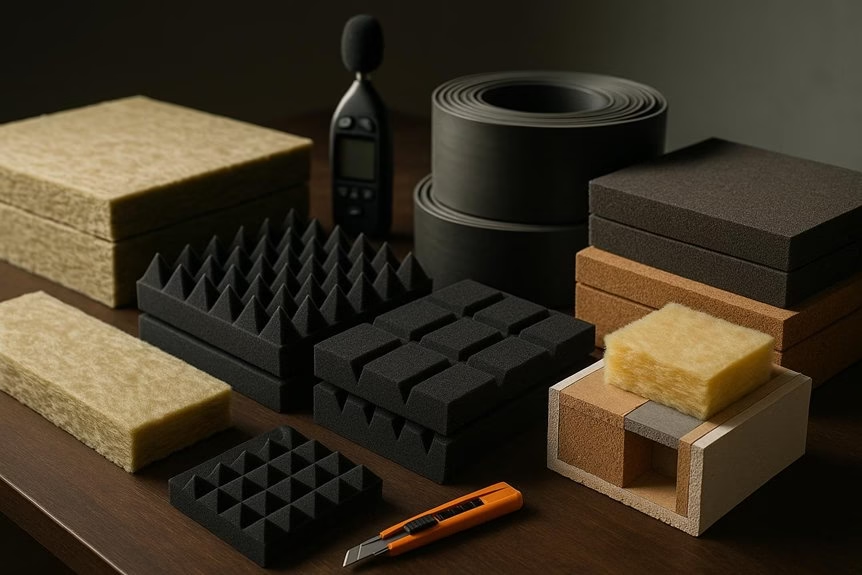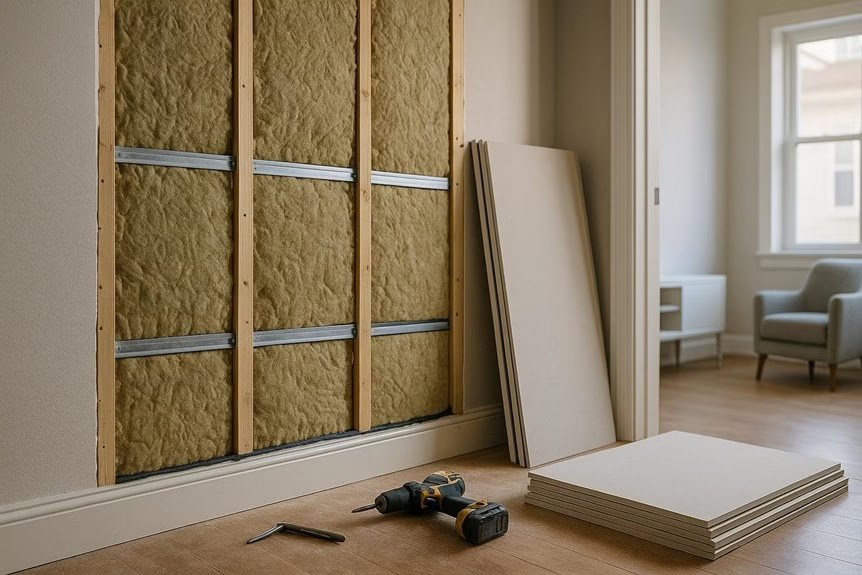
For the best soundproofing on a shared townhome wall, the right solution combines added mass, airtight sealing, and strategic decoupling to reduce voices, TV noise, and vibration. At Total Home Interiors, we typically recommend upgrading the wall assembly with dense mineral wool insulation, acoustic drywall, damping compounds, and professionally sealed penetrations to improve real-world noise control. When impact or structure-borne noise is involved, advanced methods like resilient channel or decoupled framing may be necessary for better performance. The most effective results come from a professionally designed system, not piecemeal DIY fixes. There’s more to notice.
Key Takeaways
- Effective townhome wall soundproofing should target both airborne noise and structural vibration through added mass, damping, and decoupling—not insulation alone.
- A professional upgrade often includes 5/8-inch acoustic drywall, ideally in multiple layers with Green Glue damping compound, to significantly improve sound isolation between adjoining homes.
- Filling the wall cavity with dense mineral wool helps reduce voices, TV noise, and internal wall resonance, but it performs best as part of a complete soundproofing assembly.
- Every gap matters: perimeter joints, seams, outlets, and other penetrations should be sealed with acoustical caulk and putty pads to prevent sound leaks that weaken overall performance.
- For stronger results in shared-wall applications, decoupled systems such as resilient channel, staggered studs, or double-stud construction can dramatically reduce vibration transfer.
- For homeowners in West Orange, Jersey City, Hoboken, and across the Tri-State area, Total Home Interiors designs and installs custom soundproofing solutions that deliver more reliable results than piecemeal DIY fixes.
How Soundproofing Between Townhomes Works
At a basic level, soundproofing a shared wall between townhomes is about stopping both airborne noise—like voices, TVs, or music—and structure-borne vibration before it travels from one home to the next.
The most effective wall assemblies do this by combining mass, damping, and decoupling, rather than depending on insulation alone.
For stronger results, professionally designed systems may include double-stud or staggered-stud framing, dense cavity insulation, acoustic drywall, damping compounds, and specialized materials such as mass-loaded vinyl.
Together, these components help absorb sound energy, control resonance, and limit direct vibration transfer through the framing.
Adding acoustical caulk at all perimeter joints and penetrations helps prevent the small sound leaks that can undermine even a well-built wall assembly.
Just as important, every edge, outlet, fastener, and penetration must be carefully sealed, since small gaps and flanking paths can significantly reduce overall performance.
For homeowners in West Orange, NJ and across the Tri-State area—including Jersey City, Hoboken, and NYC—this is where expert design and installation matter most.
Sound testing can help identify where noise is still leaking, while STC ratings provide a useful benchmark when comparing wall assemblies before construction or renovation.
At Total Home Interiors, we focus on premium soundproofing solutions that deliver meaningful privacy, comfort, and quiet—especially in attached homes where standard construction often falls short.
How Airborne Noise Gets Through Shared Walls
When you hear voices, TV, or music through a shared townhome wall, the noise often isn’t passing straight through the center of the wall alone. In many homes, airborne sound escapes through small gaps at drywall edges, framing joints, electrical outlets, and other penetrations.
That’s why a wall can look solid but still perform poorly—tiny cracks, unsealed seams, and lightweight drywall can allow significant noise leakage and sound flanking.
A wall may appear solid, but small gaps and lightweight drywall can still allow noticeable sound leakage and flanking.
Openings like electrical boxes, pipe penetrations, and recessed areas can act as sound shortcuts if they aren’t professionally treated with acoustic sealants, putty pads, or other sound-control materials. If the wall cavity contains only basic insulation—or insulation installed inconsistently—it may not absorb enough sound energy to meaningfully reduce voices or TV noise.
Effective soundproofing requires more than one fix. It typically involves increasing wall mass, improving air sealing, and addressing flanking paths as part of a complete assembly. Adding mass-loaded vinyl between drywall layers can further increase wall mass and help block both airborne and structure-borne sound.
At Total Home Interiors, we help homeowners in West Orange, Hoboken, Jersey City, NYC, and across the Tri-State area identify where sound is really getting through and recommend tailored soundproofing solutions designed for lasting privacy and comfort.
How Impact Noise Travels Between Townhomes
Even if a shared wall looks airtight, impact noise can still travel between townhomes through the structure itself. Footsteps, dropped items, and moving furniture send vibration into the floor framing, rim joists, studs, and connected wall assemblies, which is why you may still hear thumps and jolts despite a well-sealed wall.
This happens because structural members remain physically connected, allowing vibration to pass from one home to the next. In many townhomes, thin rigid floor systems and direct framing contact make this type of noise especially noticeable. Solving it usually requires more than adding mass to the wall. Effective soundproofing often involves reducing vibration transfer in the floor system and isolating shared-wall connections with professionally selected materials such as damping treatments, decoupling methods, or resilient channel assemblies. In many cases, adding dense underlayment beneath flooring can help reduce floor-borne vibration before it reaches the shared wall assembly.
At Total Home Interiors, we design custom soundproofing solutions for homeowners across West Orange, Hoboken, Jersey City, and the greater NYC area who want real relief from neighbor noise—not temporary DIY fixes.
Which Shared Wall Details Block Sound
To reduce sound through a shared townhome wall, the wall assembly needs to control both airborne noise and structure-borne vibration.
The most effective details start with decoupled framing, such as double-stud or staggered-stud construction, which helps limit vibration transfer between neighboring spaces.
The cavity should then be fully filled with dense acoustic insulation to absorb sound energy within the wall.
Just as important, all weak points must be sealed carefully, especially around outlets, electrical boxes, wiring penetrations, and perimeter joints, using acoustic sealant and putty pads where needed.
To improve performance further, the wall should include added mass with 5/8-inch acoustic drywall, often installed in multiple layers, along with damping compound between layers to help dissipate sound energy.
Using mineral wool insulation can further improve low-frequency control because its 3–4 lbs/ft³ density helps absorb sound within the wall cavity.
When these details are combined correctly, the shared wall does a much better job of reducing voices, music, and everyday impact from the adjacent home.
At Total Home Interiors, we design and install professional soundproofing solutions for homeowners across West Orange, Hoboken, Jersey City, NYC, and the surrounding Tri-State area—delivering quieter, more private interiors with construction details that outperform basic builder-grade assemblies.
Why Insulation Matters in Townhome Walls
Because sound doesn’t just pass through drywall—it also builds up and reverberates inside the wall cavity—insulation is a critical part of any effective townhome soundproofing system. In shared walls, professionally selected acoustic insulation helps absorb airborne sound before it can bounce through the assembly and reach the neighboring space.
That can reduce everyday disturbances like voices, TV noise, and music, especially in dense urban homes where privacy is limited.
Materials such as mineral wool insulation are especially effective because their dense, fibrous structure helps trap sound waves and improve low-frequency absorption inside wall cavities.
Just as important, performance depends on proper installation. If insulation is thin, unevenly compressed, or leaves gaps inside the cavity, noise can still move through the wall with ease.
Even high-quality insulation underperforms when poorly installed, allowing sound to slip through gaps, compression points, and thin spots in the cavity.
A properly filled cavity helps reduce internal resonance and improves the overall performance of the wall assembly. In many West Orange, Hoboken, Jersey City, and NYC townhomes, insulation works best as one component of a larger professionally designed soundproofing strategy that may also include decoupling, acoustic drywall, and other construction methods that limit noise transfer more effectively than basic DIY upgrades.
How Drywall Upgrades Improve Soundproofing
Upgrading a shared townhome wall with 5/8-inch acoustic drywall can improve sound isolation by increasing mass and adding damping, which helps reduce vibration transfer through the wall assembly. This type of upgrade is often used as part of a broader soundproofing strategy for homeowners dealing with neighbor noise, conversation bleed, or general lack of privacy.
- Add one layer to increase mass and help reduce airborne noise.
- Add a second layer to create a stronger multi-layer assembly with better isolation performance.
- Stagger seams and maintain careful fastening patterns for more consistent results.
- Keep joints properly finished and sealed to preserve long-term acoustic performance.
These improvements work because heavier, better-damped drywall helps slow and dissipate sound energy before it passes into the next space. Adding Green Glue between drywall layers can further improve damping and help reduce sound transmission through the shared wall.
For more noticeable results, drywall upgrades are often paired with other professional soundproofing measures such as decoupling methods, acoustic sealants, and mass-loaded materials.
When designed and installed correctly, acoustic drywall can help create a quieter wall with minimal impact on interior space.
For homeowners in West Orange, NJ and across the Tri-State area, Total Home Interiors designs and installs custom soundproofing solutions tailored to the specific noise path, wall condition, and performance goals of the space.
How Gaps and Outlets Leak Sound
Even a well-built shared wall can still leak sound through small gaps, especially around outlets, switch plates, cable penetrations, and perimeter seams. If air can pass through an opening, sound usually can too.
In many apartments, condos, and attached homes throughout West Orange, Hoboken, Jersey City, and NYC, these weak points are a major reason voices, TV noise, and hallway sound travel more than expected.
Electrical boxes are one of the most common problem areas because they interrupt the wall assembly and reduce its effectiveness as a sound barrier. Gaps where drywall meets the box, unsealed utility cutouts, and poorly detailed perimeter joints can all undermine an otherwise solid wall.
Even insulation inside the cavity won’t perform as intended if small air paths are left untreated.
At Total Home Interiors, we address these details as part of a complete soundproofing strategy—not a patchwork DIY fix. Professional air sealing around penetrations, acoustic treatment of electrical box openings, and careful sealing at wall seams and transitions all help reduce noise transfer.
These details matter because flanking noise paths can let sound bypass the main wall assembly through small openings and adjacent building elements.
It’s often these small construction details that make the difference between a wall that looks finished and one that actually delivers meaningful privacy and quiet.
How Layout Reduces Noise Between Townhomes
Layout matters just as much as wall construction, because a smart floor plan can significantly reduce how directly sound travels between attached townhomes.
At Total Home Interiors, we look at layout as an important first step in creating quieter, more private homes—especially in dense areas across New Jersey and NYC where shared-wall noise is a common frustration.
- Place bedrooms away from the shared wall so conversations, TVs, and daily activity have more distance to weaken before reaching sleep spaces.
- Create buffer zones with closets, stairwells, bathrooms, or garages, helping sound pass through non-living areas instead of directly into primary rooms.
- Avoid lining up noisy rooms with quiet ones next door, such as placing a living room, media area, or home office directly behind a neighboring bedroom.
- Limit direct sound pathways by reducing continuous plumbing or mechanical chases and by staggering outlets, ducts, and fixtures along shared-wall sections.
Good layout choices can reduce airborne noise leakage and vibration transfer before specialized soundproofing materials are even installed.
When combined with professional wall assemblies, acoustic treatments, and expert planning, layout becomes a powerful part of a complete noise-control strategy.
In media rooms or shared entertainment spaces, adding acoustic panels with a high NRC rating can further reduce reflected sound that might otherwise build up near the shared wall.
What to Check for on a Townhome Tour
Before you focus on finishes or square footage, pay close attention to the shared wall during a townhome tour. That construction detail will tell you far more about everyday noise, privacy, and long-term comfort than decor ever will.
Ask what’s inside the shared wall cavity. Dense acoustic insulation typically performs better than standard fiberglass when it comes to limiting sound transfer. Look for 5/8-inch acoustic-rated drywall, ideally in multiple layers, with sealed seams and perimeter edges to reduce air leakage. Check the electrical outlets as well. Boxes placed on a shared wall should be properly sealed with putty pads or similar acoustic treatments rather than left with open gaps. A well-built party wall may also target an STC rating of 55–60 to better reduce noise between attached homes.
If the builder can provide details, ask whether the wall assembly includes staggered-stud or double-stud framing, decoupling methods, mass-loaded vinyl, or sound-damping compound between drywall layers. These are the kinds of professional soundproofing measures that make a noticeable difference in attached homes.
Finally, notice how the layout is planned. Closets, stairwells, and garages can serve as valuable buffer zones between shared walls and quieter spaces like bedrooms or living areas. If noise control is a priority, these are exactly the structural details worth checking during your walkthrough.
Frequently Asked Questions
How Much Does Shared Wall Soundproofing Typically Cost?
Shared wall soundproofing typically costs about $1,000 to $5,000, depending on the wall size, construction type, material selection, and installation complexity.
Basic noise-reduction measures may cost a few hundred dollars, but professionally installed solutions—such as insulation upgrades, resilient channel systems, mass-loaded vinyl, decoupled wall assemblies, or acoustic drywall—are usually required for meaningful results.
For homeowners and apartment residents in West Orange, Hoboken, Jersey City, and NYC dealing with persistent neighbor noise, a custom soundproofing plan delivers far better performance than temporary DIY fixes.
Total Home Interiors designs and installs premium shared wall soundproofing solutions tailored to your space, noise issues, and privacy goals.
Can Soundproofing Be Added Without Removing Existing Drywall?
Yes—soundproofing can often be added without removing existing drywall.
Depending on the wall assembly and the type of noise, solutions may include injecting insulation through small access points, adding acoustic drywall over the current surface, or using decoupling methods such as resilient channel to reduce sound transfer.
For the best performance, professional soundproofing also requires sealing gaps around outlets, trim, and other wall penetrations.
At Total Home Interiors, we design custom soundproofing solutions for homes and apartments throughout West Orange, Jersey City, Hoboken, and NYC, helping clients reduce neighbor noise, street noise, and other everyday disruptions without unnecessary demolition.
Will Soundproofing Work in Older Townhomes With Plaster Walls?
Yes—soundproofing can be effective in older townhomes with plaster walls, but the best results come from a professional assessment of the wall assembly and the specific noise paths involved.
In many older homes, plaster walls can help with mass, yet sound often still travels through gaps, shared framing, floors, ceilings, windows, and adjoining surfaces.
A high-performance retrofit may include sealing air leaks, adding dense insulation, incorporating acoustic drywall or mass-loaded vinyl, and using decoupled wall systems where construction allows.
Because older townhomes vary widely, the right soundproofing strategy depends on the structure—not a one-size-fits-all fix.
It’s also important to address room acoustics, since hard plaster surfaces can create echo and make a space feel louder indoors.
Total Home Interiors designs custom soundproofing and acoustic solutions for homeowners across West Orange, NJ and the Tri-State area who want quieter, more comfortable living spaces.
Do I Need HOA Approval to Soundproof a Shared Wall?
Usually, yes—HOA approval may be required before soundproofing a shared wall, especially in a condo or apartment building. It typically depends on whether the work affects shared structures, wall assemblies, finishes, or building noise standards.
Simple removable acoustic panels inside your unit may not require approval, but construction-based soundproofing—such as adding insulation, acoustic drywall, decoupling, or mass-loaded vinyl—often does.
Before starting, review your HOA bylaws and renovation guidelines, then submit plans if required. For homeowners in Jersey City, Hoboken, NYC, and across the Tri-State area, professional soundproofing should always begin with proper approvals and expert planning to avoid costly mistakes.
Total Home Interiors helps clients design effective shared-wall soundproofing solutions that meet both performance goals and building requirements.
How Long Does a Shared Wall Soundproofing Project Take?
A shared wall soundproofing project typically takes anywhere from one day to one week, depending on the wall assembly, access, and the soundproofing methods required.
In condos, apartments, and attached homes throughout West Orange, Hoboken, Jersey City, and NYC, the timeline often depends on whether the solution involves adding acoustic drywall, mass-loaded vinyl, decoupling methods, or detailed sealing work.
Most projects move through a clear sequence of demolition, installation, acoustic sealing, and finishing, with additional time needed if compounds or adhesives must cure before final inspection.
A professional assessment is the best way to determine an accurate schedule while minimizing disruption and ensuring the wall is treated correctly the first time.
Conclusion
Understanding how sound travels through a shared townhome wall helps you make better decisions before you buy or renovate. Pay close attention to insulation, drywall layers, air gaps, electrical outlets, and room layout, since each one can affect how much neighbor noise transfers into your home. In many Tri-State townhomes, these hidden construction details make the difference between a quiet, comfortable space and ongoing noise frustration. Evaluating them during a tour can help you identify potential soundproofing needs early and avoid costly surprises after move-in. For the best results, professional soundproofing solutions such as added mass, decoupled wall assemblies, and acoustic-grade materials should be considered when noise control is a priority.